In the field of civil engineering, Concrete Geotextile, as a key geosynthetic material, is widely used in roads, water conservancy, slope protection and other scenarios by virtue of its excellent separation, filtration, reinforcement, drainage and other properties. It is one of the core materials to improve project quality and extend service life. This article will provide comprehensive and practical professional knowledge of concrete geotextile from the dimensions of basic cognition, type classification, engineering application, construction specifications, selection skills, procurement guidelines and common problems, to help solve practical needs in engineering.

What is Concrete Geotextile?
Concrete Geotextile is a geosynthetic material specially designed for concrete engineering scenarios. It is made of polymer fibers such as polypropylene and polyester through specific processes. Some special types will be integrated with dry concrete mixtures to form functional materials with both flexibility and curing characteristics. Compared with ordinary geotextiles, it has been targeted optimized in material compatibility, mechanical strength, aging resistance and other aspects, which can better adapt to the engineering environment of concrete pouring, curing and long-term service, avoid chemical reactions between materials, and ensure the stability of engineering structures.
Five Core Functions
The core value of concrete geotextile lies in its multiple functions, which can be used alone or synergistically in engineering:
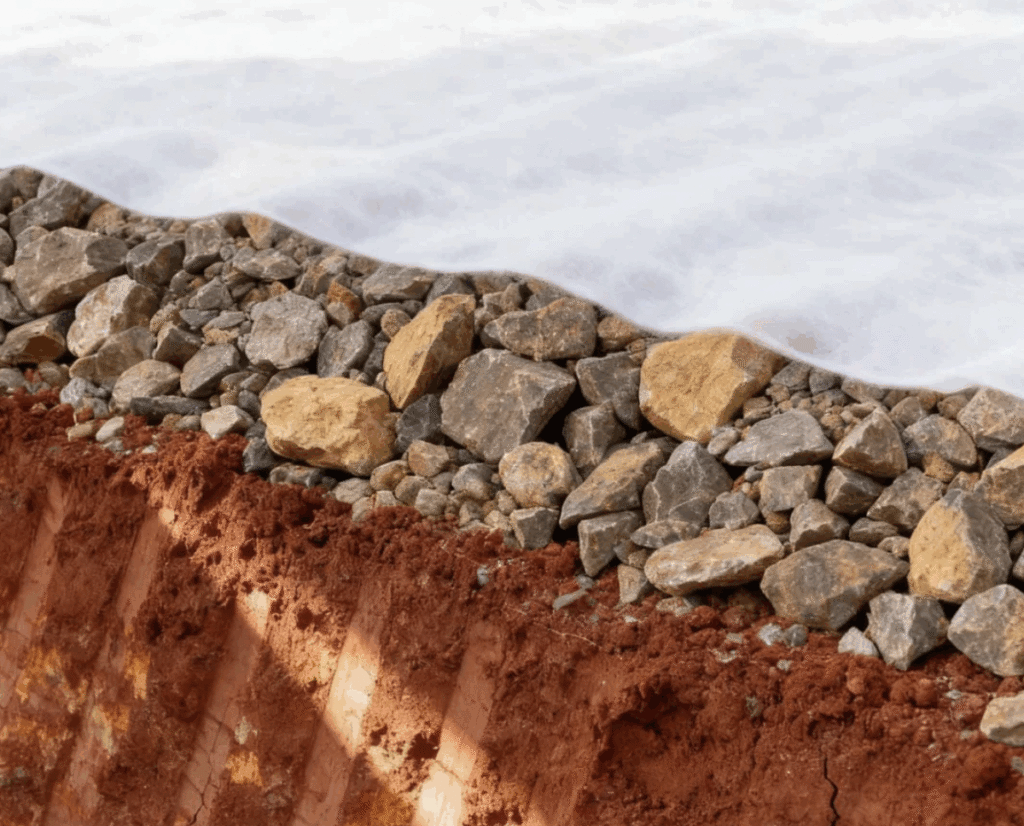
- Separation Function: Effectively isolate concrete from base materials such as soil and gravel, avoiding the decrease of structural strength caused by the mixing of different materials, especially suitable for layered construction of subgrade and concrete pavement.
- Filtration Function: With precise pore size distribution, it allows water to penetrate and discharge, while intercepting soil particles, preventing engineering settlement or seepage damage caused by soil particle loss, and ensuring the smoothness of the drainage system.
- Reinforcement Function: By transmitting and diffusing stress, it enhances the bearing capacity of soil and concrete structures, restricts the lateral deformation of soil, and improves the stability of subgrade, slope and other structures.
- Erosion Resistance Function: In scenarios such as slopes and coastlines, it can resist the erosion of concrete structures and surrounding soil by water flow, and reduce the impact of natural factors such as freeze-thaw damage.
- Crack Prevention Function: When applied to asphalt concrete overlay or old pavement reconstruction projects, it can alleviate the reflection and diffusion of base cracks and extend the service life of pavement.
Core Differences from Ordinary Geotextiles
Compared with ordinary geotextiles, the targeted optimization of concrete geotextile is mainly reflected in three aspects: first, material compatibility, which can be well adapted to concrete materials, avoiding chemical corrosion or poor bonding problems; second, mechanical strength, which improves key indicators such as tensile strength and puncture resistance according to the load requirements of concrete pouring; third, durability, which strengthens UV resistance and aging resistance, ensuring stable performance during the long-term service cycle of concrete structures.
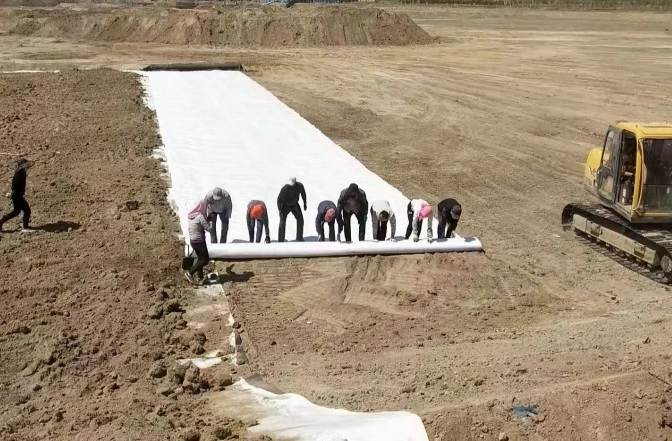
Types of Concrete Geotextile
According to different processing technologies, concrete geotextiles can be divided into four categories: non-woven, woven, knitted and composite. The performance of each type of product is significantly different, and the applicable scenarios also have their own focuses. Reasonable type selection is the premise to ensure engineering effect. The following is a detailed classification and application description.
1. Classification by Process: Characteristics and Applicable Scenarios
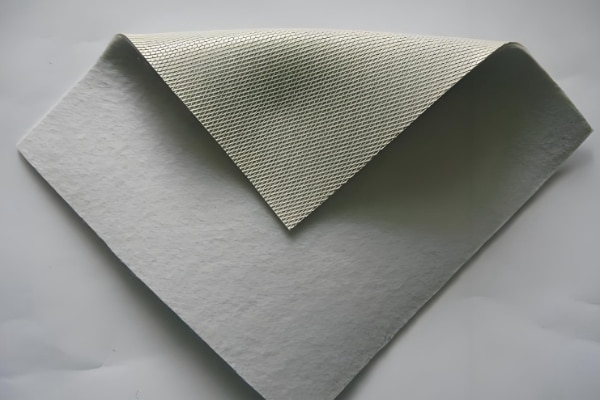
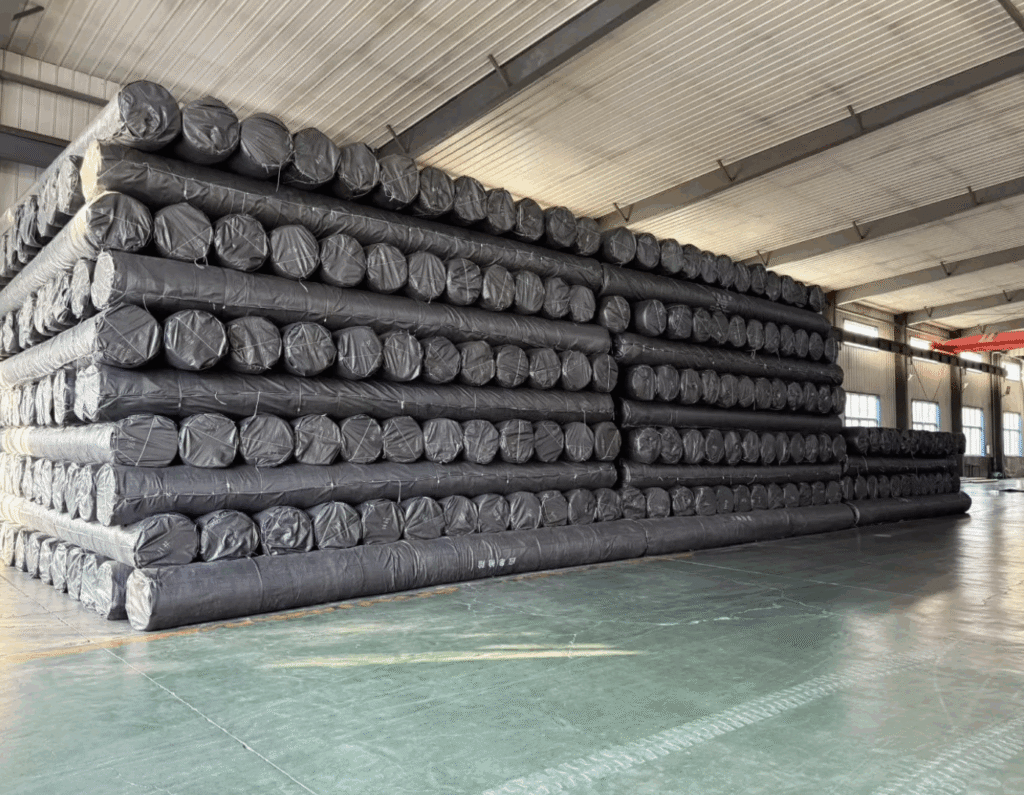
- Non-woven Geotextile: Made by staple fiber needle punching or filament web-forming process, it has the characteristics of good air permeability, excellent filtration performance and affordable price. It is mainly suitable for road subgrade drainage, concrete base separation layer and other scenarios. The common specifications are grammage 100-800g/m² and width 2-8 meters. Among them, filament non-woven geotextile has higher tensile strength and is more suitable for projects with certain strength requirements.
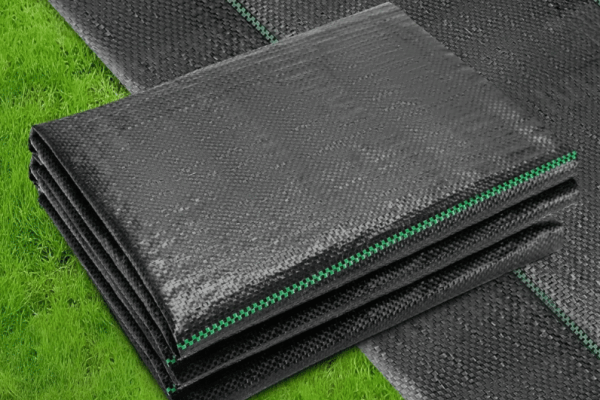
- Woven Geotextile: Woven from polyester or polypropylene filaments, it has high tensile strength and small elongation deformation rate. Its core advantage is outstanding reinforcement performance, suitable for slope reinforcement, dike anti-seepage, heavy-duty road subgrade enhancement and other scenarios. The standard specifications are grammage 90-400g/m² and width 1-6 meters. The color and size can be customized according to customer needs.
- Knitted Geotextile: Processed by knitting technology, it has excellent flexibility and can closely fit complex terrain. It is suitable for the protection and drainage of irregular structures such as dikes and tunnels. Its disadvantage is relatively low strength, so it is usually not used alone in heavy-load scenarios.
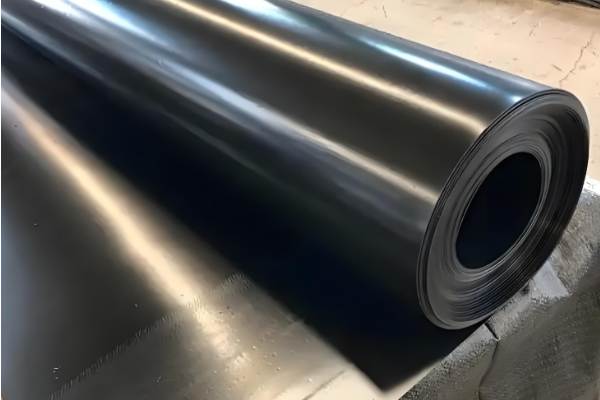
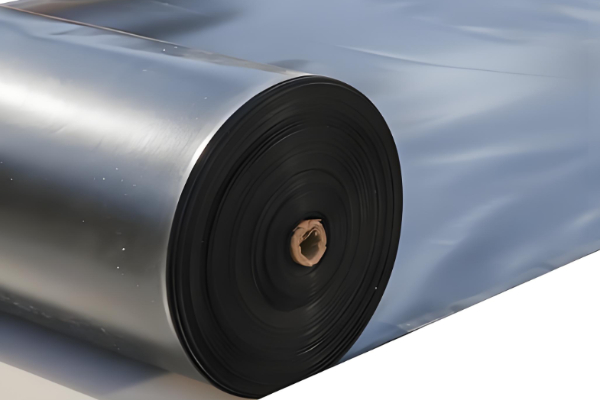
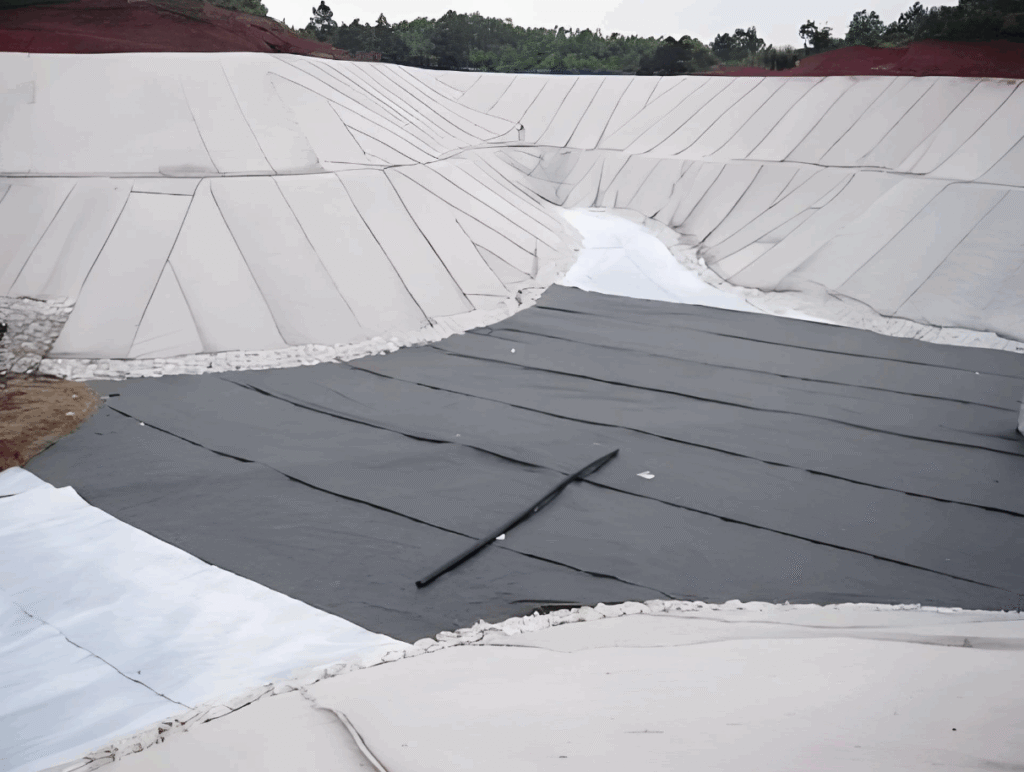
- Composite Geotextile: Combines the advantages of two or more processes, such as “non-woven + woven”, “geotextile + geomembrane” and other composite structures. It has multiple functions such as filtration, anti-seepage and reinforcement, and is suitable for scenarios with comprehensive requirements for material performance such as landfills, sewage treatment plants and water conservancy projects.
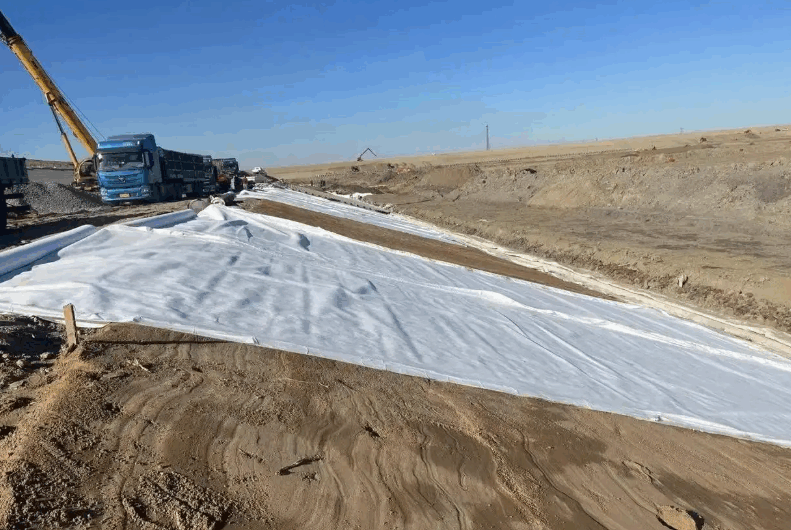
2. Special Type: Concrete Blanket
Concrete Blanket is an innovative type of concrete geotextile, with core characteristics of “flexible and foldable, curing when exposed to water”. Its structure consists of three layers: the surface and bottom layers are high-strength polypropylene fiber fabrics, and the middle layer is wrapped with dry concrete mixture (cement, aggregate, admixtures, etc.). During construction, no mixing equipment is needed. After laying the concrete blanket in place, it only needs to be sprinkled with water for curing, and it can be cured and formed within 24 hours to form a concrete structure with strength above 20MPa.
This type has extremely significant construction advantages, which can greatly shorten the construction period and reduce the construction difficulty. It is especially suitable for emergency projects (such as temporary roads, river channel restoration), complex terrain (such as mountains, steep slopes) and small-scale projects in remote areas.
3. Quick Selection Table for Types
| Applicable Scenarios | Recommended Types | Core Parameter Requirements |
| Road Subgrade Separation/Drainage | Non-woven Geotextile (Filament/Staple Fiber) | Weight 150-300g/m², Tensile Strength ≥8kN/m |
| Slope Reinforcement/Protection | Woven Geotextile/Composite Geotextile | Weight 200-400g/m², Tensile Strength ≥100kN/m |
| Concrete Pavement Anti-reflective Cracking | Non-woven Geotextile (Polyester Filament) | Weight ≥450g/m², Permeability ≥1×10⁻²cm/s |
| Emergency Projects/Complex Terrains | Concrete Blanket | Thickness 5-10mm, Strength After Curing ≥20MPa |
| Landfills/Sewage Treatment | Composite Geotextile (Fabric + Membrane) | Membrane Thickness ≥0.5mm, Elongation at Break ≥500% |
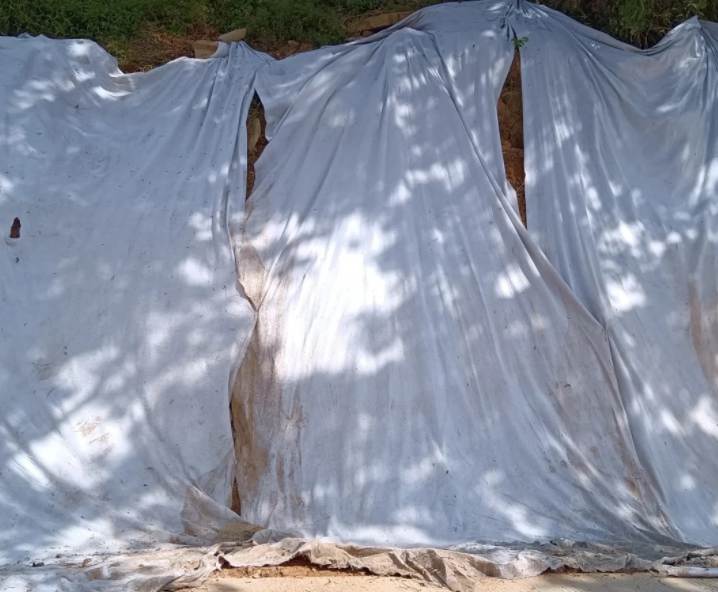
Price of Concrete Geotextile
The price of concrete geotextile is affected by factors such as material, process, specification and purchase quantity. The mainstream market price range is as follows (2025 latest quotation):
- Non-woven Geotextile: 0.5-8 yuan per square meter, among which staple fiber needle-punched type is 0.5-3 yuan per square meter, and filament spunbonded type is 2-8 yuan per square meter.
- Woven Geotextile: 5-38 yuan per square meter. The price varies greatly according to the tensile strength. The price of high-strength products (≥200kN/m) can reach 30-38 yuan per square meter.
- Composite Geotextile: 10-50 yuan per square meter, depending on the number of composite layers and film thickness. The fabric + film composite type is 10-25 yuan per square meter, and the multi-layer composite type is 25-50 yuan per square meter.
- Concrete Blanket: 50-65 yuan per square meter, thickness 5-10mm. The larger the purchase quantity, the lower the unit price. For bulk purchase (≥1000 square meters), a 10%-15% discount can be offered.
Note: The price is the ex-factory price excluding tax. The actual purchase needs to consider additional costs such as transportation fees and installation fees; the price of imported products is usually 2-3 times that of domestic products.
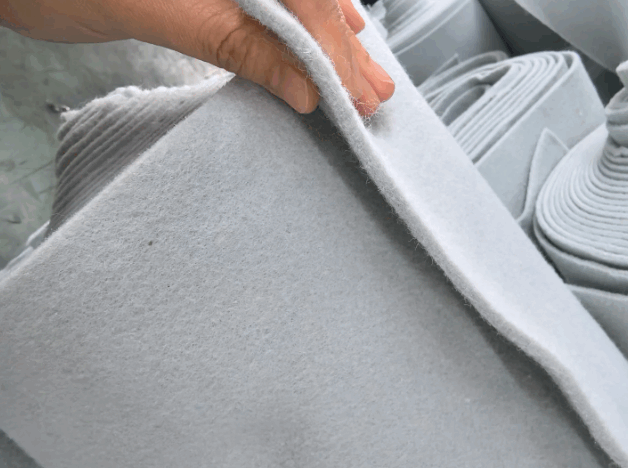
Applicable Scenarios of Concrete Geotextile
- Concrete Pavement/Overlay Engineering: Mainly used between the base and surface layer of old pavement reconstruction or new pavement to play the role of anti-reflection crack and separation. During construction, it is necessary to ensure that the geotextile is closely attached to the base, and the lap width is not less than 15cm, so as to avoid wrinkles affecting stress transmission. In the application of asphalt concrete overlay, it can reduce the pavement crack reflection rate by more than 60% and extend the pavement service life by 3-5 years.
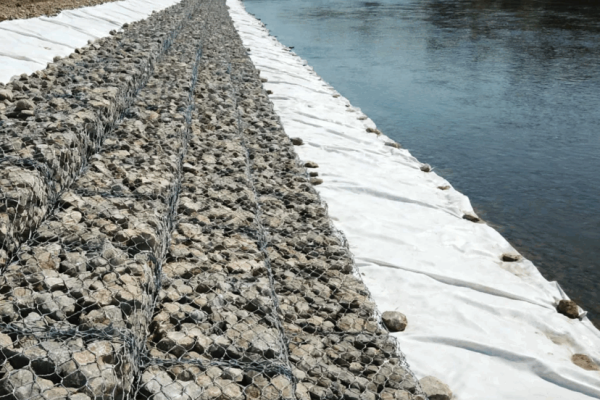
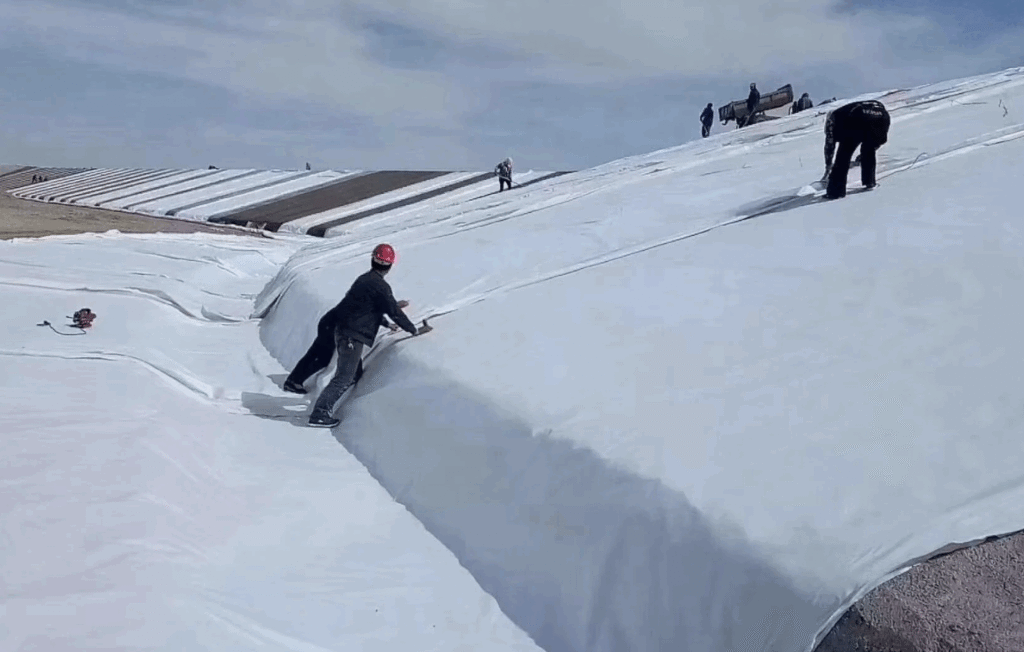
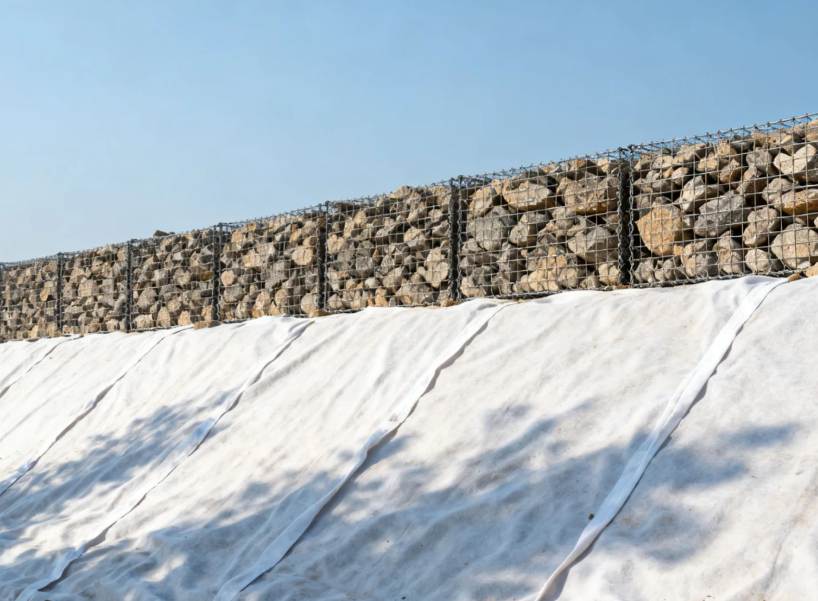
- Slope and Coastline Protection Engineering: After slope excavation, lay woven or composite geotextile, then pour concrete facing, which can enhance the adhesion between the facing and soil, and resist water erosion and wave impact. For coastline protection, it is recommended to select polyester woven geotextile with seawater corrosion resistance, and the grammage is not less than 300g/m² to ensure long-term aging resistance.
- Subgrade and Dike Engineering: As a subgrade reinforcement material, it is laid between the soft soil foundation and subgrade filler, which can diffuse the subgrade pressure and reduce uneven settlement; in dike engineering, it can be used for dam drainage, anti-seepage layer protection and other links to avoid potential safety hazards caused by dam leakage.
- Emergency Engineering: Concrete Blanket has significant advantages in emergency scenarios such as temporary road rush repair, river breach blocking, and small reservoir construction. For example, in the road repair after floods, after laying the concrete blanket and sprinkling water for curing, small vehicles can pass within 24 hours, which greatly shortens the emergency response time.
Installation Guide for Concrete Geotextile
The construction of concrete geotextile shall follow the core process of “preprocessing – laying – fixing – concrete pouring – curing”. The key points of each link are as follows:
1. Preliminary Site Preprocessing
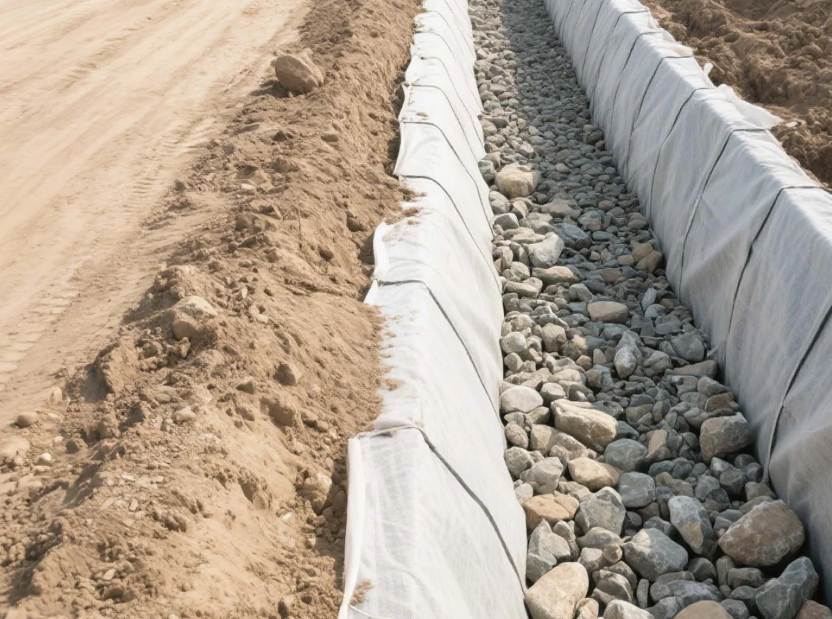
Clean up stones, sharp debris in the construction area, level and compact the site to ensure that the base flatness error does not exceed 5cm/m, so as to avoid sharp objects piercing the geotextile; at the same time, do a good job in the drainage system to prevent site water accumulation from affecting construction quality.
2. Cutting and Laying of Geotextile
Accurately cut according to the project size to avoid waste; during laying, adopt the principle of “laying along the slope”. The slope laying is carried out from top to bottom. The lap width of adjacent geotextiles: not less than 20cm parallel to the water flow direction, and not less than 30cm perpendicular to the water flow direction; during the laying process, the geotextile should be tightened to avoid wrinkles and slack.
3. Fixing Method
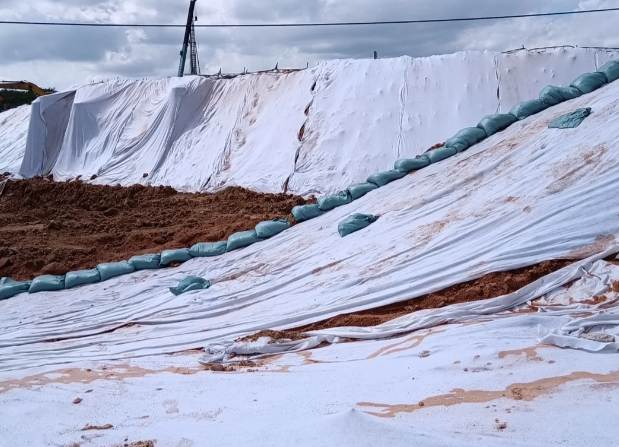
Use anchor nails, sandbags or concrete edge pressing for fixing. The spacing of anchor nails is determined according to the terrain and load, generally 1-2 meters; at key parts such as the top of the slope and corners, additional fixing points should be added to ensure that the geotextile does not displace during concrete pouring.
4. Concrete Pouring/Curing
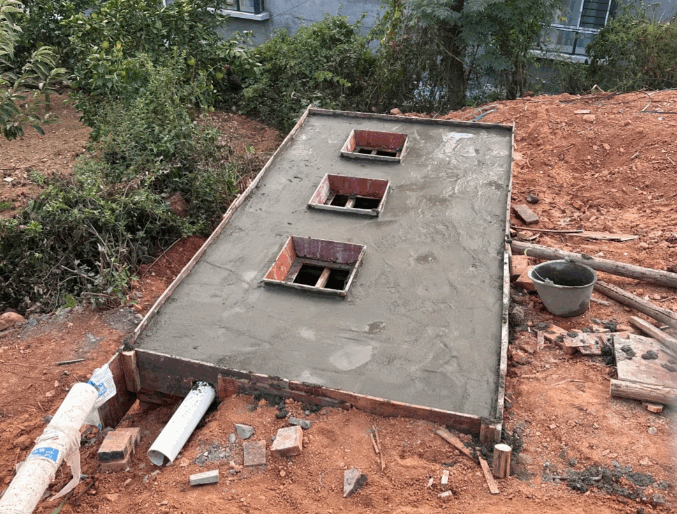
For ordinary geotextiles, pour concrete in time after laying and fixing. During pouring, avoid the vibrator directly contacting the geotextile to prevent damage; for concrete blankets, sprinkle water evenly for curing after laying. During the curing period, avoid personnel and vehicles rolling to ensure sufficient curing.
5. Post-maintenance
After the completion of concrete pouring, carry out moisture conservation according to the conventional concrete maintenance requirements, and the maintenance time is not less than 7 days; after the concrete blanket is cured, check the surface for cracks and damage, and repair defects in time.
Key Points for Selection of Concrete Geotextile
The core principle of selection is “scenario adaptation, performance matching, and economic rationality”, avoiding excessive pursuit of high performance leading to cost waste, or insufficient performance affecting project quality. The following are the core dimensions and practical suggestions for selection.
1. Core Dimensions of Selection
- Project Demand Matching: First, clarify the core functions. For example, if drainage and filtration are the main purposes, non-woven geotextiles are preferred; if reinforcement and protection are the main purposes, woven or composite geotextiles are preferred; concrete blankets are directly selected for emergency scenarios. At the same time, combined with the scene environment, such as high temperature and strong UV areas need to strengthen UV resistance, and seawater environment needs to select salt corrosion resistant materials.
- Mechanical Performance Requirements: Determine indicators such as tensile strength and puncture strength according to the engineering load. High-strength woven geotextiles are required for heavy-duty roads, high slopes and other scenarios; medium and low-strength non-woven geotextiles can be selected for ordinary subgrades and small-scale projects.
- Environmental Compatibility: In low-temperature areas, the frost resistance of materials should be considered to avoid brittle fracture in winter; in areas with high temperature and strong ultraviolet radiation (such as northwest arid areas), geotextiles with UV stabilizers should be selected; in acid-base soil environments, corrosion-resistant polyester materials should be selected.
- Construction Convenience: For complex terrain, knitted or non-woven geotextiles with good flexibility are preferred; for remote areas and scenarios lacking construction equipment, concrete blankets are preferred to reduce construction difficulty and equipment requirements.
2. Common Selection Misunderstandings
- Misunderstanding 1: Excessively pursuing high strength while ignoring air permeability. Some users think that the higher the strength, the better, and blindly select high-strength woven geotextiles for drainage scenarios, resulting in insufficient air permeability and poor drainage, leading to soil water accumulation and softening. The correct approach is to give priority to ensuring permeability in drainage scenarios, then match the corresponding strength.
- Misunderstanding 2: Ignoring environmental UV resistance. Outdoor projects use geotextiles without UV stabilizers, which are prone to aging and brittle fracture after short-term use, losing their functions. The correct approach is that outdoor projects must select products that meet UV resistance standards, and require manufacturers to provide aging test reports.
- Misunderstanding 3: Failure to match concrete adaptability. Selecting materials with poor adhesion to concrete leads to the separation of concrete facing and geotextile, affecting the integrity of the project. The correct approach is to prefer polyester geotextiles, whose adhesion to concrete is better than polypropylene materials.
- Misunderstanding 4: Taking price as the only selection criterion. Low-cost geotextiles are often produced with recycled materials, with significantly reduced strength and durability. Although they seem to save costs in the short term, they are prone to engineering hidden dangers in the long term, and the cost of secondary maintenance is higher.
3. Selection Examples for Different Scenarios
- Pavement Engineering (Anti-reflection Crack): Polyester filament non-woven geotextile, grammage 450g/m², tensile strength ≥10kN/m, permeability ≥1×10⁻²cm/s.
- Slope Reinforcement (Height 5-10 Meters): Polyester woven geotextile, grammage 300g/m², tensile strength ≥150kN/m, CBR puncture strength ≥2.5kN.
- Soft Soil Subgrade Enhancement: Composite geotextile (non-woven + woven), grammage 500g/m², tensile strength ≥200kN/m, excellent creep resistance.
- Emergency Road Rush Repair: Concrete blanket, thickness 8mm, strength ≥25MPa after curing, width 4 meters, easy for rapid laying.
Frequently Asked Questions
Q1: Can concrete geotextile be recycled?
Most concrete geotextiles (such as polypropylene and polyester materials) are recyclable polymer materials, but the recycling difficulty is relatively large. The main reasons are that they are easy to be contaminated with soil and concrete residues after engineering use, and their performance may decline due to aging. At present, the main recycling method in the industry is crushing and recycling, which is used to produce low-strength geotextile materials or building fillers. It is recommended to prefer degradable materials (such as polylactic acid-based geotextiles) to reduce environmental impact.
Q2: Is it necessary to lay geotextile under concrete?
Not all concrete projects must lay geotextiles, which needs to be judged according to the scenario: for scenarios requiring separation, reinforcement and drainage such as road subgrades, soft soil foundations and slope protection, laying geotextiles can significantly improve project quality and service life, and it is recommended to lay them compulsorily; for small concrete components (such as flower beds, sidewalks) and thin-layer concrete pouring on hard bases, if the base is flat and stable, laying may not be needed. Specifically, it is necessary to refer to the engineering design drawings and relevant specification requirements.
Q3: How to test the quality of concrete geotextile?
Quality inspection is divided into on-site simple inspection and laboratory accurate inspection: on-site, preliminary judgment can be made by visual inspection of appearance (no damage, uniform color), hand measurement of thickness (uniform), and simple stretching (no obvious fracture); accurate inspection needs to be sent to a third-party laboratory. According to standards such as GB/T 17638 and GB/T 17640, test core indicators such as unit area mass, tensile strength, permeability, CBR puncture strength, and UV aging performance to ensure they meet engineering requirements.
Q4: What is the service life of concrete geotextile?
The service life mainly depends on the material, environment and application scenario, generally 5-20 years: the service life of polypropylene materials in ordinary environments is 5-10 years, and that of polyester materials is 10-15 years; products with UV stabilizers can extend the outdoor service life to 15-20 years; in harsh environments such as seawater and acid-base soil, the service life will be shortened by 30%-50%. It is recommended to select products with corresponding durability according to the engineering design life. For important projects, regular performance testing should be carried out, and aging materials should be replaced in time.
Conclusion
In concrete engineering, the cost of geotextile only accounts for a very small part of the total cost, but its impact on the long-term performance and life of the project is decisive. It is a typical investment following the engineering wisdom of “prevention is better than repair”.
Reference Sources
1、ASTM D4354-2021Standard Test Method for Tensile Strength and Elongation of Geotextiles by the Wide-Width Strip Method
- Issuing Authority: American Society for Testing and Materials (ASTM International)
- Scope of Application: Test method for wide-width strip tensile strength and elongation of geotextiles, corresponding to the professional expression of “mechanical performance parameters” in the English content.
2、ASTM D1777-2019Standard Test Method for Thickness of Geotextiles
- Issuing Authority: ASTM International
- Scope of Application: Standard for testing the thickness of geotextiles, supporting the accuracy of thickness indicators in the “specifications and parameters” section.
3、ISO 10318:2018Geotextiles and geotextile-related products — Determination of tensile properties
- Issuing Authority: International Organization for Standardization (ISO)
- Scope of Application: International test standard for tensile properties of geotextiles, suitable for English citations in the “product quality inspection” section of foreign trade businesses.