When you need to construct a relatively high retaining wall, one on soft soil foundations, or one that prioritizes better cost-effectiveness, traditional gravity retaining walls may fall short. In such cases, geogrid retaining walls—a modern, efficient, and reliable solution—come into play. This article will provide a comprehensive breakdown of what geogrid retaining walls are, their working principles, advantages, applicable scenarios, and key design and construction points.
What is a Geogrid Retaining Wall?
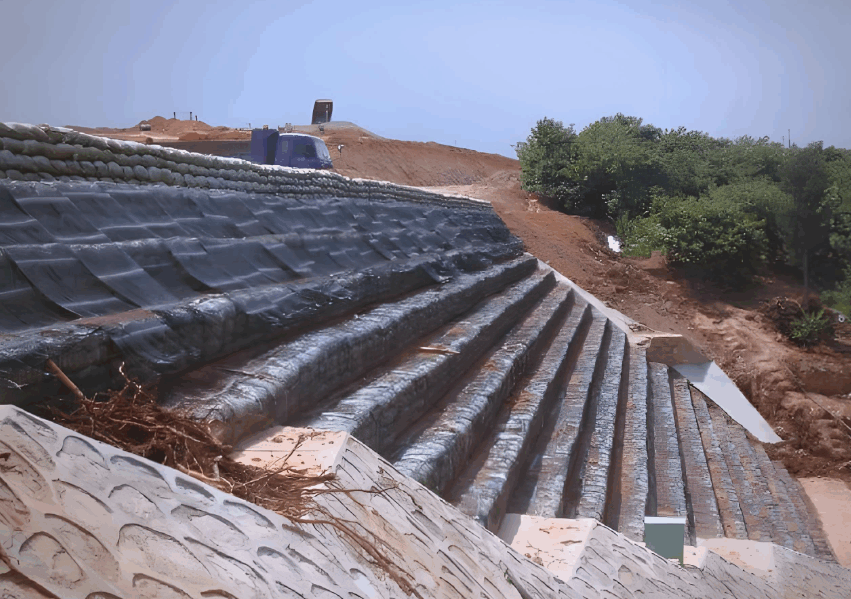
Simply put, a geogrid retaining wall is a new type of retaining structure. It uses geosynthetic materials (geogrids) as reinforcement and interacts with backfill soil to form a composite gravity-type structure.
Its three core components are as follows:
- Wall Face: Located at the front, it serves both decorative and soil-retaining purposes. Common types include modular retaining wall blocks, precast concrete panels, and gabions.
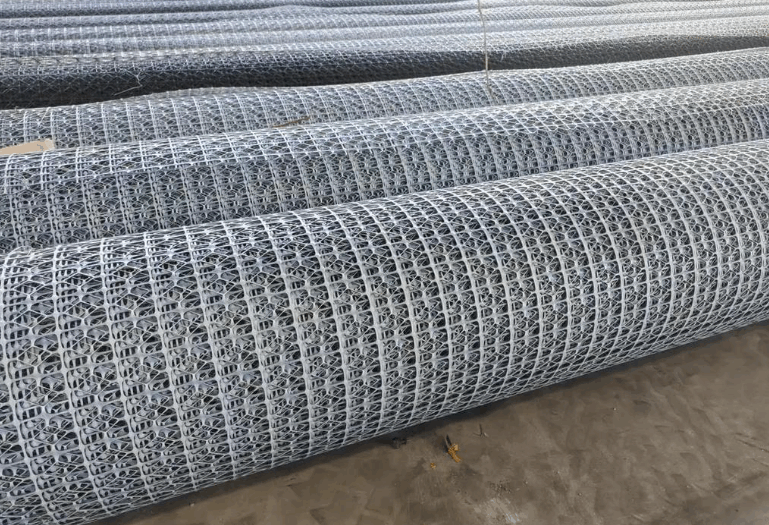
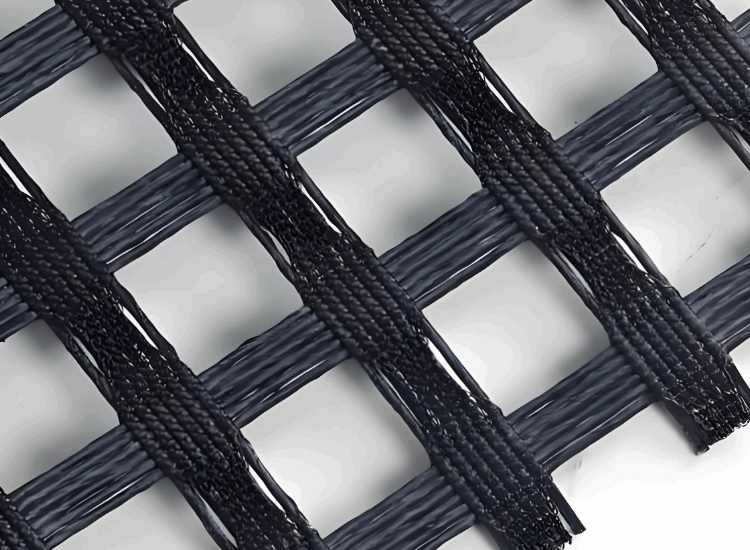
- Reinforcement: Referring to geogrids, they act as the “skeleton” of the system. Buried in the soil, they provide tensile strength.
- Backfill Soil: Selected granular fill material. It forms a stable integral structure with geogrids through friction and interlocking.
When Should Geogrid Retaining Walls Be Used?
When choosing a retaining wall solution, geogrid-reinforced schemes offer significant advantages in the following scenarios:
- Need for high retaining walls: When the wall height exceeds 1.5 to 2 meters, traditional gravity retaining walls become overly bulky and uneconomical. In contrast, geosynthetic-reinforced soil structures can easily handle soil-retaining needs for walls 4 meters, 6 meters, or even higher.
- Poor foundation conditions: Geosynthetic-reinforced soil structures are flexible. They have much lower requirements for foundation bearing capacity compared to rigid concrete retaining walls and can better adapt to uneven settlement.
- Pursuit of better cost-effectiveness: Especially for high walls, geosynthetic-reinforced soil structures save large amounts of concrete and stone, significantly reducing project costs.
- Need to save land: They can be built steeper, even vertically, to maximize land savings for construction.
- Tight construction schedules: Their components have a high degree of standardization, enabling fast construction and effectively shortening the construction period.
If you are purchasing geogrid retaining walls, you can contact us!
How Geogrid Works in Retaining Walls
The core principle of geogrid retaining walls is the concept of “reinforced soil,” which can be vividly understood as “implanting a skeleton” into the soil.
- Withstanding tensile force: Under its own weight and external loads, the soil behind the retaining wall generates lateral earth pressure, trying to push the wall face outward. Essentially, this pushing force causes tensile deformation inside the soil.
- Friction and interlocking: Geogrids have an open grid structure. When backfill soil covers them, soil particles become embedded in the grid holes, creating strong friction and interlocking forces.
- Force conversion and transmission: Through this friction and interlocking, the force that tends to move the soil outward is converted into tensile stress acting on the geogrids. Relying on their excellent tensile performance, geogrids bear this tensile force, just like countless “hands” firmly holding back the soil that is about to slide.
- Formation of the anchorage zone: The other end of the geogrids extends into the distant stable soil. It transmits and distributes the borne tensile force to a wider area, thereby forming an internal anchorage zone. Ultimately, the “reinforced soil” as a whole remains stable as a composite gravity-type structure.
Main Types of Geogrid Retaining Wall
Classification by Wall Face System
- Modular retaining wall blocks: The most popular type. They have an attractive appearance and are easy to install. Geogrids are connected through mortises or holes on the blocks.
- Precast concrete panels: With a flat and simple surface, they are often used in municipal engineering and large-scale projects.
- Gabion wall faces: They have good water permeability, are eco-friendly, and integrate well with the natural environment.
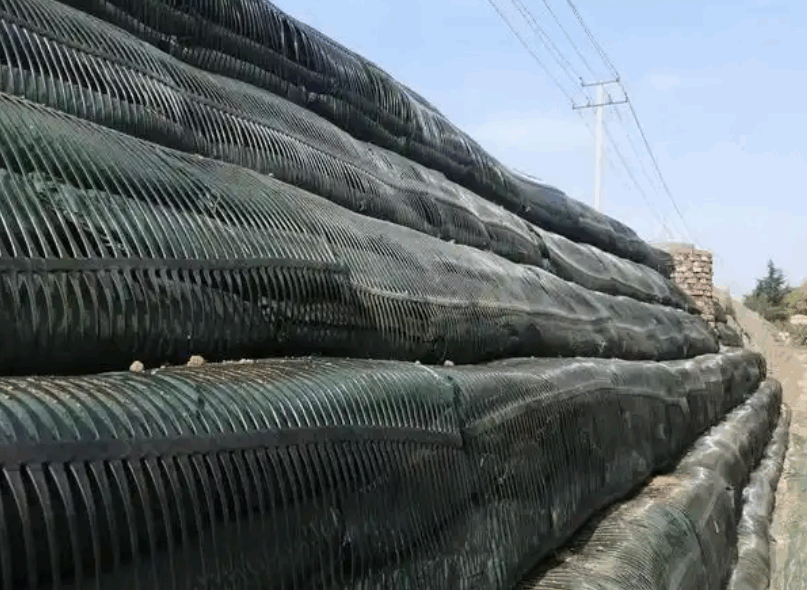
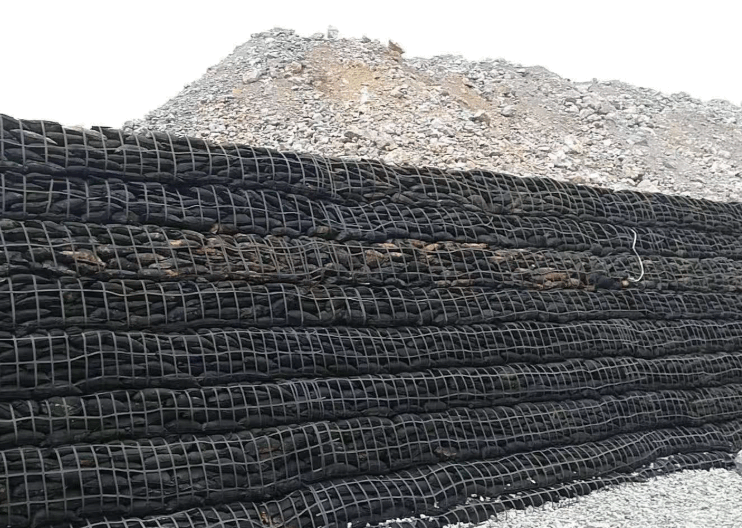
- Wrapped wall faces: Geogrids are directly folded back to enclose the backfill soil and form the wall face. This type has the lowest cost but requires protection for the wall face.
Classification by Geogrid Type
- Uniaxial geogrids: They have high strength mainly in one direction (longitudinal direction) and are specially designed for reinforced retaining walls and steep slopes.
- Biaxial geogrids: They have strength in two perpendicular directions and are more suitable for soft foundation reinforcement and load-bearing platforms.
Installation Guide for Geogrid Retaining Walls
- Foundation Preparation: Excavate the foundation trench, level the ground, and compact the foundation. Ensure the foundation is solid and level.
- Install the First Course of Wall Face: Place the first layer of wall face units accurately and ensure they are level and properly positioned.
- Lay and Connect Geogrids: This is the most critical step.
- How to connect? The connection method depends on the type of wall face:
- Modular blocks: Use dedicated polymer connecting rods or friction pins. Pass them through the holes on the blocks to fix the ends of the geogrids behind the blocks.
- Concrete panels: Use steel or polymer connectors pre-embedded in the panels. Connect them to the geogrids via bolts.
- General method: For some systems, the geogrids can be folded back and fixed behind the wall face using U-shaped nails or connecting rods.
- Key points: The geogrids must be tensioned and firmly connected to the wall face. Strictly follow the design plan and product specifications.
- How to connect? The connection method depends on the type of wall face:
- Backfilling and Compaction:
- Perform layered backfilling on the laid geogrids. The thickness of each soil layer is usually 20-30 centimeters.
- Use small compaction equipment (such as plate compactors) for careful compaction. The compaction degree must meet the design requirements (usually >95%).
- Prohibition: Do not allow large equipment to drive directly on the exposed geogrids to avoid damaging them.
- Repeat the Process: Repeat steps 2-4, installing the wall face, connecting the geogrids, backfilling, and compacting layer by layer until reaching the designed height.
- Wall Top and Drainage: Complete the final construction, properly finish the top of the wall, and ensure the drainage system behind the wall face (such as gravel drainage layers and drainage pipes) is unobstructed.
Frequently Asked Questions (FAQ)
Conclusion
With its excellent stability, significant cost-effectiveness, and wide adaptability, the geogrid retaining wall has become an indispensable retaining solution in modern civil engineering. Understanding the working principle of its “reinforced soil” concept is the first step toward proper application, while rigorous professional design and standardized on-site construction serve as the cornerstone for ensuring its long-term safety and reliability. When your project faces challenges, the geogrid retaining wall is undoubtedly a trustworthy and robust option.
If you are looking for a reliable Geogrid Retaining Wall supplier, please feel free to contact us.
About Us: Lianjie
Lianjie is a one-stop supplier of geosynthetics with 15 years of professional experience and multiple national certifications. We provide the most professional Geogrid Retaining Walls solutions!
Reference Sources
- GB/T 50290-2014 “Technical Code for Application of Geosynthetics”
- Relevance: This is the fundamental standard for geosynthetics (including geogrids) in China. The article’s content regarding geogrid materials, functions, design principles, and construction requirements is aligned with this code.
- JTG D30-2015 “Specifications for Design of Highway Subgrades”
- Relevance: It contains a dedicated chapter on “Reinforced Soil Subgrades,” providing detailed regulations for the design calculations, stability analysis, and material requirements of reinforced soil structures, including retaining walls. Concepts like internal/external stability analysis in the article originate from such specifications.
- GB 50330-2013 “Technical Code for Building Slope Engineering”
- Relevance: While focused on slopes, the principles of soil mechanics and stability analysis are highly applicable to retaining walls, providing theoretical support for understanding the reinforcement mechanism of geogrids.