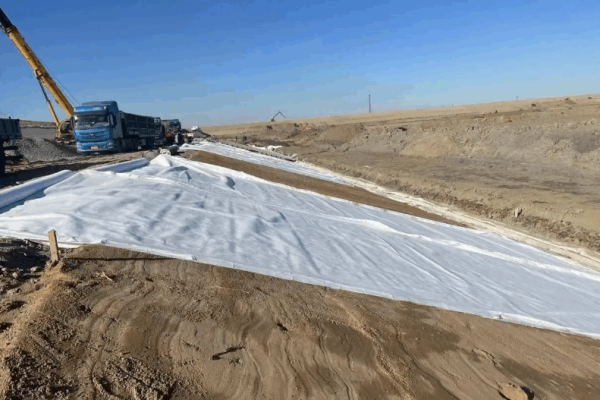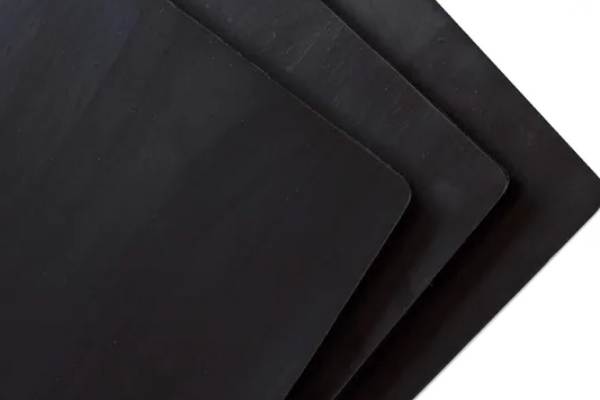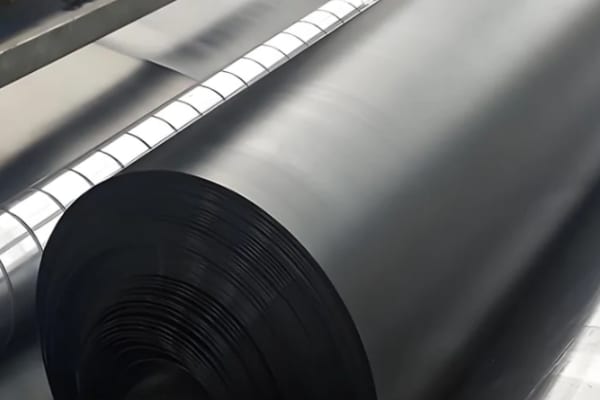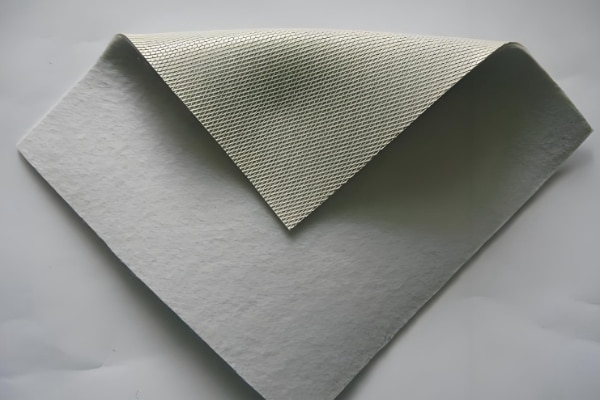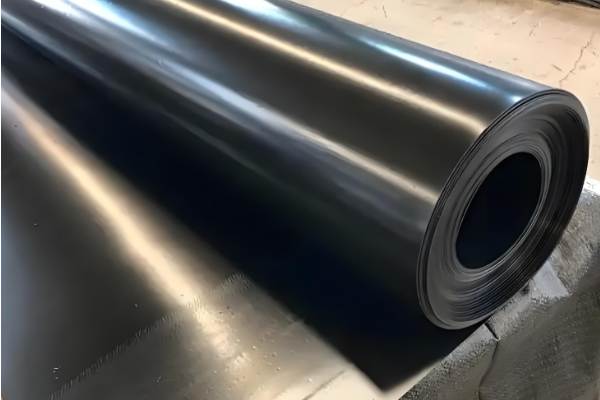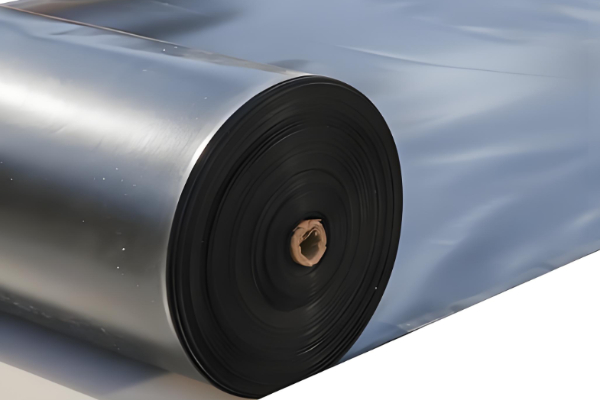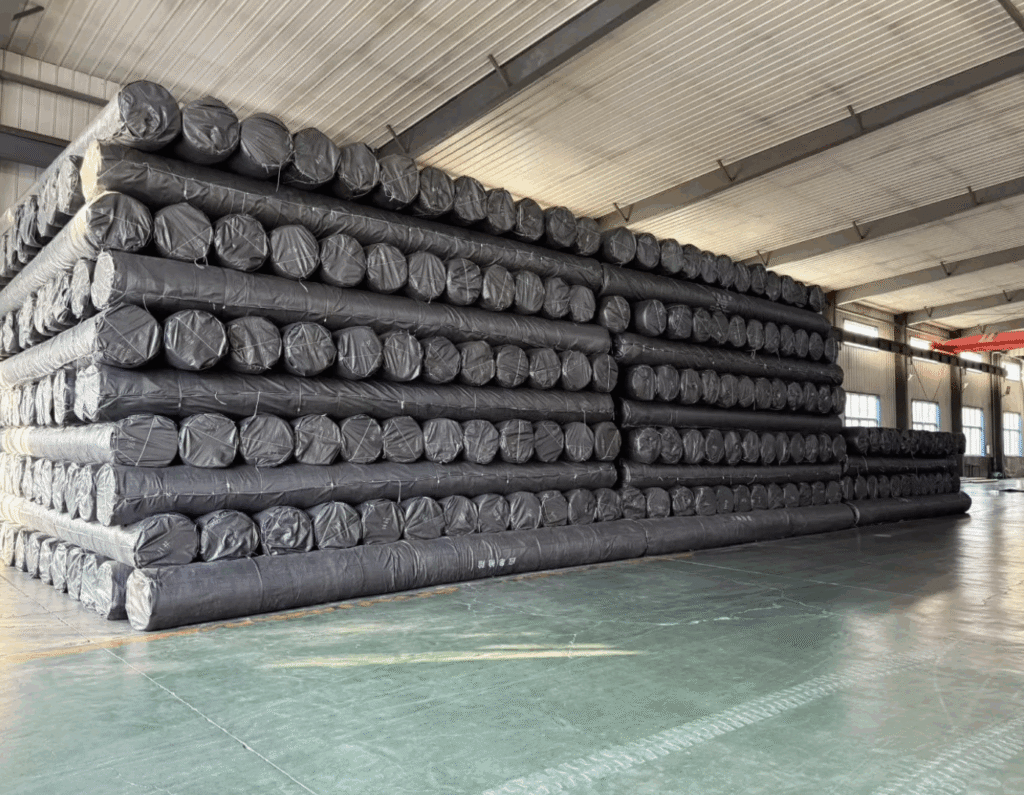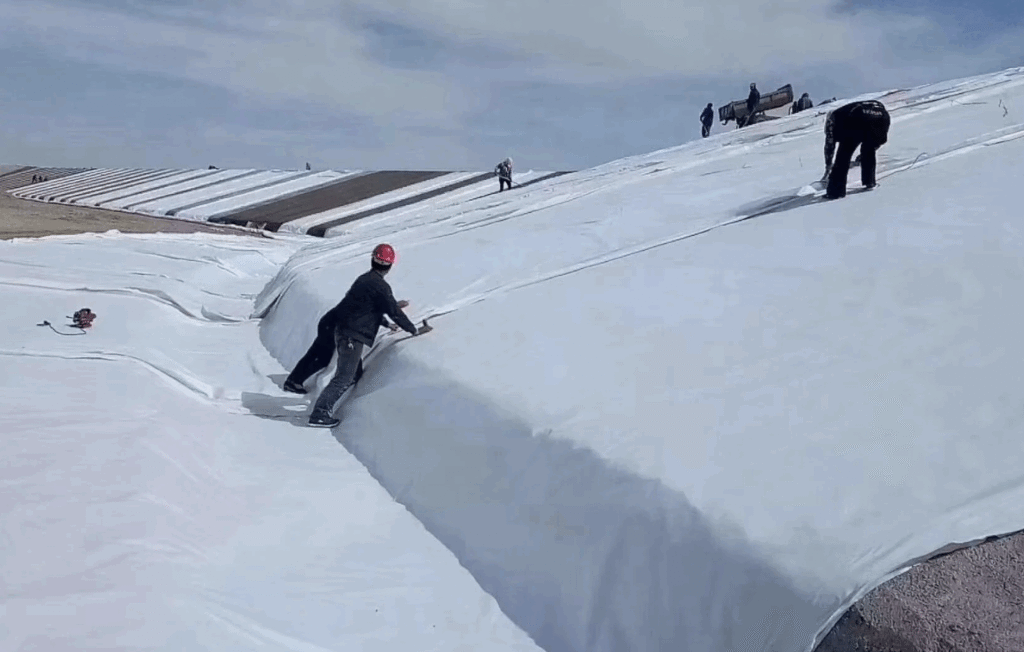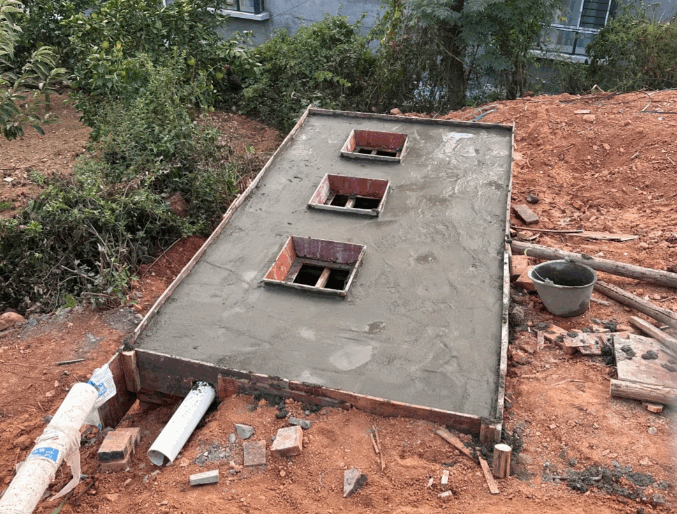
What is a geomembrane liner? What is its price range and application fields? How to install it? This article will systematically introduce geomembrane liners for you.
What is a Geomembrane Liner?
A geomembrane liner is an indispensable synthetic anti-seepage material in modern engineering construction. Made from polymers such as High-Density Polyethylene (HDPE) and Polyvinyl Chloride (PVC), it forms an almost impermeable barrier. Playing a crucial role in preventing pollutant leakage and protecting groundwater resources, it is widely used in dozens of fields including sanitary landfills, artificial lakes, mine tailings ponds, and agricultural water storage tanks.
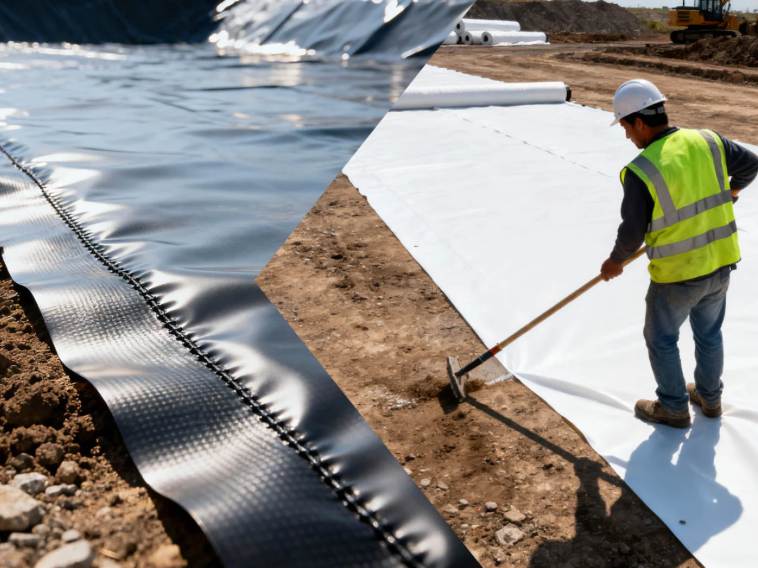
Types of Geomembrane Liners
Choosing the right material is key to project success. Below is a detailed analysis of four mainstream geomembrane types:
1. HDPE (High-Density Polyethylene) Geomembrane Liner
The most widely used and cost-effective type. Its greatest advantages lie in excellent chemical resistance, outstanding UV resistance, and high strength. It is also the preferred material for harsh environments such as sanitary landfills, chemical wastewater ponds, and evaporation ponds. The main disadvantage is relatively poor flexibility, making it sensitive to uneven foundation settlement. Key selection factors include thickness (1.0-3.0mm is commonly used in engineering), density, and carbon black content (related to anti-aging performance).
2. LLDPE (Linear Low-Density Polyethylene) Geomembrane Liner
Much softer than HDPE, LLDPE geomembrane features extremely high elongation and stress crack resistance. It is ideal for landfill final covers, irregular terrain, or tanks prone to settlement. While its chemical resistance and UV resistance are slightly inferior to HDPE, it is irreplaceable in applications requiring high flexibility.
3. PVC (Polyvinyl Chloride) Geomembrane Liner
PVC membranes are highly flexible and easy to weld and splice on-site, enabling convenient construction. They are commonly used in artificial water features, irrigation canals, and temporary anti-seepage projects. Note that some PVC membranes may have plasticizer migration issues, and their flexibility may decrease under long-term exposure. Therefore, careful evaluation is required for permanent key projects.
4. EPDM (Ethylene Propylene Diene Monomer) Geomembrane Liner
A synthetic rubber membrane with excellent elasticity, low-temperature resistance, and anti-aging performance. It is particularly suitable for green roof waterproofing, constructed wetlands, and landscape water bodies with extremely complex shapes. However, its puncture resistance is relatively weak, and it usually has the highest material cost.
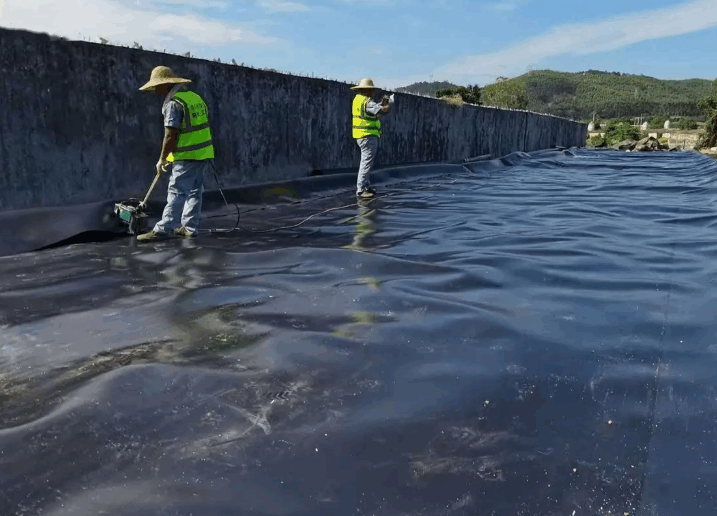
Geomembrane Liner Prices
Core Factors Affecting Prices
- Material Type & Thickness: The largest cost variable. HDPE generally has the most competitive unit price, while EPDM is the highest. Costs increase significantly with each 0.1mm increase in thickness.
- Project Scale & Shape: Larger areas result in lower unit costs; more complex shapes with more edges and corners lead to higher losses, increased welding workload, and thus higher costs.
- Product Quality Standards: Products meeting GRI (Geosynthetic Research Institute) standards or national high-quality standards are priced higher than non-standard products.
- Transportation & Geographic Factors: The distance from the production site to the construction site directly affects logistics costs.
- Installation Conditions & Labor: Terrain, climate, and local labor costs have a significant impact on the final total price.
Current Market Reference Price Range (Material Cost Only)
- HDPE Geomembrane (1.0mm – 2.0mm): Approximately 12 – 30 RMB per square meter.
- LLDPE Geomembrane (0.75mm – 1.5mm): Approximately 15 – 35 RMB per square meter.
- PVC Geomembrane (0.5mm – 1.2mm): Approximately 10 – 25 RMB per square meter.
- EPDM Geomembrane (0.75mm – 1.1mm): Approximately 25 – 50 RMB per square meter.
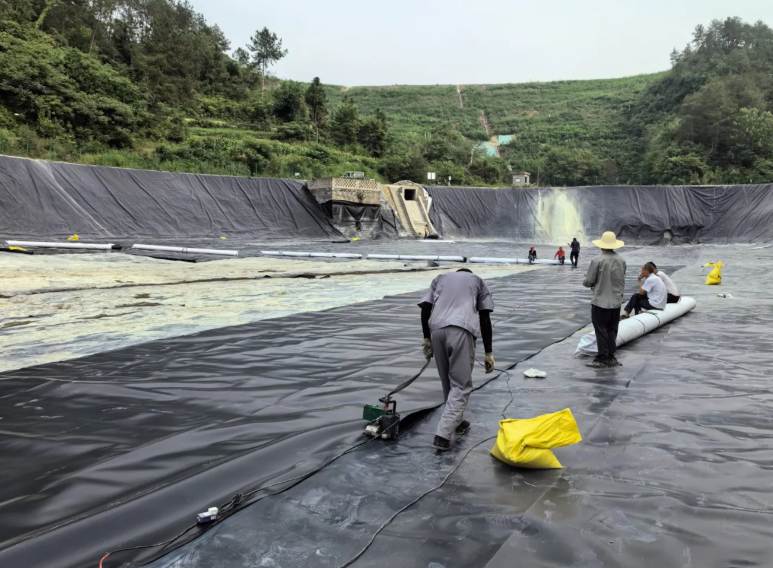
What is the Difference Between Geomembranes and Geotextiles?
Many users easily confuse these two “geo” materials, but their core functions and application scenarios are completely opposite. Understanding this difference is the first step in correct material selection.
The core function of geomembranes is anti-seepage and isolation. Acting like a large “plastic sheet”, they aim to completely block the passage of liquids or gases. Made from dense, non-porous materials such as polyethylene (PE) and polyvinyl chloride (PVC), they are impermeable by design.
In contrast, geotextiles (often called landscape fabrics) have core functions of water permeability, filtration, reinforcement, and drainage. Similar to “engineering non-woven fabrics”, they are composed of polyester or polypropylene fibers with numerous pores. They allow liquids to pass smoothly while retaining soil particles and providing reinforcement.
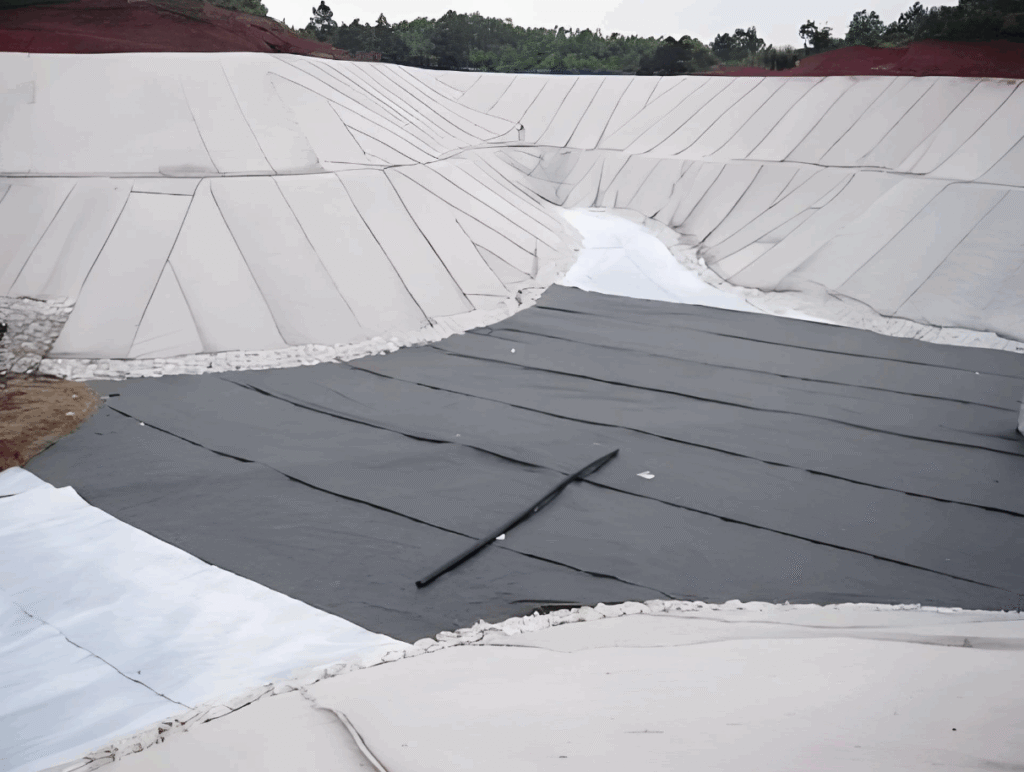
A classic analogy: At the bottom of a sanitary landfill, you first lay geotextiles to protect the foundation and drain water, then install geomembranes as the primary anti-seepage layer, and finally cover the membrane with another layer of geotextiles to prevent punctures from backfilled gravel. The two complement each other but serve entirely different purposes.
Advantages of Geomembrane Liners
- Unmatched Anti-Seepage Performance: With an extremely low permeability coefficient, their anti-seepage effect is over one million times that of compacted clay, offering unparalleled reliability.
- Excellent Chemical & Environmental Resistance: Represented by HDPE, they can resist erosion from most acids, alkalis, salts, and organic solvents, with a design life of over 50 years.
- High Strength & Durability: Featuring superior puncture resistance and UV oxidation resistance, they can adapt to harsh environments like landfills.
- Convenient Construction & Short Cycle: Factory-produced and field-installed via welding, construction is much faster than traditional clay layer methods and less affected by weather.
- Cost-Effective Whole-Life Cycle: Although the initial investment may be higher, they save land resources, reduce long-term maintenance issues, and offer better overall cost efficiency.
- Strong Terrain Adaptability: Can be arbitrarily spliced by welding to perfectly cover foundations with complex shapes.
- Controllable Quality & Easy Inspection: All welds can be tested using non-destructive methods (e.g., air pressure testing, vacuum testing) to ensure overall system integrity.
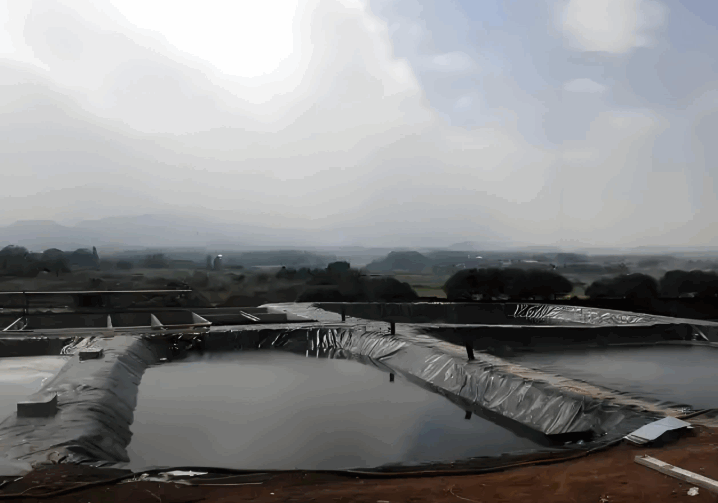
Application Field of Geomembrane Liner
Environmental Engineering
- Sanitary Landfills: HDPE is preferred. A double-liner system with geotextile protection layers is required. Thickness is usually no less than 1.5mm, with strict welding quality requirements.
- Mine Tailings Ponds & Heap Leach Ponds: HDPE or reinforced PVC is preferred. Key considerations include resistance to mineral chemical corrosion and uneven settlement.
Water Conservancy & Water Features
- Artificial Lakes, Reservoirs, & River Linings: LLDPE, PVC, or EPDM are optional. Material flexibility, landscape coordination, and freeze-thaw resistance are key factors here.
- Sewage Treatment Anaerobic/Aerobic Ponds: HDPE is preferred. Must withstand microbial environments and potential chemical additives.
Agriculture & Aquaculture
- Aquaculture Ponds & Irrigation Reservoirs: LLDPE or PVC are optional. Materials must be safe for aquatic organisms while balancing cost control.
Other Fields
- Green Roof Waterproofing: EPDM is preferred for its exceptional elasticity and root penetration resistance.
- Temporary Emergency Cofferdams: PVC or lightweight HDPE are optional for quick deployment and recovery.
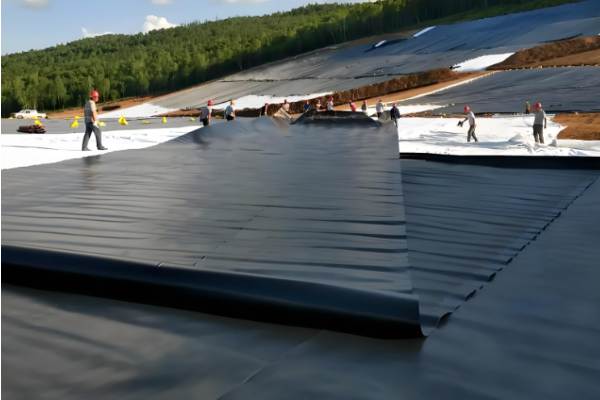
How to Purchase Reliable Geomembrane Liners?
- Verify Manufacturer Qualifications: Request proof of raw material resin sources, third-party authoritative test reports (covering key indicators such as tensile strength, puncture resistance, and UV resistance), and case studies of similar projects.
- Sample Independent Testing: For major projects, send samples to qualified laboratories for verification testing.
- Provide Complete Inquiry Information: Inform suppliers of “project type, material type, thickness, total area, and construction environment” to obtain accurate quotes.
- Beware of Abnormally Low Prices: Products far below market prices may use excessive recycled materials, whose long-term performance and service life cannot be guaranteed, posing significant engineering risks.
Geomembrane Liner Installation Guide
Proper installation is critical to maximizing geomembrane performance. Non-standard construction can directly lead to system failure.
Pre-Installation Preparation: Foundation Treatment
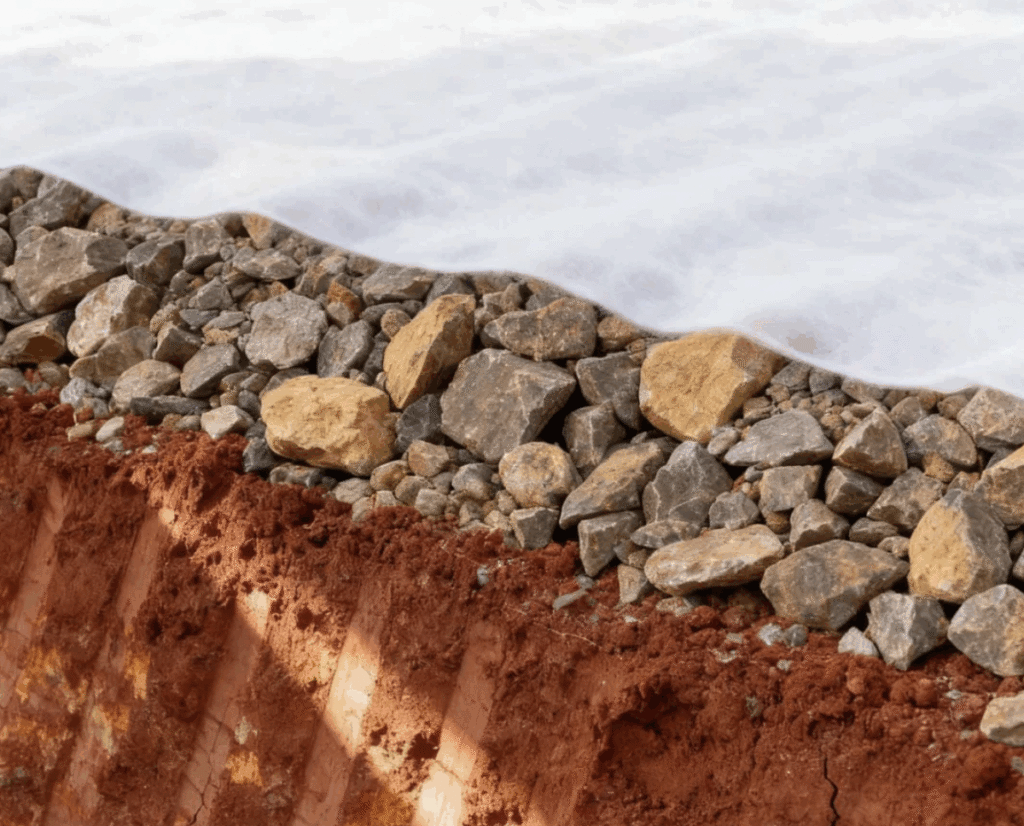
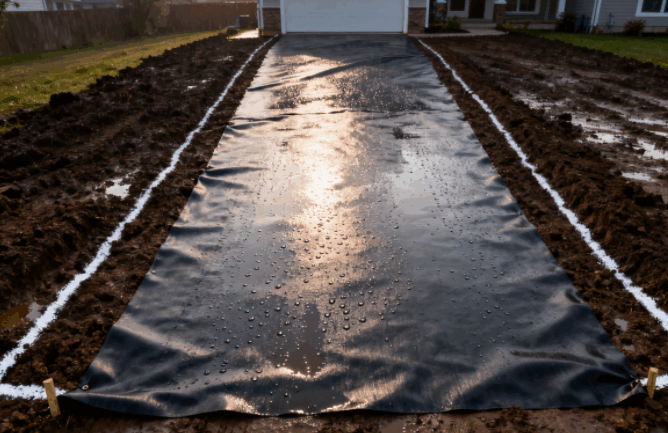
The foundation must be flat and compact. Remove all sharp stones, tree roots, and other hard objects, then compact the soil (usually requiring a compaction degree of no less than 90%). For areas with high groundwater levels, an under-membrane drainage and ventilation system must be installed to prevent “air bubbles” or “water bubbles”.
Core Installation Steps
- Unfolding & Placement: Deploy according to design drawings. Use sandbags or other temporary ballast in windy conditions. Reserve a 10-15cm welding overlap between adjacent membrane sheets.
- Welding (Core Process):
- Hot Wedge Dual-Track Welding: Most commonly used, producing two parallel weld seams with a sealed cavity in between for subsequent air pressure testing.
- Extrusion Welding: Used for repairs, complex areas, and T-joints. Temperature, speed, and pressure parameters must be precisely adjusted based on on-site conditions.
- Non-Destructive Testing:
- Air Pressure Testing: Applicable to dual-track welds; pressurize the cavity and monitor pressure stability.
- Vacuum Box Testing: Applicable to extrusion welds; apply soapy water to the weld, cover with a vacuum box, and check for bubbles.
- Repair: For any detected defects, use a homogeneous material patch larger than the defect edge by 15cm and repair via extrusion welding.
Recommended Reading: Underwater Repairing of Leakage in HDPE Geomembrane Pond
Frequently Asked Questions
Q1: What are the advantages of geomembrane liners compared to traditional compacted clay liners?
A1: Geomembranes offer far superior anti-seepage performance; faster construction with more uniform quality; land savings (thin thickness); and resistance to freeze-thaw cycles. While clay liners have self-healing properties and lower initial material costs, they suffer significant disadvantages in long-term seepage reliability and land occupation.
Q2: What is the actual service life of geomembranes?
A2: With reasonable design, standardized installation, and proper protection (e.g., soil covering), high-quality HDPE geomembranes have an expected service life of over 50 years. For long-term UV exposure, select UV-resistant formulations or provide covering protection.
Q3: How to repair geomembranes if damaged during use?
A3: Small-scale damage can be repaired using homogeneous material patches and extrusion welding. Strict vacuum testing must be performed after repair. Underwater repairs require professional divers and equipment.
Choosing a geomembrane liner is a comprehensive technical decision. If you need customized geomembrane liner solutions and accurate quotes for your specific project, please feel free to consult us at any time. Contact Us >>
References:
- GRI (Geosynthetic Research Institute) Standards: Notably GRI-GM13 (for HDPE Geomembranes) and GRI-GM17 (for LLDPE Geomembranes). These are U.S.-based but globally recognized standards for testing and material specifications. Descriptions of material properties (e.g., tensile strength, puncture resistance, UV resistance via carbon black content) are primarily based on these standards.
- ASTM International: Numerous standard test methods for geosynthetics, such as:
- ASTM D638 / D6693: Tensile Properties.
- ASTM D1004: Tear Resistance.
- ASTM D4437 / D4355: Weathering (UV) Resistance.
- ASTM D7240: Peel Adhesion of Seams.
- ASTM D792: Density.