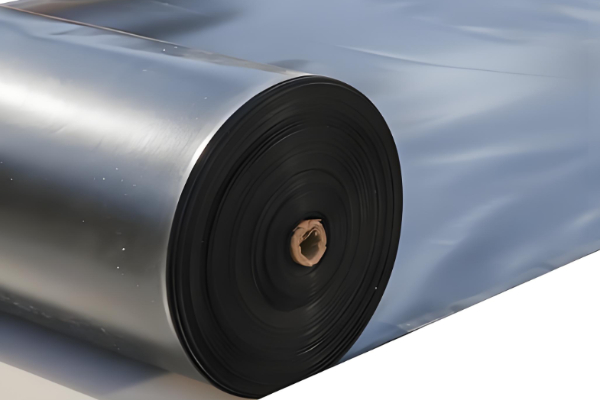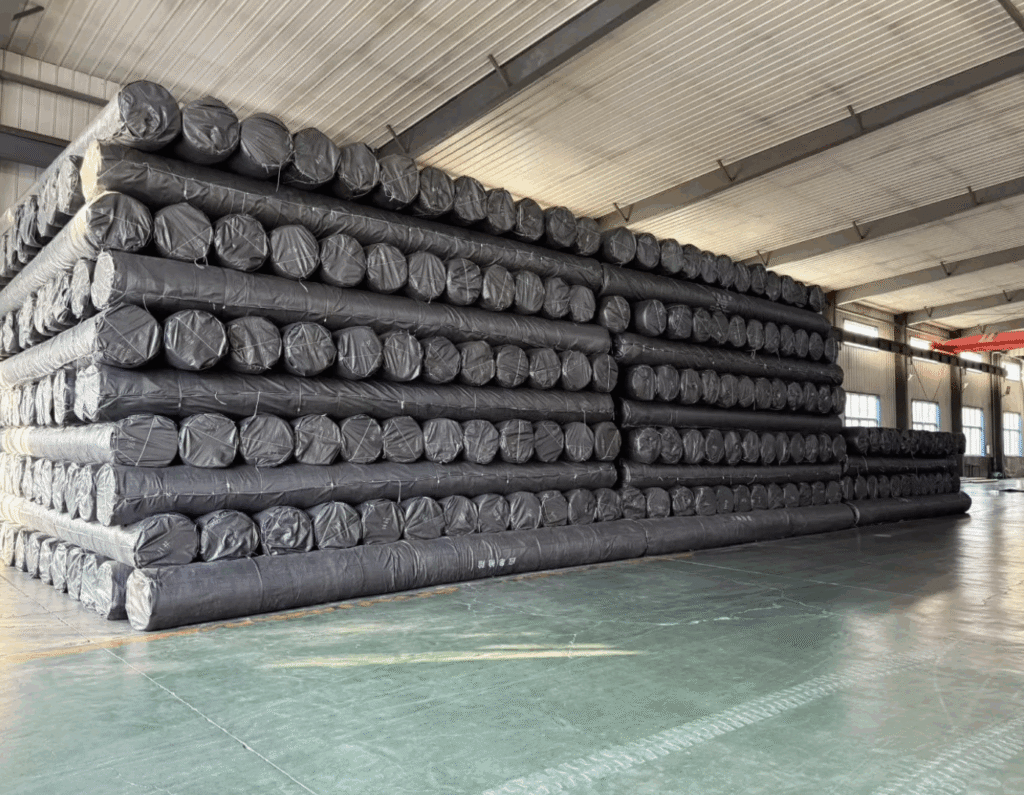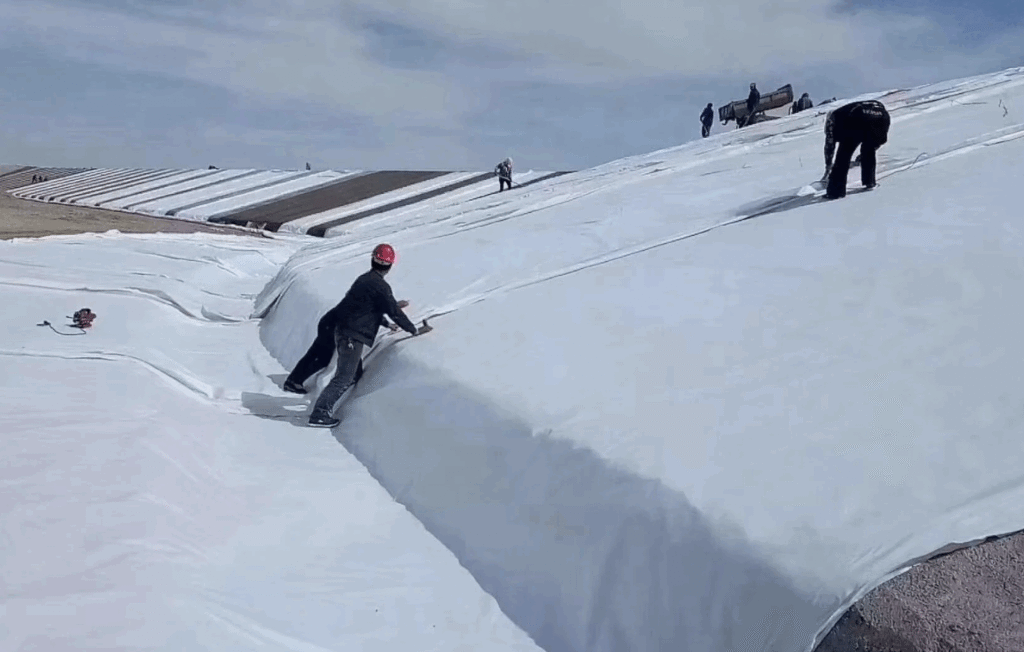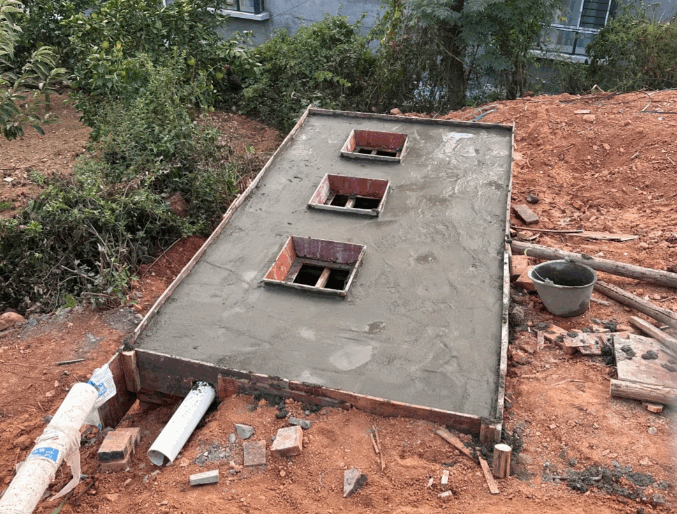

On construction sites, mining operations, riverbank reinforcement projects, or waste treatment facilities, we often face a common core challenge: how to effectively contain and control loose materials? Geotextile fabric, as a high-performance engineering material, is the key flexible solution to these “containment” problems.This article will systematically analyze the applications of geotextiles in containment engineering, providing a complete guide from scientific selection to professional installation, helping you achieve your project goals in the most efficient and economical way.
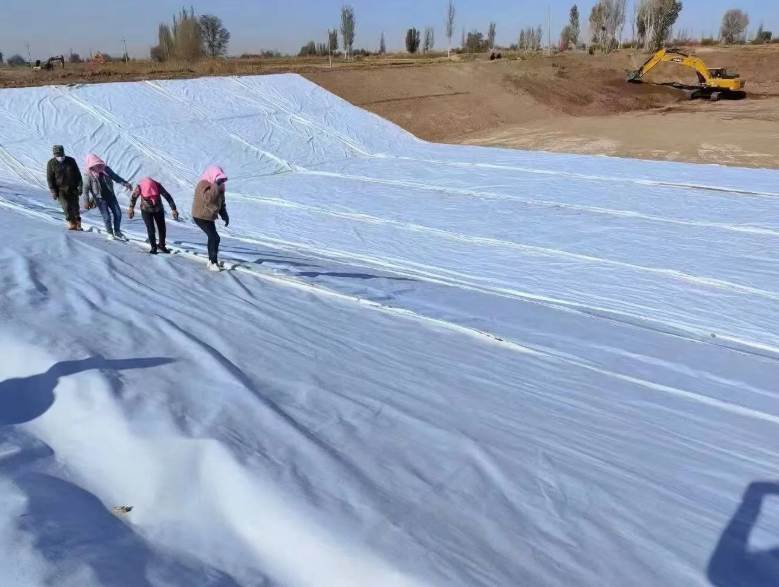
Geotextile Containment Application Scenarios
The containment function of geotextiles is mainly reflected in the following aspects. Understanding the scenario is the first step to correct selection:
1、Silt and Sediment Control (Most Common Need)
- Application Form: Serves as the core filtering liner for silt fences.
- Working Principle: Installed around construction sites, when surface runoff laden with sediment passes through, non-woven geotextile allows water to pass through slowly while effectively trapping suspended soil particles, preventing downstream water pollution and achieving water-sediment separation.
2、Temporary/Permanent Containment of Soil, Aggregate, and Fill
- Application Form: Forms vertical or inclined flexible retaining walls.
- Working Principle: High-strength woven geotextile is used to contain piled materials like sand, soil, and gravel, preventing collapse or spillage. In temporary road subgrades, it contains the gravel layer, preventing it from sinking into soft subsoil, serving the dual purpose of separation and reinforcement.
- Recommended Reading:Geotextile Fabric Retaining Wall:Principle, Selection and Installation
3、Waste Isolation and Liner System Protection
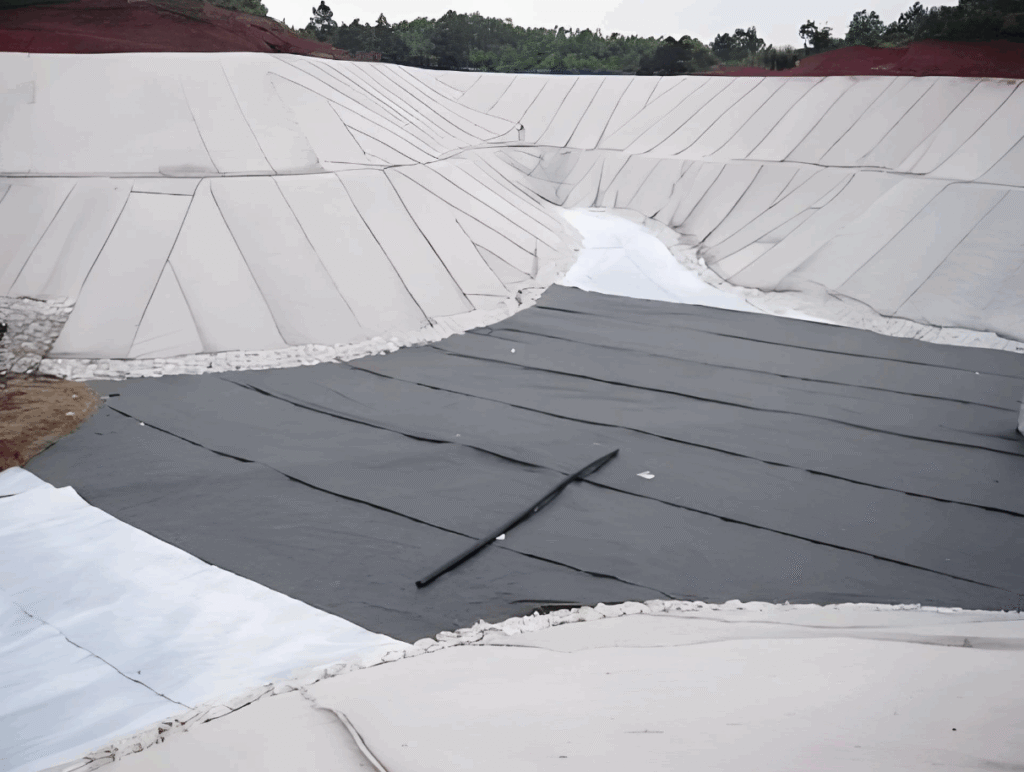
- Application Form: A critical protective layer in landfills, tailings ponds, and artificial lakes.
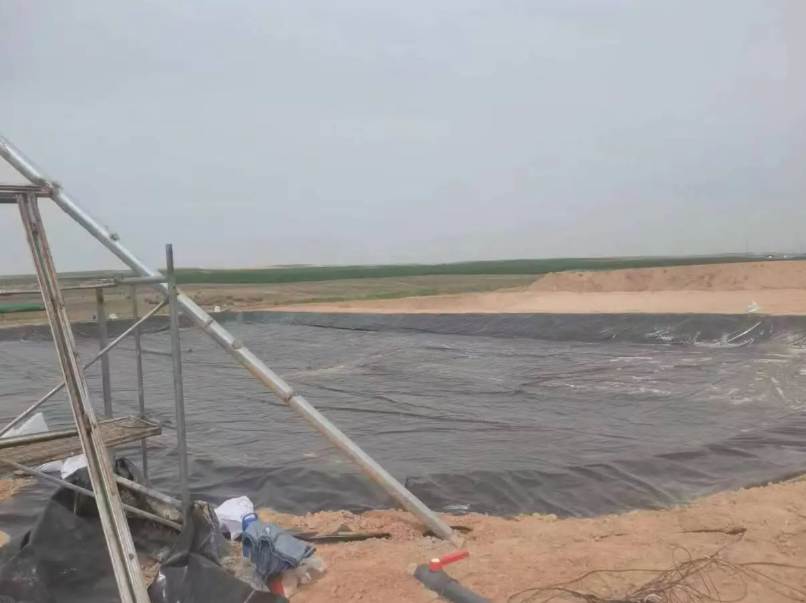
- Working Principle: Installed above or below the impermeable liner (HDPE geomembrane). When placed above, it prevents backfill gravel or waste from puncturing the primary liner; when placed below, it evenly distributes stress and provides auxiliary drainage, acting as the buffer guardian of the containment system.
4、Erosion Control and Slope Stabilization
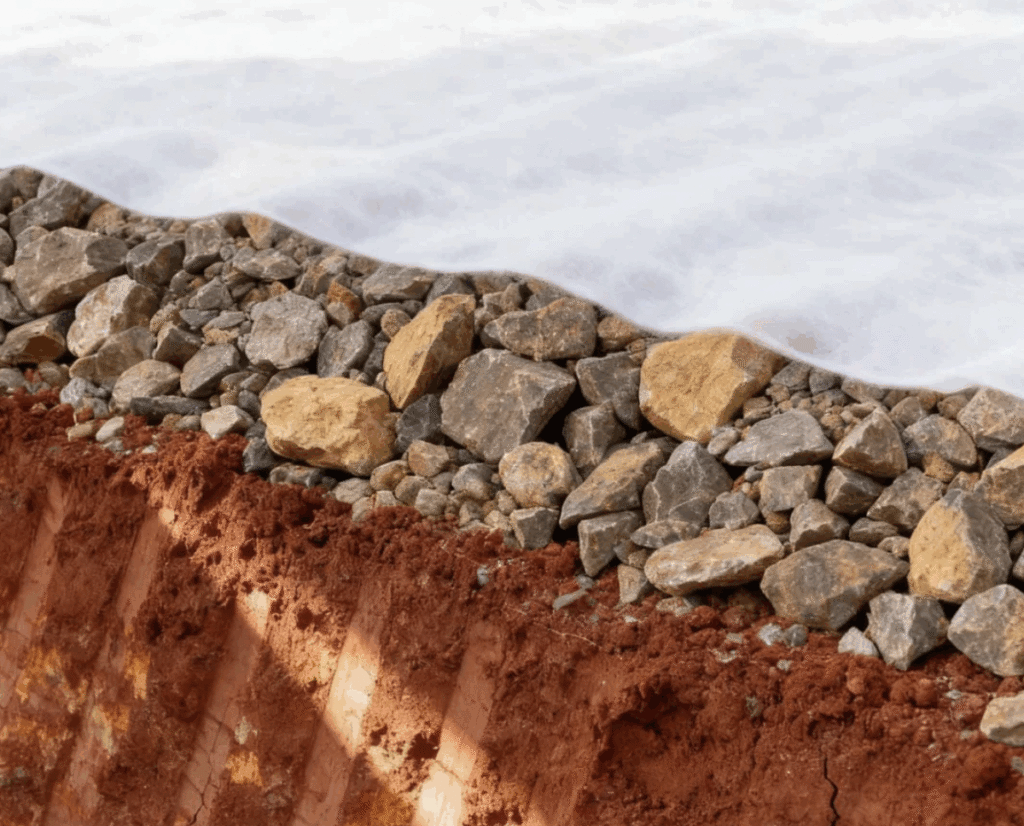
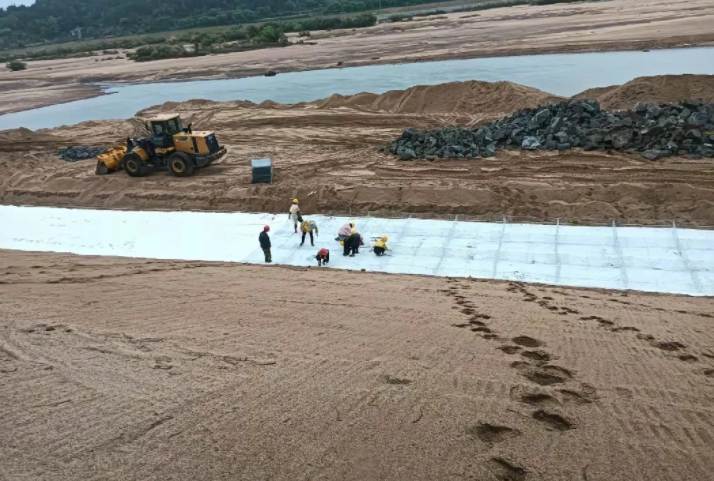
- Application Form: Used along riverbanks and slopes in conjunction with vegetation and rock.
- Working Principle: Laid on the soil surface to prevent topsoil loss from rainwater scour, providing a temporarily stable base for vegetation growth. This is a form of active protection that contains soil particles and prevents displacement.
- Recommended Reading:What is the Best Geotextile Fabric for Erosion Control?
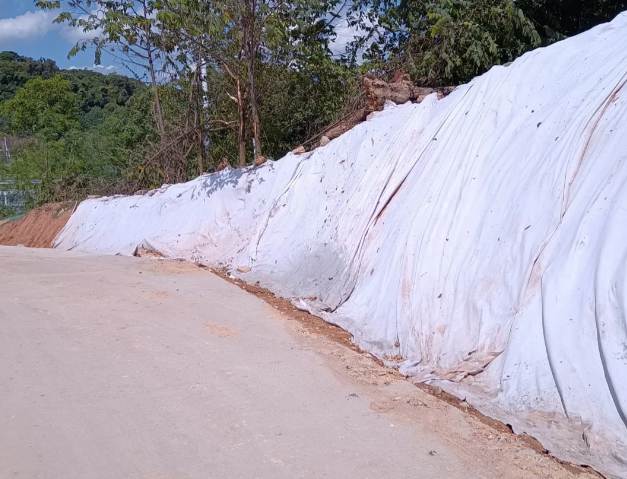
How to Select Geotextile for Containment
This is the core of decision-making. Incorrect selection will directly lead to project failure.
Step 1: Define the Primary Functional Requirement
Ask yourself: What is the most important thing the geotextile needs to do for this project?
- Primary Filtration (Water Permeability / Sediment Retention)? → Points to Non-Woven Geotextile.
- Primary Separation & Reinforcement (Stabilization / Load-Bearing)? → Points to Woven Geotextile.
- Primary Protection (Puncture Resistance)? → Points to Heavy-Weight Non-Woven Geotextile.
Step 2: Identify the Two Primary Material Types
| Characteristic | Non-Woven Geotextile | Woven Geotextile |
|---|---|---|
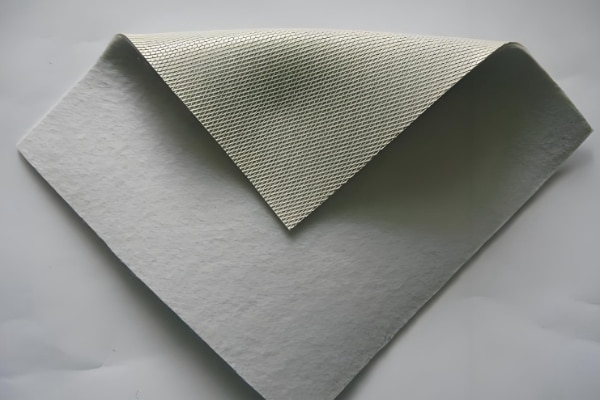
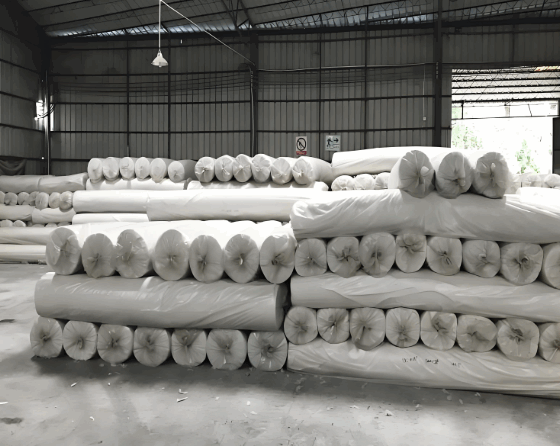
| Manufacturing Process | Fibers are randomly arranged and needle-punched or heat-bonded. | Yarns are systematically interlaced in perpendicular directions. |
| Primary Functions | Filtration, Drainage, Protection | Separation, Reinforcement, High-Strength Containment |
| Permeability | Very High. Water can pass through both the plane and thickness. | Lower. Primarily planar flow (dependent on yarns). |
| Strength | Moderate, with higher elongation. | Very High, with low elongation and dimensional stability. |
| Typical Applications | Silt fences, drainage trenches, liner protection. | Soil/aggregate containment walls, road base stabilization, embankments. |
Step 3: Interpret Key Performance Parameters
- Mass Per Unit Area (g/m² or gsm): Common range: 120 to 400 gsm. Containment applications typically require no less than 200 gsm, with heavy-duty containment or protection needing 300 gsm or above.
- Tensile Strength (kN/m): Key indicator for woven geotextiles. Warp and weft strengths should be balanced. For soil containment, the warp (longitudinal) strength typically requires no less than 20 kN/m, calculated specifically based on wall height.
- Permeability Coefficient (cm/s): Critical for non-woven filtration applications. Standard requirement is usually K ≥ 1×10⁻² cm/s, ensuring sufficient water flow rate to prevent ponding.
- Apparent Opening Size (AOS, O₉₀ in mm): Determines the size of intercepted particles. For silt control, AOS is typically between 0.06-0.2 mm, effectively retaining fine silt.
Geotextile Containment Installation Guidelines
Correct installation is the final and most critical step to realizing geotextile performance.
1、General Installation Guidelines
- Site Preparation: Remove all sharp objects like roots and stones. Level and compact the subgrade. Slopes should be smooth.
- Laying Direction: Typically align the fabric’s stronger direction (machine direction) with the primary stress direction (e.g., vertical load direction in containment).
- Seaming & Joining:
- Overlap Width: Generally not less than 30 cm, increased to 50 cm or more on soft ground or critical areas.
- Sewing (Recommended for High-Strength Containment): Use specialized sewing machines and polyester thread. Thread strength should exceed fabric strength. This is the most reliable connection method.
- Stapling / U-Pin Fixing: For temporary anchorage, spacing usually 1-1.5 meters, denser at crests and in trenches.
2、Installation Key Points by Scenario
- For Silt Fences:
- Place the non-woven geotextile on the upstream side of support posts (wooden or steel).
- The bottom must be buried in an anchor trench at least 15 cm deep and backfilled/compacted.
- The geotextile should have slack to form a filter pocket, increasing sediment storage capacity, rather than being stretched tight.
- For Soil/Aggregate Containment:
- Use “wrap-around” or “retaining wall” construction. Each fill layer should not exceed 30 cm after compaction.
- Geotextile between layers must be effectively overlapped or sewn to form a continuous load-bearing structure.
- The top should be folded back and anchored to prevent unraveling.
- For Liner Protection:
- Smoothly unroll over the installed geomembrane, avoiding wrinkles.
- Simple overlap is usually sufficient; sewing is not required.
- During backfilling, use light machinery and proceed from the center outward to avoid direct tracking or sharp turns on the fabric.
Frequently Asked Questions (FAQ)
Q1: What is the fundamental difference between geotextile and ordinary plastic sheeting (tarpaulin) for containment?
A: The essential difference lies in function. Plastic sheeting’s core function is impermeability/waterproofing; it blocks all water flow, making it prone to being overwhelmed or washed away by ponding water. Geotextile’s (especially non-woven) core function is permeable filtration; it allows controlled water passage while retaining solids, thereby eliminating hydrostatic pressure and creating a more stable, durable system. Woven geotextile also provides high strength unmatched by plastic sheeting.
Q2: How long can geotextile last in sunlight? Does it need to be covered?
A: Standard polypropylene geotextile exposed to strong UV radiation can experience significant strength degradation within weeks to months. Best practice is: prompt backfilling/covering (recommended exposure time not exceeding 14 days). If long-term exposure is unavoidable,be sure to purchase UV-resistant grades with at least 2% high-quality carbon black, which can last a year or more.
Q3: How to balance cost and performance? Is heavier weight (higher gsm) always better?
A: Not necessarily heavier is better, but fit-for-purpose is best. For filtration, excessively heavy non-woven may hinder permeability due to high density. The key is selection based on design requirements for strength, permeability, and AOS. Over-specifying is wasteful, while under-specifying leads to project failure at a higher cost. When consulting suppliers, provide specific application scenarios and design requirements to obtain the most cost-effective recommendation.
Conclusion
The success of a geotextile containment system depends on the precise control of four elements: function, material, data, and construction. Remember this decision chain: First, clarify whether your project’s primary need is “filtration” or “reinforcement,” then select non-woven or woven type accordingly. Next, strictly match the key performance parameters. Finally, execute the installation specifications meticulously.
References:
- ASTM D4354 – Standard Practice for Sampling of Geosynthetics for Testing.
- ASTM D4595 – Standard Test Method for Tensile Properties of Geotextiles by the Wide-Width Strip Method (for determining tensile strength).
- ASTM D4491 – Standard Test Methods for Water Permeability of Geotextiles by Permittivity (for permeability coefficient).
- ASTM D4751 – Standard Test Method for Determining Apparent Opening Size (AOS) of a Geotextile.