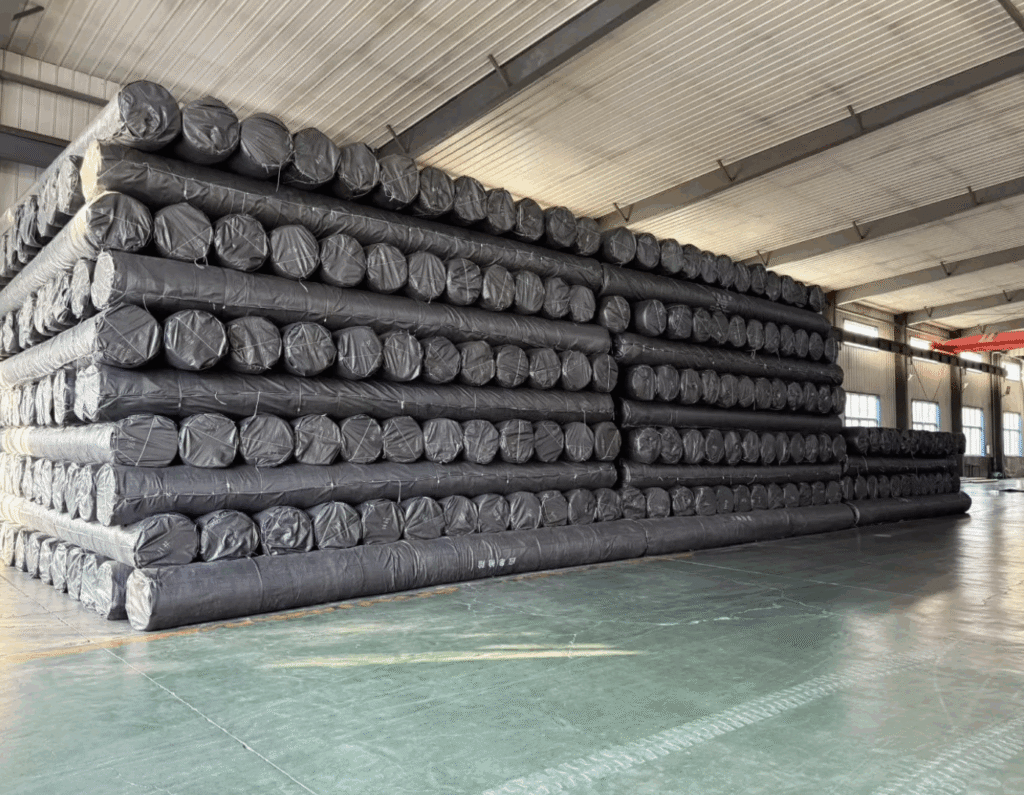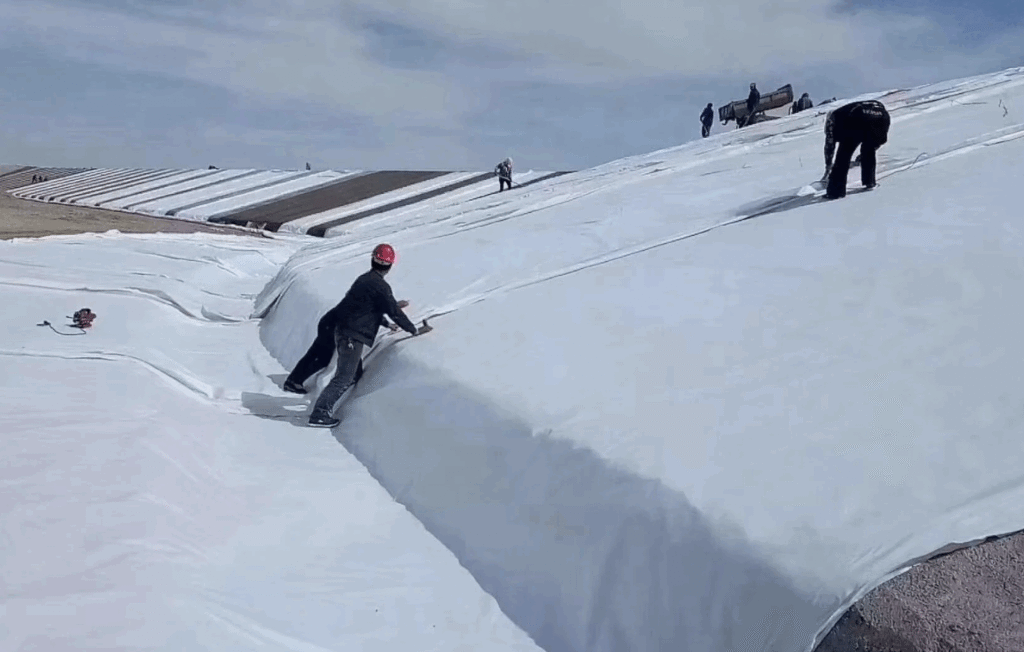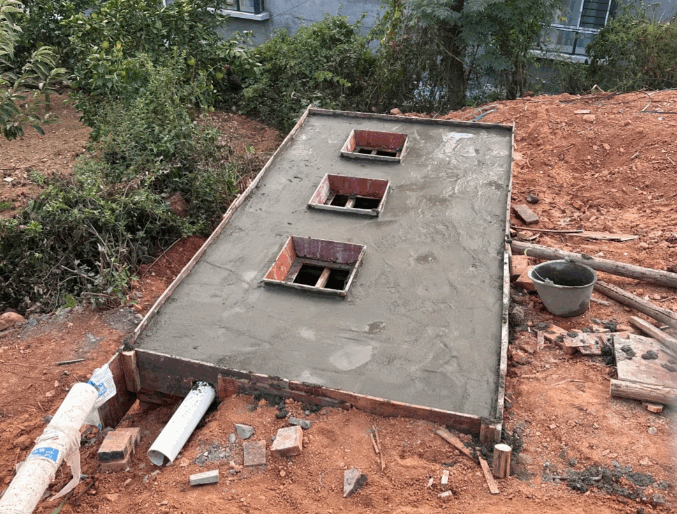
Has Your Retaining Wall Shown Cracks,Bulging,or Even Collapse? Often,the root of the problem isn’t the wall material itself,but a critical,unseen component hidden behind the wall—geotextile fabric.Though inconspicuous,it is the”unsung hero”determining the long-term stability of your retaining wall.This article serves as the ultimate guide to using geotextile for retaining wall projects,providing a comprehensive analysis from principle and selection to installation.

Why is Geotextile Fabric Indispensable for Retaining Walls?
Geotextile fabric plays four core roles in retaining wall engineering,far exceeding simple”separation”:
Separation: Prevents the backfill soil behind the wall from mixing with the drainage gravel layer in front.Once mixed,the drainage layer fails,leading to water accumulation.
Filtration: Allows groundwater to pass through efficiently into the drainage system while effectively preventing fine soil particles from being washed away,avoiding soil erosion and scouring.
Drainage: (Specifically for non-woven geotextile)Its structure forms water passages,helping to laterally drain water from the soil,significantly reducing hydrostatic pressure acting on the wall back.This is key to preventing the wall from being pushed over.
Reinforcement: (Specifically for woven geotextile)Possesses high tensile strength and is used in reinforced soil retaining walls,interacting with the backfill to distribute soil loads and enhance overall stability.
In simple terms,without a geotextile layer,your retaining wall is built on saturated,unstable soil,and failure is only a matter of time.
If you are purchasing Geotextile Fabric Retaining Wall, you can contact us!
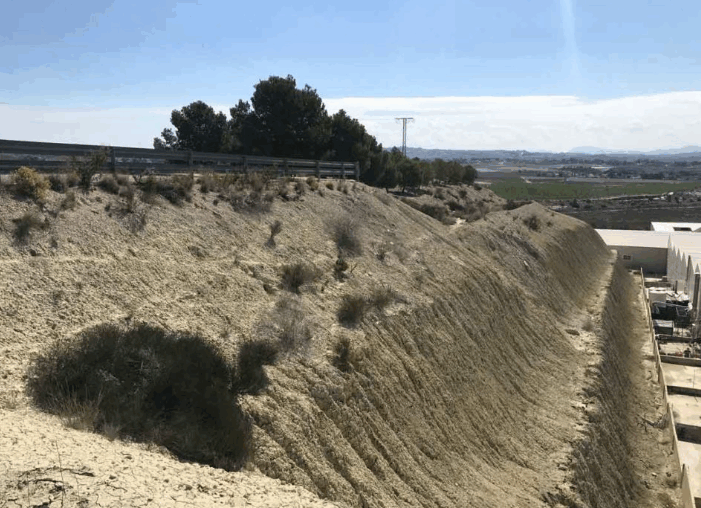
How to Choose the Right Geotextile for Retaining Wall?
This is the most critical step in material selection—choosing the wrong type can be counterproductive.
Non-Woven Geotextile:
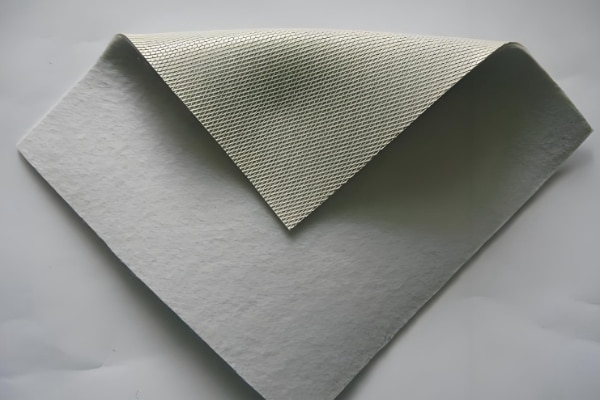
Characteristics:Feels like felt,made from randomly bonded fibers.Its core function is filtration and drainage.
Application: The preferred choice for the vast majority of retaining wall projects.It is widely used behind the wall,wrapping around drainage gravel and pipes,ensuring the long-term effectiveness of the drainage system.
Key Parameters: Focus on weight(e.g.,150 g/m²,200 g/m²)and permittivity(water flow rate).Higher walls or finer soils(e.g.,clay)require heavier,highly permeable products.
Woven Geotextile:
Characteristics: Looks like a woven bag,made from interlaced filaments.Its core function is high strength and reinforcement.
Application: Primarily used in reinforced soil retaining walls requiring extremely high tensile strength,where the geotextile is layered with soil as reinforcement.It is generally not used for drainage behind standard gravity retaining walls due to its poor filtration properties.
Key Parameters: Focus on tensile strength(kN/m).
Purchasing Advice Table:
| Retaining Wall Type | Recommended Geotextile Type | Primary Purpose |
| Standard Gravity Retaining Wall | Non-Woven Geotextile | Filtration, Drainage, Separation |
| Reinforced Soil Retaining Wall | Woven Geotextile | Reinforcement, Stabilization |
| Walls with Poorly Draining Clay Soil | Heavier Weight Non-Woven Geotextile | Enhanced Filtration and Drainage |
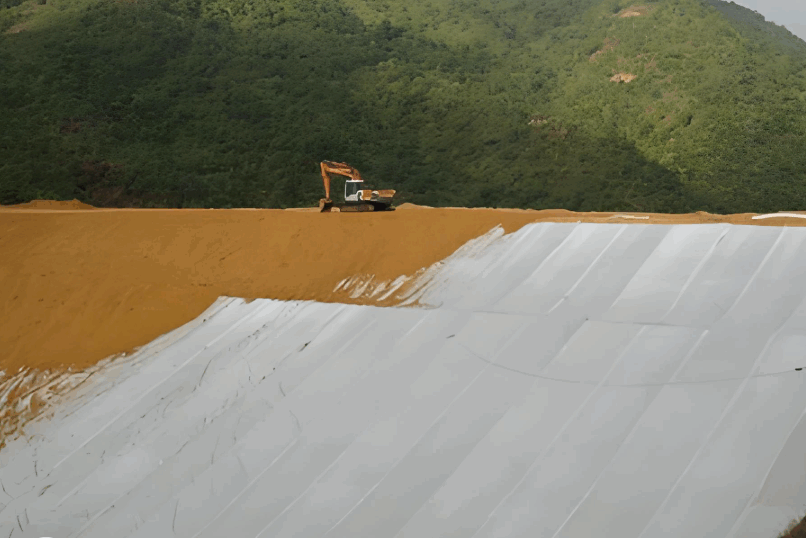
How to Install Geotextile Fabric Behind Retaining Wall
Correct installation is crucial for the geotextile fabric to function properly.Follow these steps for your retaining wall project:
Step 1:Preparation
Excavate the area behind the wall and compact the subbase.
Lay and compact a preliminary layer of gravel base.
Step 2:Laying the Geotextile
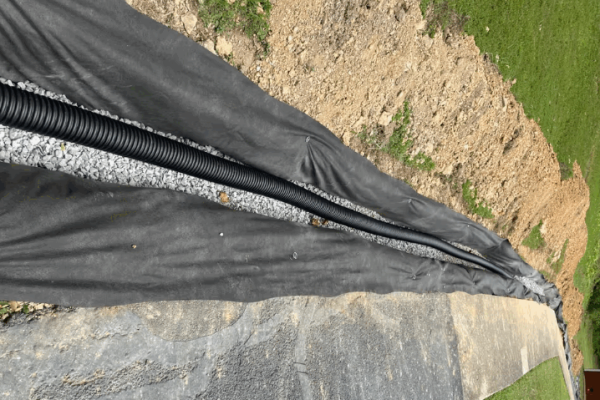
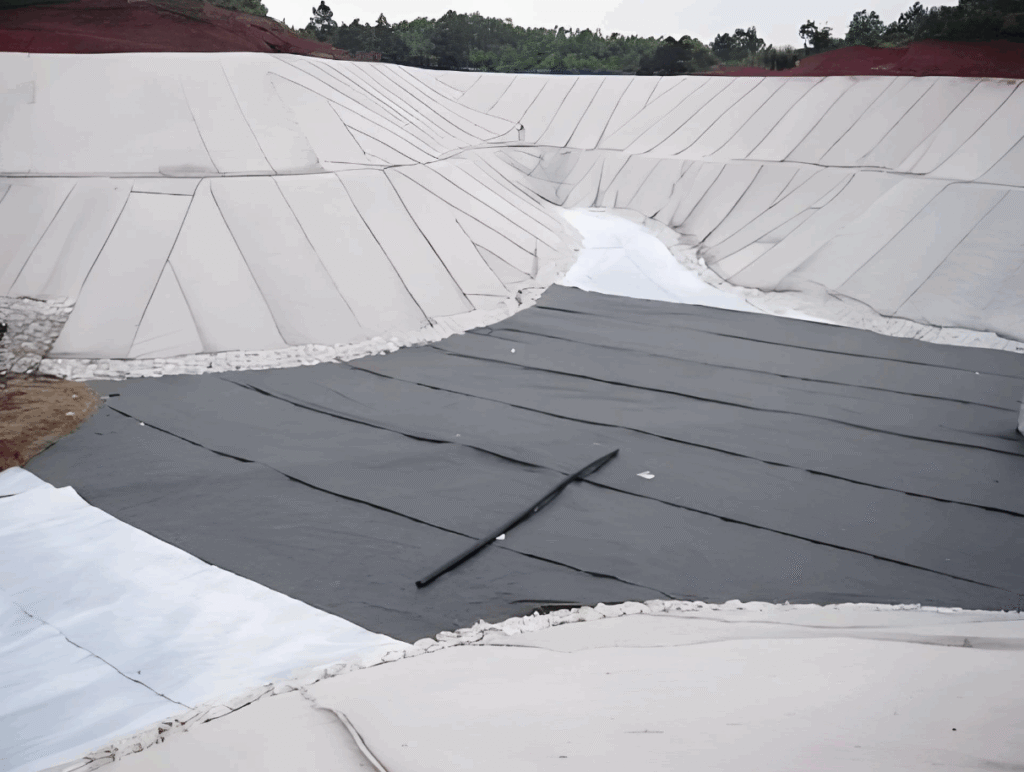
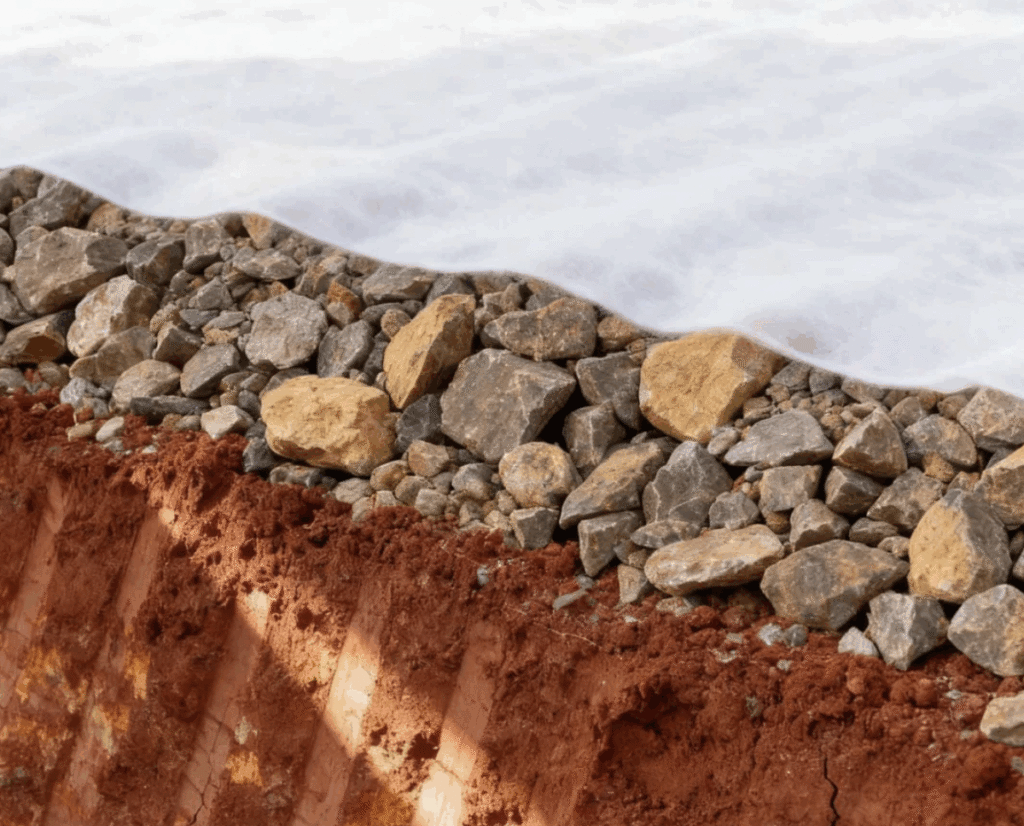
Drape the non-woven geotextile fabric over the excavated slope and base.
Key:The fabric must extend from the base all the way to the top of the planned wall height.Sufficient length is essential.
It is often recommended to orient the smoother side towards the drainage gravel.
Step 3:Placing the Drainage System
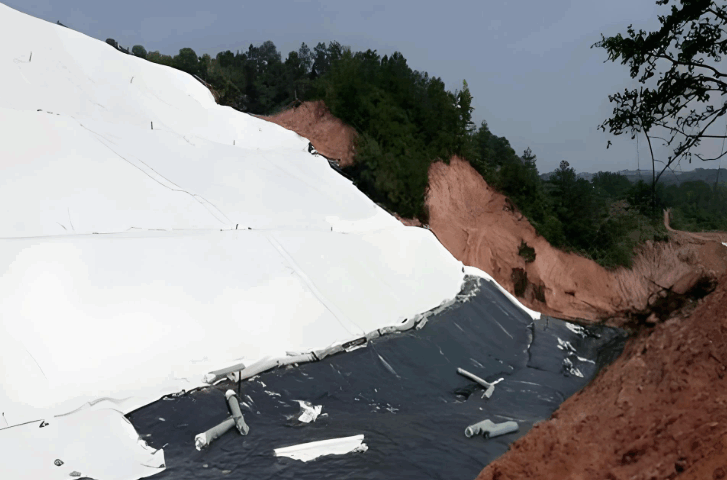
Place a perforated drain pipe within the gravel layer at the heel of the wall.Ensure the pipe has a slight slope to direct water away from the wall.
Step 4:Backfilling and Wrapping
Fill around the drain pipe with clean,washed drainage gravel(e.g.,20-40mm aggregate is ideal).
Fold the geotextile back up and over to completely envelop the entire gravel and pipe assembly.
Key:Provide a minimum overlap of 30 cm(12 inches)for the geotextile.Secure it temporarily with landscape staples or a small amount of soil to prevent shifting.
Step 5:Final Backfill
Backfill with native soil on top of the wrapped geotextile system.
Compact the soil in layers(20-30 cm lifts)for stability.
Common Geotextile Retaining Wall Mistakes and How to Avoid Them
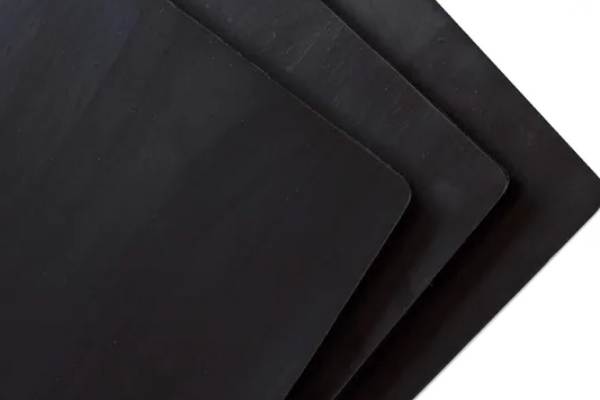
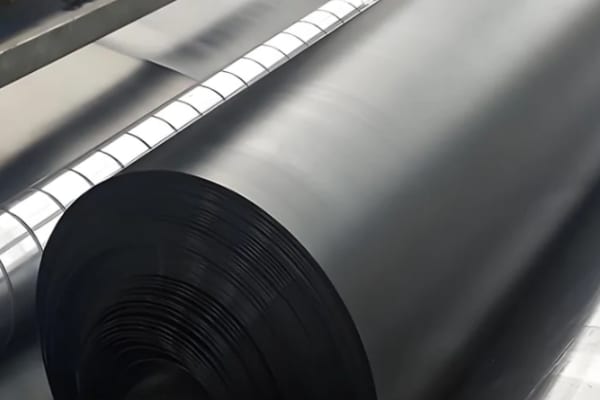
Mistake 1: Using Landscape Fabric as a Substitute:Regular weed barrier fabric is not permeable.Using it is equivalent to blocking drainage,with serious consequences.
Mistake 2: Insufficient Geotextile Length:If it doesn’t extend to the top of the wall,soil from the upper section can invade and clog the drainage layer,causing it to fail.
Mistake 3: Insufficient or No Overlap:Leads to soil washing out through the seams,gradually eroding the space behind the wall.
Mistake 4: Not Repairing Damage:Tears or holes caused by sharp rocks during installation must be patched with new material and overlapped,or they will become weak points.
Mistake 5: Neglecting the Drain Pipe and Gravel:The geotextile must work as a system with the drain pipe and gravel.Using geotextile fabric alone is ineffective.
Conclusion
Geotextile fabric is a low-cost component in a retaining wall project that is absolutely critical to its overall success.One correct selection and proper installation can provide decades of stability for your retaining wall,avoiding costly repairs in the future.
If you are looking for a reliable Geotextile Fabric Retaining Wall supplier,please feel free to contact us.
About Us:Lianjie
Lianjie is a one-stop supplier of geosynthetics with 15 years of professional experience and multiple national certifications.We provide the most professional Geotextile Fabric Retaining Wall solutions!
References:
- Koerner, R. M. (2012). Designing with Geosynthetics (6th ed., Vol. 1). Xlibris Corporation.
- Note: This is an authoritative textbook in the field of geosynthetics, providing a detailed explanation of the properties, design theories, and engineering applications of various materials, including geotextiles. It is the ultimate reference for understanding their core functions.
- National Cooperative Highway Research Program (NCHRP) Report 556: Guideline for the Design and Construction of Mechanically Stabilized Earth (MSE) Walls.
- Note: While focused on reinforced soil walls, this report provides rigorous design specifications, testing standards, and construction guidelines for the use of geotextiles as reinforcement materials, making it a highly authoritative source.
- Virginia Tech University, Department of Civil and Environmental Engineering. Geosynthetics in Civil Engineering online course modules.
- Note: Many top university civil engineering departments offer open educational resources on geosynthetics, including detailed explanations of the principles and case studies for separation, drainage, filtration, and reinforcement functions.