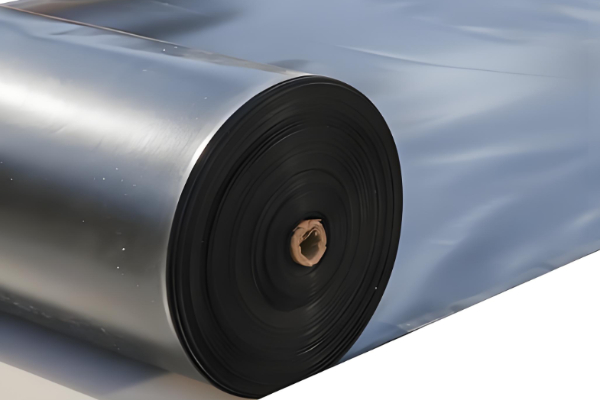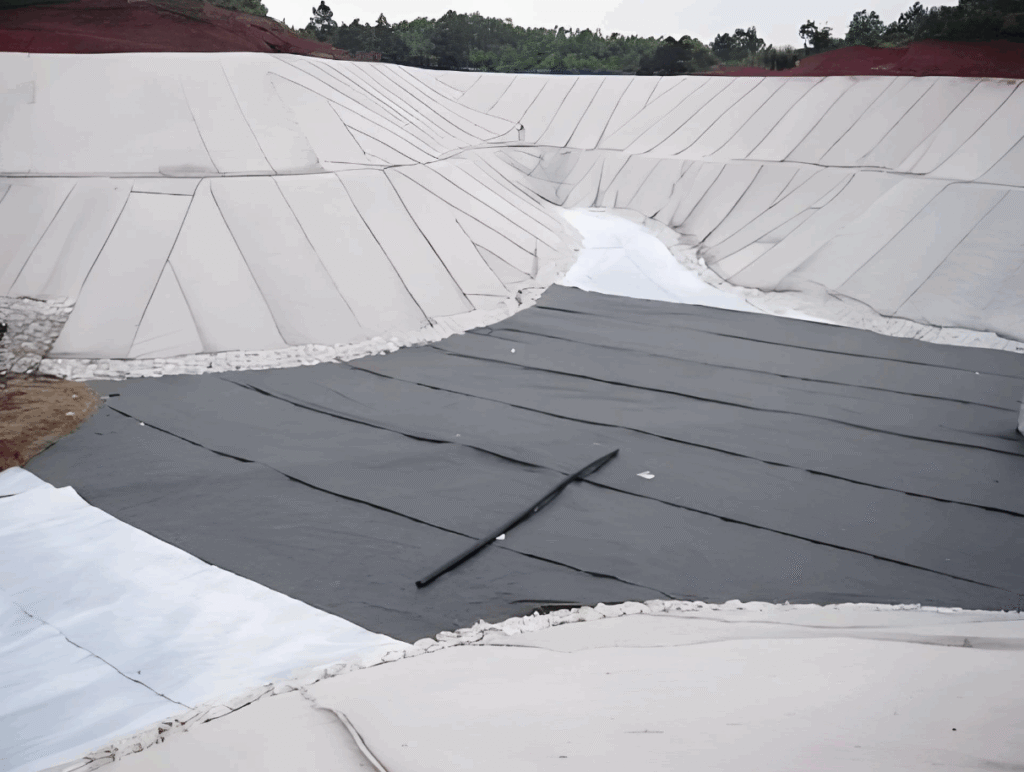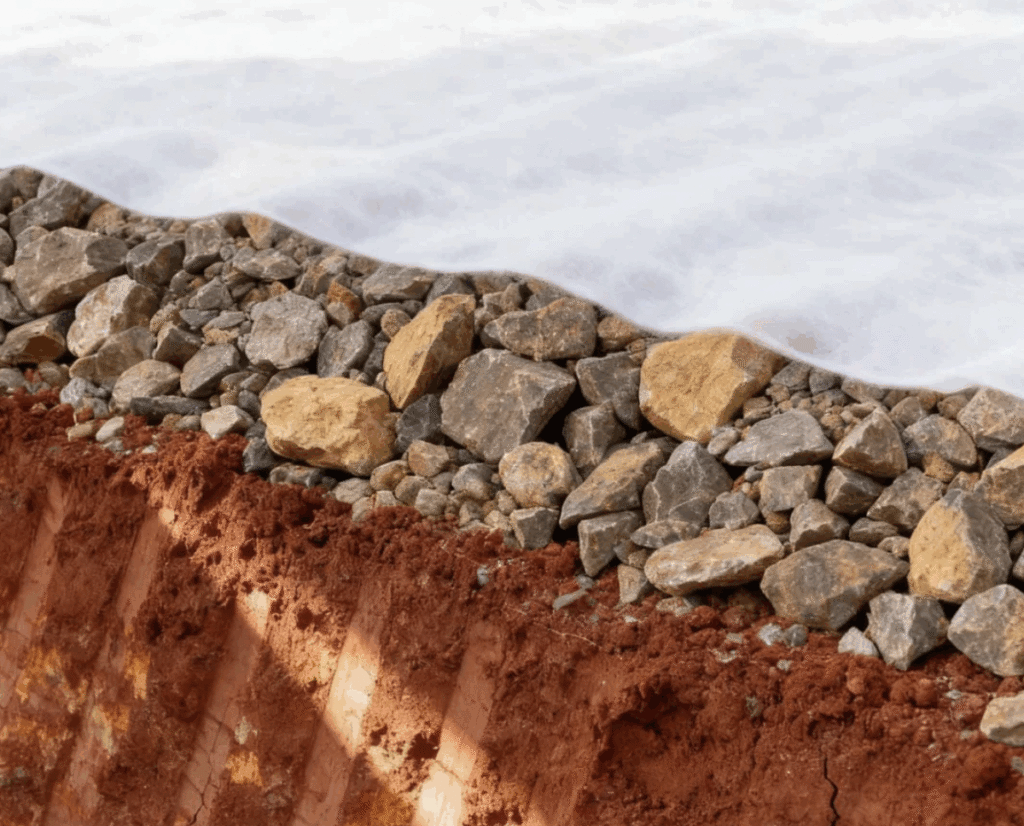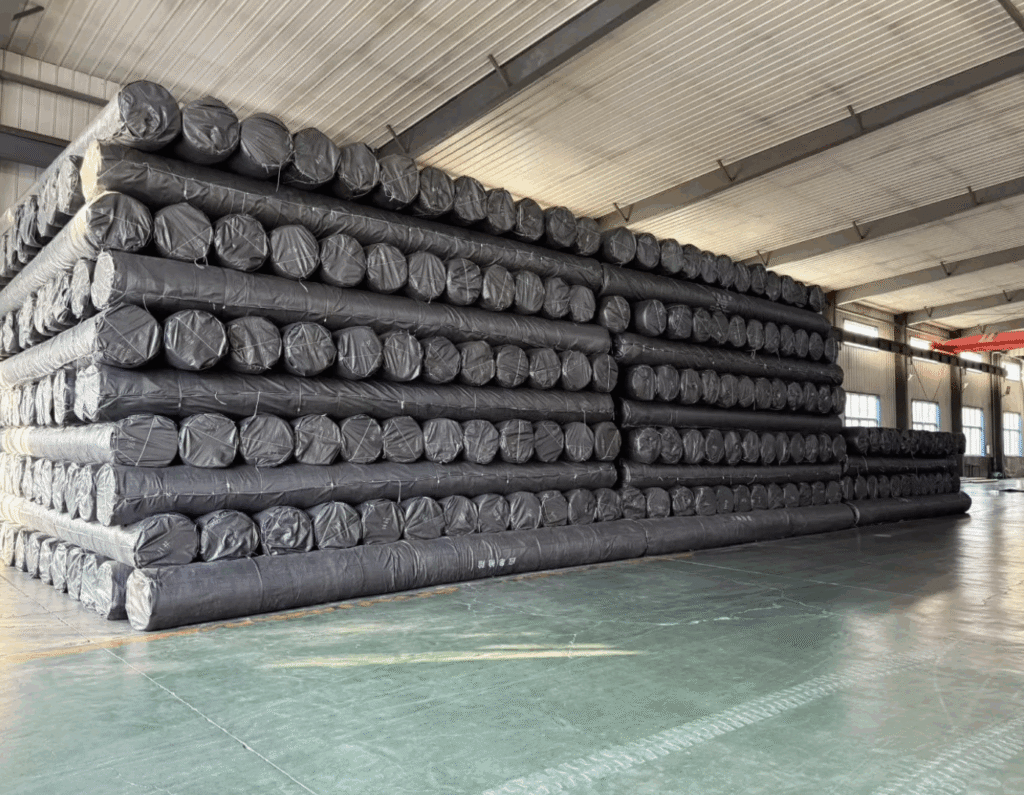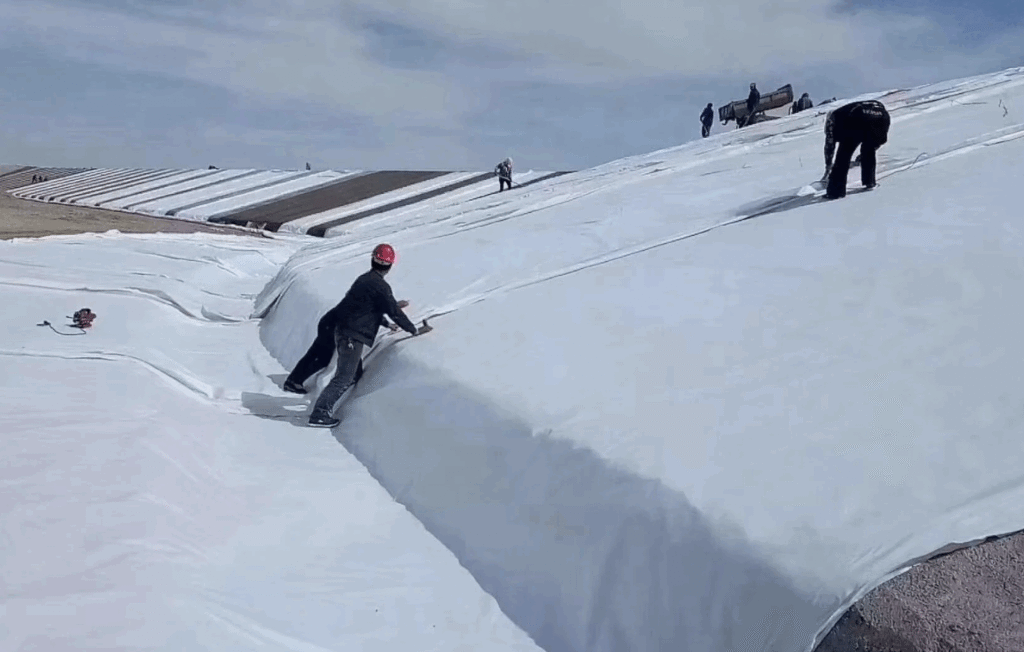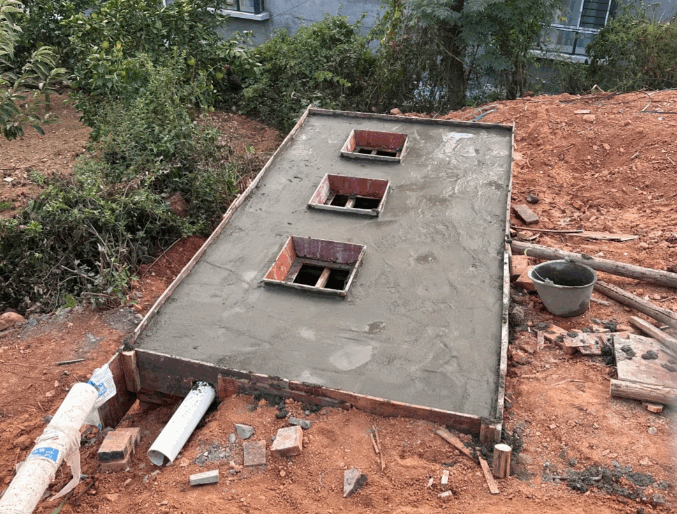
As a core anti-seepage material in landfills, water conservancy projects, and other fields, HDPE geomembrane liners have become the global engineering industry’s preferred choice due to their excellent chemical stability and long-term anti-seepage performance. This article breaks down key points from basic understanding to procurement implementation, helping you accurately control project quality.
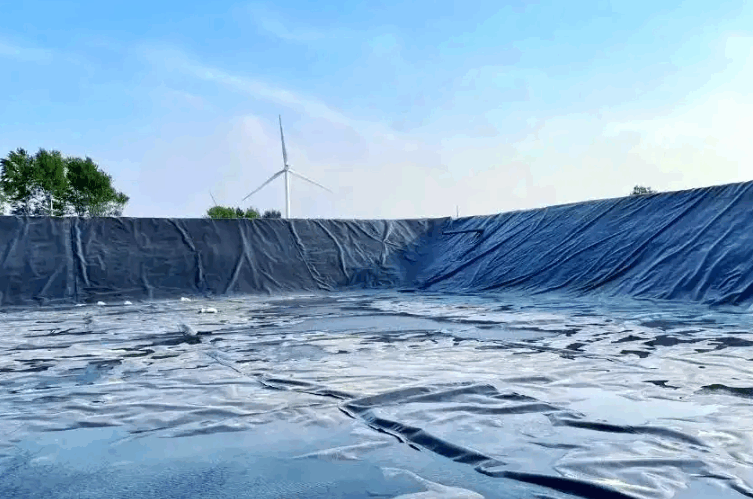
What is an HDPE Geomembrane Liner?
1. Definition & Core Characteristics
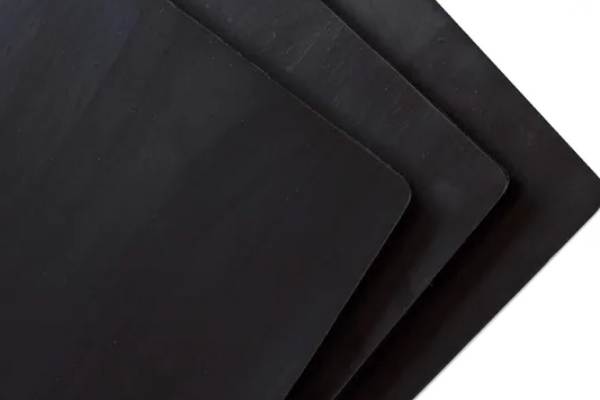
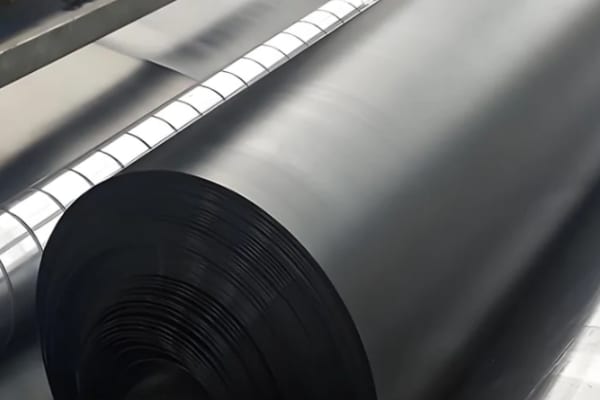
HDPE geomembrane liner, full name High-Density Polyethylene geomembrane, is a flexible waterproof barrier material made from HDPE resin pellets through extrusion calendering or blow molding processes. Its core advantages stem from HDPE’s molecular structure:
- Superior anti-seepage performance: Permeability coefficient K < 1×10⁻¹³ cm/s, almost impermeable to water and air.
- Strong chemical stability: Resists corrosion from over 80% of acids, alkalis, salts, and organic solvents, making it the first choice for landfill leachate and industrial wastewater treatment.
- Excellent Environmental Stress Crack Resistance (ESCR): Not prone to cracking under long-term loads, with a service life of over 50 years (calculated according to GRI GM13 standards).
- High mechanical strength: Outstanding tensile, tear, and puncture resistance, capable of withstanding uneven settlement of the foundation.
- Reliable weather resistance: Added with high-quality carbon black and UV stabilizers for long-term outdoor use.
2. Common Specifications & Parameters
| Parameter | Common Specifications | Notes |
|---|---|---|
| Thickness | 0.5mm, 0.75mm, 1.0mm, 1.5mm, 2.0mm, 3.0mm | Thickness is the primary factor affecting performance & cost |
| Width | 5m-8m (Calendered), 4m-7m (Blown Film) | Wider sheets reduce field seams, improving containment reliability |
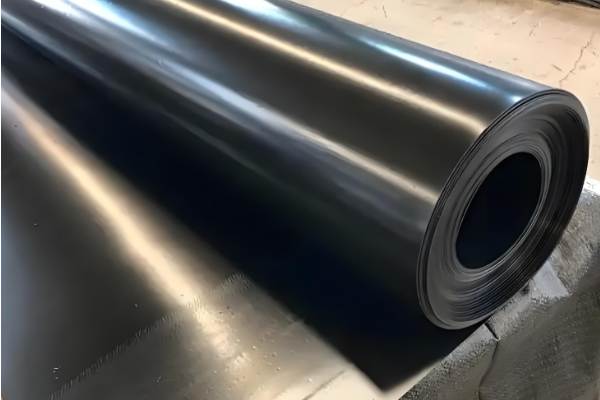
| Roll Length | 50m-100m | Customizable per project needs |
| Color | Primarily Black (with 2%-3% Carbon Black) | Green, blue, etc., available for specific applications |
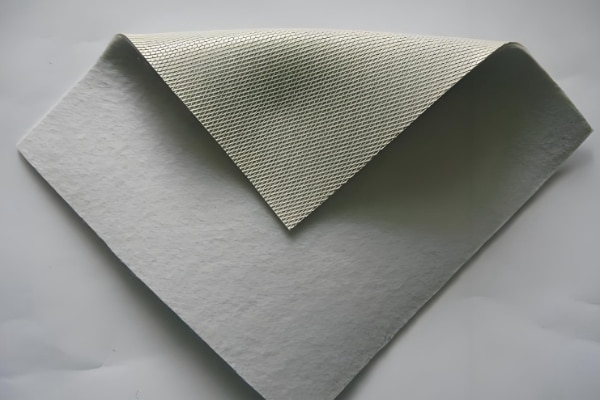
| Surface Texture | Smooth, Single Textured, Double Textured | Textured surfaces increase friction for slope stability |
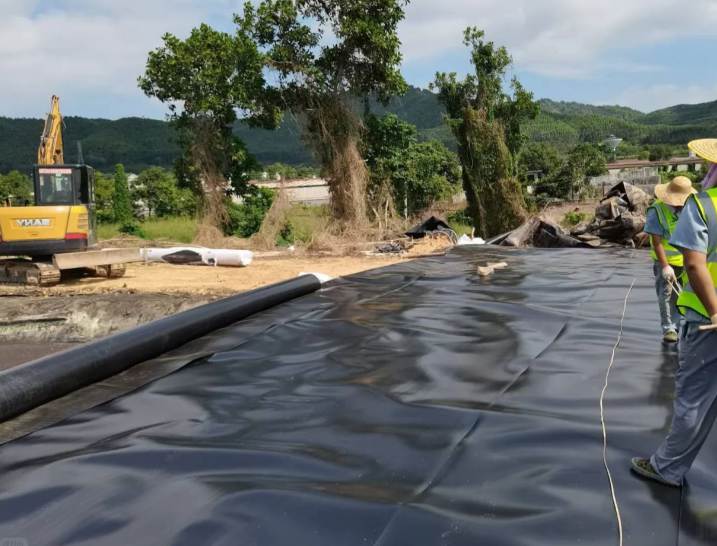
HDPE Geomembrane Liner Price
1. Four Core Factors Affecting Price
Raw Materials & Quality Standards (Weight: 40%)
- Virgin vs Recycled Material: Liners made from 100% high-quality virgin polyethylene resin (e.g., produced by Sinopec, ExxonMobil) are significantly more expensive than those blended with recycled material, which have drastically reduced ESCR performance.
- Standard Grades:
- GB/T 17643 (Chinese National Standard): Basic entry-level standard with lower prices.
- GRI GM13 (American Standard): Global industry gold standard, with strict requirements for raw materials, production processes, and indicators (especially ESCR), resulting in significantly higher prices than national standard products.
- CJ/T 234 (Urban Construction Standard): Mainly used for landfills, with requirements between national and American standards.
Product Specifications (Weight: 30%)
- Thickness: Price is basically linearly proportional to thickness. For example, the price of 1.5mm liner is not 1.5 times that of 1.0mm liner; due to production loss and process difficulty, the multiple may reach 1.6-1.8.
- Special Requirements: Double-sided textured liners are 10%-20% more expensive than smooth liners; custom colors or widths will also increase costs.
Purchase Volume (Weight: 20%)
Larger project purchase volumes (e.g., over 100,000 square meters) reduce the unit cost amortized for production, management, and logistics, enabling more competitive project discount prices.
Market & Logistics (Weight: 10%)
- Fluctuations in international crude oil prices directly affect polyethylene resin costs.
- Transportation distance and delivery terms (EXW, FOB, CIF) will be reflected in the final delivered price.
2. Current Market Price Reference Range
| Thickness | GB/T Quality | GRI GM13 Quality | Primary Applications |
|---|---|---|---|
| 1.0mm | ¥8 – ¥12 /sq.m | ¥13 – ¥20 /sq.m | Standard fish ponds, water storage |
| 1.5mm | ¥12 – ¥18 /sq.m | ¥20 – ¥30 /sq.m | Wastewater treatment, general containment |
| 2.0mm | ¥18 – ¥26 /sq.m | ¥30 – ¥45 /sq.m | Landfills, tailings ponds |
Note: The above are ex-factory unit price ranges, excluding tax, shipping, and installation. Total project cost should include “material cost + professional installation cost (accounting for 20%-40% of the total price) + auxiliary material cost”.
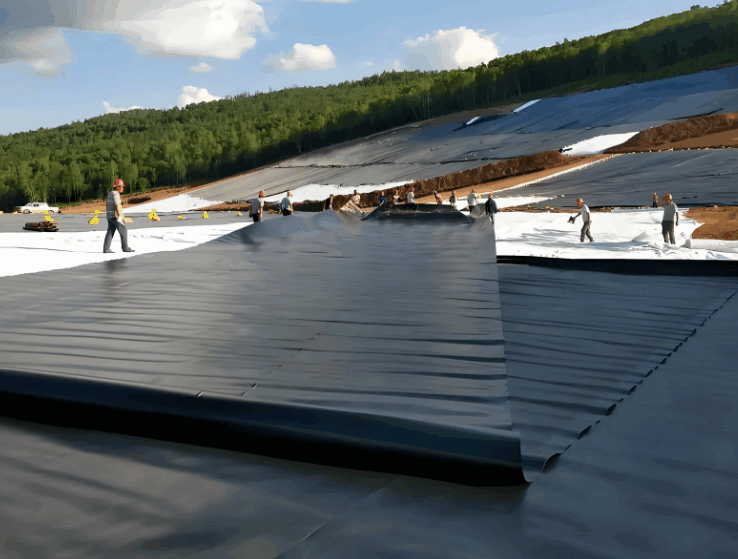
HDPE Geomembrane Liner Applications
1. Aquaculture & Agriculture
- Applicable Scenarios: Fish/shrimp ponds, irrigation reservoirs, biogas digester lining.
- Recommended Specifications: Usually 0.5mm-1.0mm smooth liners complying with GB/T 17643 (Chinese National Standard), offering high cost-effectiveness and significant anti-seepage and water retention performance.
2. Environmental Protection & Municipal Engineering
- Applicable Scenarios: Municipal solid waste landfills, hazardous waste disposal sites, sewage treatment ponds, evaporation ponds.
- Recommended Specifications: High mandatory requirements. Must use liners with thickness ≥1.5mm, complying with GRI GM13 or equivalent international standards. Double-sided textured liners are often selected to enhance slope stability.
3. Mining & Energy
- Applicable Scenarios: Heap leach pads, tailings ponds, oil sludge temporary storage sites, fly ash ponds.
- Recommended Specifications: Depending on the corrosiveness of the solution, select 1.0mm-2.0mm thick special chemical-resistant liners, with detailed chemical compatibility reports required.
4. Water Conservancy & Landscaping
- Applicable Scenarios: Artificial lakes, river anti-seepage, landscape reservoirs, golf course water features.
- Recommended Specifications: 1.0mm-1.5mm. Green liners can be chosen for aesthetic coordination with the landscape.
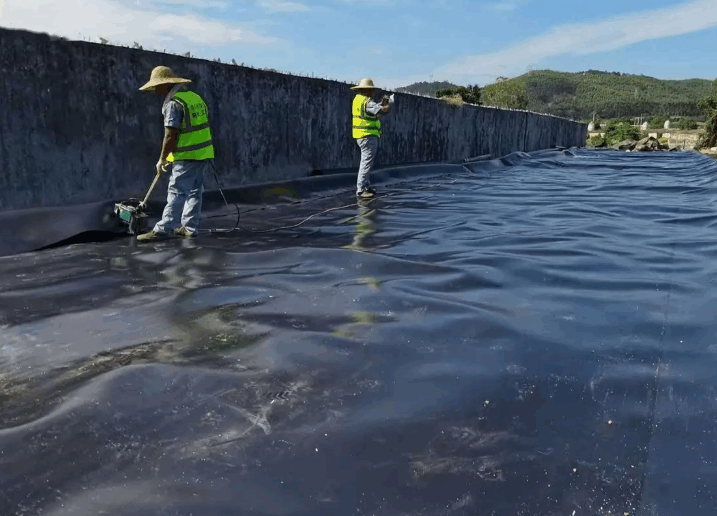
HDPE Geomembrane Liner vs. LLDPE & PVC
| Property | HDPE | LLDPE | PVC |
|---|---|---|---|
| Density & Stiffness | High, rigid | Low, flexible | Medium |
| Chemical Resistance | Excellent | Good | Poor (susceptible to organics) |
| UV Resistance | Excellent | Good | Poor (requires stabilizers) |
| Service Temp. Range | -60°C to +60°C | Wider, more flexible | Becomes brittle in cold |
| Material Cost | Medium | Lower | Lower |
| Long-term Cost-Effectiveness | Highest (Long life, low maintenance) | High | Lower (Prone to degradation) |
Conclusion: For permanent projects requiring ultra-long service life, high anti-seepage levels, and resistance to harsh chemical environments (e.g., landfills, tailings ponds), HDPE is undoubtedly the best choice. For secondary projects with complex shapes and high flexibility requirements, LLDPE can be considered.
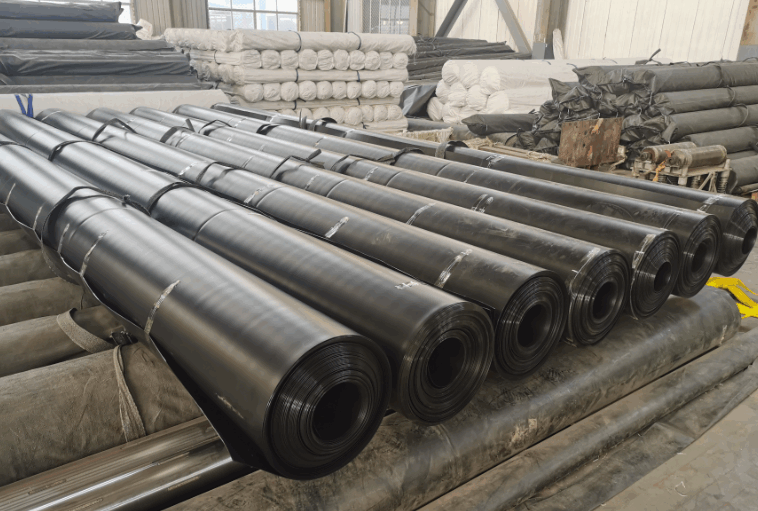
HDPE Geomembrane Liner Installation Guide
HDPE geomembrane construction must strictly follow the four-step process: “Base Preparation → Laying → Welding → Anchoring”, with clear technical requirements for each link:
- Base Preparation: Remove sharp objects such as stones and tree roots; ensure compaction degree ≥95% and flatness tolerance ≤2cm/m. Fill low-lying areas with similar soil and compact; construction waste is prohibited.
- Liner Laying: Adopt the “top-down” slope laying method; prioritize 8-12m width to reduce seams. Horizontal welding is prohibited within 1.5m of the slope top. Overlap width of adjacent liners is 10-15cm (thermal welding) or 15-20cm (extrusion welding).
- Welding Key Points: Thermal welding temperature is controlled at 230-250℃, travel speed at 2-3m/min, and weld width ≥10mm. For T-joints, adopt the “main first, secondary later” welding sequence. Immediately test with a vacuum test hood after welding; a negative pressure ≥0.02MPa with no pressure drop within 30 seconds is considered qualified.
- Anchoring Reinforcement: Use trench burial method for slope tops (anchoring trench depth ≥50cm, width ≥50cm); use expansion bolts for slope bottoms and flat areas (spacing ≤1m). Add reinforcement liners at corners (radius ≥50cm).
Frequently Asked Questions
1. What is the actual service life of HDPE geomembranes?
A: Under designed loads and standardized construction, high-quality HDPE geomembranes complying with GRI GM13 standards have a designed service life of over 50 years. Actual service life is affected by factors such as UV exposure, chemical media, and foundation settlement.
2. How to choose between HDPE and LLDPE liners?
A: The core depends on the dynamic characteristics of the project:
- For dynamic scenarios (e.g., tailings ponds, slopes), choose LLDPE (Linear Low-Density Polyethylene) for its excellent flexibility (elongation at break ≥800%) and impact resistance.
- For static anti-seepage scenarios (e.g., water storage tanks, wastewater ponds), choose HDPE, which is 30%-40% more cost-effective and has better chemical resistance.
3. How to recycle HDPE geomembranes?
A: Waste liners can be recycled through two pathways:
- Physical Recycling: Cleaned and melted to reshape into low-grade geomembranes (for temporary anti-seepage).
- Chemical Recycling: Cracked into polyethylene monomers to resynthesize new resin, with a recovery rate of over 95%.
Conclusion
Choosing an HDPE geomembrane liner is a technical and commercial decision critical to long-term engineering projects. The correct approach is: clarify application requirements → lock in quality and thickness standards → understand true price composition → select qualified suppliers → strictly control construction and acceptance.
If you are planning for specific project selection or budgeting, feel free to contact us!
References:
ASTM D6693– Standard Specification for Polyethylene Geomembranes.ASTM D6392– Standard Test Method for Determining the Stress Crack Resistance of Polyethylene Geomembranes.ASTM D4833– Standard Test Method for Index Puncture Resistance of Geomembranes.ASTM D4437– Standard Practice for Determining the Integrity of Field Seams Used in Joining Flexible Polymeric Sheet Geomembranes.