- Main Types of Geogrids
- How Do Geogrids Improve Gravel Driveway Performance?
- Is Investing in Geogrids Cost-Effective?
- Buying Criteria for the Best Geogrids for Gravel Driveways
- Reviews and Recommendations for the Best Geogrids for Gravel Driveways
- Installation Guide for Gravel Driveway Geogrids
- Frequently Asked Questions (FAQ)
- Conclusion
After a rainstorm, the driveway surface turns muddy; a few passes of vehicle rolling will leave deep ruts. Every year, you have to spend time and money raking gravel flat and filling potholes. Geogrids are exactly the key to solving all these problems. But with a wide range of products on the market, how do you choose the “best geogrid for gravel driveways“? This article will reveal the answer for you.
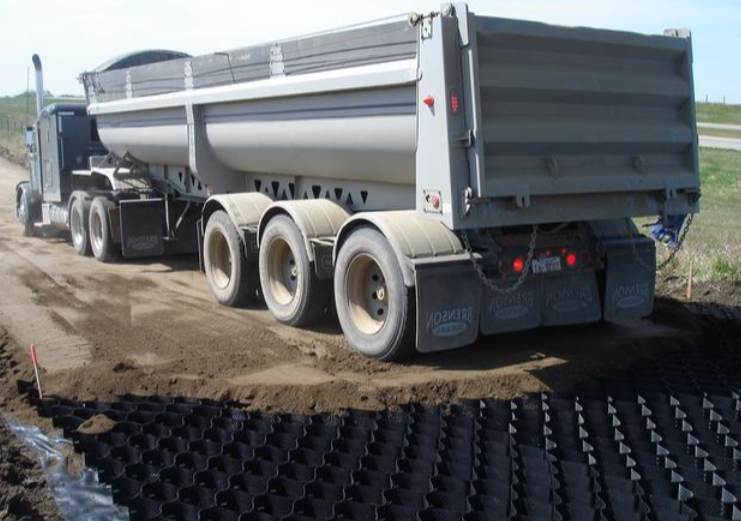
Main Types of Geogrids
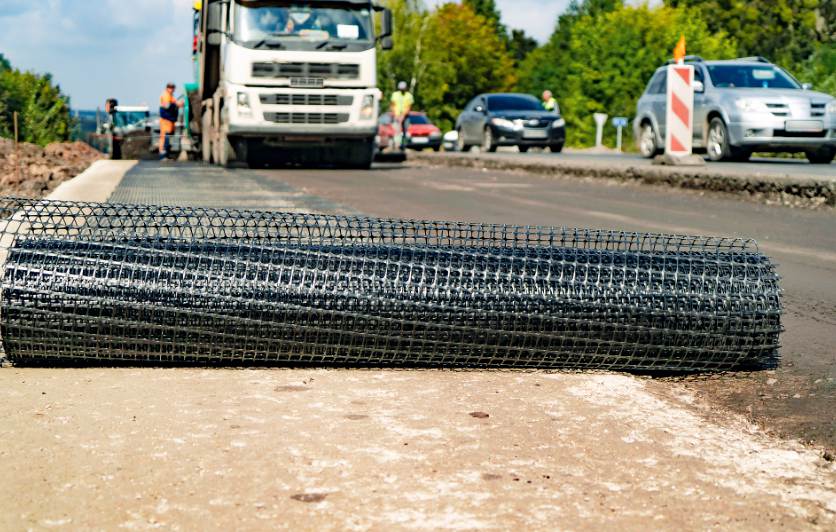
- Biaxial Geogrids: Their strength is evenly distributed in both longitudinal and transverse directions, making them the most common and optimal choice for stabilizing gravel driveways.
- Uniaxial Geogrids: Their strength is mainly concentrated in one direction, making them more suitable for scenarios such as steep slope reinforcement and retaining wall construction.
How Do Geogrids Improve Gravel Driveway Performance?
To understand the value of geogrids, you first need to identify the root of the problem. In an unreinforced gravel driveway, gravel shifts downward and outward under load, gradually sinking into the soft subgrade and forming ruts.
Geogrids fundamentally solve this problem through three core mechanisms:
- Mechanical Interlocking Effect: The openings of the geogrid firmly “grip” the gravel above, forming a composite layer with high shear strength and preventing gravel from being squeezed into the subgrade.
- Tension Membrane Effect: When a load acts on the driveway, the geogrid acts like a taut net, converting concentrated vertical stress into horizontal tension. This distributes the load over a larger area and avoids local settlement.
- Restricting Lateral Displacement: The geogrid provides high tensile strength, effectively limiting the lateral movement of subgrade soil and gravel to keep the driveway flat and stable.
If you are purchasing Geogrids Driveway, you can contact us!
These mechanisms deliver four key performance improvements:
- Multiplied Load-Bearing Capacity: It can safely support family cars, SUVs, even heavy-duty pickup trucks and RVs without the risk of settlement.
- Significantly Reduced Maintenance: Ruts and potholes become a thing of the past, eliminating the need for frequent gravel raking or refilling.
- Extended Service Life: It protects the subgrade structure, allowing your driveway to last for many years.
- Reduced Gravel Usage: Thanks to effective restraint, a thinner gravel layer can achieve equal or even better performance.

Is Investing in Geogrids Cost-Effective?
This is one of the most concerned questions for users. The answer is: Geogrids are not an expense, but a long-term investment with high returns.
Upfront Costs
The main cost includes geogrid materials. Prices vary by material and strength, usually calculated per square meter. For a standard residential driveway, this initial investment is affordable.
Long-Term Benefits (Key to Saving Money)
Let’s do the math:
- Savings on Gravel Refills: An unreinforced driveway may require refilling several cubic meters of gravel each year. The cumulative cost over 3–5 years is likely to exceed the initial cost of geogrids.
- Time and Labor Savings: No more spending precious weekends maintaining the driveway.
- Avoid Early Renovation: A completely failed driveway needs full excavation and reconstruction, which costs dozens of times more than geogrids.
- Increased Property Value: A consistently flat and durable driveway adds value to your property.
Conclusion: For most driveways—especially those with soft soil or needing to support heavy vehicles—the investment in geogrids typically recoups its cost through saved maintenance expenses within 2–5 years, making it extremely cost-effective in the long run.
Buying Criteria for the Best Geogrids for Gravel Driveways
Stop focusing solely on brands; make judgments based on your specific situation:
- Soil Conditions: The softer the soil (e.g., clay, silt), the higher the required geogrid strength.
- Vehicle Load:
- Family cars/SUVs: Basic strength is sufficient (e.g., 20–30 kN/m).
- Heavy-duty pickup trucks/RVs/small construction vehicles: High-strength geogrids are required (over 40 kN/m).
- Tensile Strength: This is the core parameter, measured in kN/m. Higher values mean stronger load-bearing capacity. For most residential driveways, ≥30 kN/m is a safe and common choice.
- Material and Durability: HDPE (High-Density Polyethylene) and polyester are mainstream options, offering good chemical corrosion resistance and long service life—ideal for driveway environments.
Reviews and Recommendations for the Best Geogrids for Gravel Driveways
Now that you understand the buying criteria, you may wonder which products on the market are reliable. Below are highly reputable brands and series (both global and domestic) for gravel driveway applications. They have different focuses and meet needs ranging from standard residential driveways to heavy-duty industrial access roads.
1. Tensar BX Series: Global Benchmark for Subgrade Stabilization
Core Introduction: As a global leader in geosynthetic materials, Tensar’s BX Series is almost synonymous with the industry. Its unique three-rib structure and rigid node design are specifically engineered for subgrade stabilization, delivering unparalleled gravel interlocking performance.
Advantages:
- Excellent Interlocking: The unique geometric structure maximizes “gripping” of gravel to form a solid composite layer.
- Long-Term Durability: Made of high-quality HDPE, it resists chemical corrosion and has a long design life.
- Versatile Strength Options: Available in various specifications from BX1100 (approximately 20 kN/m) to BX1300 (approximately 40 kN/m) to fit different projects.
Considerations: As a high-end brand, its price is relatively higher. Purchase through official channels to ensure authenticity.
Best For: Driveways pursuing top-tier performance and long-term reliability—from standard residential driveways to those with frequent heavy pickup truck traffic.
2. Tensar UX Series: Built for High Strength and Easy Installation
Core Introduction: The UX Series is Tensar’s high-performance product line. While inheriting the advantages of the BX Series, it further optimizes rigidity and strength. The rolls are lighter, making them easier for DIY users to transport and lay.
Advantages:
- Higher Rigidity: Stronger nodes can withstand harsher load conditions.
- Installation-Friendly: Relatively lightweight for easier single-person operation, effectively improving construction efficiency.
- Excellent Long-Term Performance: Low creep characteristics ensure stable performance under long-term loads.
Considerations: Positioned as a high-end product, it requires a higher budget.
Best For: Scenarios with extremely high load requirements, such as fire access roads, garbage truck lanes, and soft subgrade treatment in poor soil conditions.
3. Mirafi MG Series: A Reliable Choice Under Solvay
Core Introduction: From Solvay Group—a global chemical giant—the Mirafi brand also enjoys a strong reputation in geosynthetic materials. Its MG Series geogrids are reliable products proven by long-term market testing.
Advantages:
- Strong Brand Credibility: Stable product quality and reliable performance data.
- Comprehensive Specifications: Offers multiple strength options in polyester or polypropylene materials for precise selection.
Considerations: Less available in retail markets in some regions; authorized distributors may be required.
Best For: General subgrade stabilization of roads. It is a cost-effective and reliable choice for residential driveways, farm roads, and parking lots in recreational areas.
4. Well-Known Domestic Brands (e.g., Hao Ke, Lu De): Cost-Effective “Domestic Excellence”
Core Introduction: After years of development, China’s local geosynthetic manufacturers have produced a number of brands with mature technology and reliable quality. Their products strictly comply with national standards and offer outstanding cost-effectiveness.
Advantages:
- Strong Price Competitiveness: At the same strength level, prices are usually significantly lower than international brands.
- Responsive Service: Local enterprises often have advantages in regional services and technical support.
Considerations: Brand influence lags behind international giants. When purchasing, carefully check the manufacturer’s test reports and product specifications to ensure they meet your project requirements.
Best For: Residential driveways, rural roads, temporary construction access roads, and other civil reinforcement projects with limited budgets but a focus on practical results.
Installation Guide for Gravel Driveway Geogrids
Proper installation is half the battle.
- Excavation and Leveling: Excavate to the design elevation, ensuring the foundation is level and has a slight slope for drainage. Fully compact the subgrade soil.
- Laying and Compacting Bottom Gravel: Lay a 5–10 cm layer of base gravel and compact it with a roller or plate compactor.
- Laying the Geogrid: Stretch and flatten the geogrid to ensure it fits tightly against the ground. Adjacent rolls require sufficient overlap width (usually 15–30 cm) and should be fixed with connectors or wire.
- Filling Surface Gravel: Directly lay the remaining gravel on the geogrid and spread it evenly manually or mechanically.
- Final Compaction: Use a roller for final compaction to ensure full interlocking between gravel and geogrid.
Common Installation Mistakes to Avoid
- Mistake: Laying the geogrid loosely. Consequence: Ineffective tension, greatly reducing performance.
- Mistake: Insufficient overlap width or no fixation. Consequence: Geogrid rolls separate under load, forming weak zones.
- Mistake: Inadequate compaction. Consequence: The composite structure cannot achieve its intended strength.
Frequently Asked Questions (FAQ)
Q1: How long is the service life of geogrids?
A1: In driveway applications, high-quality HDPE or polyester geogrids have a design life of several decades, matching the service life of the driveway itself.
Q2: Can I install geogrids myself?
A2: For residential driveways, DIY installation is completely feasible. Simply prepare tools (shovel, rake, rented plate compactor) and strictly follow the installation steps.
Q3: Besides driveways, where else can geogrids be used?
A3: They can also be used in scenarios such as parking lots, sidewalks, soil reinforcement under lawns, and slope protection.
Conclusion
There is no absolute “best geogrid for gravel driveways”—only the most suitable one. Your budget, soil conditions, and vehicle load together determine the final choice. Before making a decision, it is recommended to obtain samples and technical data sheets of your preferred products as much as possible, or consult professional civil engineers and suppliers.
If you need to use this translation for official documents or product promotions, I can help you polish the language to make it more concise and in line with English technical writing norms. Do you want me to optimize the key technical terms section separately for easier reference?
If you are looking for a reliable geogrid for a gravel driveway supplier, please feel free to contact us.
About Us: Lianjie
Lianjie is a one-stop supplier of geosynthetics with 15 years of professional experience and multiple national certifications. We provide the most professional geogrid for gravel driveway solutions!
Reference Sources
- International Geosynthetics Society (IGS)
- Referenced Content: Definition of geogrids, reinforcement mechanisms (e.g., interlock, tension membrane effect), and functional distinction from geotextiles.
- Source Channels: IGS official website educational resources, whitepapers, and guidelines published by technical committees.
- ASTM International (ASTM) Standards
- Referenced Content: Standard definitions and test methods for key parameters mentioned, such as tensile strength (kN/m).
- Source Channels: Relevant standards such as ASTM D6637/D6637M (Wide-Width Tensile Test).
- Chinese National Standards (GB/T)
- Referenced Content: Basis for evaluating the performance of domestic geogrid products.
- Source Channels: National standards such as GB/T 17689 Geosynthetics – Plastic geogrids.