- Core Functions and Uses of Geotextile Fabric
- Main Types of Geotextile Fabric
- Common Applications of Geotextile Fabric
- Is Geotextile Fabric the Same as Landscape Fabric?
- Advantages and Disadvantages of Geotextile Fabric
- Geotextile Fabric Price Guide
- Geotextile Fabric Frequently Asked Questions(FAQ)
- Conclusion
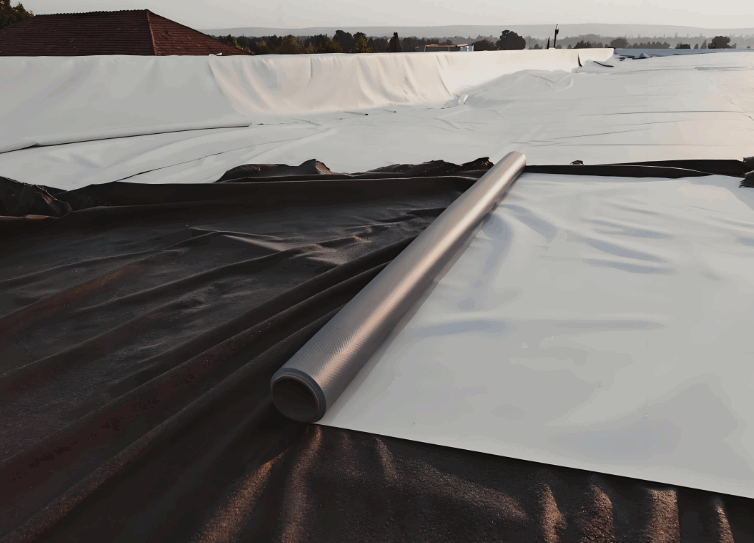
Geotextile fabric is a permeable synthetic textile material widely used in civil engineering,construction,and landscaping projects.Think of it as a high-tech”smart cloth”buried within soil to perform critical functions such as reinforcement,separation,filtration,and drainage.From building highways to maintaining a backyard,geotextile fabric is an indispensable”unsung hero”in modern engineering.
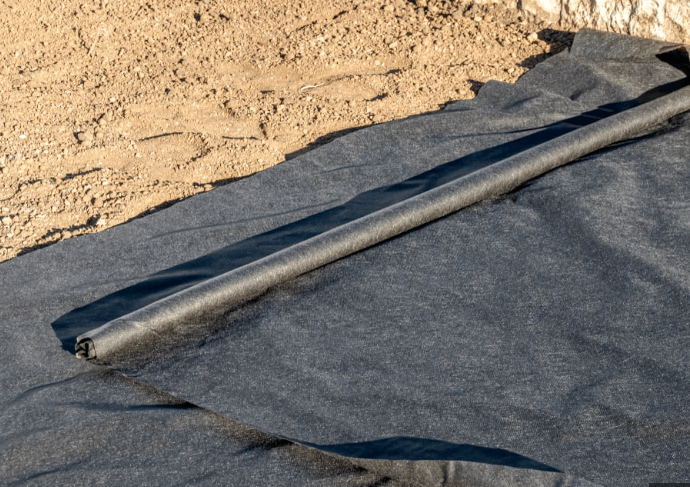
Core Functions and Uses of Geotextile Fabric
Geotextile fabric is not just a simple piece of cloth;it plays various roles based on engineering needs:
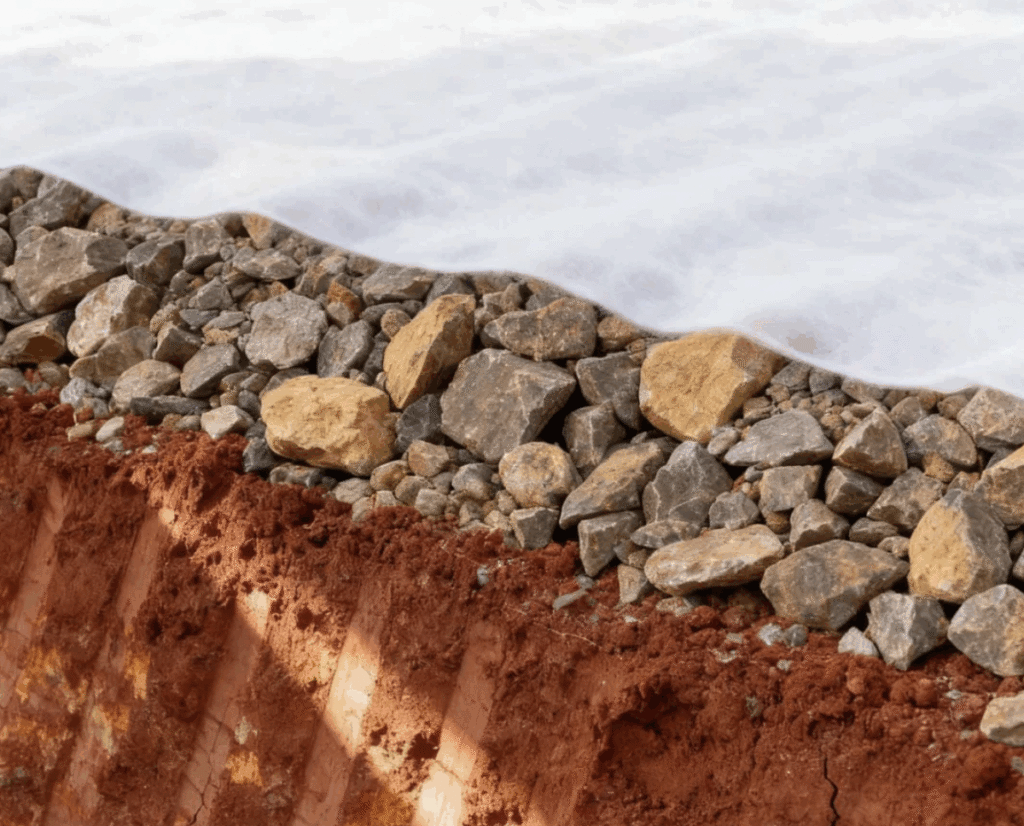
Separation: Prevents different types of soil or materials(e.g.,gravel base and underlying soft soil)from mixing,maintaining the independence and integrity of each layer and preventing base subsidence.
Reinforcement: Utilizes its high tensile strength to distribute upper loads,enhancing overall soil stability and bearing capacity.It is commonly used to reinforce embankments,steep slopes,and retaining walls.
Filtration: Allows water to pass through freely while effectively preventing soil particle loss.It is a key component in systems like drainage ditches and French drains.
Drainage: Collects and channels water within its plane,thereby reducing hydrostatic pressure in the soil and preventing water damage.
If you are purchasing Geotextile Fabric, you can contact us!
Main Types of Geotextile Fabric
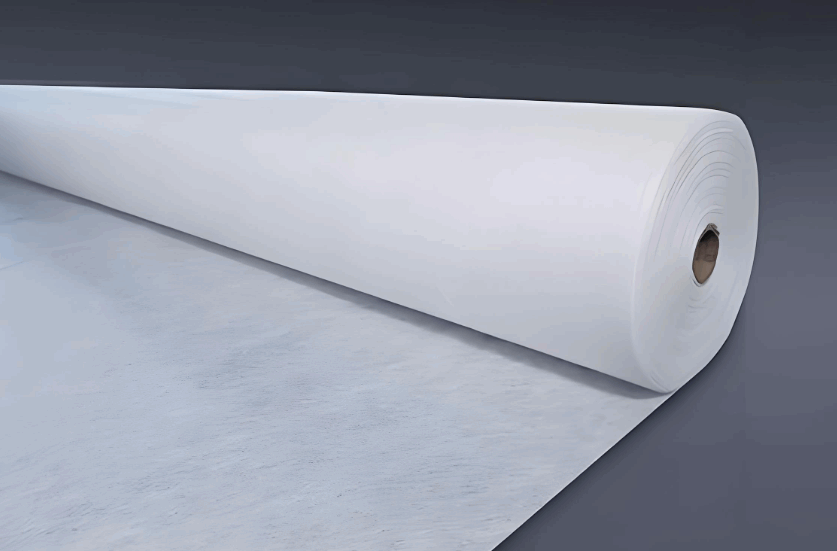
Geotextile fabrics are primarily divided into two main types:woven and non-woven.Their manufacturing processes,characteristics,and applicable scenarios differ significantly.
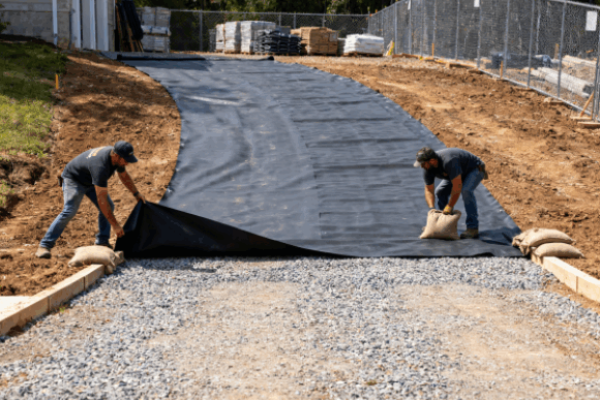
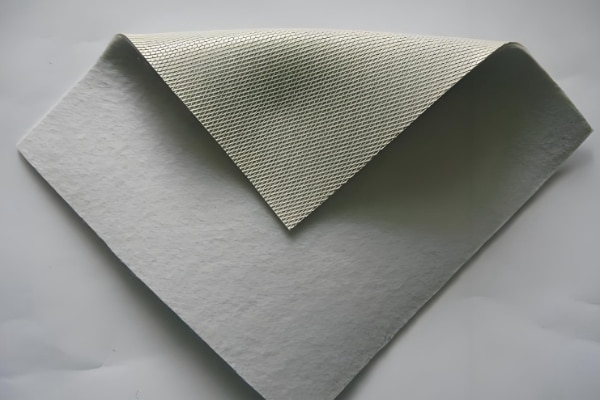
Woven Geotextile is made by interlacing polypropylene or polyester tapes vertically and horizontally,giving it a texture and appearance similar to sackcloth.This construction provides extremely high tensile strength and excellent UV resistance,while also resulting in low elongation.Functionally,woven geotextile primarily serves reinforcement and separation purposes.Consequently,it is most commonly used in scenarios requiring high strength,such as road and railway subgrade reinforcement,parking lot foundations,and any load-bearing areas subjected to heavy loads.
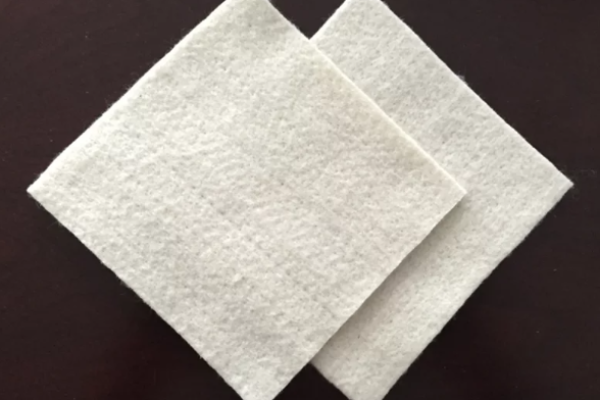
Non-Woven Geotextile is manufactured through a completely different process.It is made from randomly arranged polyester or polypropylene short fibers bonded together by needle-punching or heat-bonding,giving it a felt-like texture.This random fiber structure creates countless tiny pores,endowing it with exceptional permeability and filtration properties.Its core functions are filtration,drainage,and separation.This makes non-woven geotextile the ideal choice for drainage systems,pipe wrapping,landscape separation,and asphalt pavement interlayer maintenance.
In simple terms,if you need to reinforce soil(e.g.,for building a driveway),woven geotextile is the preferred choice.If you need drainage or filtration(e.g.,for constructing a drainage ditch or garden),non-woven geotextile is more suitable.
Common Applications of Geotextile Fabric
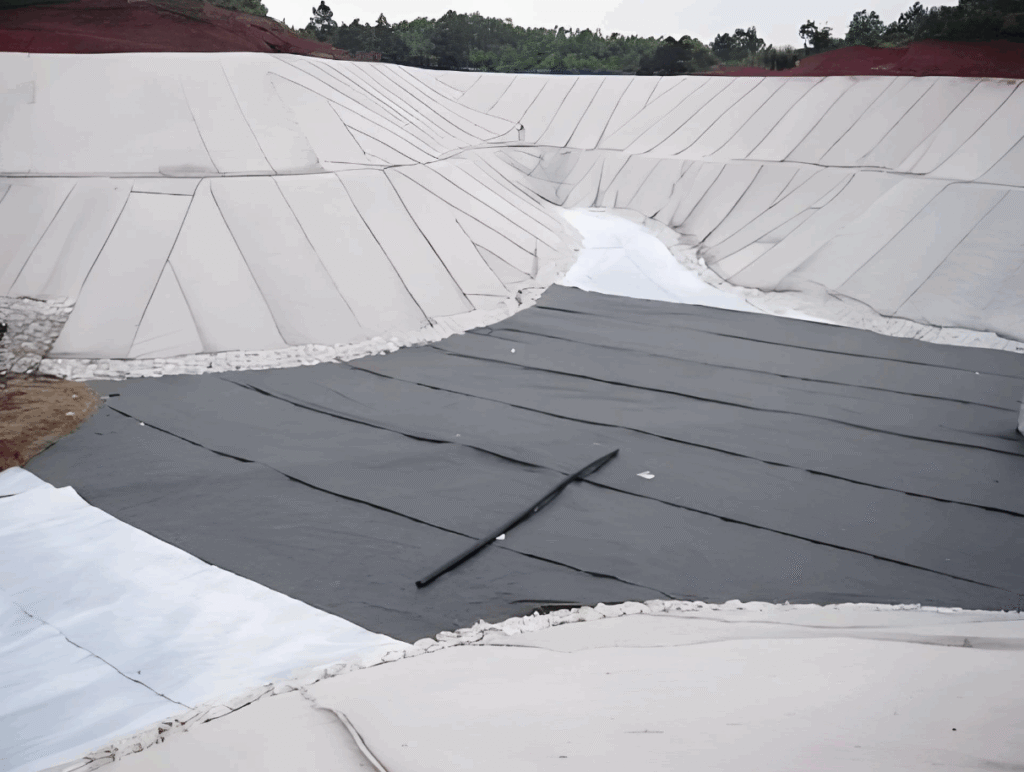
Road and Railway Construction: Used for subgrade separation and reinforcement to extend service life.
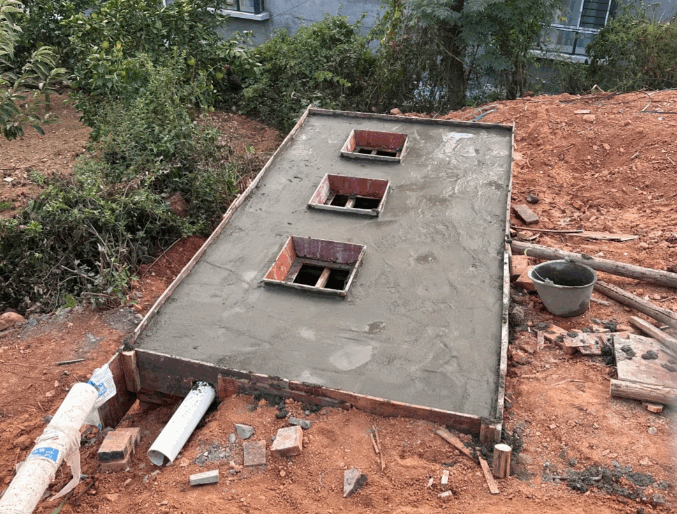
Drainage Systems: Wraps around drainage pipes or gravel to prevent silt clogging while ensuring smooth water flow.
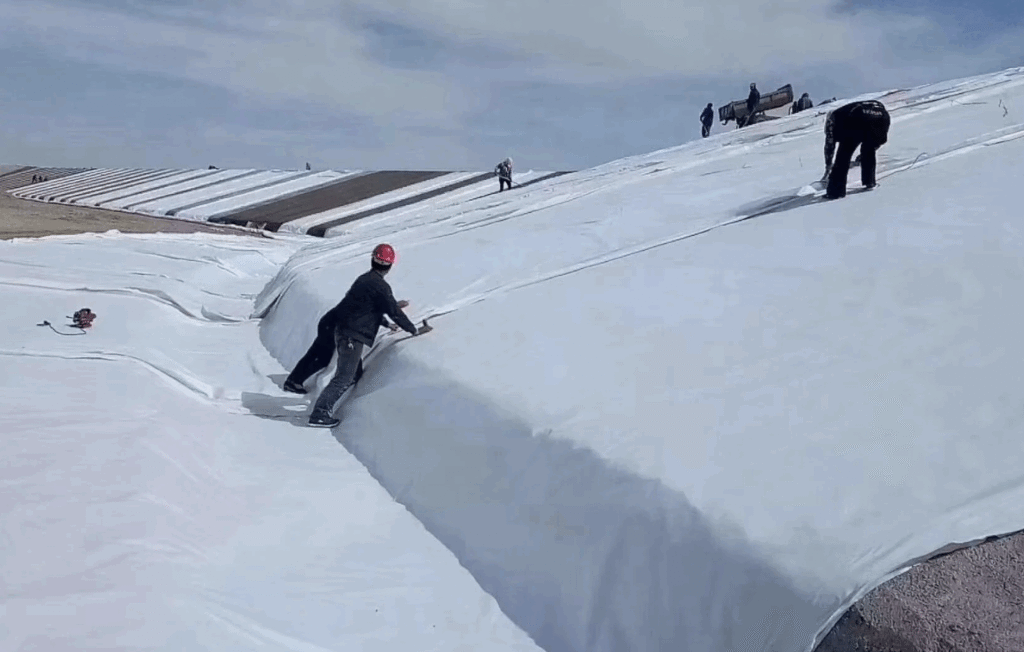
Retaining Walls and Slope Reinforcement: Increases soil shear strength to prevent landslides and soil erosion.
Landscaping: Used beneath garden paths and flower beds to separate soil from gravel.
Is Geotextile Fabric the Same as Landscape Fabric?
Not exactly;this is a common misconception.Although both might be referred to as tǔgōng bù in Chinese,engineering-grade Geotextile Fabric and the common garden Landscape Fabric(Weed Barrier)are fundamentally different.
Key Advice: Never substitute cheap weed barrier fabric for engineering-grade geotextile,as this can lead to drainage issues or structural failure.Conversely,using heavy-duty engineering geotextile in a garden is often overkill and unnecessarily expensive.
Advantages and Disadvantages of Geotextile Fabric
Advantages:
Extended Lifespan: Significantly prolongs the service life of roads and engineering projects,reducing maintenance needs.
Improved Stability: Enhances soil bearing capacity and prevents base subsidence.
Cost-Effectiveness: Saves material and transportation costs by reducing the required thickness of stone base layers.
Environmental Protection: Effectively prevents soil erosion and protects the ecological environment.
Disadvantages:
High Installation Requirements: Improper installation(e.g.,uneven laying,poorly handled seams,or puncture by sharp objects)can significantly reduce its effectiveness or cause complete failure.
UV Degradation: Most geotextiles will age and become brittle when exposed to sunlight(UV rays)for extended periods,losing strength.Therefore,they must be covered and backfilled promptly.
Clogging Risk: In fine-grained soils,non-woven geotextile may become clogged by tiny particles over time,affecting its permeability.
Environmental Considerations: As a plastic product,its production and ultimate disposal pose environmental concerns.Choosing high-quality,durable products is eco-friendlier in itself(by extending lifespan and reducing resource consumption),but it still inherently involves plastic use.
Geotextile Fabric Price Guide
Important Note: The following prices are approximate ranges only.Actual prices vary greatly depending on region,supplier,purchase volume,and specifications(weight per unit area,strength).Please obtain actual quotes for accurate pricing.
Economy Non-Woven Geotextile(for garden drainage,general separation): Approximately¥0.7-¥2.5/square meter
Heavy-Duty Woven Geotextile(for driveways,load-bearing subgrades): Approximately¥2.5-¥5.0+/square meter
High-Performance Composite Geosynthetic Materials(for large engineering projects): Priced higher,requires project-specific quotes.
Key Factors Influencing Price:
Material and Strength: Polyester is generally more expensive than polypropylene;higher indices like tensile strength and tear resistance command higher prices.
Weight(g/m²): Higher weight per unit area indicates denser material and a higher price.
Purchase Quantity: Buying full rolls is far more economical than buying by the meter.
Retailer: Prices differ among large building material markets,specialized engineering material suppliers,and online platforms(e.g.,1688,Taobao).
Geotextile Fabric Frequently Asked Questions(FAQ)
Q1:What is the difference between geotextile fabric and geomembrane?
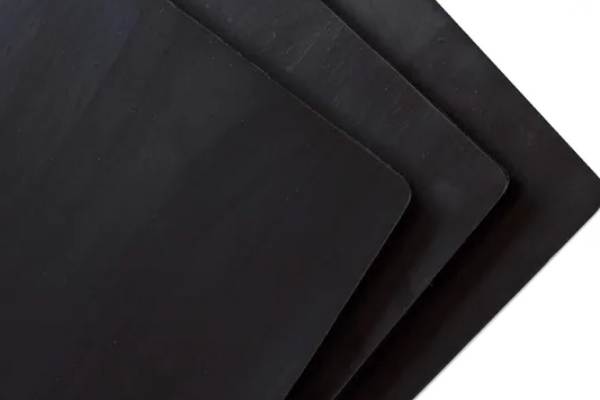
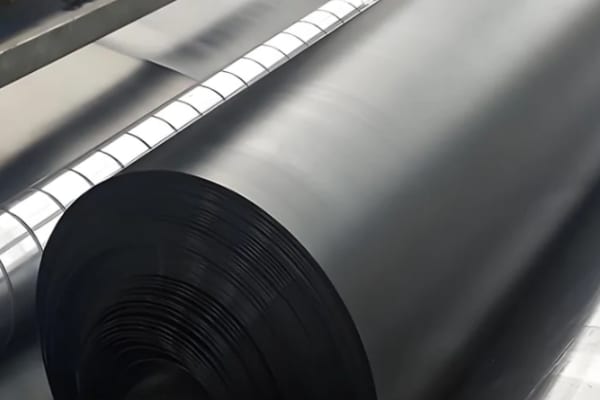
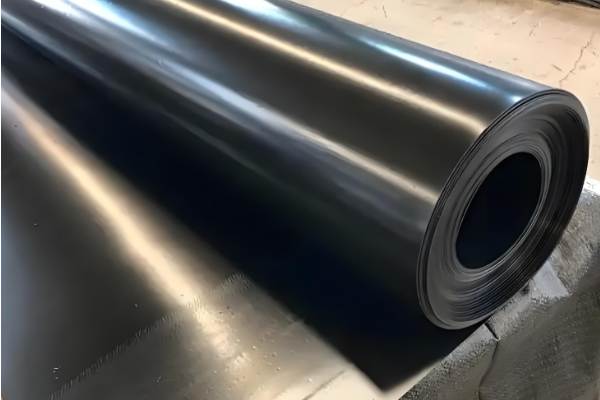
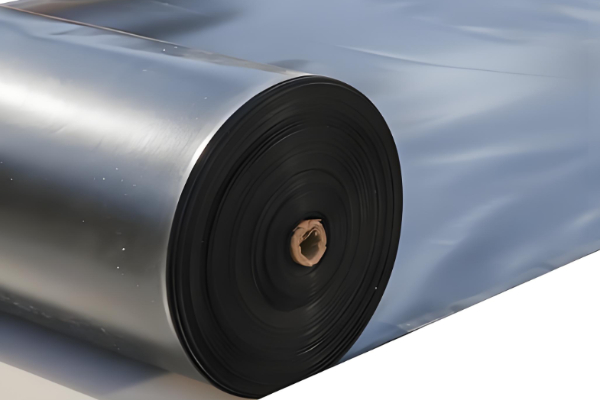
A:Geotextile fabric is permeable and used for reinforcement and drainage.A geomembrane is an impermeable plastic sheet used for containment(e.g.,fish ponds,landfills).
Q2:Which side of the geotextile fabric faces up during installation?
A:The vast majority of geotextile fabrics have no distinct sides;both sides function identically.Simply lay it flat and even.Only some special composite products have orientation requirements.
Q3:Can geotextile fabric clog?
A:Yes,it’s possible.If the wrong type is selected(e.g.,choosing a geotextile with an inappropriate aperture size for filtering fine sand),”clogging”or”blinding”can occur over time.Therefore,selecting the correct product specification based on soil particle size is crucial.
Q4:How long does geotextile fabric last?
A:When correctly installed and covered(protected from direct UV exposure),high-quality polyester or polypropylene geotextile fabric has a design service life of decades,even up to a hundred years.
Conclusion
Geotextile fabric is a versatile and highly efficient modern engineering material,whose importance is evident from massive infrastructure projects to delicate home gardens.The key to success lies in understanding project requirements,selecting the correct type(woven/non-woven),ensuring proper installation,and being aware of its limitations.For large projects,it is best to consult professional engineers.
If you are looking for a reliable Geotextile Fabric supplier,please feel free to contact us.
About Us:Lianjie
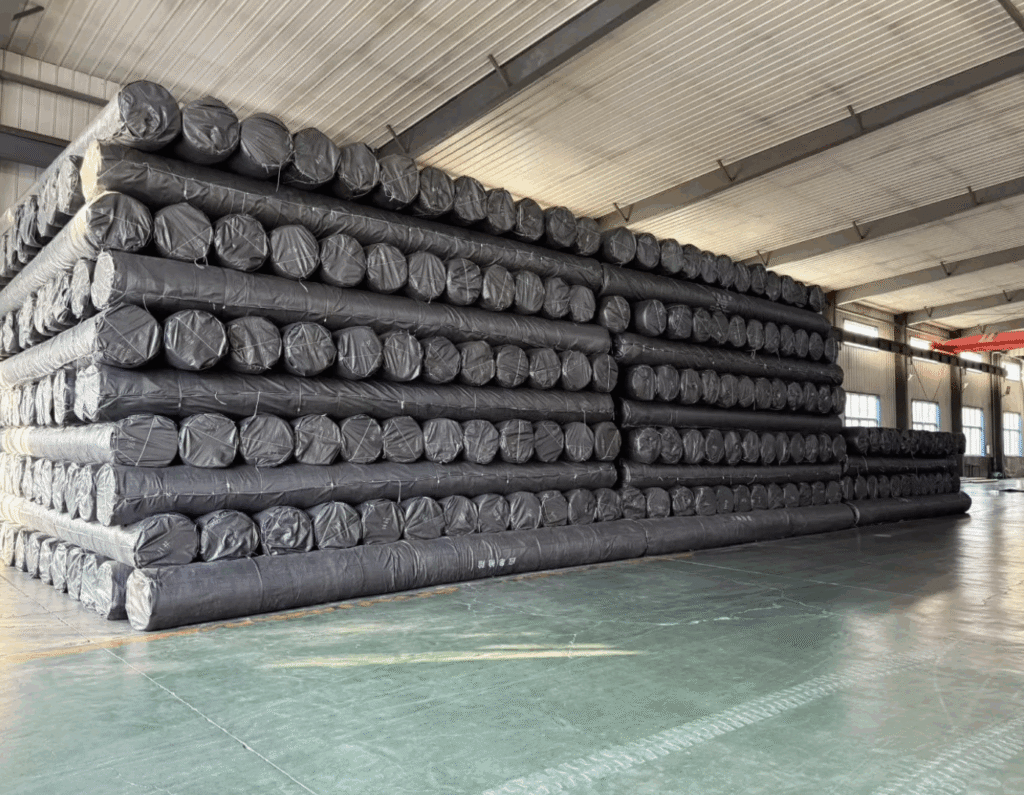
Lianjie is a one-stop supplier of geosynthetics with 15 years of professional experience and multiple national certifications.We provide the most professional Geotextile Fabric solutions!
References:
- International Geosynthetics Society(IGS) Reference sections:Definition of geotextile,core functions(separation,reinforcement,filtration,drainage),and typology.
- ASTM International Reference sections:Test methods for geotextile performance indicators(e.g.,weight per unit area,strength)and standard terminology,providing a standard basis for the professional descriptions in the article.
- GRI(Geosynthetic Research Institute) Reference sections:Application guidelines,testing standards,and technical white papers for geotextiles,particularly regarding the selection and use of different types of geotextiles in specific scenarios.