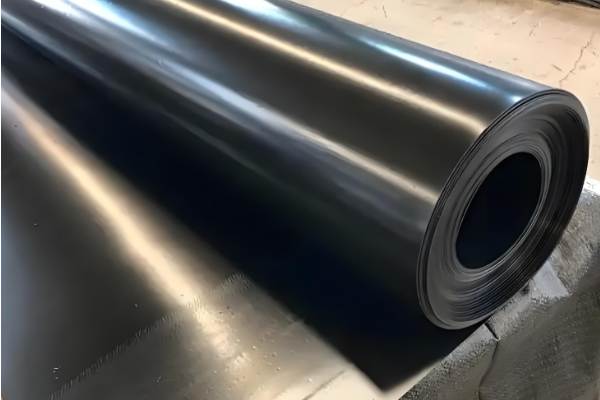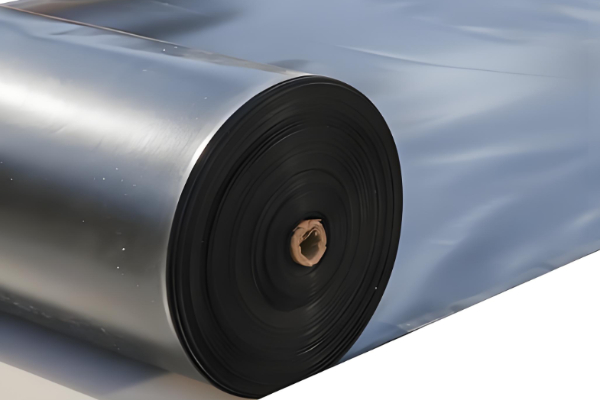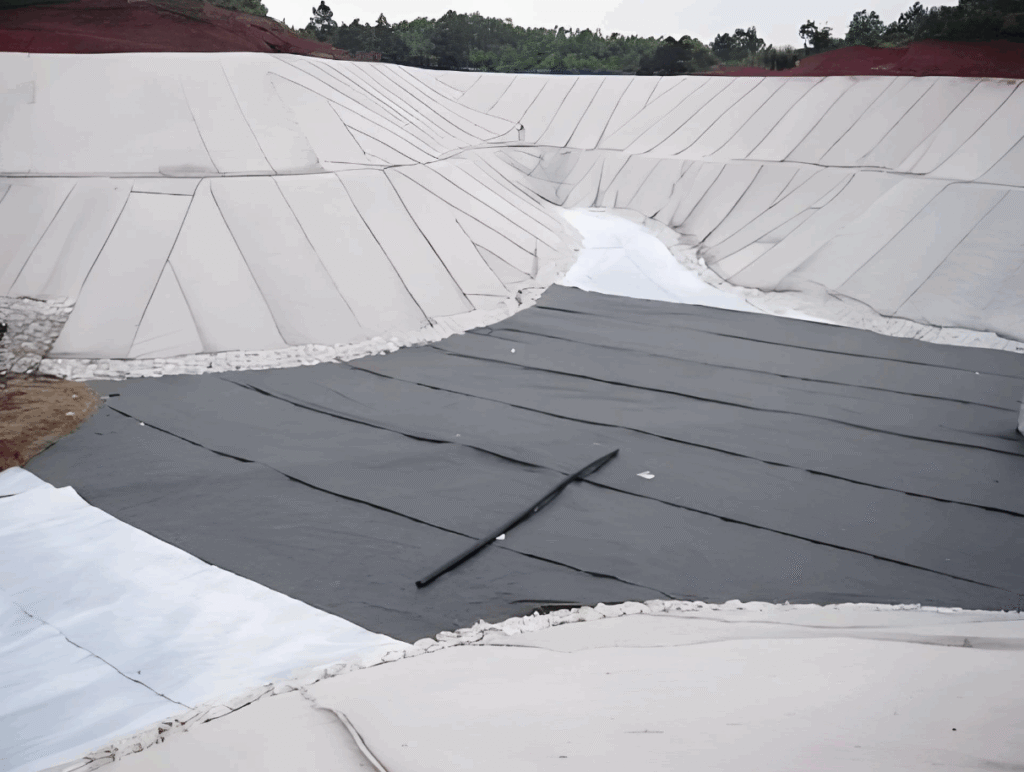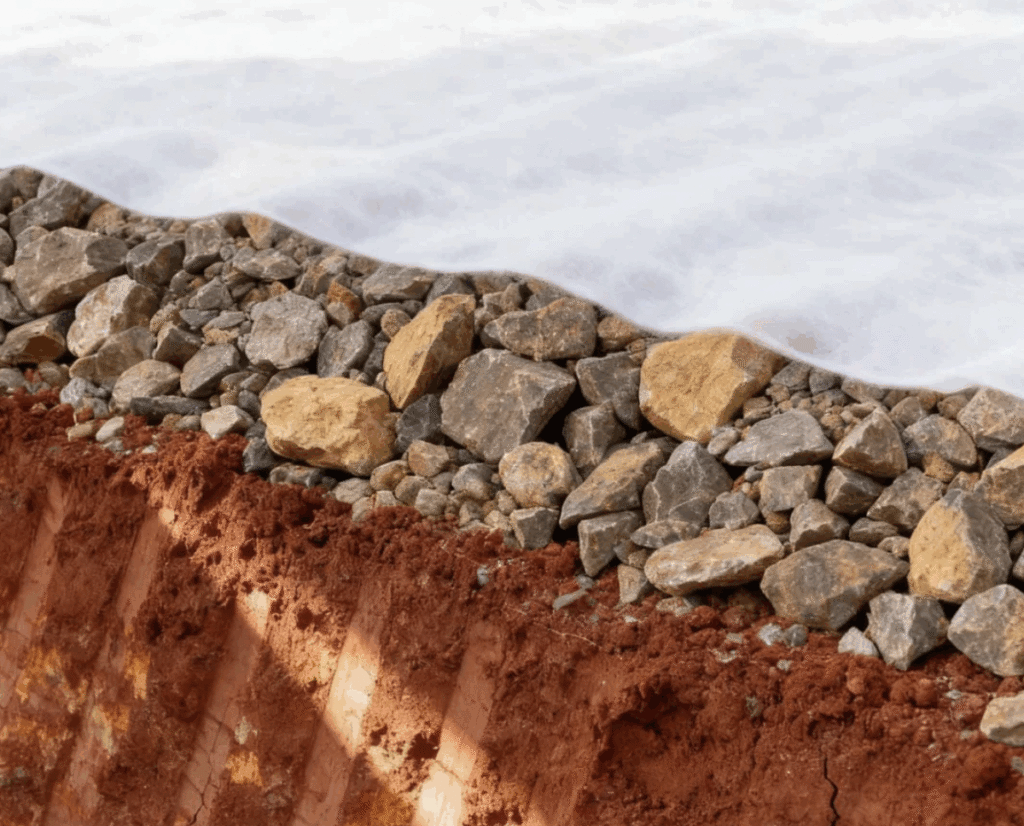
Are you selecting geotextile fabric for your French drain project and feeling overwhelmed by the choices between ‘woven’, ‘non-woven’, different weights, and brands? Choosing the wrong material can lead to the complete failure of your hard-installed drainage system within just a few years due to silt clogging. This article will directly reveal the best geotextile fabric for French drains, provide an in-depth analysis of the selection criteria, and offer authoritative brand recommendations, ensuring you make the right choice the first time and guarantee your drain works effectively for decades.
The Criteria for the Best French Drain Geotextile Fabric
Before recommending specific products, we must clarify that for French drains, the “best” standard isn’t just about strength or price, but the perfect balance between filtration performance, clogging resistance, and durability.
Core Function is Filtration, Not Reinforcement: The primary task of a French drain geotextile is to allow water to pass freely while blocking soil particles. Therefore, excellent filtration is the top priority.
Key Parameters to Check:
Type: Determines the basic performance direction.
Weight(oz/yd²): Typically,4-8 oz/yd² is suitable for most residential projects. Higher weight generally means greater durability.
Permeability: The higher the value, the faster the drainage speed.
UV Resistance: Ensures the material’s performance doesn’t degrade before installation.
Conclusion: After comprehensive evaluation,non-woven polypropylene geotextile fabric is universally recognized as the best choice for over 90%of French drain applications. We will explain the reasons in detail below.
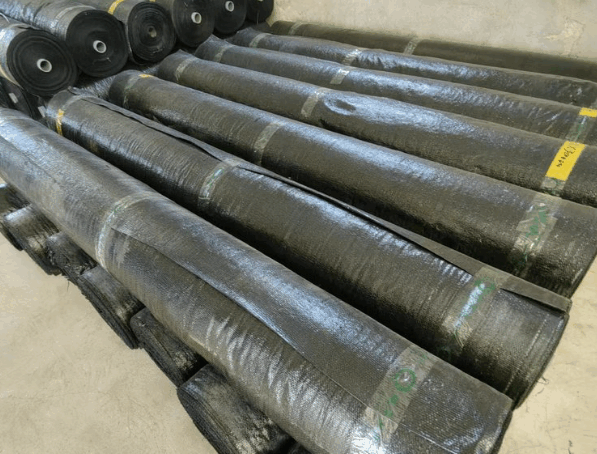
The Best French Drain Geotextile: Non-Woven vs.Woven
| Characteristic | Non-Woven (Recommended) | Woven (Not Recommended for Standard Drains) |
|---|---|---|
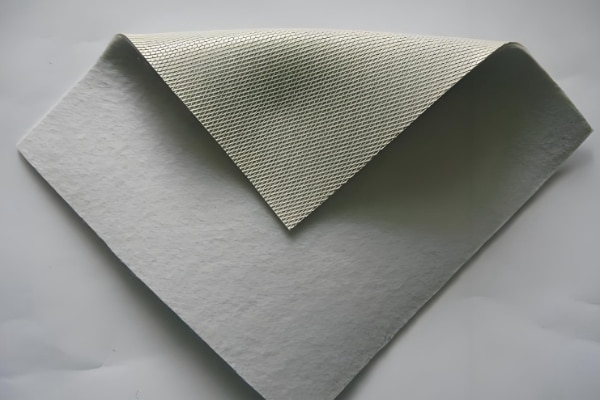
| Structure | Randomly oriented fibers, heat-bonded; felt-like | Woven strands resemble a burlap sack |
| Primary Function | Superior Filtration | Soil Separation & Reinforcement |
| Permeability | Excellent (Water can pass freely in multiple directions) | Good (But prone to clogging over time) |
| Clogging Resistance | Excellent (Structure prevents fine particle clogging) | Fair (Particles can lodge in the weave) |
| Strength | Good (More than adequate for a drain) | Excellent (Very high tensile strength) |
| Suitability for French Drains | ★ Highly Recommended ★ | Only if soil reinforcement is also needed |
Why Does Non-Woven Fabric Win?
Its random fiber structure creates countless tiny channels that allow water to pass through easily while effectively blocking soil particles.This structure makes it highly resistant to clogging,enabling it to maintain long-term drainage efficiency—the core requirement of a French drain.
Warning: Be Sure to Avoid the “Landscape Fabric” Trap!
Never use ordinary Landscape Fabric(or Weed Barrier).They are designed to block everything(including water and air),which will cause your drain to fail completely.
If you are purchasing Geotextile for Erosion Control, you can contact us!
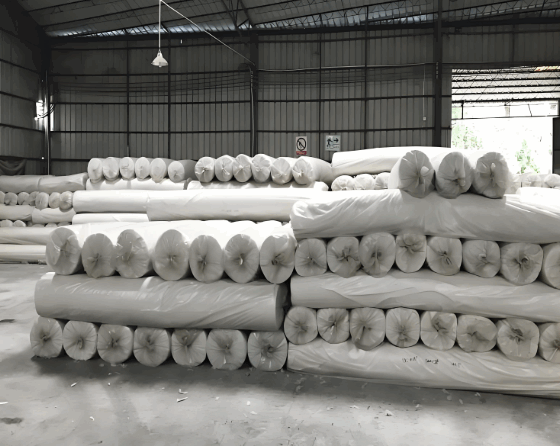
The Best French Drain Geotextile: Brand Recommendations
Based on the above criteria,we have selected the following products that excel in both performance and reputation.
1. Comprehensive Best Choice: Amoco Non-Woven Geotextile Fabric
Recommended Specs:4 oz/yd²(for standard yard drainage)or 6 oz/yd²(for heavy-duty applications)
Reasons to Buy:
Professional Design: Specifically designed for drainage and filtration applications, with balanced performance.
Best Value: Offers the perfect balance between filtration, strength, and price, making it the ideal choice for the vast majority of residential projects.
Easy to Purchase: Widely available at major home improvement stores and online platforms(like Amazon).
2.Premium/Heavy-Duty Choice: Typar Non-Woven Geotextile Fabric
Reasons to Buy:
Brand Reputation: Typar is a well-known industry brand recognized for its consistent high quality and durability.
Excellent Performance: Typically offers higher strength and optimized filtration performance, suitable for use next to driveways, commercial projects, or scenarios with extremely high longevity requirements.
High Return on Investment: Although slightly more expensive, it provides extra assurance for critical projects.
3. Budget-Friendly Choice: Home Depot/Lowe’s In-Store Brand Non-Woven Fabric
Reasons to Buy:
Price Advantage: The most competitive price, very suitable for standardized yard drainage projects with limited budgets.
Convenience: Readily available in stores,meeting urgent needs.
Note: When purchasing, be sure to confirm the product label says “Non-Woven” and is suitable for”Drainage”.
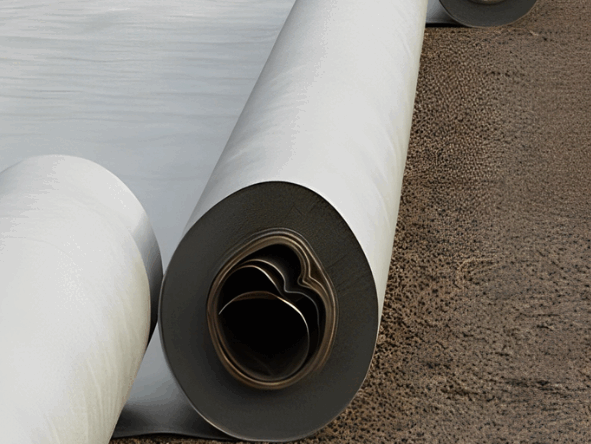
Purchase and Installation Guide for the Best French Drain Geotextile
1. How Much to Buy?Quick Calculation Formula
You can use this formula for estimation:(Trench Length×(Depth+Width)×2)/Fabric Roll Coverage Area
Explanation: Because the fabric needs to wrap the entire gravel layer(bottom and sides),you need to calculate the surface area of the”liner.”Please reserve about 10%extra fabric for seam overlap when purchasing.
2. Professional Installation Steps for French Drain Geotextile
Even with the best fabric, incorrect installation will render it useless.
Following the correct steps to install the geotextile is crucial for the long-term effectiveness of the French drain.
Excavation and Grading: Dig a trench about 30 cm wide and 50 cm deep.The core key is to ensure a continuous slope(≥1%)at the trench bottom.Use a level for assistance and compact the trench bottom.
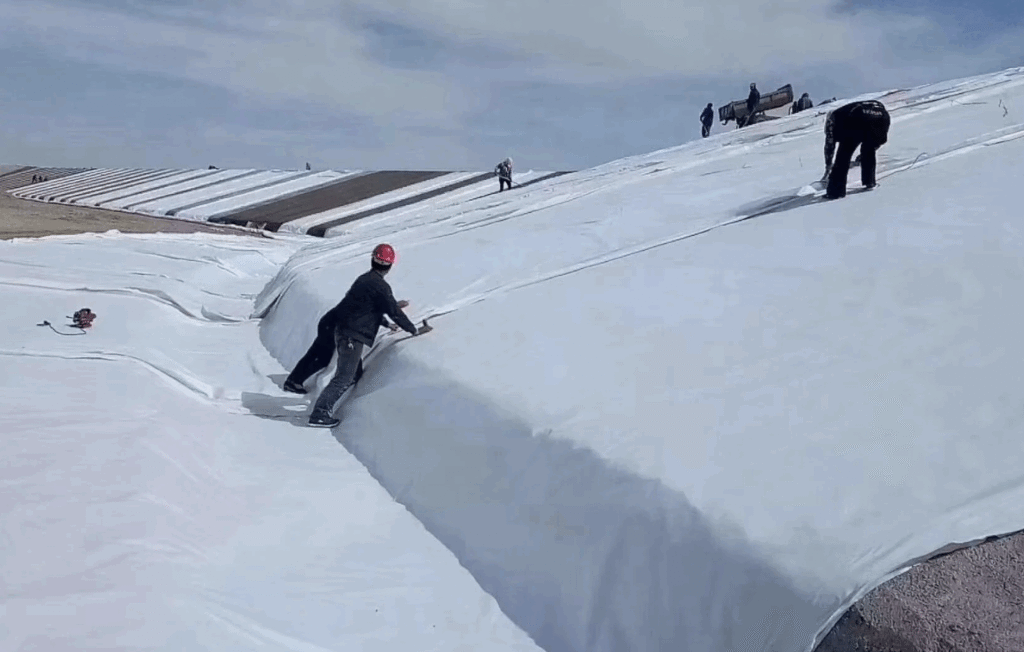
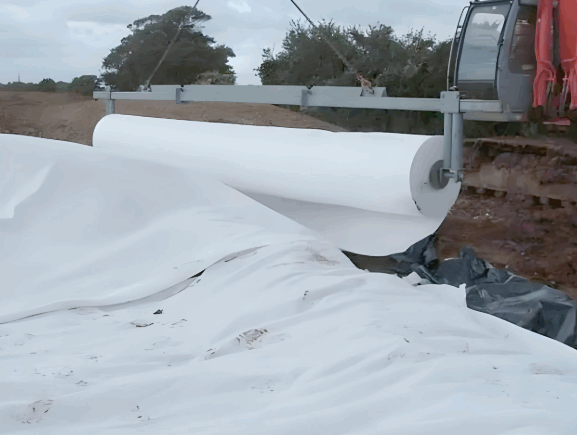
Laying the Geotextile: Loosely place the non-woven geotextile into the trench,completely covering the bottom and side walls.Be sure to leave sufficient width to ensure the sides can be pulled up and overlapped adequately.
Adding Gravel and Drain Pipe:
- First, add a 5-8 cm thick base layer of washed gravel.
- Place the perforated drain pipe(holes facing down)and check the slope again.
- Continue filling with gravel until about 15 cm below the final ground level.
Wrapping and Sealing: This is the most critical step.Pull the sides of the geotextile up and completely wrap the gravel layer at the top,forming a sealed bundle.The overlap width must be strictly guaranteed to be over 30 cm,and the seam should be secured using tape or stitching to completely isolate silt.
Backfilling and Completion: Backfill with loose topsoil over the wrapped bundle and restore the surface.
Key to Success: The geotextile must form a continuous and complete”protective capsule”that completely isolates the gravel layer from the surrounding soil.This is essential for preventing clogging and ensuring drainage effectiveness for decades.
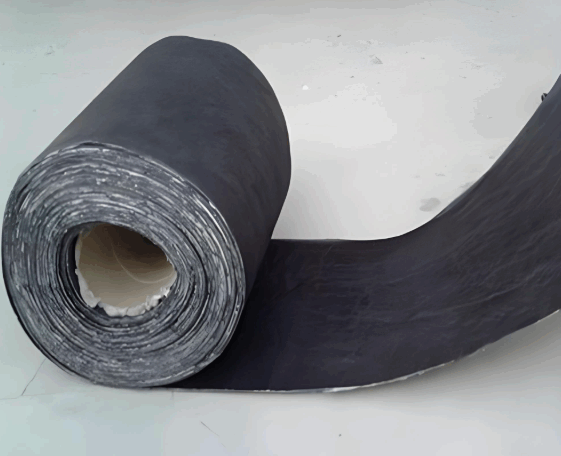
Frequently Asked Questions(FAQ)
Q1:Can I use a heavier woven fabric for peace of mind?
A:Not recommended.The high strength of woven fabric is overkill for a French drain,and its tendency to clog is a fatal flaw.In the long run,drainage efficiency will significantly decrease,making it not worth the trade-off.
Q2:How do I choose between 4 oz and 8 oz non-woven fabric?
A:For most standard yard drainage,4 oz is fully sufficient and offers the best value.If your project is located next to a driveway, parking area, or the soil contains many sharp rocks,it’s advisable to upgrade to 6 or 8 oz for extra protection.
Q3:Does the geotextile need to wrap the drain pipe itself?
A:No.Modern best practice is to use a perforated drain pipe with a built-in filter sock.The geotextile’s task is to wrap the entire gravel layer, creating a large-scale filtration barrier.
Conclusion
In summary, after a comprehensive comparison and analysis,our recommendation for your French drain is clear:the best choice is a non-woven polypropylene geotextile fabric with a weight between 4-8 oz.It scientifically balances filtration efficiency,long-term reliability,and project budget.
If you are looking for a reliable geotextile fabric for French drains supplier, please feel free to contact us.
About Us:Lianjie
Lianjie is a one-stop supplier of geosynthetics with 15 years of professional experience and multiple national certifications.We provide the most professional geotextile fabric for French drains solutions!
Reference Sources
- ASTM D4491: Standard Test Methods for Water Permeability of Geotextiles by Permittivity.
- ASTM D4751: Standard Test Method for Determining the Apparent Opening Size (AOS) of a Geotextile.
- ASTM D4632: Standard Test Method for Grab Breaking Force and Elongation of Geotextiles.
- Application: Parameters and test methods mentioned in the text concerning “water permeability,” “tensile strength,” and “Apparent Opening Size” are derived from such standards.