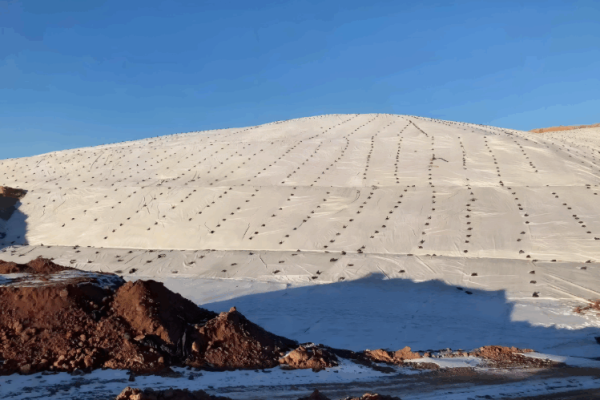
Watching the soil and nutrients on the courtyard slope being relentlessly washed away by rain, you struggle to find a once-and-for-all solution. With countless types of landscape fabric available on the market, it’s challenging to pick the right one for your needs. This article will explain the best landscape fabric for erosion control, guiding you from principles to practice to completely resolve soil erosion issues.
The Best Landscape Fabric for Erosion Control
Choosing the wrong type of landscape fabric is the biggest mistake in erosion control. The market mainly offers two types: woven weed barrier fabric and non-woven fabric, with significant differences in performance.
Simple Distinction:
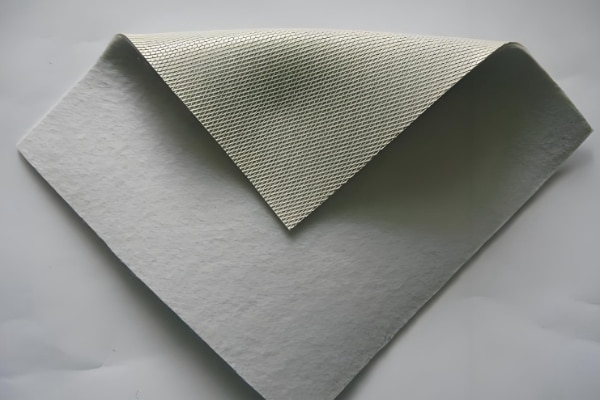
- Woven Fabric: Made of PP or polyester flat yarn interwoven like woven bags, featuring a dense and sturdy structure.
- Non-Woven Fabric: Composed of plastic fibers bonded randomly, with a texture similar to non-woven shopping bags.
For erosion control, we strongly recommend woven fabric. The reasons are as follows:
| Characteristic | Woven Fabric (Recommended) | Non-woven Fabric (Not Recommended for Primary Erosion Control) |
|---|---|---|
| Permeability | Excellent – Allows for rapid water passage, reducing surface runoff. | Good |
| Strength/Durability | Superior – High tensile strength, can firmly lock soil in place. | Medium – More prone to tearing, less stable on slopes. |
| Soil Fixation | Superior – Effectively secures soil particles through its tight weave. | Poor – Soil can potentially wash through the material. |
| Best Use Case | Slopes, driveways, high-traffic areas. | Flat areas for weed suppression, greenhouse flooring. |
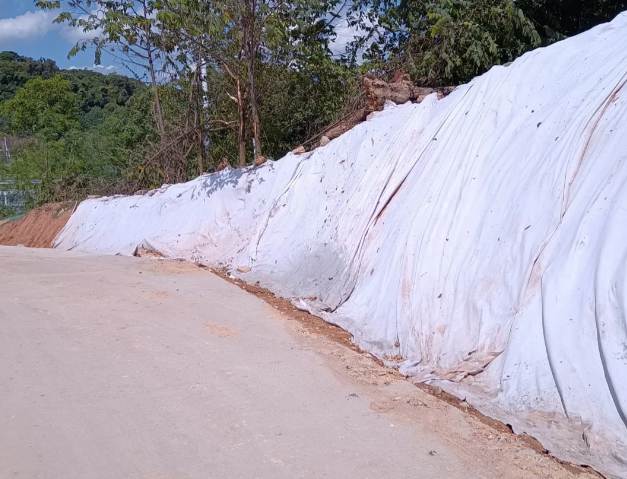
Conclusion: Woven fabric, with its excellent tensile strength and soil stabilization capability, effectively resists water erosion. It is the ultimate choice for controlling erosion, especially on sloped areas. Non-woven fabric is more suitable for flat regions where weed control is the primary goal.
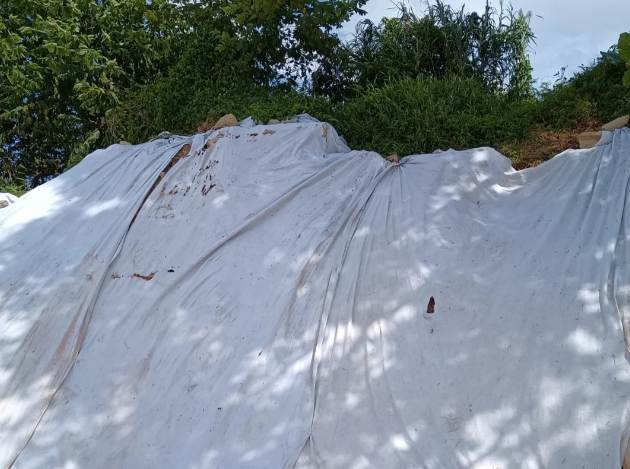
How to Select the Right Landscape Fabric for Erosion Control
- Check the Type: Prioritize “Woven Fabric”Action Guide: Explicitly look for “woven fabric” on product pages or packaging. Avoid all products labeled “non-woven fabric” or “eco-friendly non-woven fabric” for primary erosion control scenarios.
- Check GSM (Grams per Square Meter) – A Key Indicator of StrengthWhat it is: Refers to the weight per square meter (grams/m²). Higher GSM means thicker material and greater strength.Action Guide:
- Daily gentle slopes/weed control: Choose products with ≥90 GSM.
- General slope control: Recommend 110 GSM – 140 GSM products.
- Steep slopes/high-intensity projects: Must select heavy-duty woven fabric with ≥150 GSM.
- Check Material and UV ProtectionWhat it is: The best material is new PP (polypropylene), which is durable and resistant to chemical corrosion. Ensure the product has UV stabilization treatment; otherwise, it will quickly become brittle under sunlight.Action Guide: Check product details for terms like “UV protection” or “anti-aging.”
- Check User Reviews and Real PhotosAction Guide: Focus on photos showing the fabric’s thickness, weaving density, and actual performance in sloped or embankment scenarios. Negative reviews often reveal real issues with strength or durability.
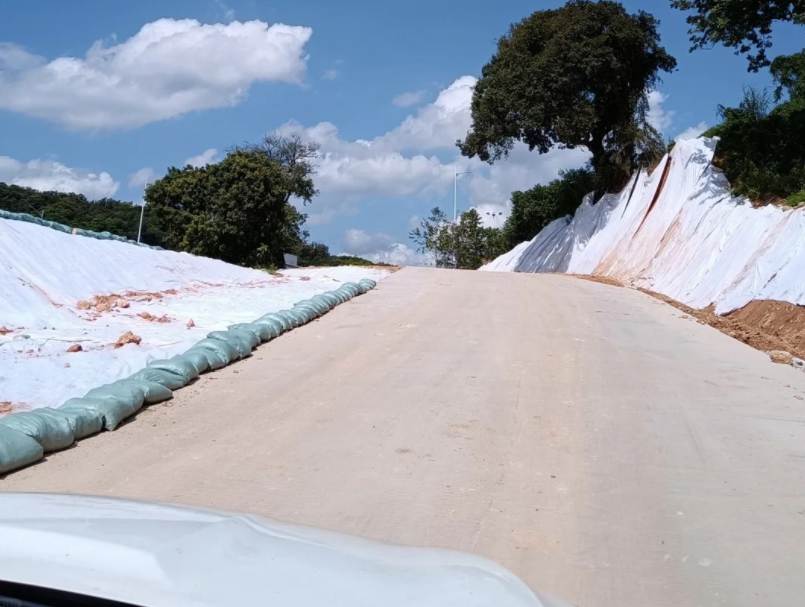
How to Install Landscape Fabric Correctly for Optimal Erosion Control
Incorrect installation can render even the best fabric ineffective. Follow these steps, especially for sloped areas:
Tool Preparation:Tape measure, utility knife, heavy-duty landscape fabric staples (at least 15-20 cm long), hammer, gloves.
Step-by-Step Installation Guide:
- Site Preparation: Thoroughly remove weeds, rocks, and branches, and level the soil as much as possible. Fill large depressions to prevent the fabric from sagging and failing to stabilize the soil.
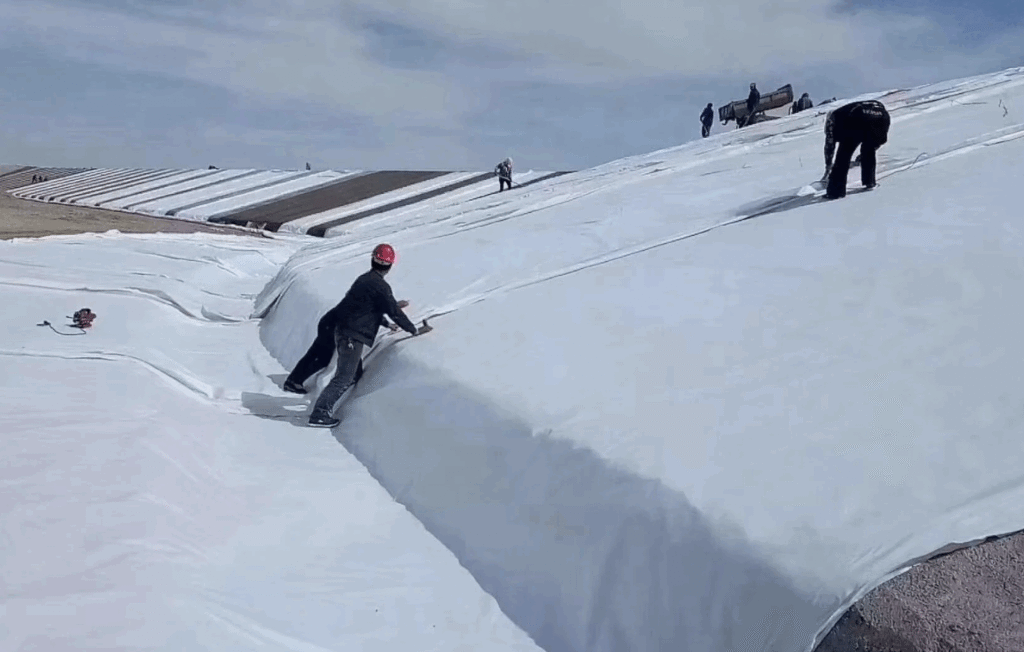
- Laying Direction (Critical!): Always lay the fabric from top to bottom along the slope.Unroll the fabric from the slope top and gently roll it downwards.Overlap adjacent fabric panels by 15-20 cm to prevent water from seeping through seams.
- Securing Tips (Core Step): Use plenty of U-shaped staples! This is the secret to successful slope projects.On flat ground, space staples 1-1.5 meters apart; on slopes, reduce spacing to 0.5-1 meter.Start securing from the slope top, then work along the slope. Drive staples perpendicular to the slope for maximum grip. Add extra staples along edges and overlapping seams.
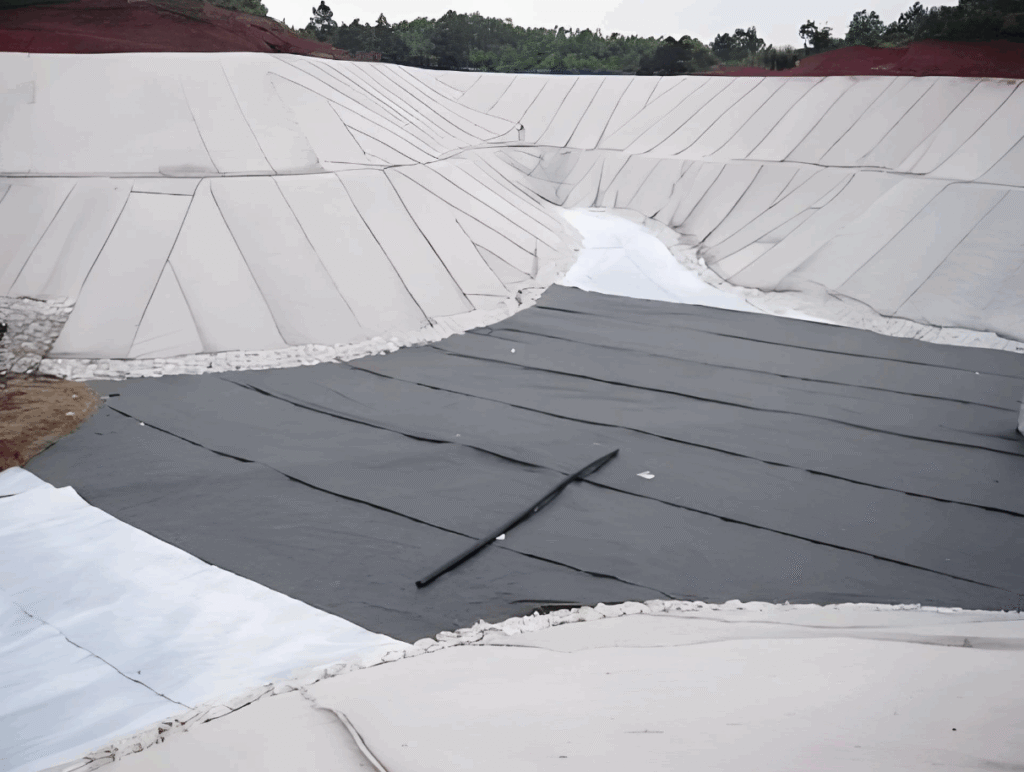
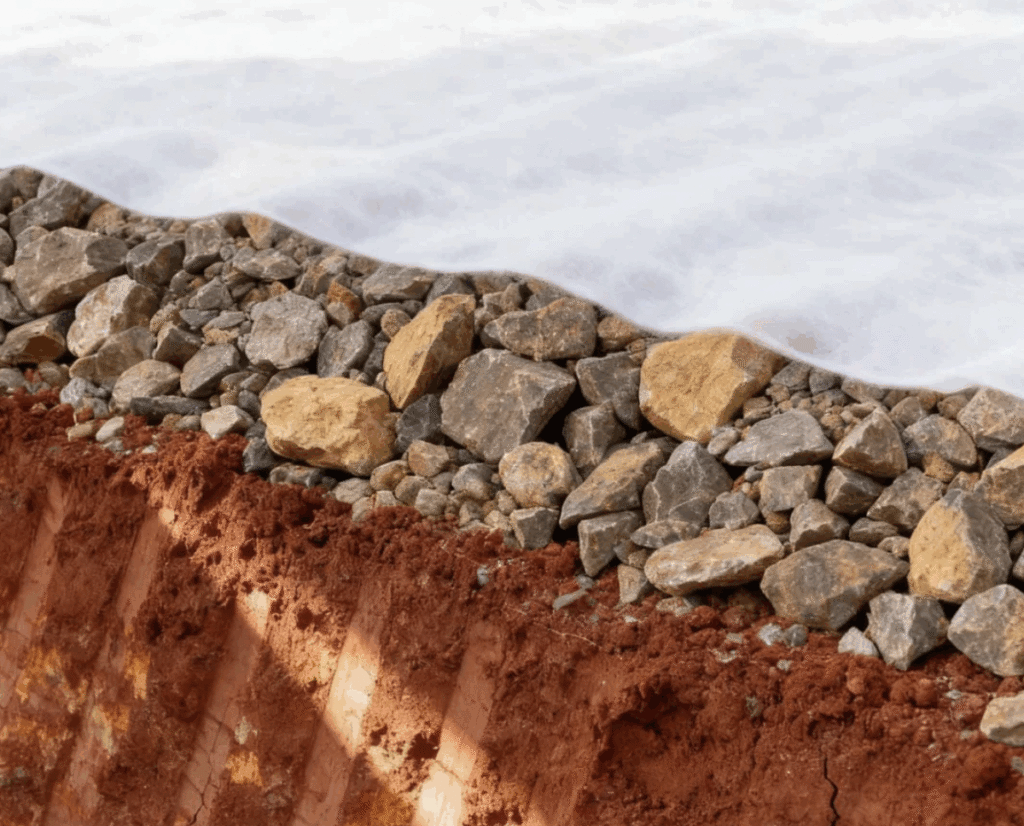
- Finishing Touches: At the slope bottom, bury the fabric end in a shallow trench and compact it with soil and rocks.Finally, cover the fabric with a 2-5 cm layer of gravel, pebbles, or bark chips. This not only enhances stability and improves appearance but also further cushions raindrop impact.
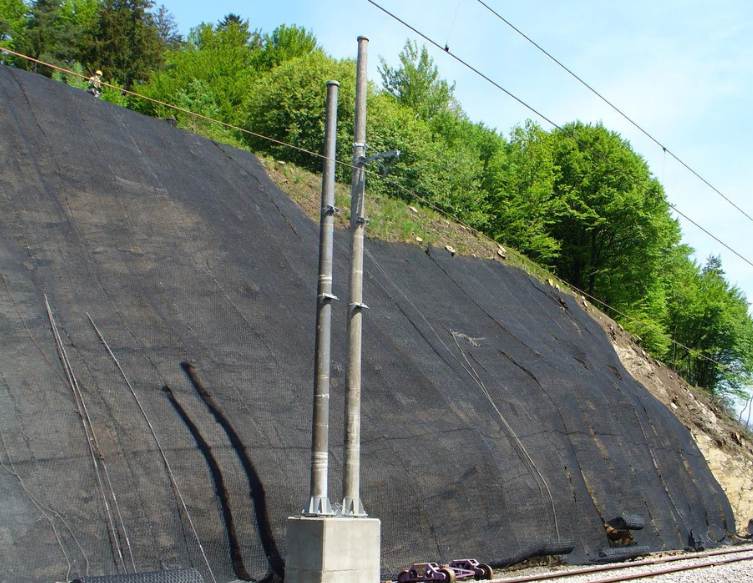
Other Effective Erosion Control Solutions
For extremely steep terrain or more eco-friendly options, fabric is not the only choice – a detail that deeply researched users will care about:
- Erosion Control Matting: Made of coir (coconut fiber) or jute, it is a natural and biodegradable option.Advantages: Eco-friendly, effectively stabilizes soil before degradation (usually 1-3 years), and provides temporary protection for plant growth.Suitable Scenarios: Newly seeded lawn slopes, ecological restoration projects, and courtyards seeking natural solutions.
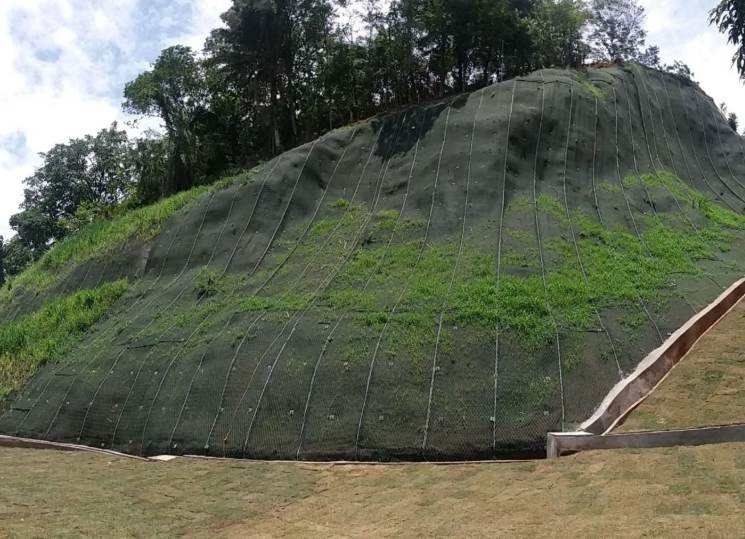
- Planting Soil-Stabilizing Plants: The most fundamental and aesthetically pleasing long-term solution.Plant Selection: Choose plants with dense, spreading root systems, such as creeping bentgrass, Bermuda grass, and ivy.Advantages: A permanent “living” barrier that is both ecological and attractive.Tip: Combine with coir matting for initial protection before plants fully establish.
- Using Mulch: For gentle slopes or short-term protection, directly lay a thick layer (5-10 cm) of wood chips or straw to effectively cushion rain and slow runoff.
Conclusion
Selecting an erosion control solution depends on matching your terrain and needs.
- For the most effective and durable solution: Choose high-strength woven fabric without hesitation and follow the slope installation method strictly.
- For eco-friendliness and natural landscapes: Coir or jute erosion control matting is an excellent choice.
- For a fundamental long-term solution: Planting soil-stabilizing plants combined with initial protection is the optimal ecological strategy.
Reference Sources
- Functions of Geosynthetics
- Source: International Geosynthetics Society (IGS), “Introduction to Geosynthetics.”
- Usage Justification: This source authoritatively defines the four core functions of geotextiles: separation, filtration, drainage, and reinforcement. The article’s descriptions of woven fabric providing “soil locking” (reinforcement) and “water permeability” (filtration/drainage), and non-woven fabric providing “filtration” and “water conveyance,” are based on this standard classification.
- Woven vs. Non-Woven Geotextile Performance Comparison
- Source: GRI-GT13 (Geosynthetic Research Institute Standard Test Methods), “Standard Specification for Test Methods for Geotextiles.”
- Usage Justification: This standard details test methods for various geotextile properties. The article’s conclusions that “woven fabric has higher tensile strength” and “non-woven fabric has higher water permeability and transmissivity” are based on the general industry consensus derived from such standardized tests (e.g., wide-width tensile test, permittivity test).
- Best Management Practices (BMPs) for Erosion Control
- Source: United States Environmental Protection Agency (EPA), “National Menu of Stormwater Best Management Practices.” Or relevant technical guides from the USDA Natural Resources Conservation Service (NRCS).
- Usage Justification: Guides from these government agencies emphasize the importance of managing surface runoff at the source. The article’s recommendation to select “highly permeable” materials to “reduce surface runoff” aligns with the core principles of these BMPs.