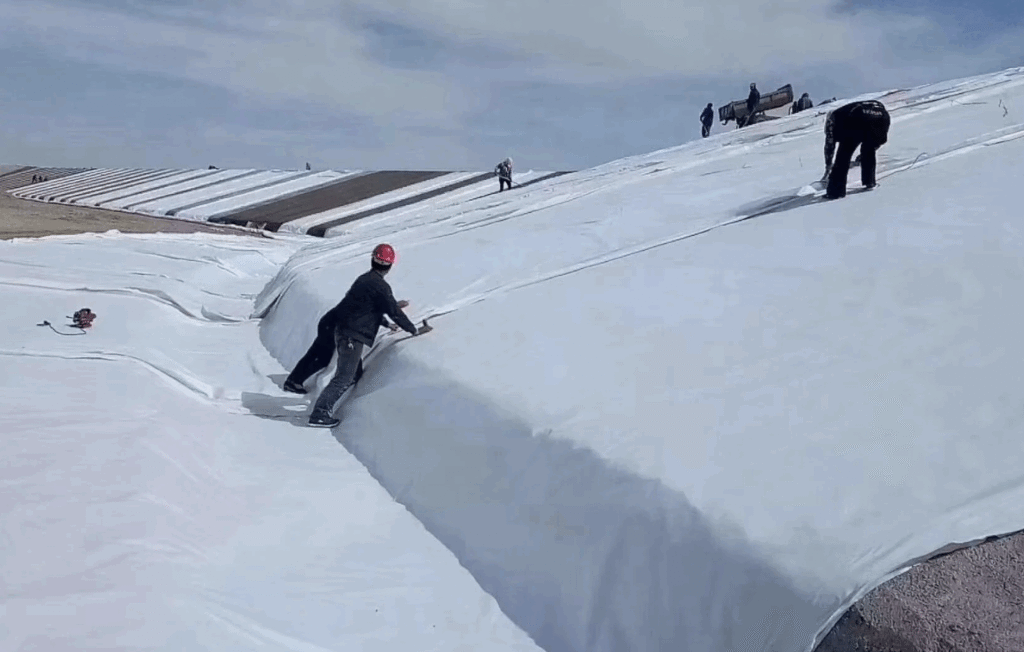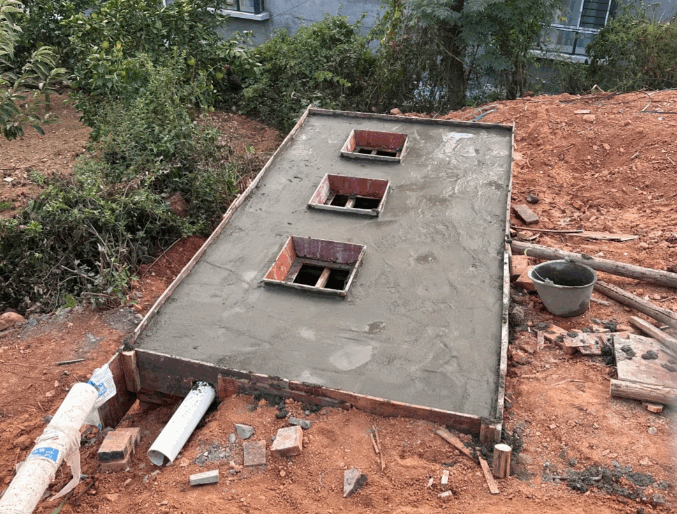
In backyard renovations or slope protection, the stability of retaining walls directly determines project quality and service life. This article will professionally break down the key selection criteria, product recommendations, installation processes, and common pitfalls of specialized landscape fabrics (geotextiles) for retaining walls. It helps you accurately choose the best landscape fabric for retaining Wall, ensuring your retaining wall is both functional and durable.
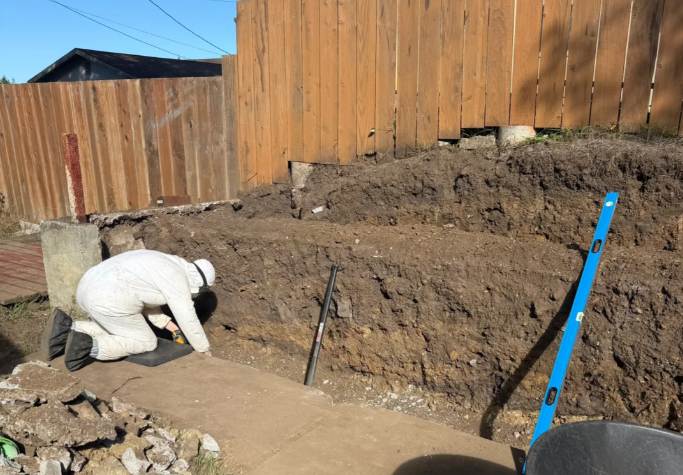
Why Retaining Walls “Must” Use Landscape Fabric?
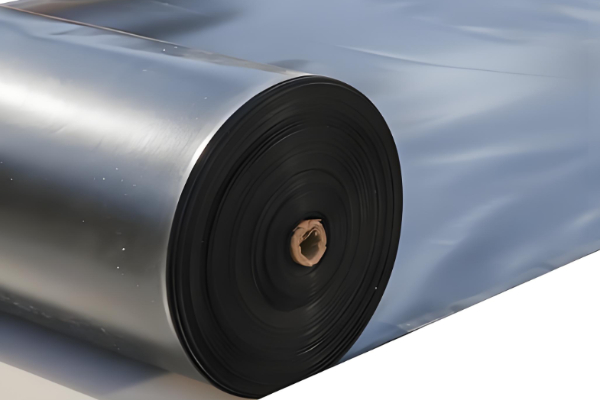
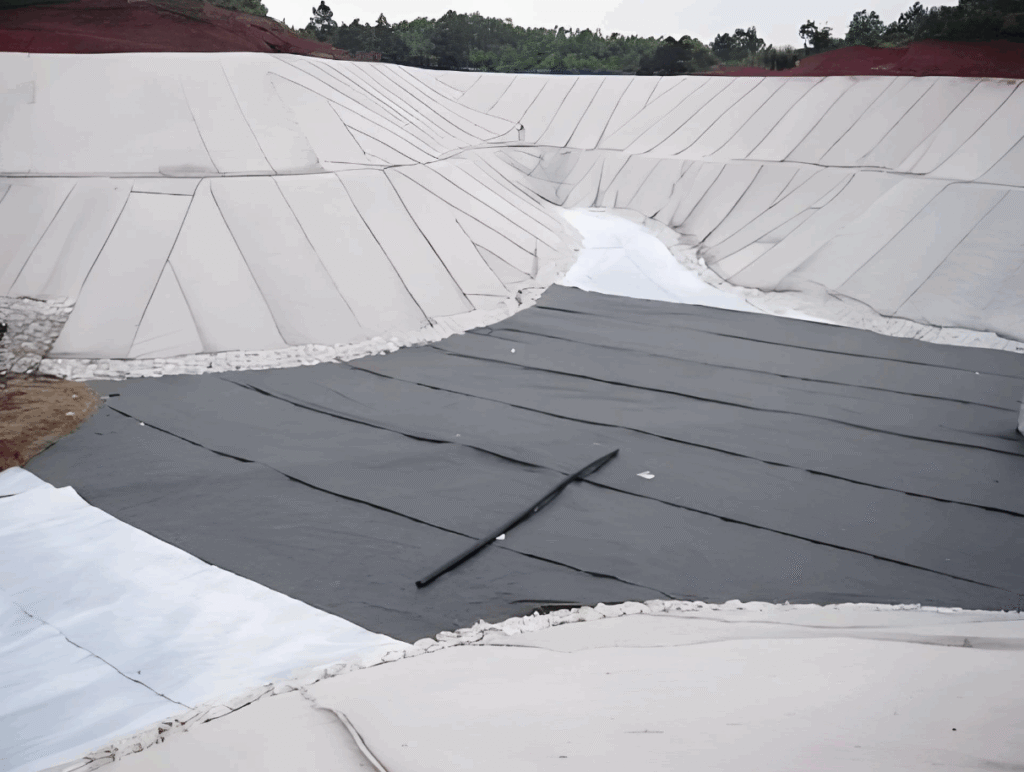
Landscape fabric (also known as geotextile) is no optional accessory for retaining walls—it serves as three core safeguards for structural safety.
- Core Function: Soil Separation
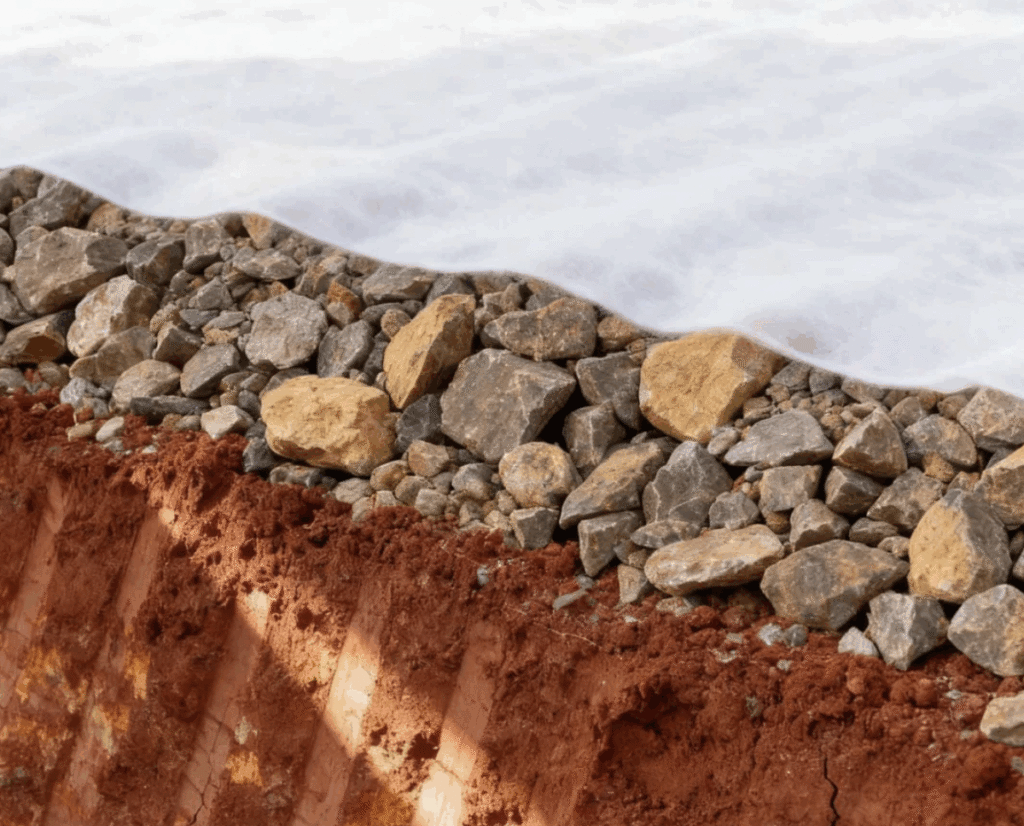
- Retaining walls are usually backfilled with drainage stone or gravel to facilitate rapid water drainage. Landscape fabric acts like a high-efficiency “filter,” preventing backfill soil from infiltrating the drainage stone layer. Without it, soil will gradually mix with and clog the gaps in the drainage stone, rendering it ineffective.
- Secondary Function: Weed Suppression
- While not 100% weed-proof, high-quality landscape fabric significantly blocks weeds from growing behind the wall. It maintains the wall’s neat appearance and reduces long-term maintenance hassle.
- Critical Function: Structural Protection
- By keeping the drainage system unobstructed, the landscape fabric directly prevents hydrostatic pressure buildup behind the wall. This greatly reduces the risk of wall collapse and fundamentally extends the retaining wall’s service life.
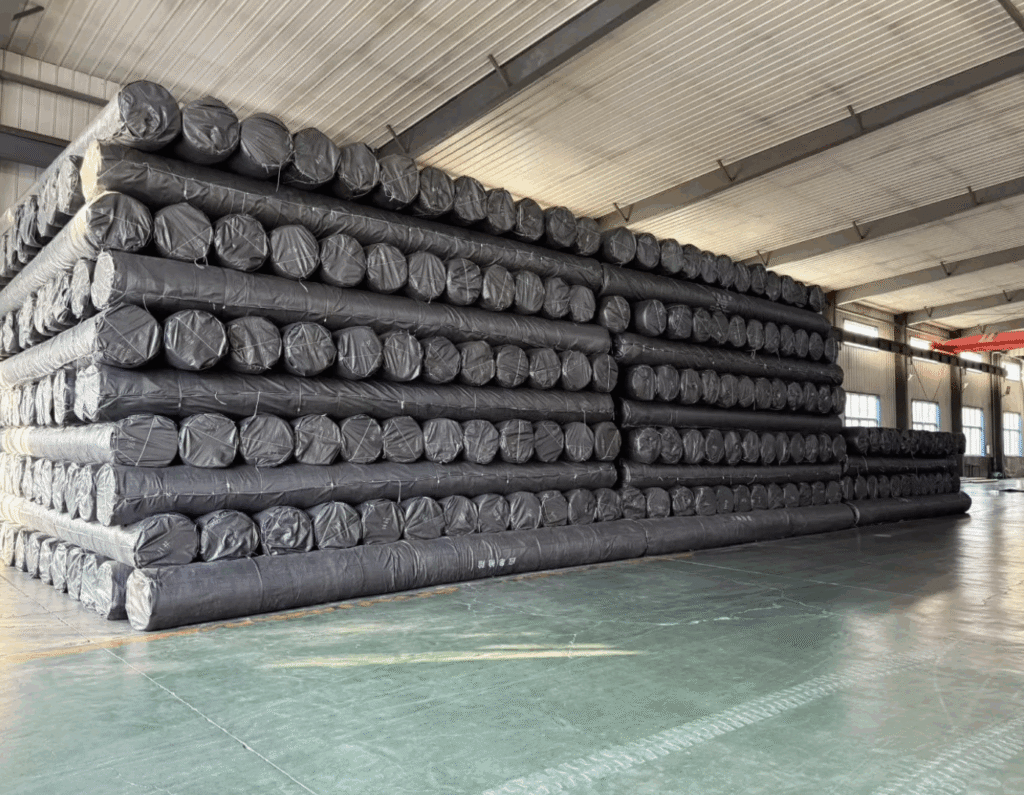
If you are purchasing a landscape fabric for retaining wall, you can contact us!
5 Core Parameters for Selecting Landscape Fabric for Retaining Walls
The key to choosing the right geotextile lies in matching it to the retaining wall’s height, soil type, and climatic conditions. The following 5 parameters are indispensable for product suitability:
- Fabric Type: Non-Woven Preferred, Woven as Needed
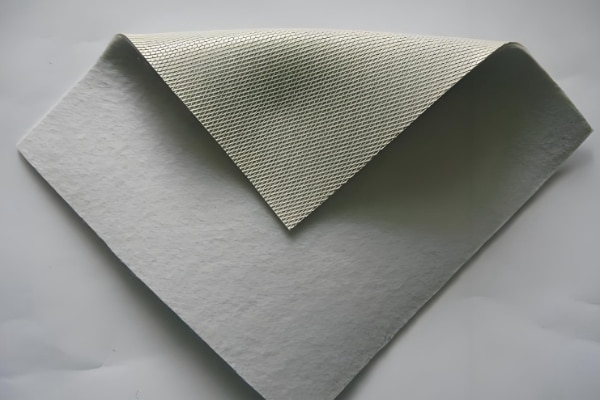
- Non-woven geotextiles (needle-punched): Excellent drainage and filtration performance, quickly diverting soil moisture to avoid pressure buildup. Suitable for 90% of residential retaining walls (height < 3 meters) and the top choice for most scenarios.
- Woven geotextiles (machine-woven): Extremely high tensile strength (≥300 lb/in) but slightly lower drainage capacity. Ideal for commercial projects, high walls (height ≥ 3 meters), or heavy-load areas (e.g., vehicle traffic zones).
- Weight & Thickness: 3-8 oz/yd² is the Golden Range
Weight directly correlates with tensile strength and durability—specialized geotextiles for retaining walls must weigh between 3-8 oz/yd².
- Low-height walls (< 1.5 meters): Choose 3-4 oz/yd² for a balance of cost-effectiveness and basic protection.
- Medium-height walls (1.5-3 meters): Opt for 5-6 oz/yd² to balance strength and drainage.
- High walls (≥ 3 meters): Select 7-8 oz/yd² to resist strong lateral pressure.
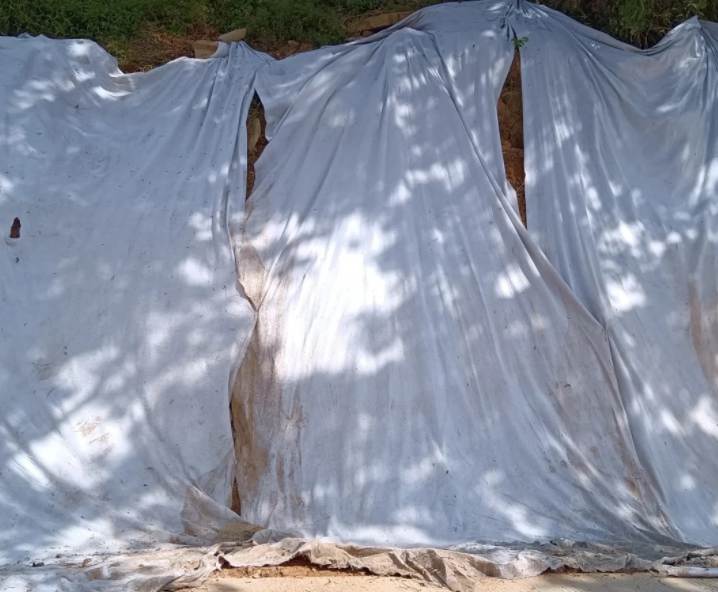
- Core Performance Indicators: 3 Non-Negotiable Parameters
- Tensile Strength: Both horizontal and vertical strength must be ≥200 lb/in to avoid tearing during soil backfilling.
- Permeability: ≥0.05 sec⁻¹ to ensure rapid water penetration and reduce hydrostatic pressure impact on the wall.
- UV Stability: Minimum 50 years of outdoor weather resistance to prevent material aging, brittleness, and cracking from long-term sun and rain exposure.
- Material Selection: Polypropylene (PP) vs. Polyester (PET)
- Polypropylene (PP): Cost-effective, chemical-resistant, and drainage-efficient. Suitable for most soil types (except strongly acidic soils) and the mainstream choice for residential retaining walls.
- Polyester (PET): Superior temperature resistance and higher tensile strength. Ideal for extreme environments (desert heat, rainy/humid areas) or strongly acidic soil conditions, but slightly more expensive than PP.
- Size Adaptation: Purchase by “Wall Dimensions + 20% Margin”
- Width Selection: Prioritize 3-4 meter wide geotextiles to minimize seams and reduce soil leakage risks.
- Length Calculation: Coverage area = wall height × wall length × 1.2 (20% margin) to reserve space for seam overlap and edge securing.
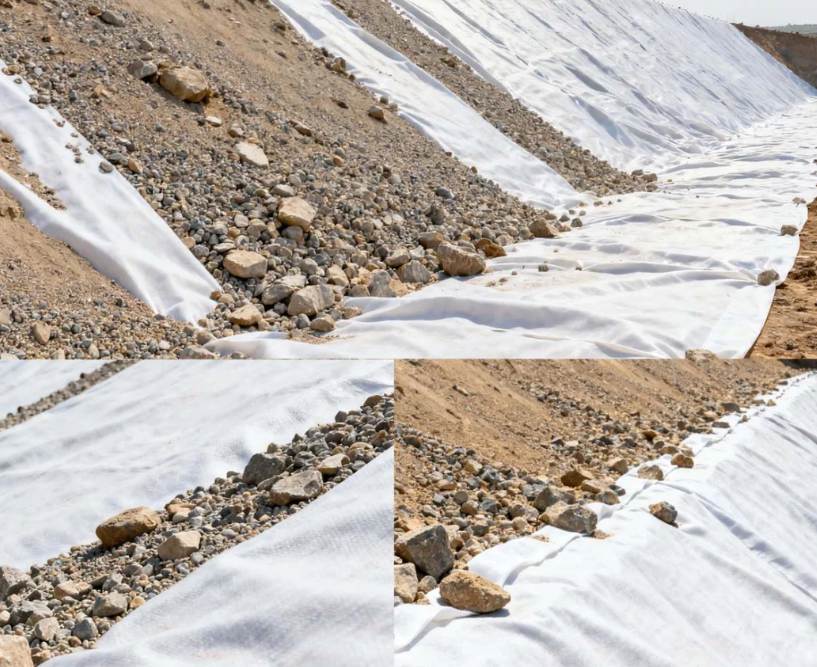
The Best Landscape Fabric for Retaining Wall in 2025
Based on market reputation and professional performance, the following 3 products cover diverse scenarios for direct selection:
- All-Round Top Choice: 5 oz Needle-Punched Non-Woven Polypropylene Geotextile
- Core Parameters: Tensile strength 250 lb/in, permeability 0.08 sec⁻¹, 50-year UV stability, weight 5 oz/yd².
- Suitable Scenarios: 1.5-3 meter residential retaining walls, backyard slope protection, general soil types (both clay and sandy soil).
- Key Highlights: Balances “drainage + strength + cost-effectiveness,” the optimal solution for most users with easy installation and low long-term maintenance.
- Heavy-Load Option: 7 oz Woven Polyester Geotextile
- Core Parameters: Tensile strength 350 lb/in, permeability 0.06 sec⁻¹, temperature resistance -40℃~80℃, weight 7 oz/yd².
- Suitable Scenarios: Walls over 3 meters high, commercial projects, vehicle traffic areas, high lateral pressure environments.
- Key Highlights: Exceptional tensile strength to withstand heavy soil backfill pressure, suitable for complex engineering conditions.
- Extreme Environment Choice: 8 oz Thickened UV-Stabilized Polypropylene Geotextile
- Core Parameters: Tensile strength 300 lb/in, permeability 0.07 sec⁻¹, double-layer UV protection, weight 8 oz/yd².
- Suitable Scenarios: Desert high-temperature areas, rainy/humid environments, coastal salt spray regions, acidic soil conditions.
- Key Highlights: Superior weather resistance to withstand extreme climate erosion, extending the retaining wall’s service life to over 60 years.
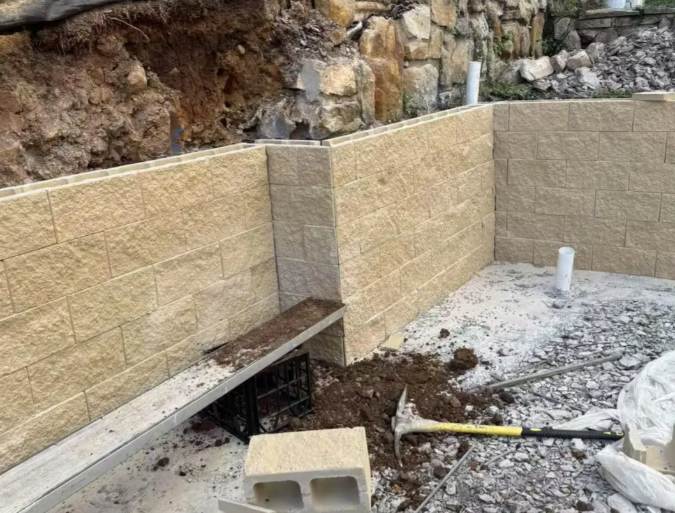
Installation Steps for Landscape Fabric for Retaining Walls
After selecting the right product, proper installation is critical. Incorrect laying directly impairs the geotextile’s drainage and reinforcement effects. Below is the standard installation process:
- Preparations: Essential Tools & Materials
- Required Tools: Geotextile-specific scissors, landscape stakes (50cm spacing), tape measure, small compactor.
- Auxiliary Materials: 3/4-inch crushed stone (drainage layer), perforated drain pipes (behind the wall), geotextile seam tape.
- 5-Step Standard Installation Process
- Clear the Site: Remove weeds, gravel, and sharp objects from the retaining wall foundation area. Level and compact the ground to avoid puncturing the geotextile.
- Lay the Geotextile: Spread the geotextile horizontally along the wall length, keeping it vertical and wrinkle-free. Overlap seams by 6-12 inches (approximately 15-30cm) and secure with seam tape to prevent soil leakage.
- Secure the Edges: Fix the geotextile edges with landscape stakes at 50cm intervals (30cm intervals at corners) to ensure flat and stable laying.
- Install the Drainage Layer: Spread 15-20cm thick 3/4-inch crushed stone outside the geotextile to form a drainage channel. Embed perforated drain pipes behind the wall with a 1%-3% slope to guide water to drainage outlets.
- Backfill and Compact: Backfill soil in layers (20cm per layer) and lightly compact with a compactor. Avoid heavy impacts on the geotextile to ensure close contact between soil and fabric.
- Critical Notes
- Prevent the geotextile from contacting sharp objects (e.g., steel bars, gravel). Use thin foam sheets for protection if necessary.
- Keep the geotextile taut during laying—wrinkles or slack will reduce tensile strength and drainage efficiency.
- The drainage layer must be used with the geotextile; laying geotextile alone cannot achieve effective drainage.
Common Pitfalls with Landscape Fabric for Retaining Walls
Many retaining wall failures stem from incorrect geotextile selection or installation. Avoid these 4 key pitfalls:
Pitfall 1: Using Ordinary Weed Control Fabric Instead of GeotextileOrdinary weed control fabric has poor drainage and low tensile strength, easily tearing under long-term pressure. This causes soil migration, water accumulation behind the wall, and collapse.
Solution: Strictly select products labeled “retaining wall-specific” or “geotextile”—reject ordinary weed control fabric.
Pitfall 2: Ignoring Seam Overlap or Improper SecuringInsufficient seam overlap or lack of securing leads to soil leakage through gaps, weakening wall stability.
Solution: Ensure seam overlap ≥6 inches, secure with specialized tape, and add extra stakes at edges.
Pitfall 3: Choosing Too Thin or Low-Strength GeotextileOpting for thin geotextiles (below 3 oz) to save costs fails to resist soil lateral pressure, resulting in tearing and failure.
Solution: Select weight based on wall height—prioritize 5 oz or above for medium to high walls.
Pitfall 4: Not Installing a Drainage Layer or Drain PipesLaying geotextile without a drainage layer prevents rapid water diversion, leading to excessive hydrostatic pressure behind the wall.
Solution: Must pair with crushed stone drainage layers and perforated drain pipes to ensure timely water discharge.
Conclusion
The stability of retaining walls hinges on “drainage” and “reinforcement,” and specialized geotextiles are the key to these two functions. When selecting, focus on three core factors: “non-woven preferred, weight 3-8 oz/yd², tensile strength ≥200 lb/in,” and match the product to wall height and climatic conditions. During installation, follow the principles of “flat laying, standardized seams, and supporting drainage layers” to extend the retaining wall’s service life to over 50 years.
Whether it’s a small residential backyard retaining wall or a commercial high-slope protection project, choosing the right geotextile and installing it correctly avoids costly future repairs and ensures reliable project quality.
Reference Sources
- ASTM D6706-01(2021) “Standard Test Method for Soil Pullout Resistance of Geosynthetic Materials”
- Issued by the American Society for Testing and Materials (ASTM), this standard specifies laboratory test methods to simulate real working conditions. It is used to evaluate the anchoring effect and stability of geotextiles for retaining walls.
- ISO 10318-2:2015 “Geosynthetics – Part 2: Symbols for Properties, Graphical Symbols and Pictograms”
- Developed by the International Organization for Standardization (ISO), this standard unifies the symbol identification of geosynthetic material properties. It standardizes the expression of parameters such as geotextile tensile strength and permeability, facilitating parameter comparison and communication in engineering design.
- ISO/DIS 10318-2 “Geosynthetics – Part 2: Symbols for Properties, Graphical Symbols and Pictograms (Draft)”
- The 2025 revised draft further refines the symbol identification of intelligent geotextiles (e.g., products embedded with sensors), reflecting the development trend of industry technology.