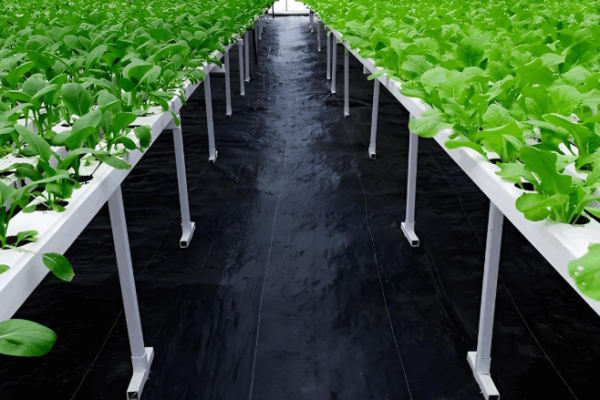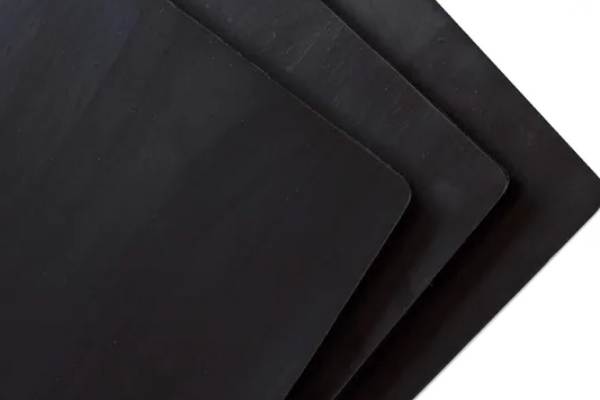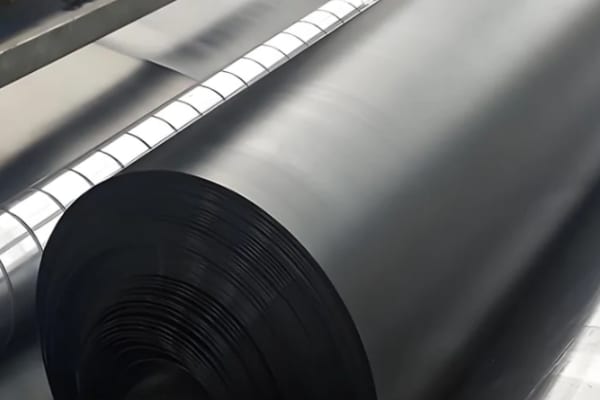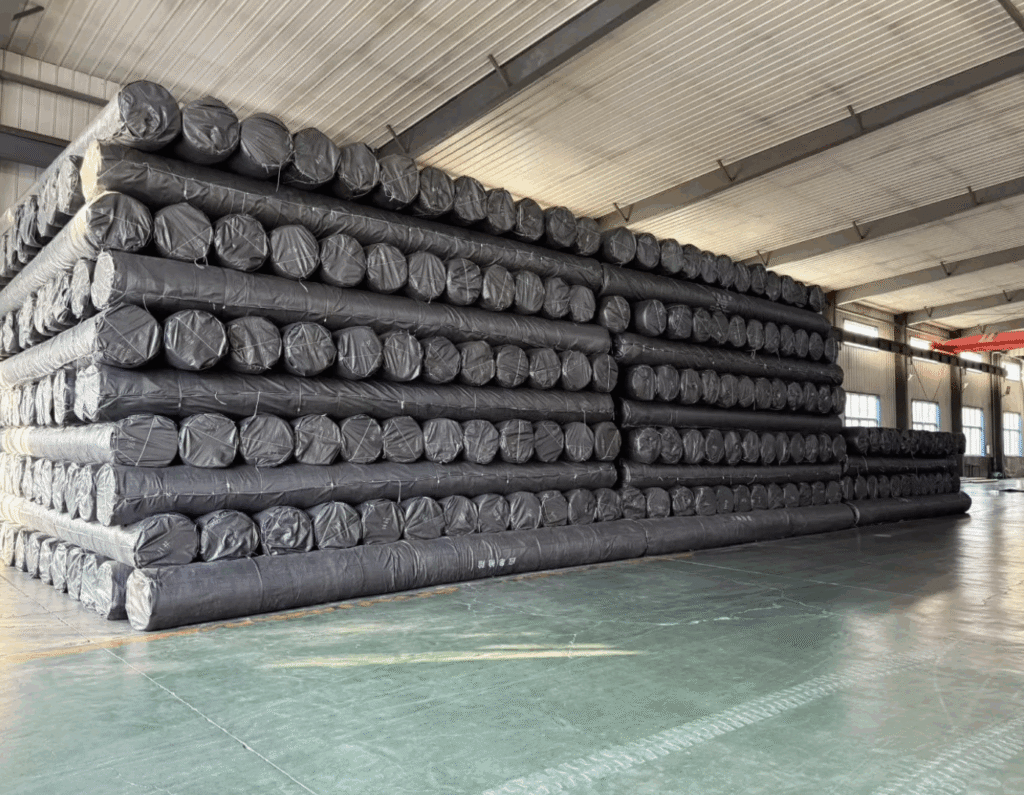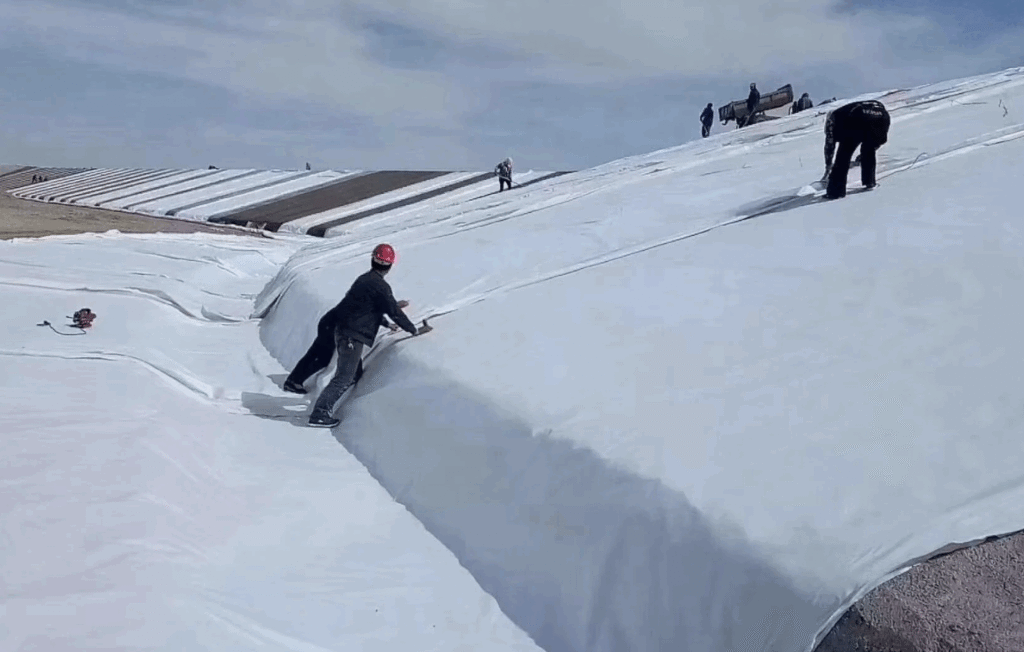
Have you ever had a newly laid gravel driveway or garden path ruined by stubborn weeds within just a few months? The problem likely lies with the weed barrier under the gravel. Choosing the wrong product means all your effort goes to waste. This article will take you through the different types of weed barriers and recommend the best weed barrier for under gravel, ensuring your gravel landscape remains pristine long-term.
Why Must a Weed Barrier Be Laid Under Gravel?
Before diving into product comparisons, we first need to understand the core value of a weed barrier—it’s not just for “weed control.”
- Long-term Weed Suppression: Physically blocks sunlight, fundamentally inhibiting weed seed germination and growth.
- Gravel Layer Stabilization: Prevents gravel from sinking into the soil under pressure, keeping the surface level and reducing future maintenance.
- Effective Soil Separation: Avoids mixing of soil and gravel, maintaining cleanliness and smooth drainage in the gravel area.
Key Evaluation Criteria for Choosing a Weed Barrier
- Grammage/Thickness: Measured in “grams per square meter (gsm)” or “ounces per square yard (oz/sq yd)”. Higher values mean thicker material, better durability, and stronger puncture resistance.
- Water Permeability: Allows rainwater or irrigation water to seep through quickly, preventing surface waterlogging and mud.
- UV Stability: Resistance to ultraviolet rays, which directly affects the product’s lifespan under intense sunlight.
If you are purchasing a weed barrier for under-gravel, you can contact us!
Types of Weed Barriers
There are numerous products on the market, but they essentially fall into three main categories. Understanding their core differences and applicable scenarios is the first step to making the right choice.
1. Woven Fabric: The All-Round Champion for Durability
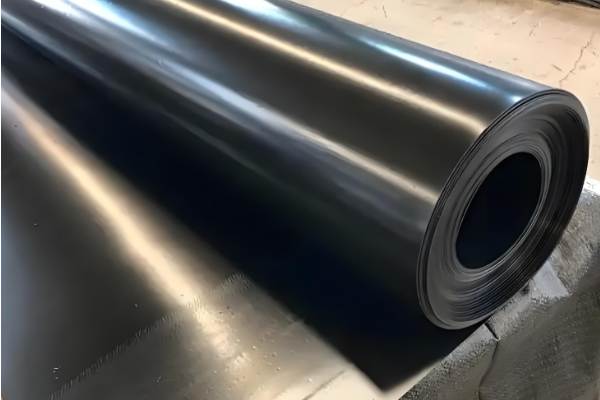
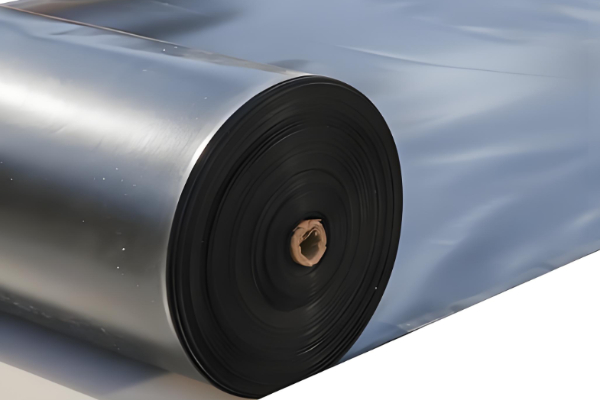
Made from woven flat filaments of polypropylene (PP) or high-density polyethylene (HDPE), its structure resembles burlap—this is what guarantees its sturdiness and longevity.
- Core Advantages: Its greatest strength is exceptional durability, with unmatched tensile strength and tear resistance to withstand heavy loads and sharp gravel. Meanwhile, its woven structure naturally has small pores, ensuring excellent water permeability and effectively preventing waterlogging. Combined with superior UV stability, it is the longest-lasting option available.
- Potential Drawbacks: High quality usually comes with a higher price tag—woven fabric is the most costly of the three. Additionally, its tough texture makes cutting slightly more labor-intensive during installation.
- Best Application Scenarios: Undoubtedly, it is the top choice for high-traffic or heavy-load areas like gravel driveways, parking spaces, and walkways.
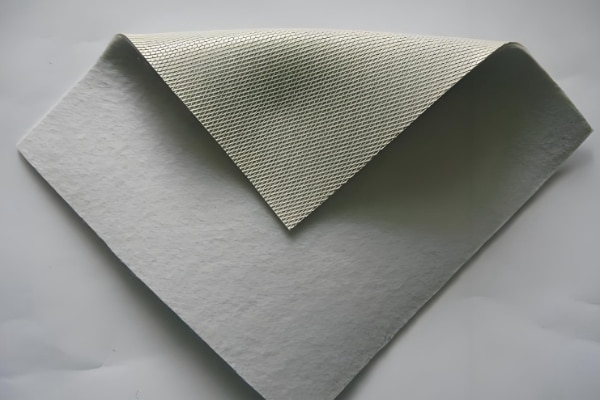
2. Non-Woven Fabric: The Lightweight, Permeable, and Economical Option
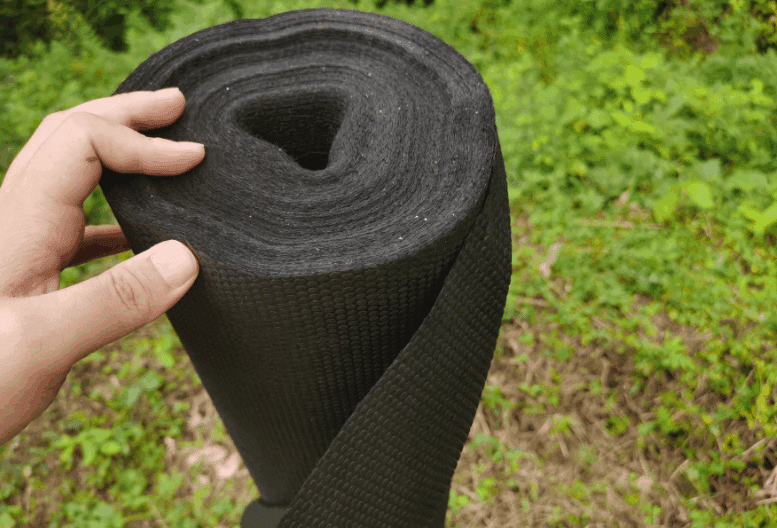
Composed of randomly arranged polyester or polypropylene fibers bonded together by heat, it feels like felt and focuses more on filtration and drainage functions.
- Core Advantages: It offers the best water permeability among the three, draining water instantly—ideal for rainy areas or projects with high drainage requirements. It is also soft, extremely easy to cut and install, providing a user-friendly DIY experience. Most importantly, it is usually the most affordable option.
- Potential Drawbacks: Its durability is relatively poor—a major trade-off. It can be easily punctured by the roots of persistent perennial weeds (such as crabgrass) and is less resistant to wear, with a shorter lifespan than woven fabric.
- Best Application Scenarios: Mainly used in non-load-bearing decorative areas, such as garden paths, the bottom layer of flower beds, pot liners, or as a temporary solution for budget-constrained projects.
3. Heavy-Duty Composite Fabric: The Professional Shield for Harsh Environments
Typically made by combining multiple layers of materials or using advanced weaving techniques and coatings, it represents the top-tier performance in weed barrier products.
- Core Advantages: Designed to provide uncompromising protection, it excels in UV aging resistance, puncture resistance, and overall lifespan. Many products offer warranties of over 20 years, making it a truly “one-time investment” solution.
- Potential Drawbacks: Its professional-grade performance comes with a high price. For ordinary backyard projects, its capabilities may be overkill.
- Best Application Scenarios: Professional landscaping projects, commercial premises, and homeowners with extreme quality requirements—especially in environments with complex soil conditions or extremely stubborn weeds.
Core Conclusion
For most users installing gravel driveways, heavy-duty woven fabric is the best choice, balancing performance, lifespan, and price. Non-woven fabric, however, is more suitable for non-load-bearing landscaping projects due to its excellent water permeability.
The Best Weed Barrier for Under Gravel
The following recommendations are based on popular brands in North American and domestic markets, user reviews, and key performance parameters.
1. Best Overall Choice: AMERISTAR Heavy-Duty Woven Weed Barrier
- Core Highlights: High grammage (usually 3 oz/sq yd or higher), excellent UV protection, and superior tear resistance.
- Recommendation Reason: This product achieves a perfect balance between durability, water permeability, and price. Its tight woven structure effectively blocks most weeds, while the HDPE material ensures an extended lifespan—making it an ideal choice for residential driveway projects.
- Suitable For: Homeowners seeking a long-lasting solution with sufficient budget.
2. Professional-Grade Choice: DeWitt Ultra Heavy-Duty Weed Barrier
- Core Highlights: Commercial-grade quality, ultra-long warranty (usually 25 years or more).
- Recommendation Reason: DeWitt is an industry benchmark brand. This ultra-heavy-duty product is nearly impossible to tear by hand, offering unparalleled puncture resistance and UV protection. If you’re building a gravel area designed to last for decades, this is your best option.
- Suitable For: Contractors, professionals, and DIY users with extreme quality requirements.
3. Best Value for Money: ProShield Heavy-Duty Woven Ground Cover
- Core Highlights: Good grammage and water permeability at an affordable price.
- Recommendation Reason: It delivers core performance (durability, weed control) while offering a more competitive price. For most backyard gravel paths and moderately used areas, it provides excellent value.
- Suitable For: Budget-conscious users who don’t want to compromise too much on quality.
4. Best for Water Permeability: Earth Science Quick-Drain Spunbond Fabric
- Core Highlights: Extremely fast drainage speed, suitable for humid areas.
- Recommendation Reason: If you live in a rainy area or your project site has poor drainage, this non-woven fabric is the top choice. It drains water instantly, keeping the layer under the gravel dry. Note, however, that it is not suitable for suppressing aggressive weeds or use in load-bearing areas.
- Suitable For: Users needing non-load-bearing decorative areas with a strong focus on drainage.
Installation Guide for Weed Barriers Under Gravel
Four-Step Correct Installation Guide
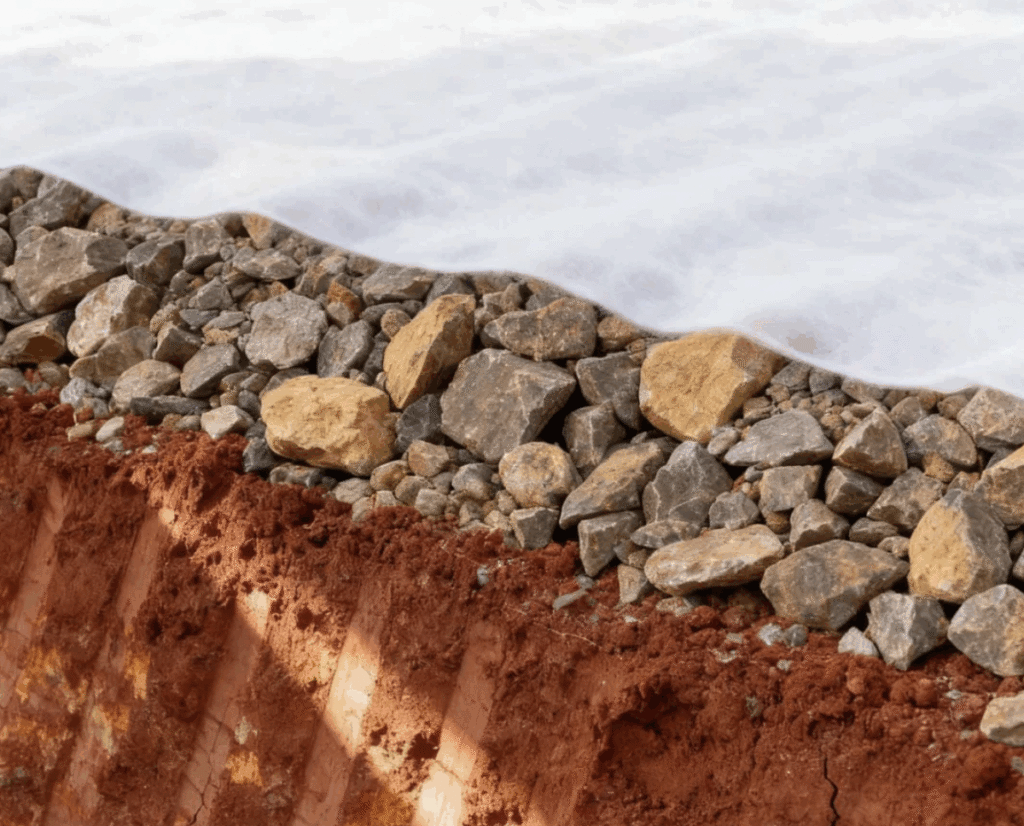
- Thoroughly Prepare the Base: Remove all existing weeds, rocks, and debris. Compact the soil and make it as level as possible.
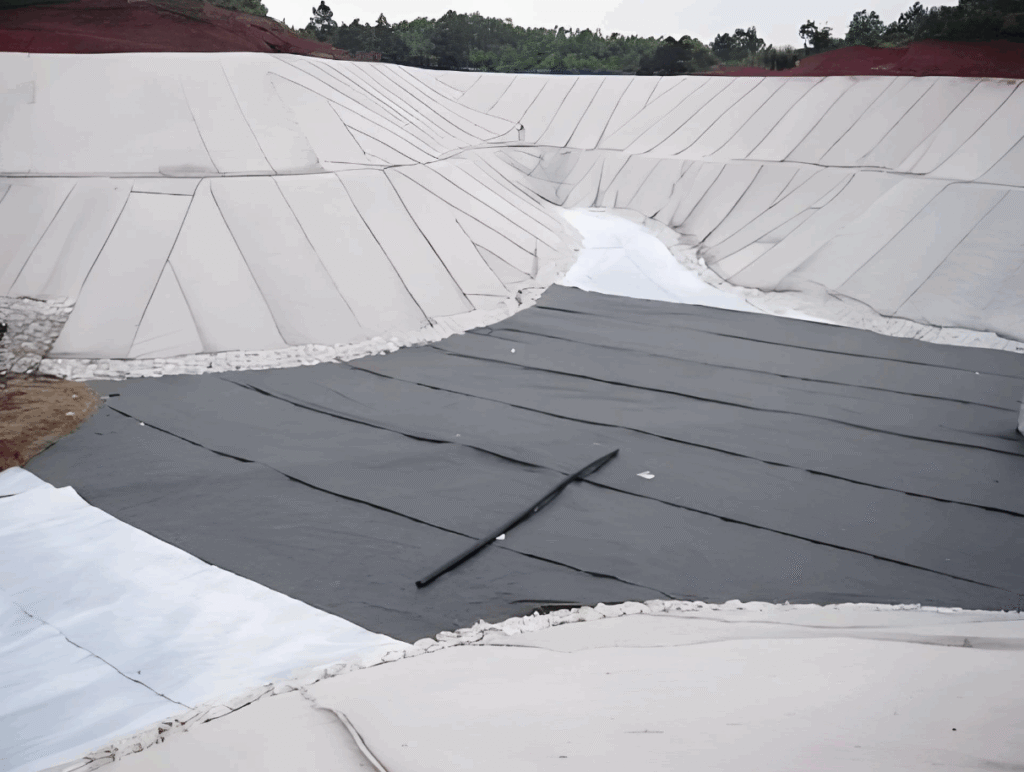
- Lay the Weed Barrier: Spread the weed barrier flat over the entire area, ensuring at least 15-20 cm of overlap between each roll. Secure it to the ground with landscape staples to prevent shifting.
- Lay the Gravel: Start spreading gravel evenly. It is recommended that the gravel layer be at least 5-7 cm thick to fully cover and protect the weed barrier.
- Level and Compact: Use a rake to level the gravel. For driveway areas, a compactor can be used for light compaction.
Three Critical Mistakes to Avoid
- Mistake 1: Using Plastic Sheeting as a Substitute: Black plastic sheeting is completely impermeable to water, leading to waterlogging, soil suffocation, root rot, and damage to the soil structure—it is a wrong choice.
- Mistake 2: Too Thin a Gravel Layer: A thin gravel layer exposes the weed barrier to sunlight, accelerating aging, and makes it vulnerable to damage from foot traffic or vehicle tires.
- Mistake 3: Improper Seam Handling: Insufficient overlap between rolls or failure to secure the barrier allows weeds to grow through the seams, rendering the weed barrier ineffective.
Conclusion
Choosing the right weed barrier for under gravel is key to ensuring your hardscape project remains attractive and low-maintenance long-term. We hope this article solves your problems.
If you are looking for a reliable weed barrier for under gravel supplier, please feel free to contact us.
About Us: Lianjie
Lianjie is a one-stop supplier of geosynthetics with 15 years of professional experience and multiple national certifications. We provide the most professional weed barrier for under-gravel solutions!
Reference Sources
- This Old House
- Referenced their guide “How to Choose the Best Landscape Fabric,” which informed the article’s structural categorization and the comparative advantages of woven vs. non-woven fabrics in different scenarios.
- Gardening Know How
- Leveraged discussions from articles like “Weed Barrier Fabric Pros and Cons,” particularly regarding limitations (e.g., not being 100% effective) and summaries of common installation mistakes, integrated into the FAQ and installation guide sections.
- Bob Vila
- Their annual review, “The Best Landscape Fabric,” which combines user feedback and professional editorial opinion, provided a reference for market reputation and overall performance in the product recommendation section.
- ASTM International Standards
- Referenced relevant geotextile testing standards, such as ASTM D4632 (for tensile strength) and ASTM D4491 (for water permeability), which form the objective basis for evaluating weed barrier performance.
Frequently Asked Questions (FAQs)
Q1: Can a weed barrier prevent weeds 100% permanently?
A1: No, it can’t be 100% permanent, but it can suppress most annual weeds. Occasional dust accumulation on the gravel surface may cause a few shallow-rooted weeds to grow, but these are easy to pull out. For stubborn perennial weeds, be sure to completely remove them before laying the barrier.
Q2: What is the lifespan of a weed barrier?
A2: High-quality woven fabric can last 10-20 years or more with proper installation and maintenance. Non-woven fabric typically has a lifespan of 5-10 years, depending on its quality and UV stability.
Q3: Can I lay a new weed barrier directly over old gravel?
A3: It is not recommended. The correct method is to remove the old gravel, clean the base, lay the new weed barrier, and then replace (or refresh) the gravel. This ensures the weed barrier functions properly.