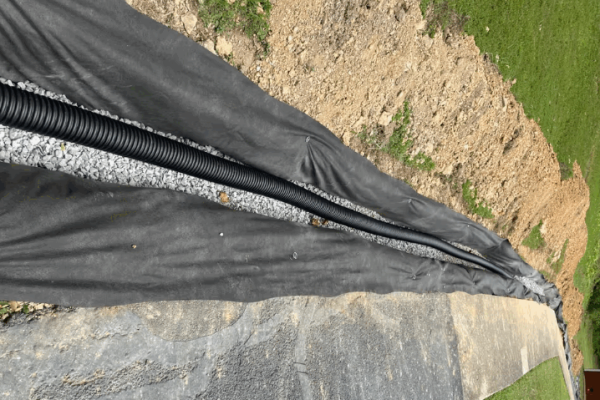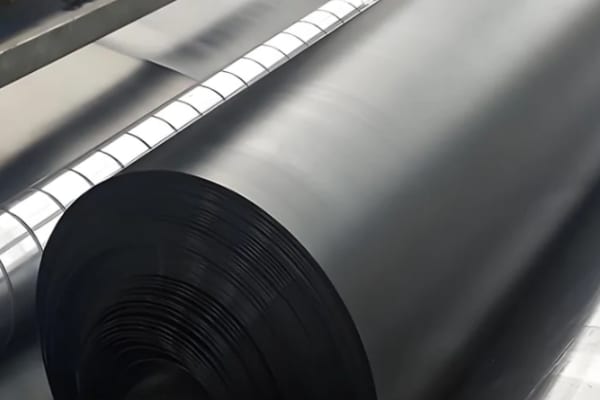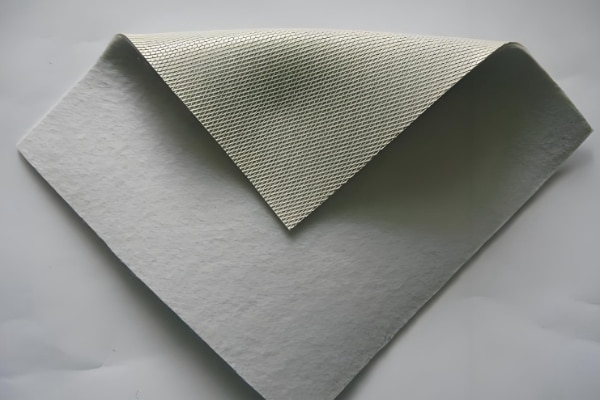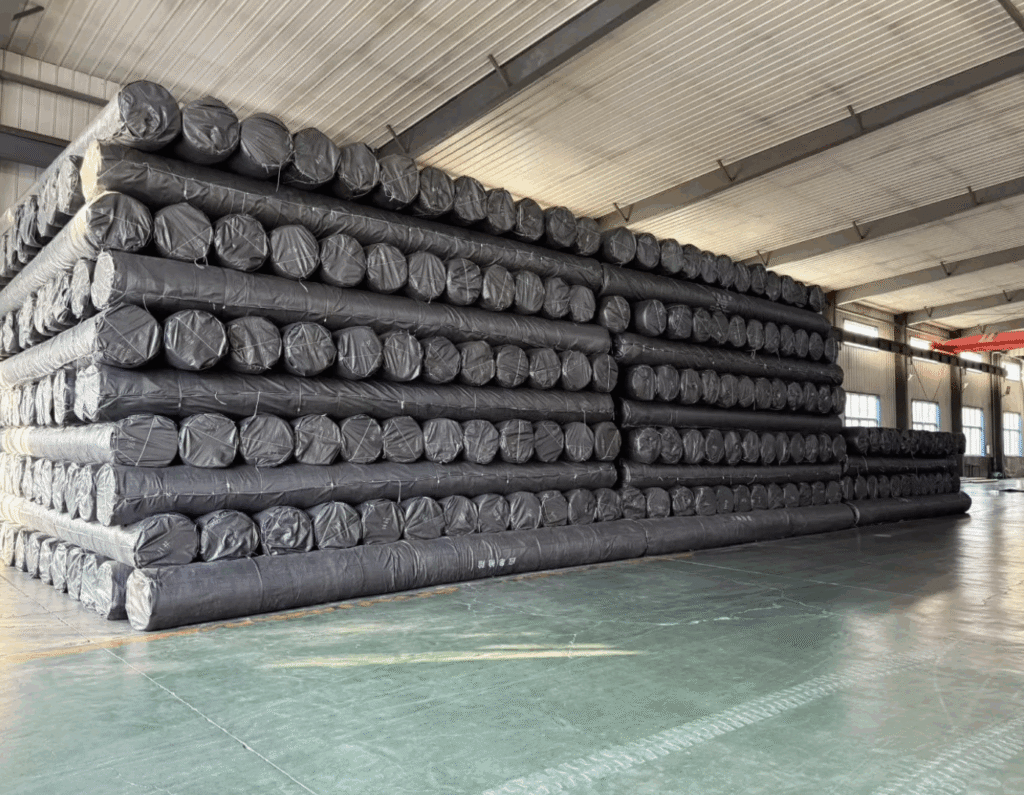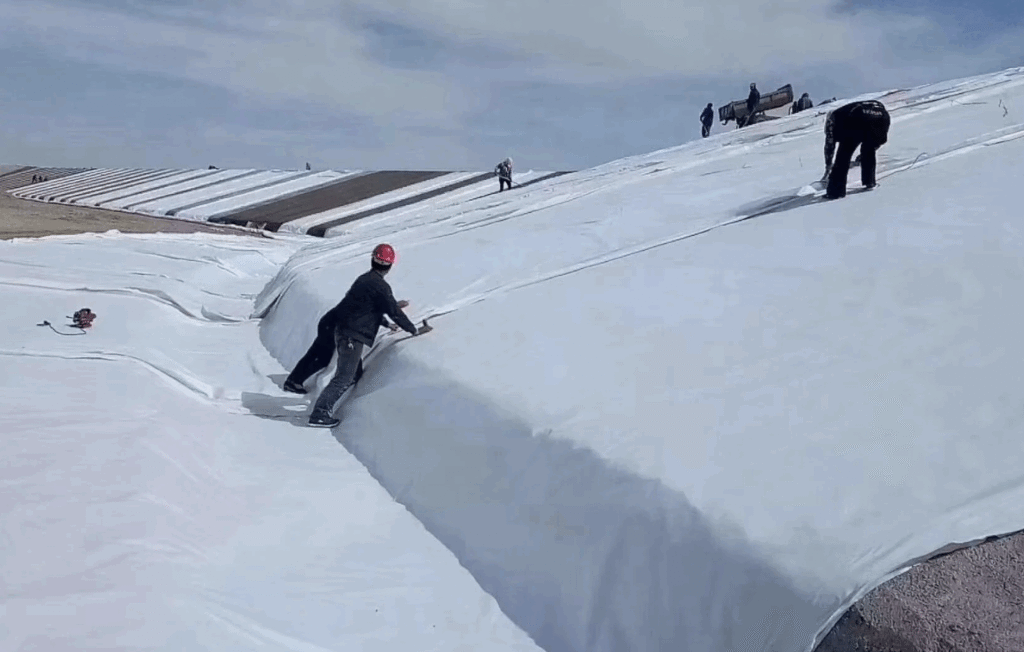
Is your gravel driveway plagued by annoying ruts, sinking, or overgrown weeds shortly after installation? The solution lies in a woven geotextile fabric for driveway. This article will comprehensively analyze the practical knowledge of using woven geotextile fabric driveways from material differences, selection techniques, construction steps to procurement guidelines, helping you easily solve driveway maintenance problems.
What is Woven Geotextile?
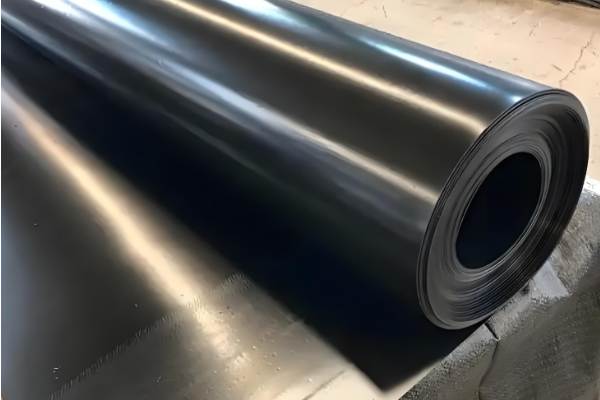
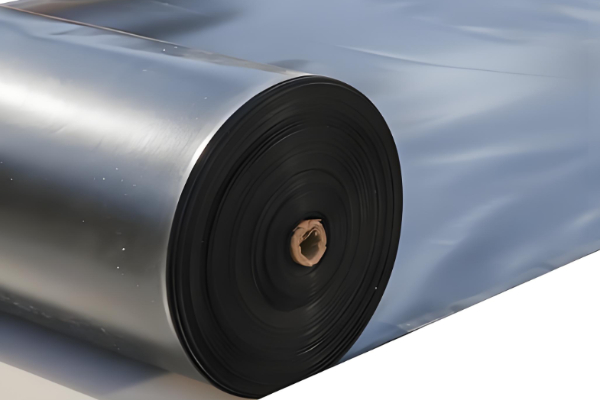
Woven geotextile, commonly known as “geowoven fabric,” is a advanced geosynthetic material made by interweaving high-strength polypropylene (PP) or polyester (PET) flat yarns on industrial looms. Unlike soft fabric, it functions more like a durable, robust “carpet” for your driveway.
Its three core functions in driveway applications:
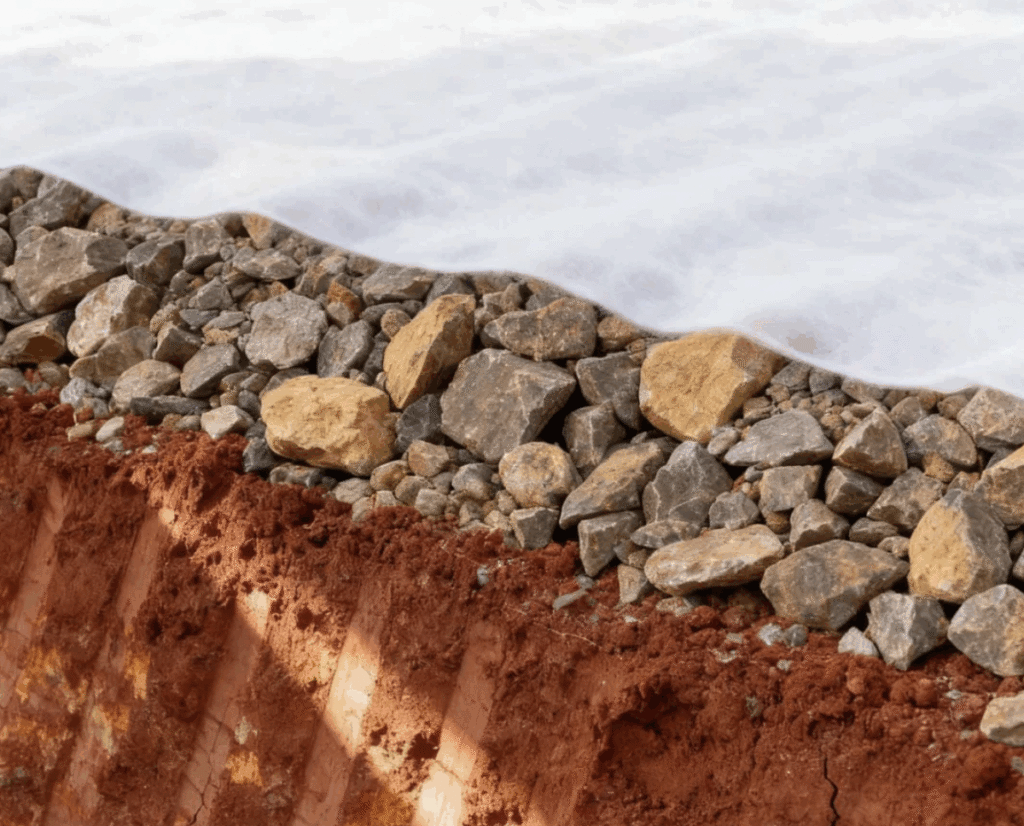
- Separation: Acts as a sturdy barrier, preventing upper-layer gravel from sinking into soft soil while stopping subsoil from rising. This keeps the gravel layer clean and maintains its thickness, eliminating rut formation at the source.
- Reinforcement: Boasts high tensile strength to distribute vehicle loads over a larger area, reducing pressure on the subgrade and significantly enhancing the driveway’s load-bearing capacity and stability.
- Stabilization: Creates a uniform load-bearing platform for the entire driveway, ensuring long-term subgrade stability and extending the driveway’s service life.
What is the Difference Between Woven and Non-Woven Geotextile for Driveways?
This is the most common confusion among homeowners. Online information is contradictory, but our conclusion is clear: For driveways supporting vehicle weight, woven geotextile is the undisputed performance leader. Let’s break down their fundamental differences:
Structure & Texture
- Woven Geotextile: Dense structure, smooth surface, and tough texture—similar to heavy-duty canvas or luggage material.
- Non-Woven Geotextile: Loose structure, random fiber arrangement, and soft texture—like thick felt or sweaters.
Core Functions & Principles
- Woven Geotextile: Its interwoven structure delivers exceptional tensile strength, with a core focus on “load-bearing stabilization.” It sacrifices partial permeability for superior filtration and separation: water passes through, while sediment is effectively blocked.
- Non-Woven Geotextile: Its loose structure provides excellent vertical permeability, with a core function of “drainage and filtration.” It has low strength and is prone to stretching and deformation under load.
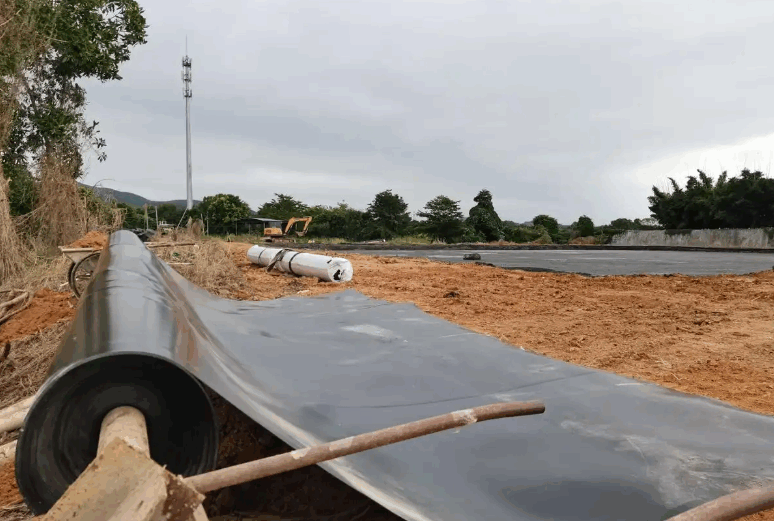
Woven vs. Non-Woven Geotextile: Comprehensive Comparison Table
| Characteristic | Woven Geotextile Fabric | Non-Woven Geotextile Fabric |
|---|---|---|
| Manufacturing Process | Tape filaments are woven together | Fibers are randomly arranged and needle-punched |
| Primary Function | Separation, Reinforcement, Stabilization | Filtration, Drainage, Protection |
| Tensile Strength | Very High, strong resistance to tearing and puncture | Lower, prone to elongation and deformation under load |
| Permeability | Planar flow, Good, effectively filters out silt/soil | Vertical flow, Excellent, fast drainage but may allow fine particle loss |
| Ideal Application | Driveways, Parking Lots, Heavy-Duty Roads, Railway Subgrade | French Drains, Foundation Drainage Protection, Landscaping |
| Consequence in Driveways | Long-lasting stability, effectively prevents ruts and subsidence | Can lead to failure, as deformation causes gravel and soil to mix |
Conclusion: Using non-woven geotextile for driveways is like asking a “plumber” to do a “structural engineer’s” job—it’s a misapplication that will inevitably lead to premature driveway failure. Always choose woven geotextile for your driveway.
How to Choose the Right Woven Geotextile Fabric for Driveway?
Key Specifications
- Grammage: Weight per square meter (g/m²) or per square yard (oz/yd²). Not the sole criterion, but an important reference:
- Residential cars/SUVs: Minimum 150 g/m² (≈4.4 oz/yd²).
- Heavy vehicles (trucks, RVs): Minimum 200 g/m² (≈6 oz/yd²) or higher.
- Tensile Strength: More critical than grammage—it directly determines load-bearing capacity. Check longitudinal and transverse breaking strength (unit: kN/m):
- Minimum Requirement: ≥ 8 kN/m.
- Recommended Range: 8–20 kN/m for most residential driveways.
- CBR Puncture Strength: Measures resistance to sharp object penetration. Higher values indicate better puncture resistance.
- UV Resistance: Choose products with UV stabilizers if exposed to sunlight for over a week to prevent degradation.
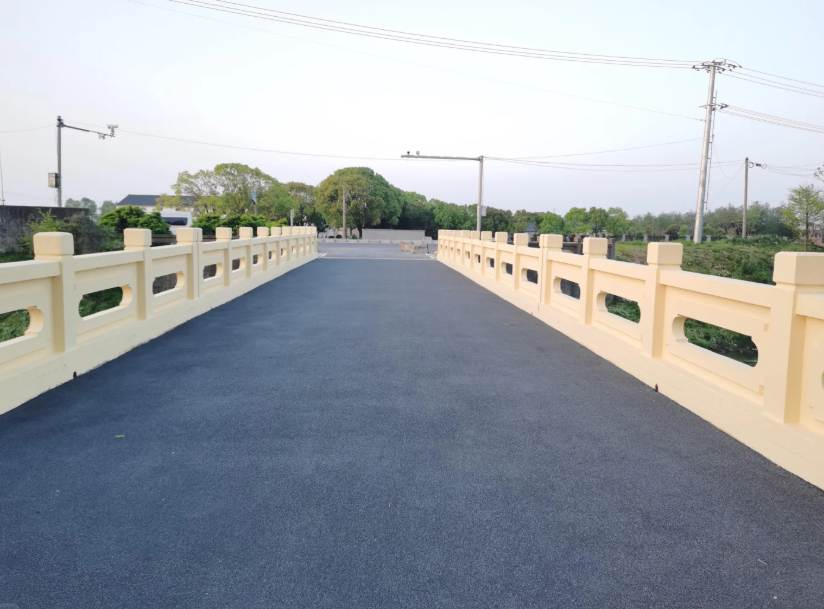
Woven Geotextile for Driveways Installation Guide
1. Pre-Installation Preparation
- Site Preparation: Clear weeds, rocks, and debris. Compact the subgrade with a roller to ≥90% compaction (testable via the ring knife method). For soft soil, dig 30cm-deep drainage trenches and fill with crushed stone to form blind drains.
- Tools & Materials List:
- Geotextile: Calculate as (driveway area × 1.1) to account for overlaps.
- Fasteners: Galvanized steel nails (≥15cm long, spaced 1m apart), geotextile-specific tape.
- Tools: Tape measure, utility knife, light roller (≤5 tons), rake.
- Auxiliary Materials: Gravel (5–10mm for base layer, 10–20mm for surface layer), crushed stone (for blind drains).
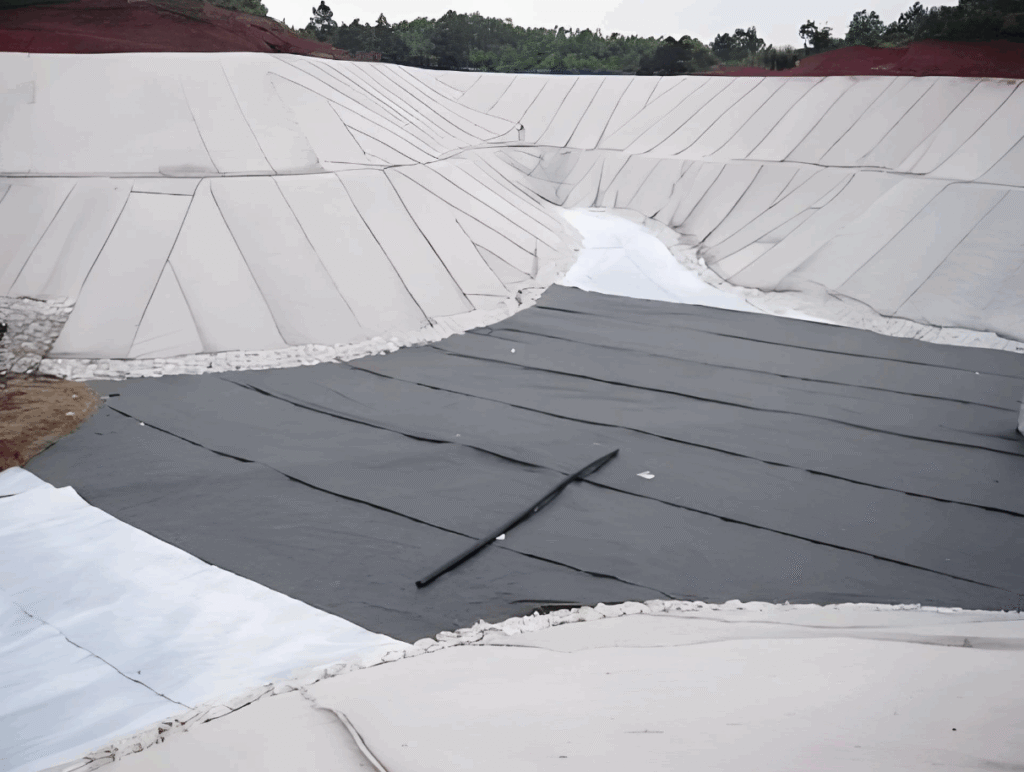
- Layout Planning: Lay a single-type geotextile parallel to the driveway’s long side. For overlapping layers, place a non-woven geotextile below a woven geotextile. Reserve 50cm at corners to avoid stretching damage.
2. Standard 4-Step Installation (with Key Tips)
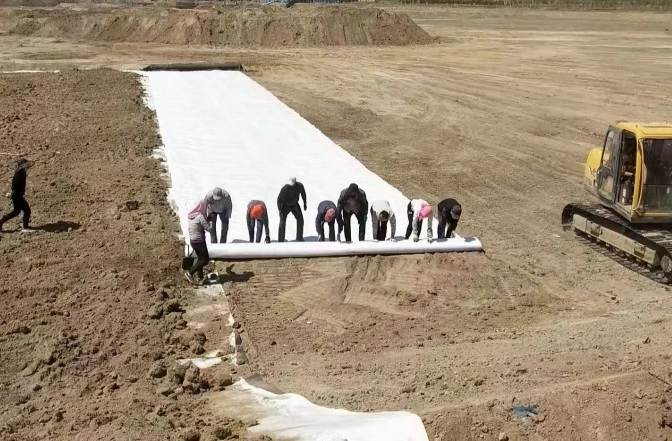
- Unroll the Geotextile:Spread along the planned direction. Overlap woven geotextile by 15–20cm and non-woven by 20–30cm (align fibers at overlaps). Use fan folding at corners—never stretch tightly (prevents cracking from temperature changes). Inspect for sharp objects during unrolling.
- Secure the Geotextile:Fasten edges with galvanized steel nails every 1m; increase density to every 50cm at corners. Add extra fasteners for non-woven geotextile (2m×2m grid) to prevent shifting during water accumulation. Nail both sides of overlaps every 50cm, then seal seams with specialized tape.
- Lay Aggregate:First, spread a 5–10cm base layer of gravel, rake evenly, and lightly compact (≤1 ton) to ensure tight contact with the geotextile. Then add a 3–5cm surface layer. Total aggregate thickness: ≥8cm (≥15cm for heavy-duty driveways). Avoid installation during rain to prevent soil infiltration.
- Compact:Roll from edges to center with a light roller (speed ≤3km/h), making 3–4 passes. Limit compaction pressure to ≤2 tons for non-woven geotextile to avoid damage. Check flatness after compaction—add gravel and re-compact if depressions exist.
3. Common Mistakes to Avoid (10 Years of Construction Experience)
- Never expose geotextile to sunlight for over 48 hours—strength drops by 50%+ and service life shortens to 1 year.
- Skipping drainage for soft soil leads to noticeable sinking within 2–3 years.
- Overlap width <15cm or unsealed seams cause soil leakage and local collapse.
- Using regular iron nails instead of galvanized steel nails results in rust failure within 6 months, causing geotextile shifting.
- Aggregate thickness <8cm forces geotextile to bear direct vehicle loads, accelerating damage.
FAQ
- Q: Is geotextile mandatory for gravel driveways?
- A: Yes. Gravel driveways without geotextile experience aggregate-soil mixing, rutting, and sinking within 1–2 years, increasing maintenance costs by 40%. Woven geotextile extends service life to 15+ years.
- Q: Do I need to re-lay geotextile when resurfacing an old driveway?
- A: Retain intact, non-shifted woven geotextile and add non-woven geotextile for drainage. Replace all geotextile if damaged or mixed with soil—otherwise, resurfacing effect will be compromised.
- Q: Should asphalt driveways use geotextile?
- A: Recommended. Installing woven geotextile between the asphalt layer and subgrade prevents adhesion, reduces reflective cracking, and extends asphalt driveway life by 30%+, especially for soft soil.
- Q: How to calculate geotextile quantity?
- A: Quantity = Driveway area × 1.1 (for overlaps). Example: A 10m×3m driveway (30㎡) requires 33㎡. Prioritize widths matching the driveway to minimize seams.
- Q: How to repair damaged geotextile?
- A:
- Small holes (<5cm diameter): Use a same-material patch with specialized tape, extending 5cm beyond the damage.
- Large holes (≥5cm diameter): Replace the entire section to avoid load-bearing issues.
- A:
Conclusion
Investing in high-quality woven geotextile is the most cost-effective way to build a durable driveway foundation. It significantly extends service life, reduces long-term maintenance and resurfacing costs, and offers a permanent solution for driveway durability. Choose wisely—your driveway will thank you for years to come.
References:
- ASTM D4439 – Standard Terminology for Geosynthetics.
- ASTM D4595 – Standard Test Method for Tensile Properties of Geotextiles by the Wide-Width Strip Method.
- ASTM D6241 – Standard Test Method for the Static Puncture Strength of Geotextiles and Geotextile-Related Products Using a 50-mm Probe.