- What is a Construction Geotextile?
- Types of Construction Geotextiles
- Why Use Geotextiles in Construction?
- Key Technical Indicators for Selecting Geotextiles
- Guide to Selecting Construction Geotextiles
- Where to Buy Construction Geotextiles?
- Basic Steps and Precautions for Installing Construction Geotextiles
- Conclusion
- FAQ (Frequently Asked Questions)
What is a geotextile in construction? Why use geotextile in road construction? What are the types of geotextiles in construction? This article will provide a comprehensive understanding of what geotextiles are, why they are needed, how to select the correct type for your project, and guide you through the key steps of procurement and installation.
What is a Construction Geotextile?
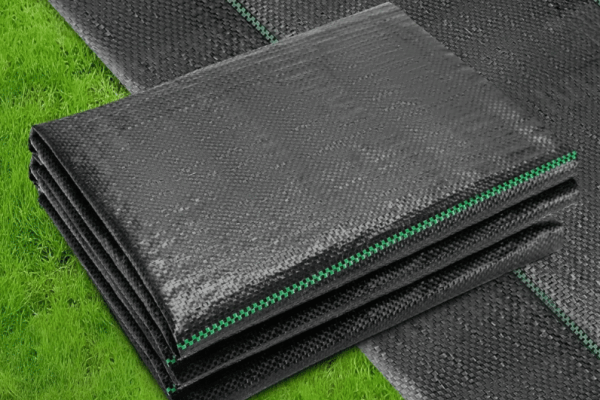
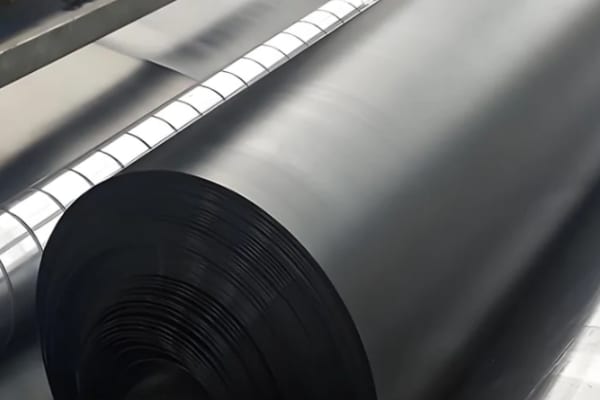
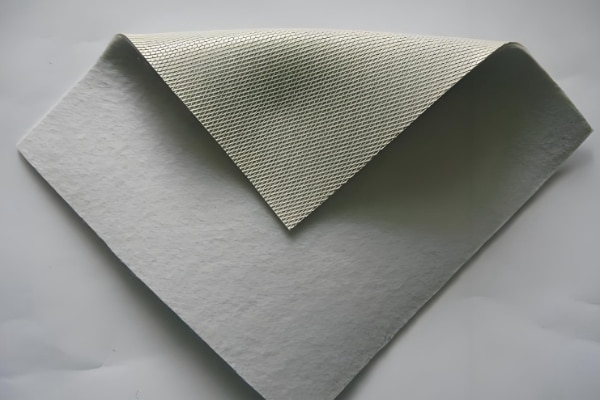
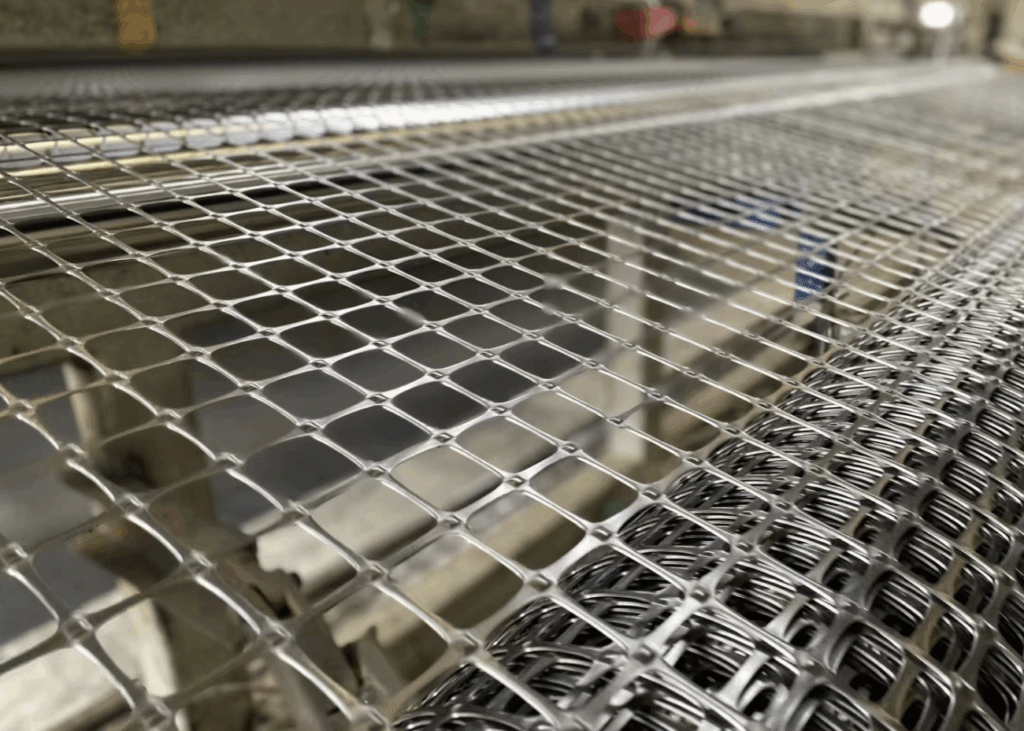
In simple terms, a construction geotextile is a permeable synthetic fabric made from raw materials like polypropylene or polyester through processes such as needle-punching, weaving, or heat-bonding. It is specifically designed to work in conjunction with soil, rock, or other geotechnical materials to enhance the performance and service life of engineering structures. Its core characteristics include high strength, durability, resistance to chemical corrosion, and excellent water permeability.
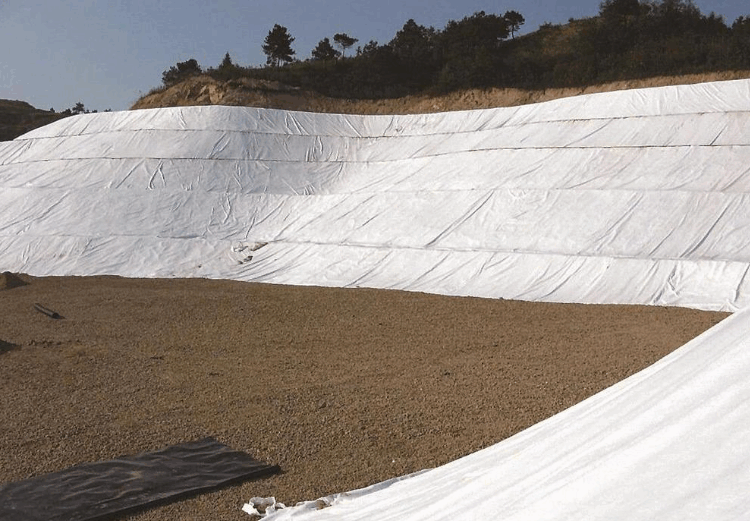
Types of Construction Geotextiles
In practical road engineering, the type of geotextile is selected based on specific needs:
| Primary Requirement | Recommended Type | Application Description |
|---|---|---|
| Separation | Needle-Punched Non-Woven Geotextile | Placed between the subgrade and base course to prevent mud-pumping (soft soil intrusion) and aggregate loss, thereby extending the road’s service life. |
| Filtration & Drainage | Thick Needle-Punched Non-Woven Geotextile | Used in roadside ditches and around subsurface drainage pipes as a filter layer to prevent soil from clogging the drainage system. |
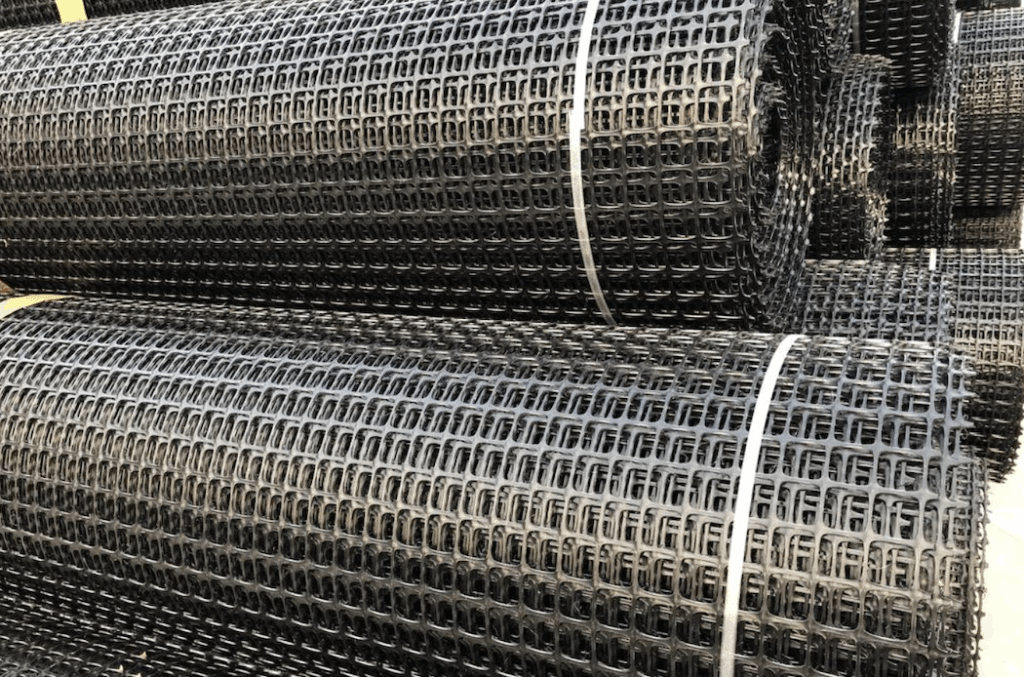
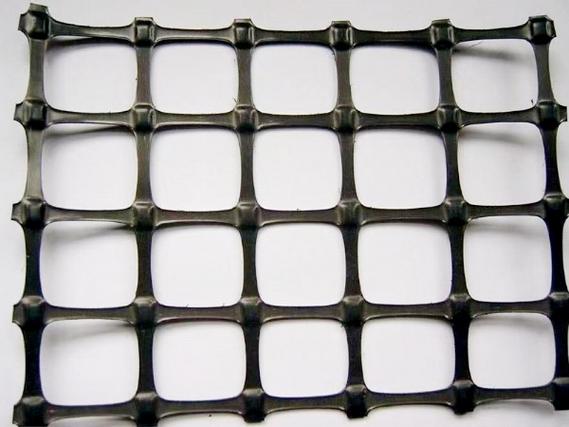
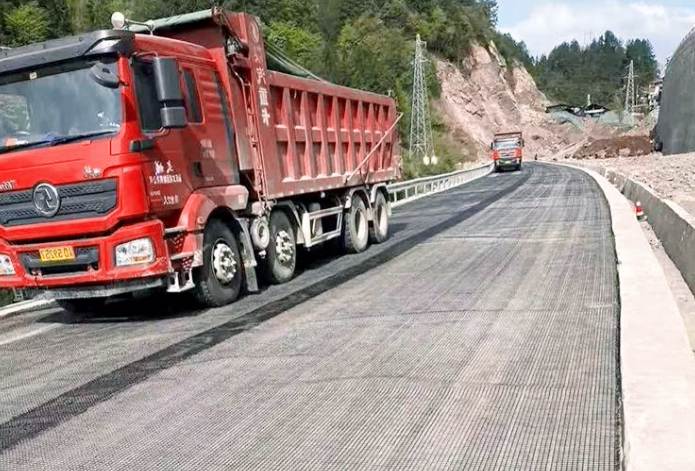
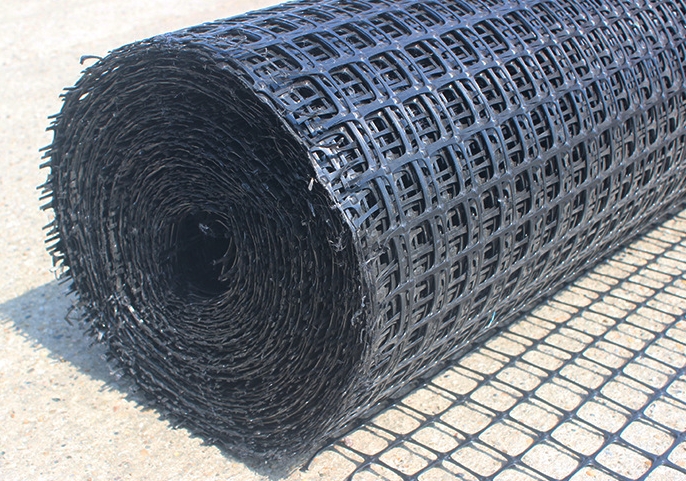
| Reinforcement & Stabilization | High-Strength Woven Geotextile or Geogrid | Used for roads on soft foundations and reinforced soil walls, utilizing their high tensile strength to enhance overall stability. |
| Asphalt Pavement Maintenance (Crack Control) | Specially Treated Non-Woven Geotextiles or Fiberglass Grids | Installed between old asphalt pavement and new asphalt overlay to effectively retard the reflection of cracks. |
If you are purchasing Geotextile in Construction, you can contact us!
Why Use Geotextiles in Construction?
The value of geotextiles is demonstrated through their four core functions, each directly addressing specific engineering challenges:
Separation Function
- Action: Placed between layers of different soil characteristics (e.g., subbase and soft subgrade) to prevent them from mixing under load and vibration.
- Benefit: Maintains the integrity and bearing capacity of the base materials, significantly extending the service life of structures like roads and parking lots, and reducing maintenance costs.
Reinforcement Function
- Action: Utilizes its high tensile strength to share stresses imposed on the soil mass, restricting lateral soil displacement, thereby “reinforcing” the soil.
- Benefit: Used for embankments on soft foundations, stabilization of steep slopes, and the construction of reinforced earth walls, improving the overall stability of the structure.
Filtration Function
- Action: Allows water to flow through freely while effectively preventing excessive soil particle loss. It acts as a dynamic filter.
- Benefit: Widely used behind revetments, in drainage ditches, and behind retaining wall drainage systems to prevent soil erosion and piping, ensuring the long-term effectiveness of the drainage system.
Drainage Function
- Action: Collects water flow within its plane and channels it to drainage outlets. This primarily relies on its three-dimensional structure.
- Benefit: Used for subsurface drainage, relief of water pressure on foundation waterproofing layers, and drainage in tunnel engineering, effectively lowering the groundwater table and pore water pressure.
Key Technical Indicators for Selecting Geotextiles
When reviewing product data sheets, pay attention to the following core parameters:
- Grab Strength: Resistance to direct tensile force, measured in kN.
- CBR Puncture Strength: Simulates resistance to penetration by concentrated loads (e.g., crushed stone), measured in kN.
- Trapezoidal Tear Strength: Measures resistance to tear propagation, measured in kN.
- Permittivity: The volumetric water flow rate passing vertically through the fabric, measured in s⁻¹.
- Apparent Opening Size (AOS): The equivalent pore size, which influences its filtration performance, measured in mm.
Guide to Selecting Construction Geotextiles
Scenario 1: Road and Parking Lot Construction
- Recommendation: High-strength woven geotextile.
- Reason: Its excellent separation and reinforcement functions effectively prevent aggregate from penetrating into the soft subgrade, distribute vehicle loads, and create a stable working platform.
Scenario 2: Drainage Systems (e.g., behind retaining walls, French drains)
- Recommendation: High-permeability non-woven geotextile.
- Reason: Its superior filtration properties allow water to pass through easily while preventing surrounding soil particles from being carried away, thus preventing clogging of the drainage system.
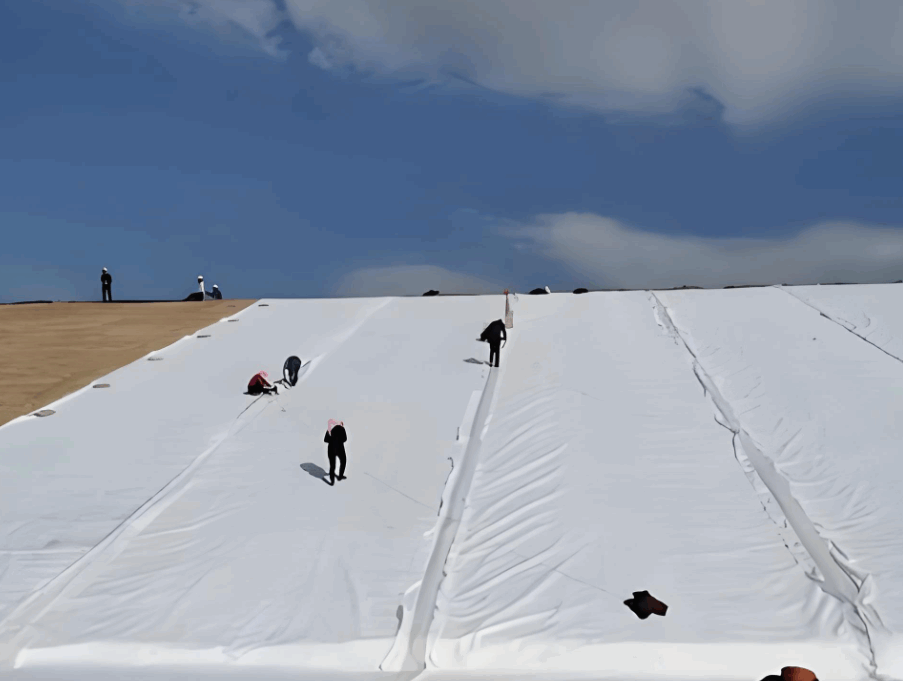
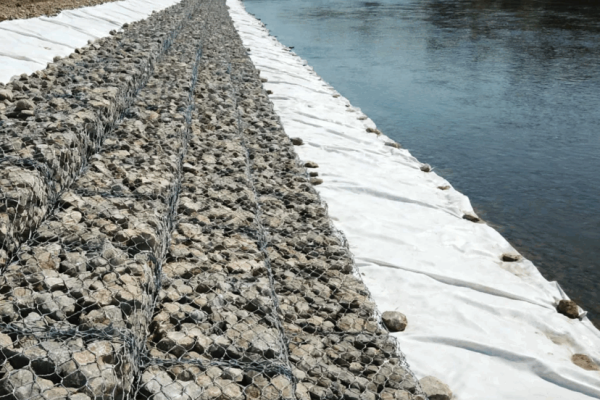
Scenario 3: Erosion Control and Slope Protection (under riprap or under turf reinforcement mats)
- Recommendation: Non-woven geotextile or specialized woven fabric.
- Reason: Laid before placing rock or turf reinforcement mats, the non-woven fabric effectively prevents soil erosion by water flow and provides initial support for plant growth.
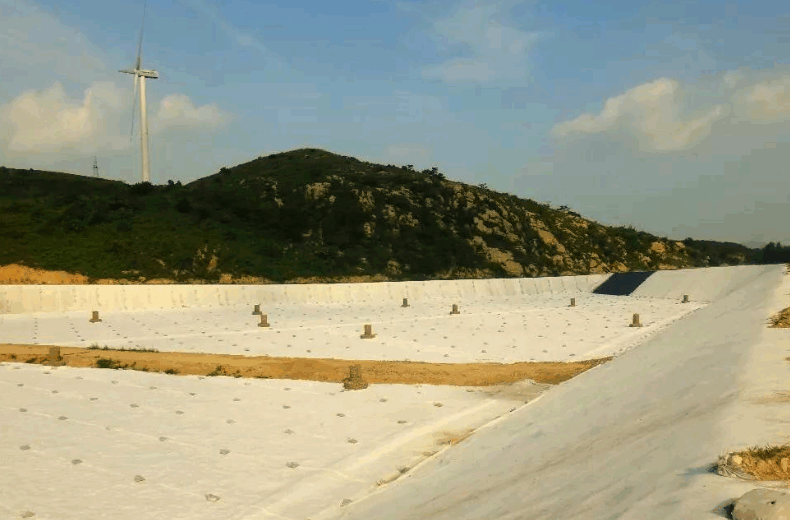
Scenario 4: Landfills and Artificial Lakes (as a protection layer)
- Recommendation: Medium-weight non-woven geotextile.
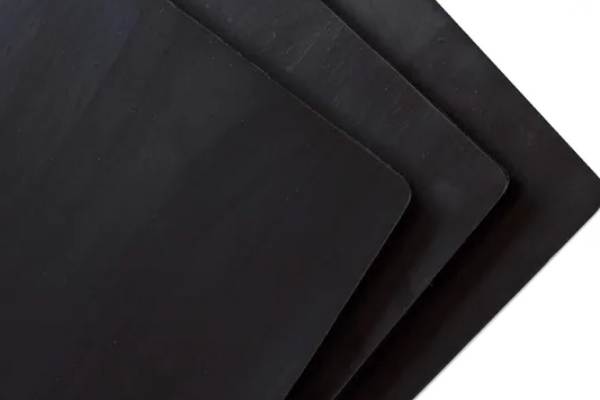
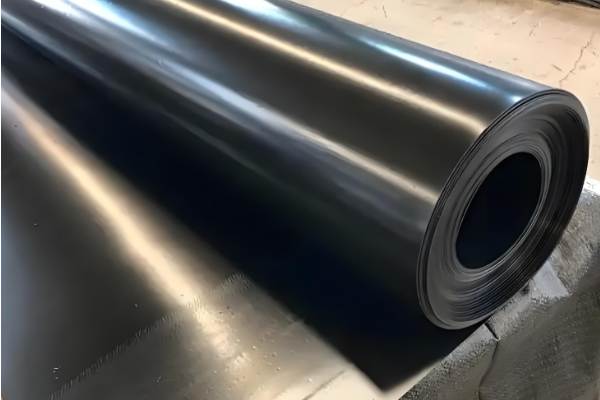
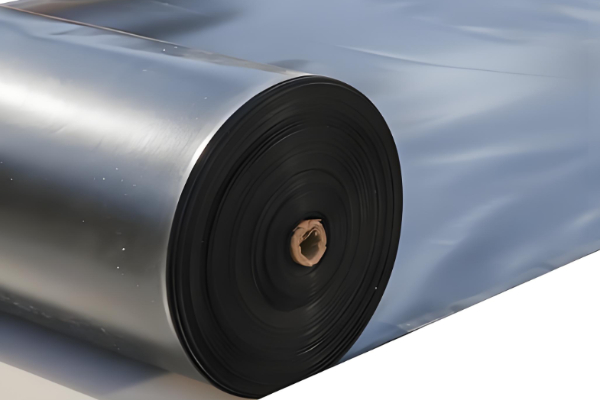
- Reason: Installed above or below the geomembrane (e.g., HDPE), it acts as a cushion and protection layer, preventing sharp objects from puncturing the primary impermeable liner.
Where to Buy Construction Geotextiles?
- Direct Manufacturers: Suitable for large projects, offering competitive prices and professional technical support.
- Distributors/Suppliers: Suitable for small to medium-sized projects, offering flexible procurement, fast delivery, and often maintaining stock.
- Checklist for Evaluating Reliable Suppliers:
- Do they provide product test reports from independent third-party laboratories?
- Does the company possess relevant industry qualifications and certifications (e.g., ISO 9001)?
- Can they provide success cases and customer reviews?
- Do they have a professional technical support team to answer selection and application questions?
Basic Steps and Precautions for Installing Construction Geotextiles
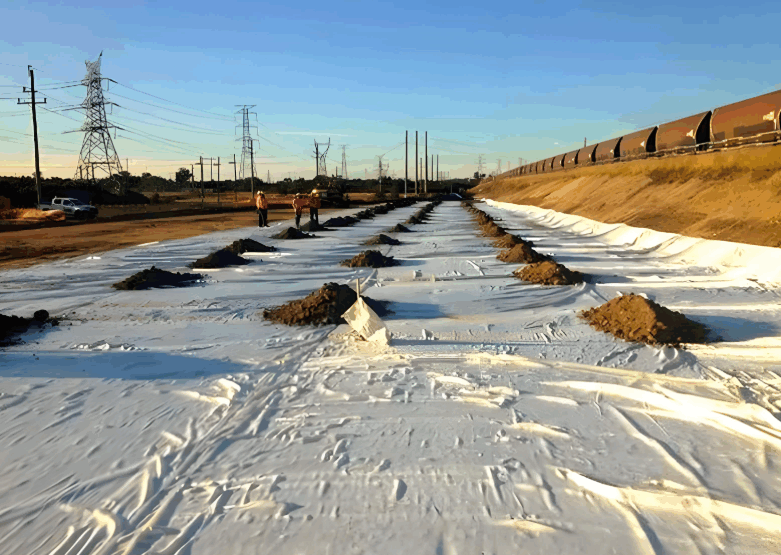
- Site Preparation: Remove roots, sharp stones, and other debris, and level and compact the subgrade.
- Laying Direction: Typically, the direction of higher strength (the machine direction of the roll) is placed in the primary stress direction.
- Seam Requirements:
- Mechanical Connections: Using specialized connectors, efficient and reliable.
- Sewn Seams: Using specialized sewing machines and thread, suitable for high-strength requirements.
- Lap Seams: The most common method, generally requiring an overlap of 30-100 cm, depending on the engineering design and geotextile type.
- Anchoring: Anchor the geotextile at the top and bottom of slopes to prevent slippage.
- Backfilling: Backfill immediately to prevent prolonged exposure to UV radiation (UV radiation accelerates material aging). Backfilling should start from one side using light machinery. Avoid driving heavy equipment directly on the exposed geotextile.
Conclusion
Although thin, construction geotextiles play an extremely important role in modern civil engineering. Correctly understanding their functions, scientifically selecting the type, and strictly following construction specifications are key to ensuring project quality, extending structural service life, and reducing life-cycle costs. Investing in the right geotextile is an investment in the long-term stability and safety of the project.
If you are looking for a reliable construction geotextile supplier, please feel free to contact us.
About Us: Lianjie
Lianjie is a one-stop supplier of geosynthetics with 15 years of professional experience and multiple national certifications. We provide the most professional construction geotextile solutions!
FAQ (Frequently Asked Questions)
Q1: What is the difference between geotextile and geogrid?
- A: Geotextiles’ primary functions are separation, filtration, drainage, and protection; they are planar materials. Geogrids are grid-like structures formed from polymers, whose core function is “reinforcement.” They provide tensile strength and interact with the soil through interlock, reinforcing the soil mass like “rebar,” functioning as linear load-bearing materials.
Q2: What is the lifespan of geotextiles?
- A: Under designed and properly constructed conditions, high-quality geotextiles (polypropylene/polyester) buried underground and protected from direct UV exposure can have a service life exceeding 50 years or even longer. Aging is primarily caused by UV radiation, so covering and protection during storage and before installation are important.
Q3: Can geotextiles be reused?
- A: Generally not recommended. Geotextiles may have been damaged during construction or have undertaken initial stress, and their performance is closely tied to specific soil conditions. Reuse cannot guarantee their performance and may pose engineering risks.
Reference Sources
- ASTM D4439 – Standard Terminology for Geosynthetics: Provides the standardized terminology basis for the definition of “geotextile” in the article.
- ASTM D5261 – Standard Test Method for Measuring Mass per Unit Area of Geotextiles: Underpins the specification of product weight.
- ASTM D6241 – Standard Test Method for Static Puncture Strength of Geotextiles and Geotextile-Related Products (CBR Test): The direct reference for the “CBR Puncture Strength” metric.
- ASTM D4632 – Standard Test Method for Grab Breaking Load and Elongation of Geotextiles: Defines the test standard for “Grab Strength”.
- ASTM D4533 – Standard Test Method for Trapezoidal Tearing Strength of Geotextiles: Defines the test standard for “Trapezoidal Tear Strength”.
- ASTM D4751 – Standard Test Method for Determining Apparent Opening Size of Geotextiles: Defines the test standard for “Apparent Opening Size”.
Recommended Reading