- Core Functions and Exclusive Requirements of Landscape Fabric for Vegetable Gardens
- Comparison of Mainstream Landscape Fabric Types for Vegetable Gardens
- Key Parameters for Choosing Landscape Fabric for Vegetable Gardens
- Top 5 Recommended Landscape Fabrics for Vegetable Gardens
- Practical Installation for Landscape Fabric in Vegetable Gardens
- Common Purchasing and Usage Pitfalls
- Conclusion
In vegetable gardening, rampant weed growth, difficulty retaining soil moisture, and the time-consuming burden of frequent weeding are core pain points for many growers. Landscape fabric, as an efficient gardening aid, offers a targeted solution to these challenges. However, vegetable garden applications demand significantly higher standards for breathability, permeability, and safety compared to ordinary flower beds or pathways. This article will provide a professional breakdown of the selection criteria, key parameters, installation techniques, and highly-recommended products for landscape fabric designed specifically for vegetable gardens, to help you select the best landscape fabric for vegetable garden.
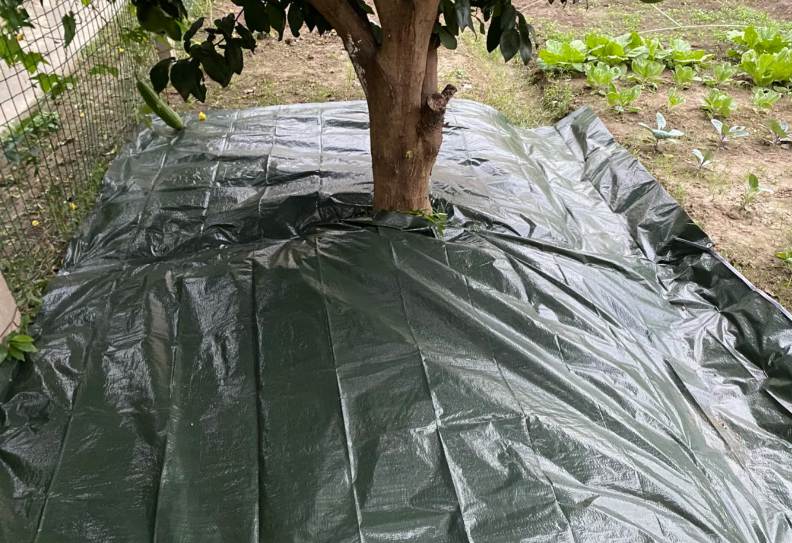
Core Functions and Exclusive Requirements of Landscape Fabric for Vegetable Gardens
Core Functions
Landscape fabric is not simply a “weed cover cloth.” For vegetable gardens, its value is reflected in multiple dimensions:
- Effectively inhibits weed growth, reduces the frequency of manual weeding, and prevents weeds from competing with vegetables for water and nutrients.
- Locks in soil moisture, reduces evaporation, especially suitable for vegetable gardens in dry seasons or with inconvenient watering.
- Protects soil structure, prevents soil erosion caused by rainwater scouring, and maintains soil looseness.
- Reduces the use of chemical herbicides, lowers the risk of pesticide residues in vegetables, and meets the needs of organic planting.
- Regulates soil temperature, provides heat insulation in summer and keeps warm in winter, creating a stable growth environment for vegetable roots.
Exclusive Requirements
The particularity of the vegetable garden scenario determines that landscape fabric must meet the following 4 key indicators; otherwise, it may hinder vegetable growth:
- High breathability: Ensures the respiration of vegetable roots and avoids root rot caused by soil hypoxia.
- Strong water permeability: Allows rainwater, irrigation water, and nutrients to penetrate smoothly into the soil without affecting vegetable absorption.
- Weather resistance and durability: Possesses UV-resistant properties, can withstand outdoor exposure, wind and rain erosion, and has a service life of at least 2 years.
- Ease of operation: Easy to cut and lay, and can be easily perforated to adapt to the planting needs of vegetable transplanting and seedling supplementation.
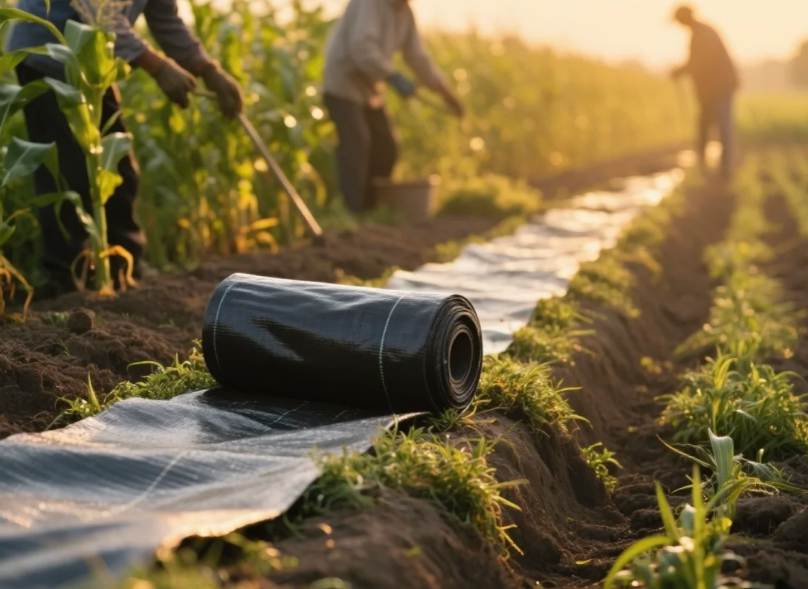
Comparison of Mainstream Landscape Fabric Types for Vegetable Gardens
Different types of landscape fabric vary significantly in material and performance, and are suitable for different vegetable garden scenarios. The specific comparisons are as follows:
| Type | Core Material | Core Advantages | Potential Disadvantages | Suitable Vegetable Garden Scenarios |
|---|---|---|---|---|
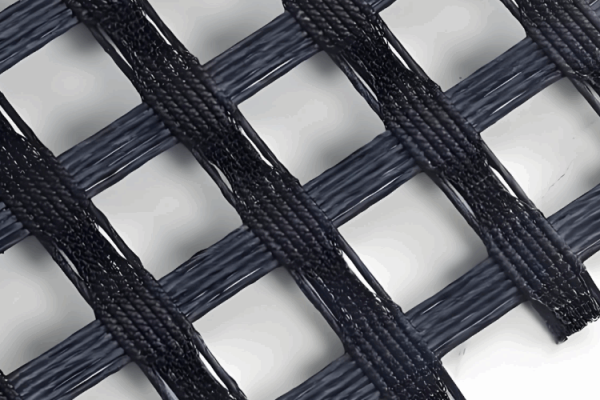
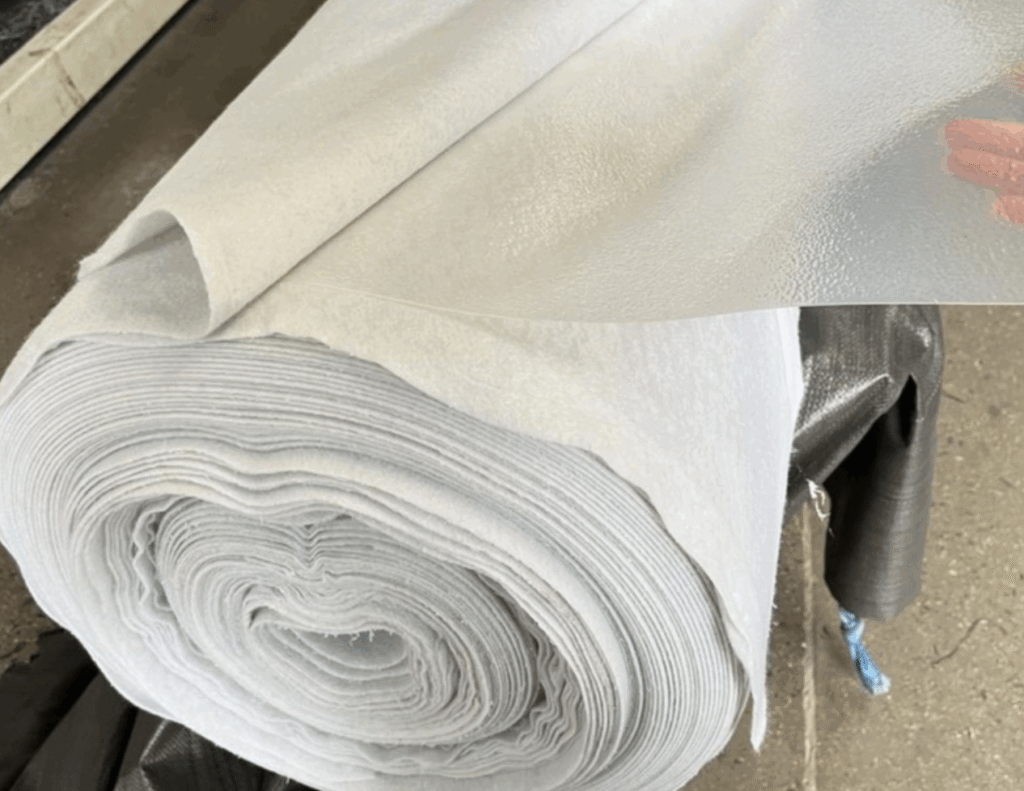
| Woven | Polypropylene (PP)/Polyester Fiber | High durability (5-10 years), excellent breathability and water permeability, tear-resistant, good load-bearing capacity | Slightly poor flexibility, easy to fray at edges, relatively high price | Long-term planting gardens, large-area planting areas, used with straw/wood chip mulch |
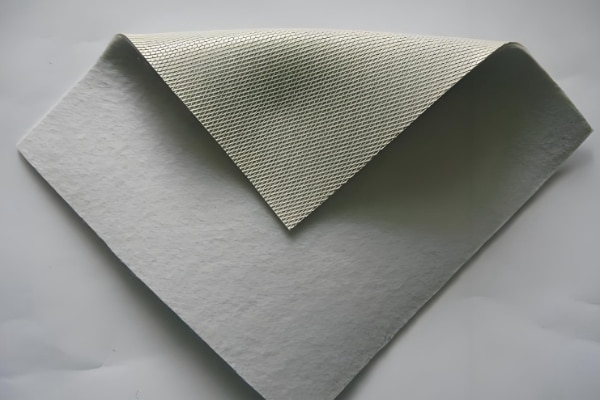
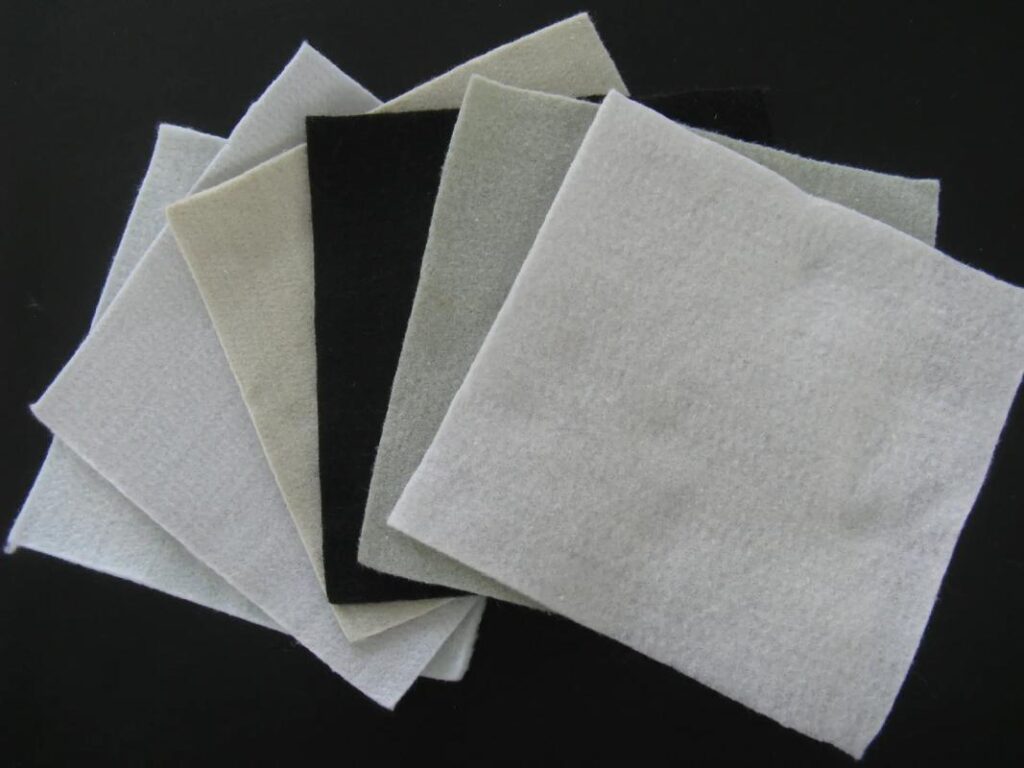
| Non-woven | Bonded Synthetic Fiber | Good soil erosion control effect, soft texture, suitable for irregularly shaped gardens | Average breathability, short service life (2-3 years), easy to be cut by sharp objects | Short-term gardens, sloped gardens, vegetable gardens with heavy clay soil and high drainage needs |
| Spunbond (Non-woven Subtype) | Spunbond Polypropylene | Lightweight design, excellent breathability, easy to cut and perforate, affordable price | Weak load-bearing capacity, needs to be used with mulch to avoid aging | Small leafy vegetable gardens, greenhouse gardens, temporary planting plots, home potted vegetable gardens |
Note: Ordinary non-woven fabric (without spunbond process) has poor breathability, which easily causes soil moisture and stuffiness, so it is not recommended for vegetable garden planting.
Key Parameters for Choosing Landscape Fabric for Vegetable Gardens
There is no need to blindly pursue “high-priced products” when purchasing. Focus on the following 5 core parameters to accurately select high-quality products:
1. Material Selection: Prioritize Polypropylene (PP)
- Polypropylene (PP) is the preferred material for vegetable garden landscape fabric, with good breathability, weather resistance, and safety. It contains no additives harmful to vegetables and is suitable for organic planting.
- Avoid fabric made from recycled materials, as such products have poor toughness, are easy to break, and may contain toxic substances.
- Polyester fiber material is more durable but slightly less breathable than PP, suitable for large-scale long-term vegetable gardens.
2. Thickness and Density: 100-150gsm is the Golden Range
- Thickness is usually marked in “ounces (oz)” or “grams per square meter (gsm)”. It is recommended to choose products of 3.2-5oz (corresponding to 100-150gsm).
- A thickness of 100-150gsm can balance weed suppression and breathability. It will not be broken through by weeds due to being too thin, nor will it affect soil breathability due to being too thick.
- For heavy-duty vegetable gardens (e.g., covered with gravel or thick mulch), you can choose thickened products above 5oz (150gsm). For small home vegetable gardens, 3.2-4oz is sufficient.
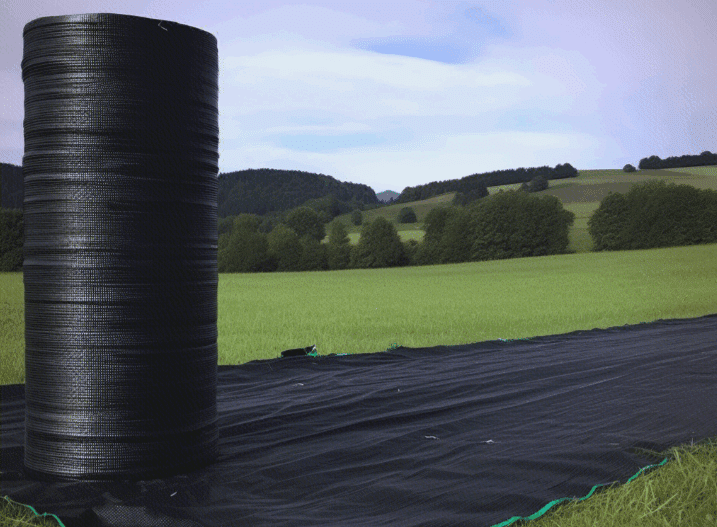
3. Water Permeability: Pay Attention to Water Permeability Rate
- The water permeability rate of high-quality vegetable garden landscape fabric should be ≥4.5 gallons per minute per square foot (or ≥180L/m²·h according to international standards).
- Check the product description when purchasing, and avoid “waterproof” or “impermeable” fabric, which will block water penetration and cause vegetables to lack water.
4. Additional Attributes: These Functions Are Practical
- UV-resistant treatment: This function is a must. Otherwise, it will age and become brittle after 1-2 months of outdoor exposure, which can extend the service life.
- Grid/marking line design: Fabric with clear grid or green line marks can help accurately locate planting positions and make perforation more convenient.
- Edge reinforcement: Products with heat-sealed or hemmed edges are not easy to fray or tear, making laying more worry-free.
5. Size Selection: Reserve 10% Margin
- Purchase according to the actual area of the vegetable garden, and it is recommended to be 10% larger than the garden area to reserve a margin for edge fixation.
- Common sizes include 1x20m, 2x30m, etc. For small home vegetable gardens, narrow-width products can be chosen to avoid cutting waste.
- Pay attention to tensile strength. It is recommended to choose products with longitudinal/transverse tensile strength ≥950N to prevent stretching and deformation during laying.
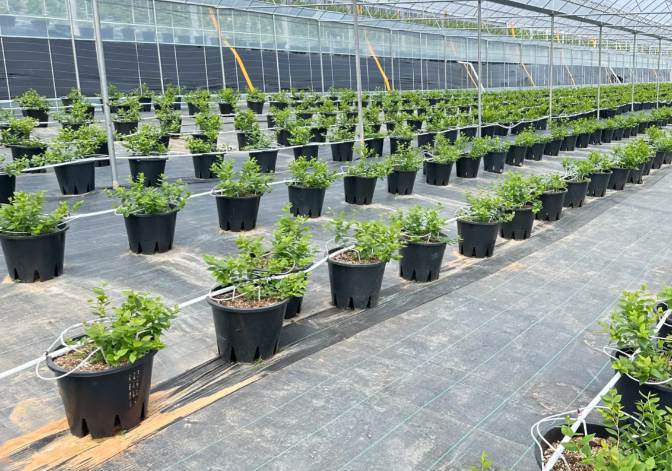
Top 5 Recommended Landscape Fabrics for Vegetable Gardens
Based on market sales, user feedback, and adaptability to vegetable garden scenarios, the following 5 products have been tested and verified to have excellent comprehensive performance:
1. Best Overall: PP Woven High-Breathability Landscape Fabric (5oz)
- Core Parameters: Food-grade polypropylene material, thickness 5oz (150gsm), water permeability rate 220L/m²·h, UV-resistant treatment, service life 8 years.
- Core Advantages: Balanced breathability and water permeability, weed suppression effect of over 95%, heat-sealed edges, strong tear resistance.
- Suitable Scenarios: Various long-term vegetable gardens, planting areas for fruit and vegetable crops such as tomatoes, cucumbers, and eggplants.
2. Best Value for Money: Spunbond Polypropylene Landscape Fabric (3.2oz)
- Core Parameters: Spunbond PP material, thickness 3.2oz (100gsm), grid marking design, water permeability rate 190L/m²·h, service life 3 years.
- Core Advantages: Price is only 60% of woven type, easy to cut and perforate, suitable for beginners.
- Suitable Scenarios: Home small vegetable gardens, planting areas for leafy vegetables (lettuce, spinach, chrysanthemum greens), temporary planting plots.
3. For Large-Scale Gardens: Polyester Fiber Woven Landscape Fabric (6oz)
- Core Parameters: Polyester fiber + PP blend, thickness 6oz (180gsm), tensile strength 1200N, UV-resistant + anti-mildew treatment, service life 10 years.
- Core Advantages: Excellent load-bearing capacity, can be directly covered with gravel or thick mulch, suitable for large-scale commercial vegetable gardens.
- Suitable Scenarios: Farm vegetable gardens, large home vegetable gardens over 50㎡, planting areas for root vegetables (carrots, potatoes).
4. Suitable for Organic Planting: Additive-Free PP Landscape Fabric (4oz)
- Core Parameters: Food-grade virgin PP material, no fluorescent agents, no odor, thickness 4oz (120gsm), water permeability rate 200L/m²·h, service life 5 years.
- Core Advantages: Certified for organic planting, high safety, balanced breathability and water permeability.
- Suitable Scenarios: Organic vegetable gardens, planting areas for baby vegetables (cherry radishes, mini lettuce), greenhouses.
5. Best for Irregular Gardens: Flexible Non-Woven Landscape Fabric (3.5oz)
- Core Parameters: Flexible bonded fiber, thickness 3.5oz (110gsm), soft and foldable texture, water permeability rate 180L/m²·h, service life 2 years.
- Core Advantages: Strong ability to fit terrain, suitable for vegetable gardens with many corners and irregular shapes, affordable price.
- Suitable Scenarios: Sloped vegetable gardens, small corner vegetable gardens in courtyards, vegetable gardens with clay soil.
Practical Installation for Landscape Fabric in Vegetable Gardens
High-quality products need to be matched with correct installation methods to achieve the best results. The specific steps are as follows:
Step-by-Step Installation Guide
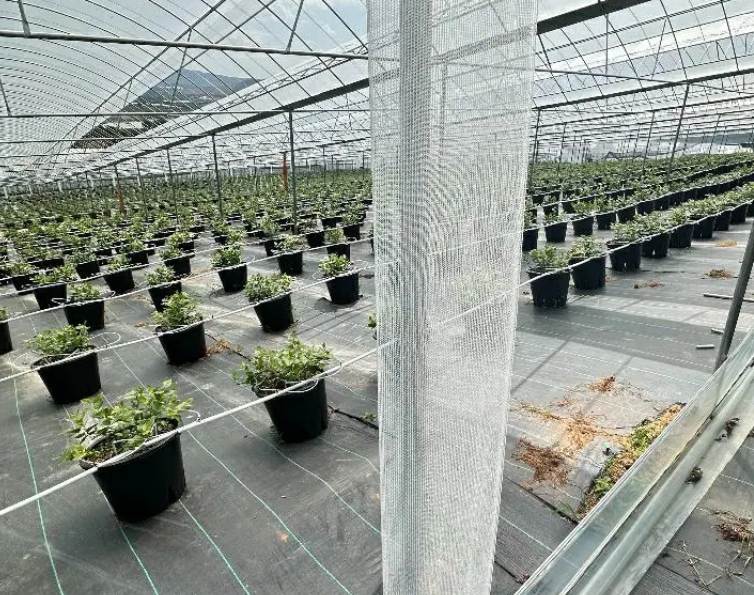
- Soil Preparation: First, thoroughly remove weeds (including roots) from the vegetable garden, level the land, and avoid exposing sharp stones and branches. After applying base fertilizer, let the soil aerate for 1-2 days.
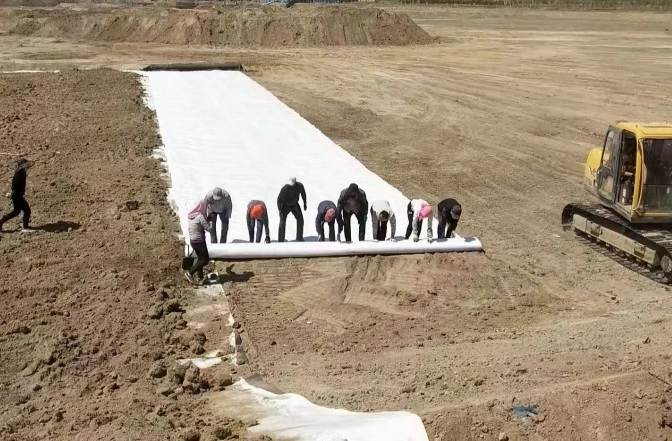
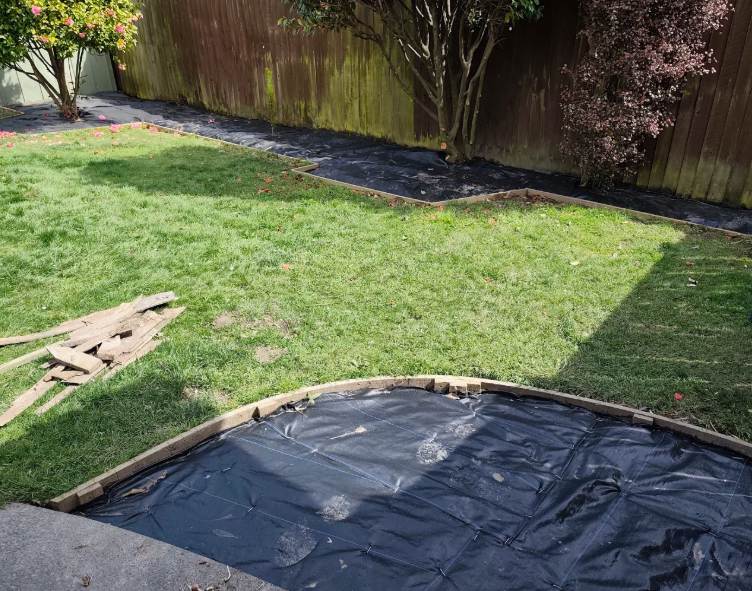
- Cutting and Laying: Cut the fabric according to the shape of the vegetable garden, leaving a 10-15cm margin for edge fixation. Lay the fabric flat on the soil surface without stretching or deforming, ensuring complete coverage without gaps.
- Edge Fixation: Fix the edges of the fabric with U-shaped garden stakes or stones, with a stake spacing of about 50cm. The stakes can be densely fixed at corners to prevent displacement by wind or being washed up by rainwater.
- Planting Perforation: Along the grid lines of the fabric or pre-marked planting positions, cut X-shaped holes with scissors (the hole diameter is slightly larger than the root of the vegetable seedling, generally 5-8cm). Avoid excessively large holes that allow weeds to grow from the gaps.
- Efficiency Enhancement: After laying, cover the surface of the fabric with 3-5cm thick straw, wood chips, or pine needles. This can protect the fabric, delay aging, and further improve water retention.
Daily Maintenance Tips
- Regularly check the integrity of the fabric. If damage or tearing is found, repair it with garden tape or replace the local area in a timely manner.
- Clean up fallen leaves and debris on the surface of the fabric to avoid accumulation that reduces breathability.
- When changing crops in seasons, the fabric can be lifted, and after loosening the soil and fertilizing, it can be re-laid to extend the service life.
- Avoid direct contact between sharp tools (such as hoes and shovels) and the fabric to prevent scratching.
Common Purchasing and Usage Pitfalls
Pitfall 1: Blindly Choosing Thick Products
Believing that “thicker is better” and choosing ultra-thick fabric above 6oz leads to insufficient soil breathability and root hypoxia and rot of vegetables. Correct Approach: Select products of 100-150gsm according to the type of vegetable garden, balancing protection and breathability.
Pitfall 2: Confusing Scenarios and Misusing Walkway/Flower Bed Fabric
Using landscape fabric designed for driveways or flower beds in vegetable gardens. Such products have poor water permeability and hard materials, which are completely inconsistent with the growth needs of vegetables. Correct Approach: When purchasing, choose products clearly marked “vegetable garden-specific” or “suitable for vegetable planting.”
Pitfall 3: Ignoring UV-Resistant Performance
Buying ordinary fabric without UV treatment, which ages and becomes brittle after 3-6 months of outdoor exposure. Frequent replacement actually increases costs. Correct Approach: Prioritize products marked “UV-stabilized” or “UV-resistant” on the packaging to ensure service life.
Pitfall 4: Not Using Mulch After Installation
Thinking that the fabric itself can be “a one-time solution” without matching mulch such as straw or wood chips, leading to accelerated aging of the fabric due to direct exposure and easy weed growth at the edges. Correct Approach: Must lay mulch after installation to form a double protection of “fabric + mulch.”
Pitfall 5: Excessively Large or Small Perforations
Excessively large holes allow weeds to grow from the gaps; excessively small holes hinder the growth of vegetable seedlings. Correct Approach: Adjust the hole diameter according to the vegetable variety, about 5cm for leafy vegetables and 8cm for fruit and vegetable crops, and the edges of the holes should be as close to the roots of the seedlings as possible.
Conclusion
For vegetable gardens, choosing the right landscape fabric can double planting efficiency. Overall, 3.2-5oz polypropylene woven landscape fabric is the first choice for most vegetable gardens, with balanced breathability, durability, and adaptability. For small-scale short-term vegetable gardens, spunbond products are more cost-effective. For organic planting, the safety of materials should be the focus.
Reference Sources
- ASTM International. (2023). ASTM D4355 – Standard Test Method for Strength Properties of Geotextiles by the Wide-Width Tensile Test. ASTM International. https://www.astm.org/d4355-23.html
- ASTM International. (2022). ASTM D4716 – Standard Test Method for Water Permeability of Geotextiles. ASTM International. https://www.astm.org/d4716-22.html
- ISO. (2021). ISO 10318:2021 – Geotextiles and geotextile-related products – Determination of ultraviolet resistance. International Organization for Standardization. https://www.iso.org/standard/77989.html