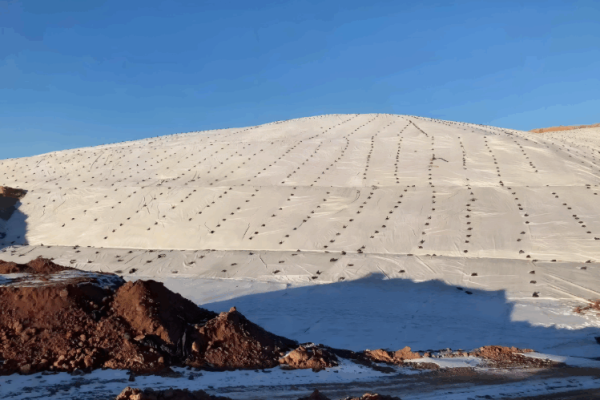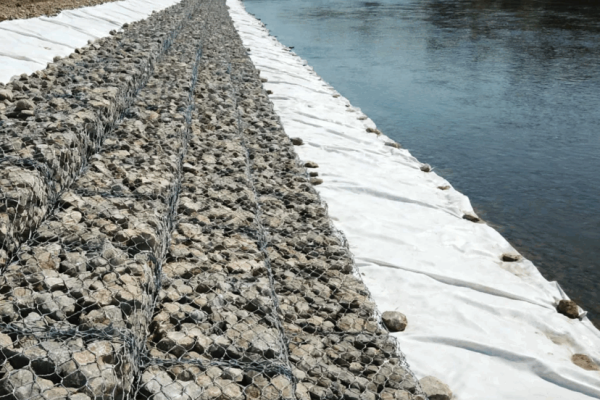
In industrial and environmental engineering, constructing a secondary containment system over geotextile is a critical technology to prevent hazardous substance leakage and ensure regulatory compliance. This article provides a comprehensive guide covering system principles, material selection, structural design, and step-by-step installation, along with key compliance requirements, offering you a one-stop solution.
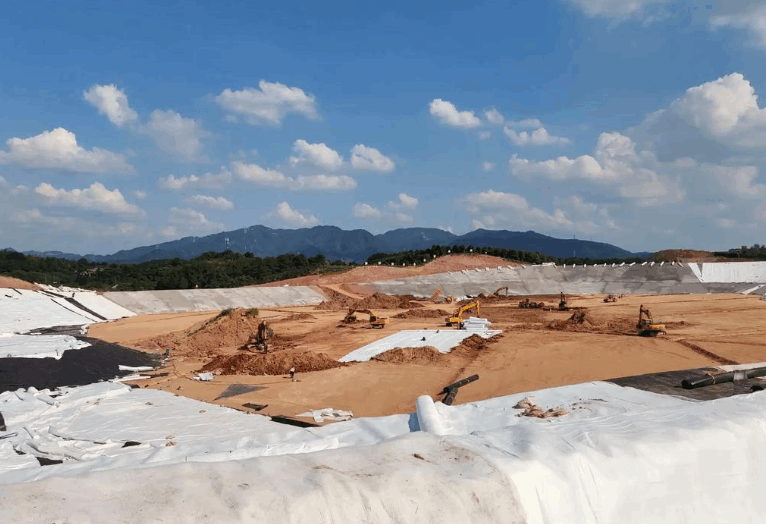
Four Core Functions of Geotextile in Containment Systems
Geotextile is not merely a “layer of fabric” but serves multiple vital roles:
- Separation: Prevents intermixing of underlying base soil and upper geomembrane, maintaining distinct structural layers.
- Protection: Absorbs and distributes local stresses, providing a buffer for flexible geomembranes (e.g., HDPE) to avoid puncture by sharp objects in the base layer.
- Filtration & Drainage: Allows upward seepage of groundwater or lateral flow of leachate, effectively relieving sub-hydrostatic pressure and preventing membrane bulging or floating.
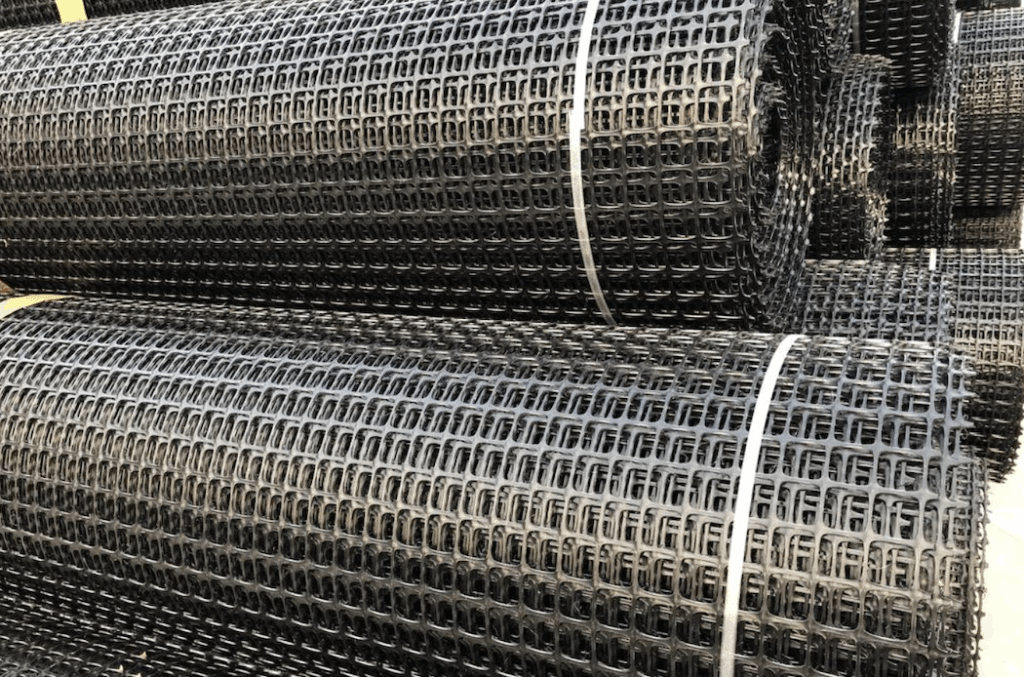
- Reinforcement (in specific designs): Offers tensile strength to enhance overall system stability.
A typical “golden structural layer” from bottom to top is: Compacted base → Geotextile (protection/drainage layer) → Secondary containment geomembrane (primary barrier) → Optional top protection layer.
Recommended Reading:Geotextile Fabric Containment: Applications, Selection, and Installation
Material Selection for Secondary Containment Over Geotextile
| Material Layer | Recommended Type | Key Performance Parameters | Application Scenario |
|---|---|---|---|
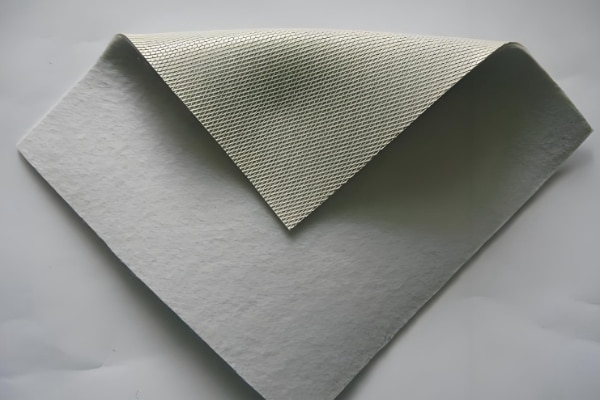
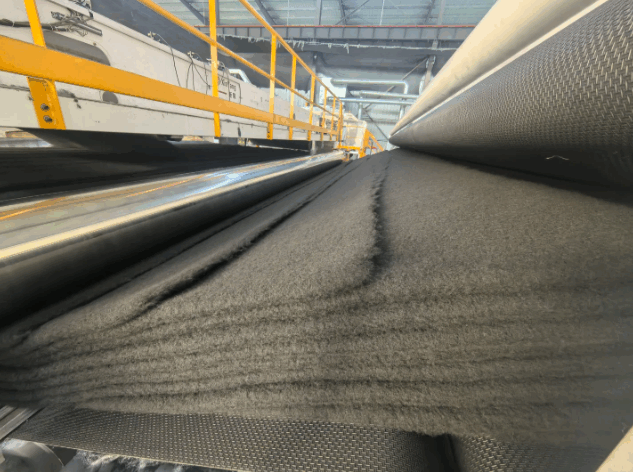
| Geotextile | Non-woven Fabric | Weight ≥ 200 g/m², Thickness ≥ 2mm, CBR Puncture Resistance ≥ 3.5 kN | Preferred option. Offers superior protection and drainage due to its greater thickness and loft. |
| Woven Fabric | High tensile strength, Precise filtration properties | Used in special cases requiring strict filtration control or extremely high tensile strength. | |
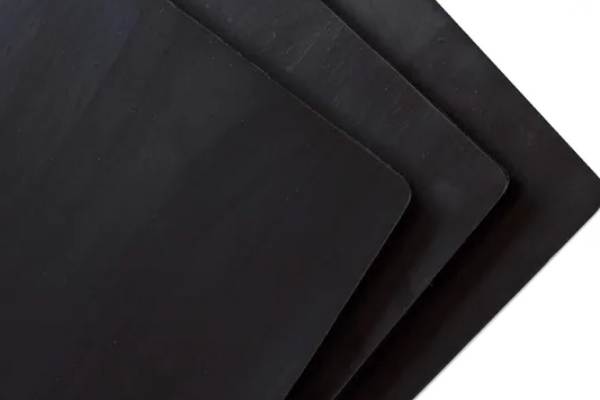
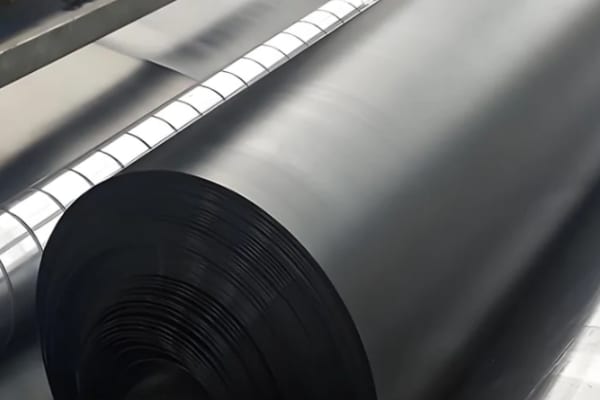
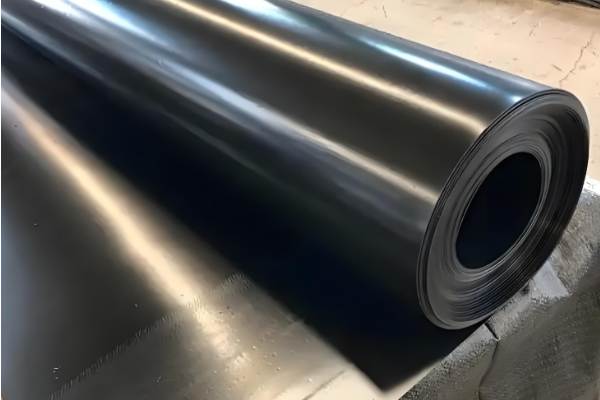
| Containment Liner | HDPE (High-Density Polyethylene) | Thickness 1.0mm – 2.0mm, Excellent chemical resistance | For long-term storage, complex chemical mixtures, and applications demanding high durability. |
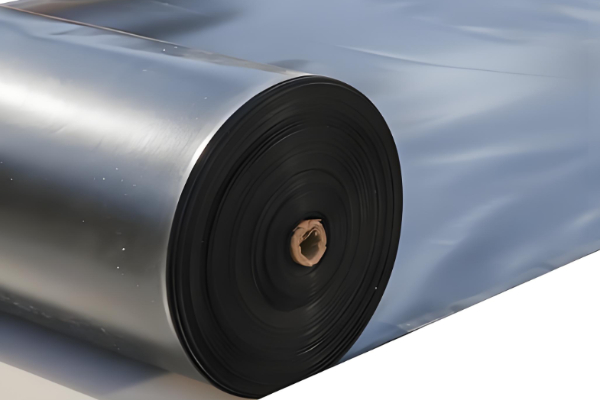
| LLDPE (Linear Low-Density Polyethylene) | Thickness 0.75mm – 1.5mm, High flexibility, Strong seam strength | For areas with average subgrade conditions, irregular shapes, or where greater conformability is needed. |
Key Design Considerations for Secondary Containment Over Geotextile
1. Standard Structure
Compacted clay or gravel base → Protection/drainage layer (material: non-woven geotextile) → Primary containment layer (material: LLDPE/HDPE geomembrane) → Optional concrete surface or cover layer.
2. Interface Friction & Slope Stability
The friction coefficient between geotextile and geomembrane is critical for slope design, typically requiring professional laboratory testing. For HDPE membranes, slopes are often designed at 2:1 (H:V) or gentler, with anti-slip stability calculations mandatory.
3. Anchor Trench Details
All liner layers must terminate and be securely anchored in anchor trenches, which shall be backfilled and compacted.
4. Penetration Handling
Pipes, columns, and other penetrations must be flexibly sealed using specialized outdoor sleeves or welded reinforcement patches. These are leakage-prone areas requiring special attention.
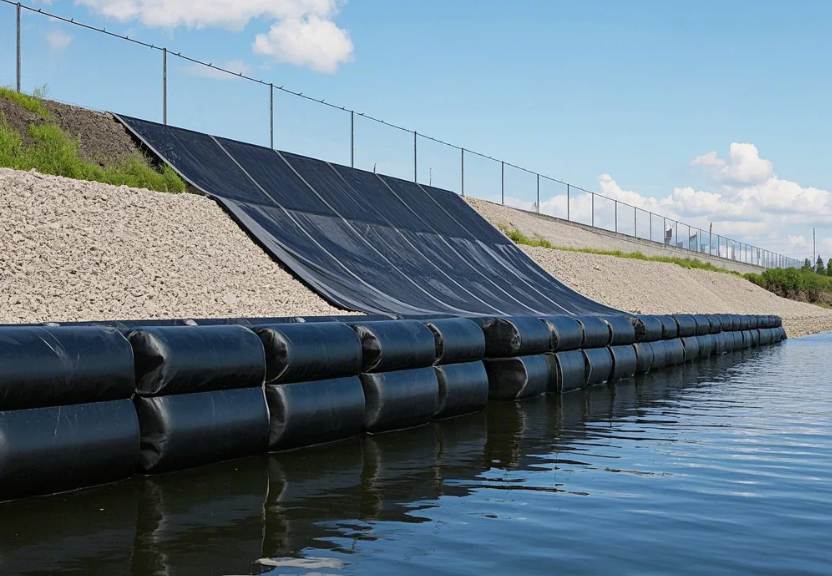
Installation Guide for Secondary Containment Over Geotextile
Preparatory Work
Ensure the base layer is flat, compacted (compaction degree > 90%), and free of tree roots, sharp rocks, etc. Prepare all materials and welding equipment.
Step 1: Geotextile Installation
- Unrolling: Lay geotextile in the designed direction, ensuring flatness without wrinkles.
- Lapping: Minimum lap width is typically 300mm. Lapping is acceptable for non-critical areas; sewing or thermal bonding is recommended for steep slopes or critical zones.
- Protection: Cover with geomembrane promptly after installation to avoid prolonged exposure to sunlight and foot traffic.
Step 2: Geomembrane Installation & Welding
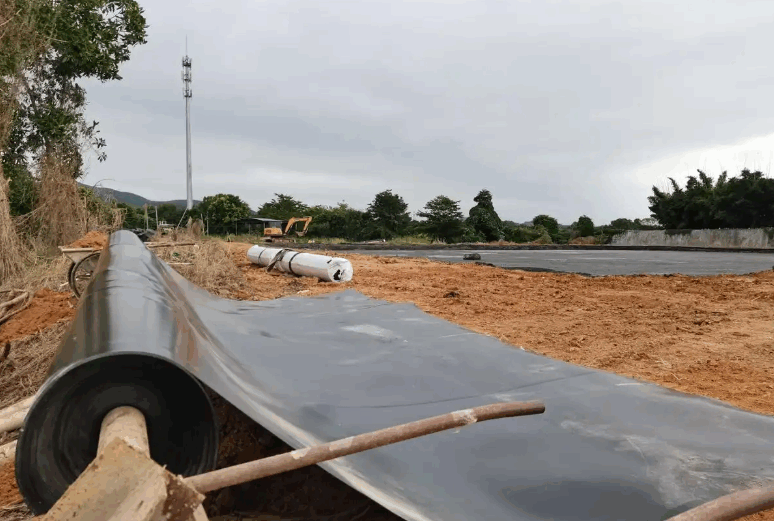
- Unrolling: Carefully deploy the geomembrane over the geotextile, avoiding dragging to prevent scratches. Reserve sufficient expansion/contraction allowance for temperature changes.
- Welding: The lifeline of system quality:
- Twin-track hot wedge welding: For long, straight, flat seams.
- Extrusion welding: For repairs, complex shapes, and T-joints.
- Inspection: 100% non-destructive testing of all welds:
- Air pressure testing (for twin-track welds): Inflate the weld cavity and maintain stable pressure.
- Spark testing (for extrusion welds): Scan the weld to detect leaks.
Step 3: Final Inspection & Backfilling
Conduct a comprehensive visual inspection to ensure no damage or untreated laps. If a concrete surface or cover layer is required, proceed only after the supervising engineer confirms the containment layer’s qualification, with protective measures in place.
Compliance References (U.S. Example)
Secondary containment system design must meet relevant regulations, such as:
- EPA SPCC (Spill Prevention, Control, and Countermeasure) Rule: Requires secondary containment for oil storage facilities of specific capacities to contain spills.
- Industry Standards: Widely reference standards from the Geosynthetic Research Institute (GRI), such as GRI GM13 (Standard Specification for HDPE Geomembranes).
Important Note: The final design must be certified by a Professional Engineer (PE) to ensure compliance with all federal, state, and local requirements for the specific site.
Frequently Asked Questions (FAQs)
Q1: Will geotextile be corroded by chemicals?
A1: Geotextiles made of polypropylene (PP) or polyester (PET) offer excellent resistance to most acids and alkalis. However, in extreme chemical environments, selection must be based on the chemical compatibility chart of the stored substances.
Q2: How to locate and repair leaks in the system?
A2: Bilinear leak detection systems or electrical leak detection can be used. For repairs, clean the damaged area, apply strict extrusion welding with same-material patches, and re-inspect.
Q3: Can geotextile be omitted to save costs?
A3: Strongly not recommended. Omitting geotextile significantly increases the risk of geomembrane puncture and failure due to sub-hydrostatic pressure, potentially leading to costly leaks, environmental cleanup expenses, and fines. Geotextile is the most cost-effective “insurance” for the system.
Q4: Should geotextile be placed under or over the geomembrane?
A4: Typically placed underneath as a protection layer. In certain designs (e.g., when backfilling over the geomembrane), an additional geotextile layer may be placed on top for extra protection.
Conclusion
The successful construction of a secondary containment system over geotextile relies on three pillars: correct material selection based on professional assessment, meticulous detailed design, and strict compliance with installation and quality control standards. Understanding the versatility of geotextile and integrating it into the system design is the cornerstone of ensuring the long-term integrity and effectiveness of the containment structure.
References:
- ASTM D5321 – Standard Test Method for Determining the Coefficient of Soil and Geosynthetic or Geosynthetic and Geosynthetic Friction by the Direct Shear Method. (Relevant to “Interface Friction and Slope Stability”)
- ASTM D4833 – Standard Test Method for Index Puncture Resistance of Geotextiles, Geomembranes, and Related Products. (Relevant to “Geotextile Key Performance Parameters”)
- ASTM D6693 – Standard Specification for Polyolefin-Based Geomembranes.