In civil engineering, water conservancy construction, environmental governance and other fields, waterproof geotextiles serve as key geosynthetic materials, and their performance directly determines the anti-seepage effect, structural stability and service life of projects. However, it should be clarified that waterproof geotextiles are not a single water-blocking material, but core components that build a complete waterproof system through the multi-functional coordination of “anti-seepage, filtration, reinforcement and protection”. This article comprehensively analyzes the application logic of waterproof geotextiles from the dimensions of basic cognition, function decomposition, type scenarios and selection key points, providing professional reference for engineering material selection and construction.
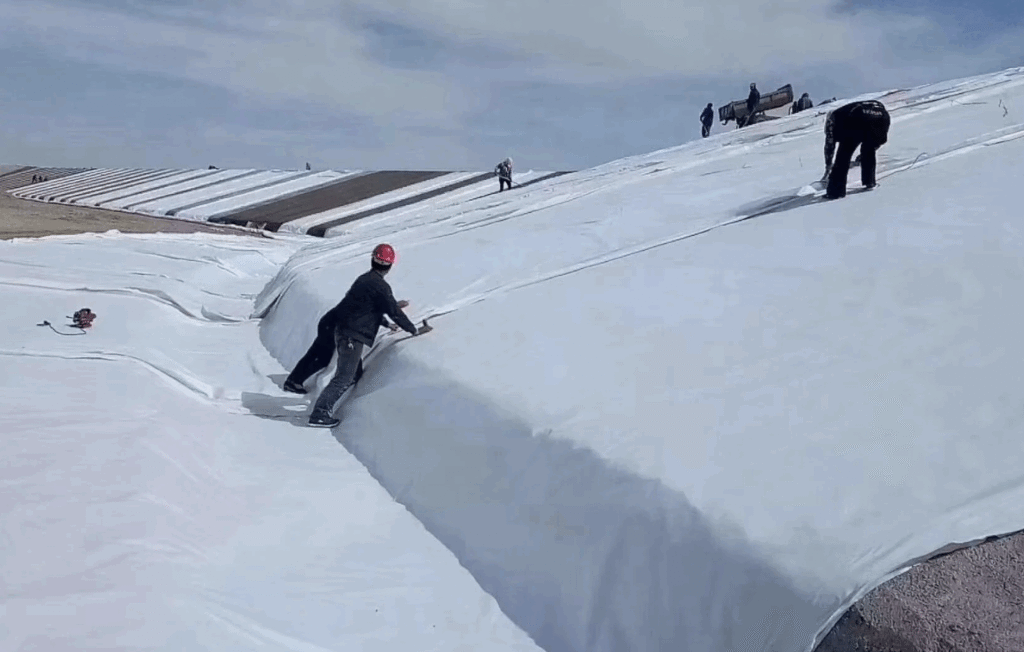
I. What are Geotextile Fabric for Waterproofingtextiles?
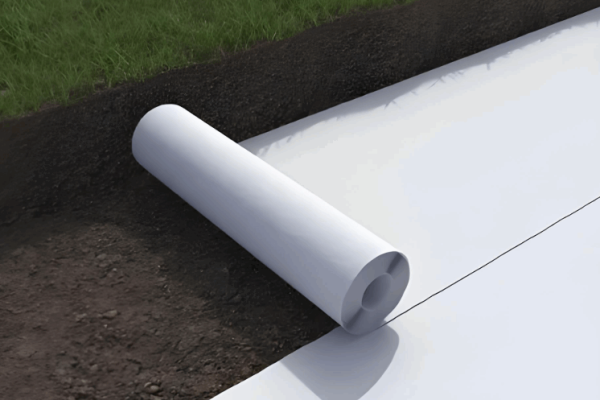
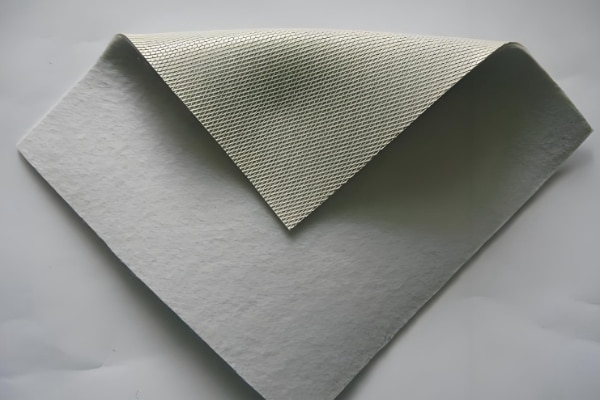
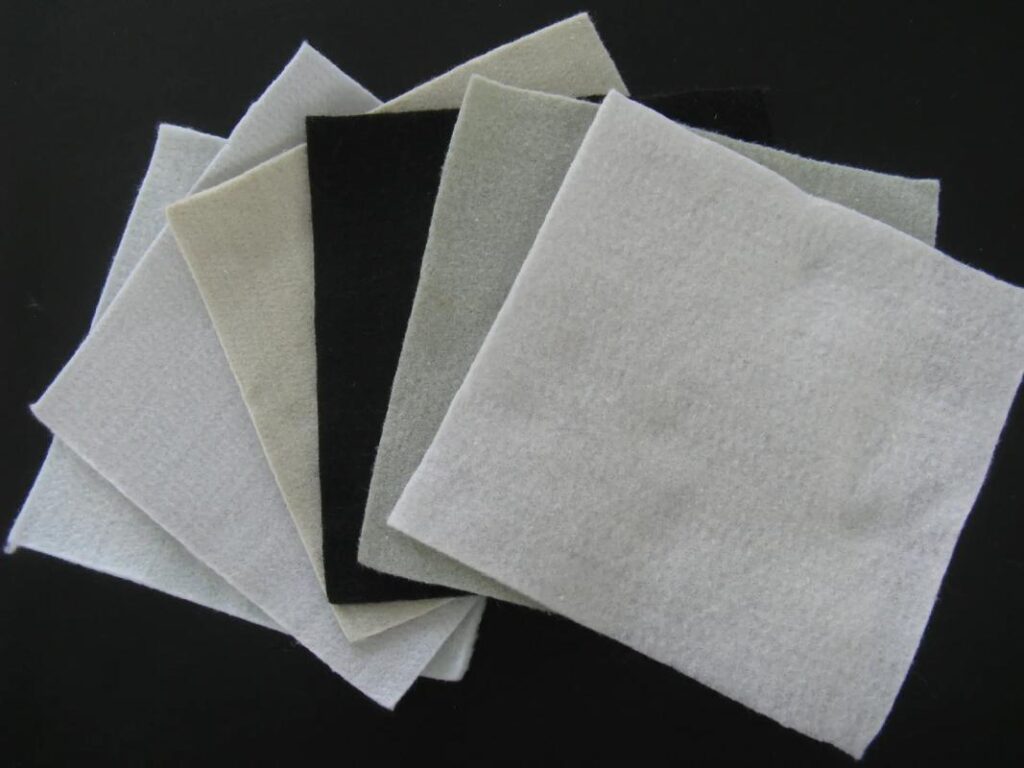
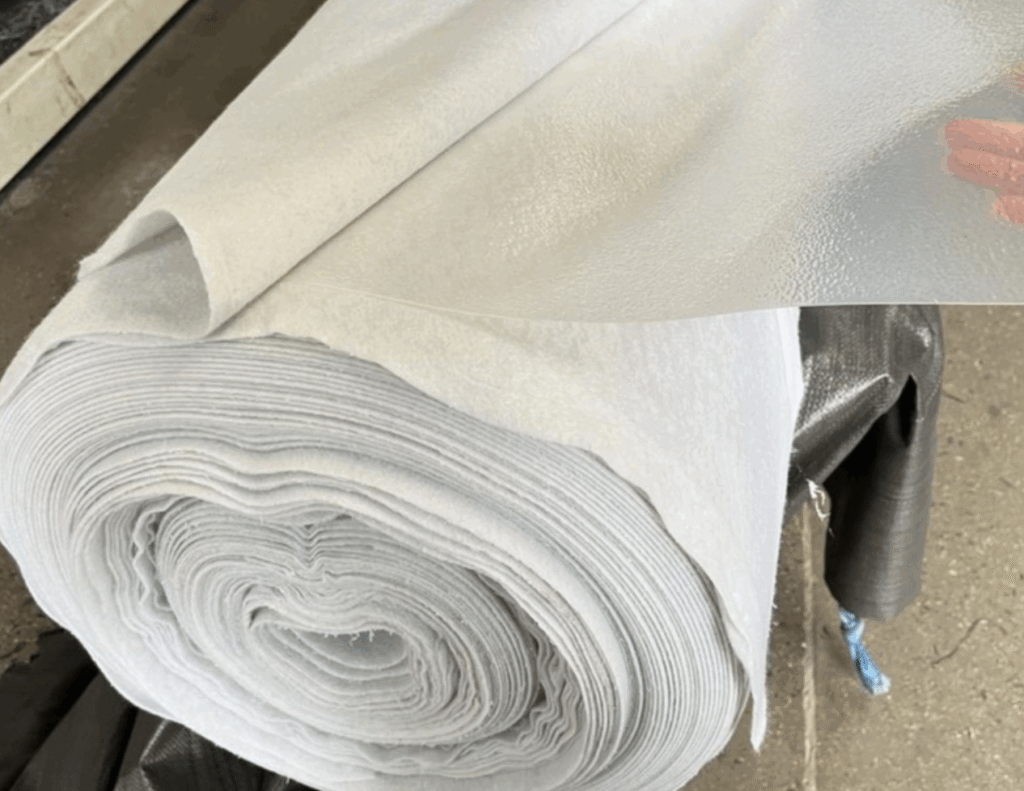
Waterproof geotextiles are essentially geotextiles made of high polymer fibers such as polyethylene (PE), polypropylene (PP) or polyester. They are often compounded with geomembranes to form composite geotextiles, which have both water permeability, filtration and auxiliary waterproof capabilities, and are important components of engineering anti-seepage systems.
Their core material advantages are reflected in multiple dimensions: first, excellent durability. After 1000 hours of ultraviolet aging test, the strength retention rate of high-quality products can reach 92%. With the addition of carbon black and other anti-aging components, the service life can be as long as 10-15 years or more; second, outstanding physical properties. The breaking strength is generally ≥25kN/m, and the puncture resistance can reach more than 300N, which can resist soil particle friction and external impact; third, strong environmental adaptability. They are resistant to acid and alkali corrosion. After soaking in an extreme environment with pH=2-12 for 30 days, the strength retention rate is still ≥85%. Products certified by ISO 14001 have no harmful substance precipitation, which can meet the requirements of environmental protection projects; fourth, convenient construction. The conventional width is 2-6 meters, and the width of 8 meters can be customized, reducing the number of joints. The paving efficiency is 40% higher than that of traditional waterproof materials.
Relationship between Waterproof Logic and Permeability
Many engineering parties have a misunderstanding that “geotextiles need to be completely impermeable”. In fact, the core value of waterproof geotextiles is not simply water blocking, but to achieve anti-seepage goals through the synergistic effect of “drainage + filtration + isolation”. Geotextiles themselves are permeable, with an equivalent aperture usually ranging from 0.07 to 0.2mm, which allows water to pass through but intercepts soil particles, avoiding the blockage of waterproof structures by sediment and maintaining water balance.
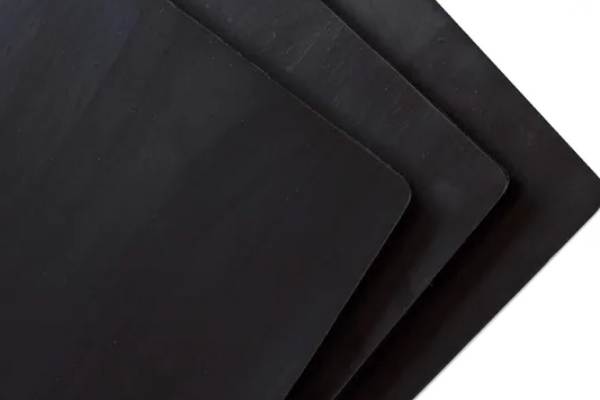
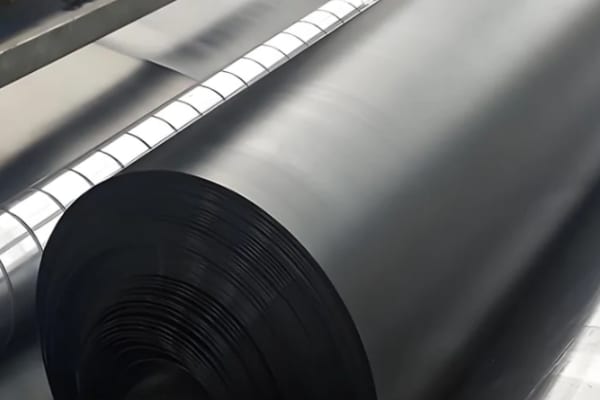
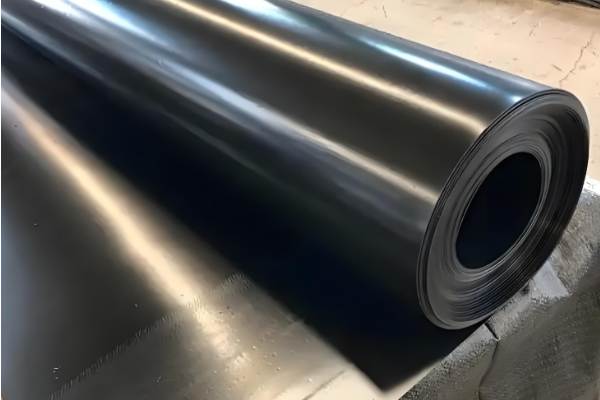
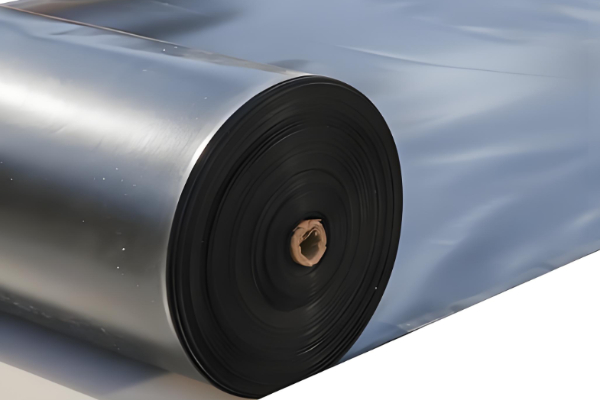
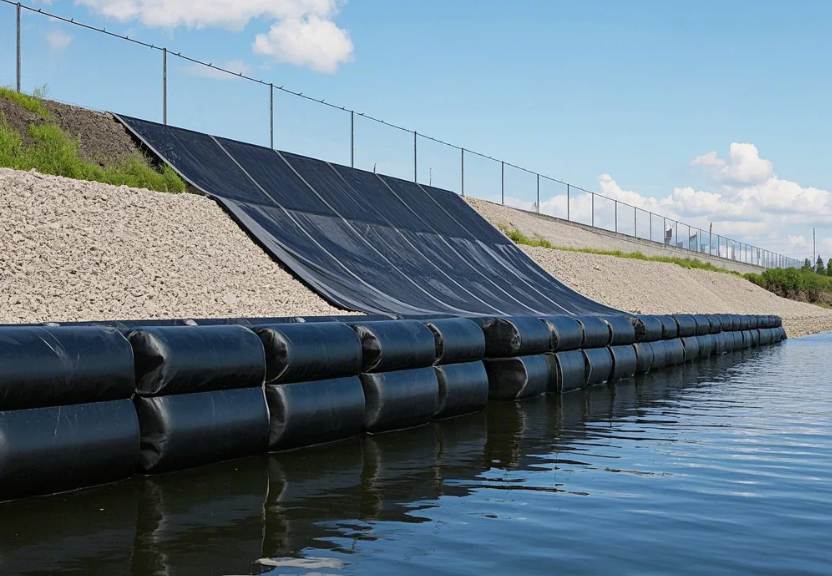
In practical applications, waterproof geotextiles are mostly used in combination with HDPE anti-seepage membranes and other materials to form a “geotextile + anti-seepage membrane” composite system: geotextiles act as a protective layer to prevent the anti-seepage membrane from being punctured by sharp soil particles and aging by ultraviolet radiation, while undertaking the functions of filtration and drainage; the anti-seepage membrane plays a core water-blocking role, with a permeability coefficient as low as 1×10⁻¹²cm/s, far lower than the national standard requirement of 1×10⁻¹⁰cm/s. The two work together to achieve the dual guarantee of “protection + anti-seepage”.
II. Core Benefits of Waterproof Geotextiles
The value of waterproof geotextiles lies in the integration and coordination of multiple functions. Centering on engineering waterproof scenarios, the five core functions support each other to build a stable and reliable anti-seepage system:
First, auxiliary waterproof function. Special composite geotextiles (such as two-cloth-one-membrane) can be directly used as the core component of the waterproof layer. Through the composite structure of geomembrane and geotextile, it not only blocks water penetration, but also improves the overall tensile strength; general-purpose geotextiles indirectly enhance the waterproof effect by controlling water, avoiding water accumulation in the structural layer leading to leakage.
Second, isolation function. It can effectively prevent the mixing of soil layers and rock-soil materials with different particle sizes, maintain the layered stability of subgrades, dams and other structures, avoid the decrease of bearing capacity caused by material mixing, and provide a solid foundation for the waterproof system. In high-speed railway subgrade projects, this function can control the subgrade settlement within 5mm, meeting the strict requirement of ≤10mm for high-speed railway projects.
Third, filtration function. This is one of the core characteristics of waterproof geotextiles. Through precise control of equivalent aperture, it realizes “water passing through while soil retaining”, prevents soil particles from being lost with water flow, and avoids the blockage of waterproof structures and drainage pipes. In landfill projects, this function can make the leachate filtration efficiency reach 98% and reduce the subsequent treatment cost by 20%.
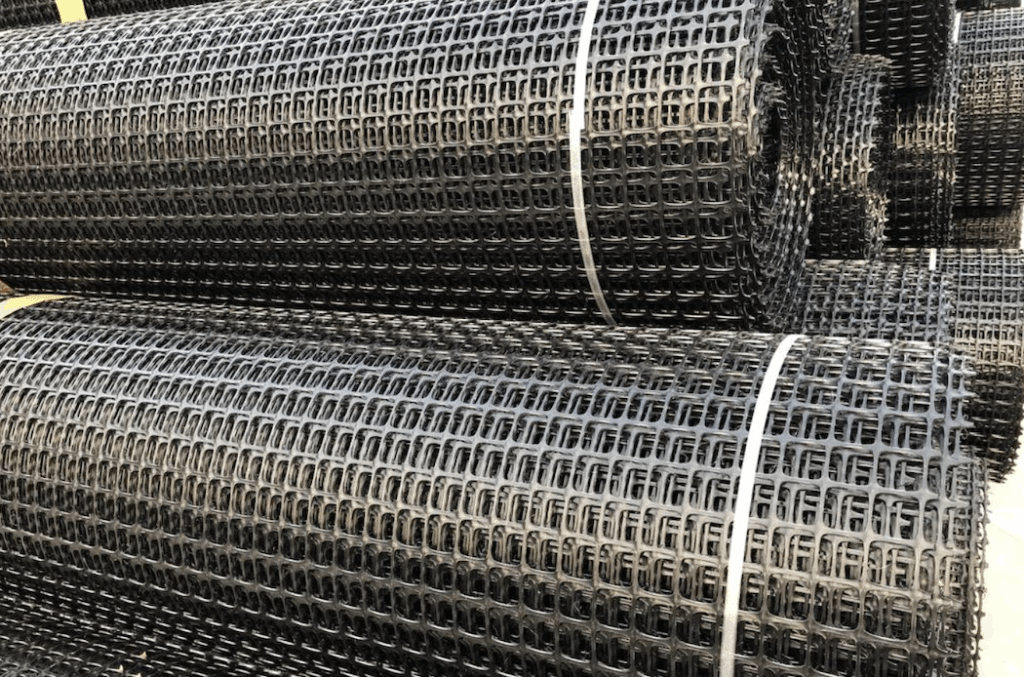
Fourth, reinforcement function. By improving the tensile strength and deformation resistance of soil, it reduces the settlement and displacement of engineering structures, and avoids the tearing of the waterproof layer due to structural deformation. The longitudinal tensile strength of filament geotextiles can reach 50kN/m, and the creep modulus is ≥1000MPa, which can effectively meet the deformation requirements of high-frequency load scenarios such as airport runways and high-speed railway subgrades.
Fifth, protection function. It can protect anti-seepage membranes, soil or rocks from rain erosion and external peeling, and extend the service life of the entire waterproof system. In the anti-seepage project of Wensu Reservoir, the combination of geotextiles and HDPE anti-seepage membranes has withstood 3 years of long-term immersion and water pressure tests without leakage, and the project acceptance qualification rate has reached 100%.
III. Main Types of Geotextile Fabric for Waterproofingtextiles
According to the manufacturing process, waterproof geotextiles can be divided into two categories: woven (woven) and non-woven (non-woven). The two types have significant performance differences and are suitable for different engineering needs:
- Woven waterproof geotextiles: Made of polyester filaments through weaving process, they have high strength and excellent tensile properties. The breaking strength can reach 24-40kN/m (for specifications of 300g/m² and above), and the creep resistance is outstanding. They are suitable for waterproof scenarios focusing on structural reinforcement. For example, slope protection, high-speed railway subgrades, airport runway bases, etc., can effectively resist high loads and structural deformation, and reduce settlement risks. Its conventional specifications are divided according to the mass per unit area. Models above 300g/m² are suitable for high-load scenarios, and models of 100-200g/m² can be used for light subgrade isolation.
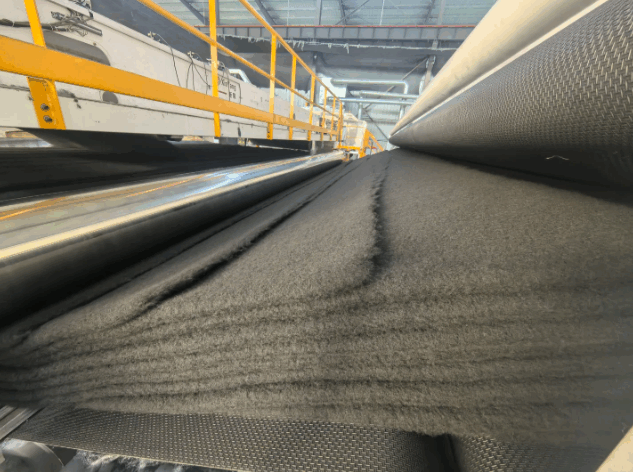
- Non-woven waterproof geotextiles: Made of short fibers or filaments through needle punching and thermal bonding processes, they have better air permeability and filtration performance than woven ones, with uniform equivalent aperture and a permeability coefficient ≥1×10⁻²cm/s, far exceeding the national standard requirements. They are suitable for waterproof scenarios focusing on filtration and isolation, such as reservoir filter layers, landfill drainage layers, river slope protection, etc. In the Yantai landfill project, the laying area of non-woven staple fiber geotextiles reached 300,000 m², effectively achieving the dual goals of leachate filtration and anti-seepage membrane protection.
IV. Application Scenarios of Geotextile Fabric for Waterproofingtextiles
The application scenarios of waterproof geotextiles cover various engineering fields, and the type and specification need to be matched according to the scenario requirements:
- Water conservancy projects: The core needs of dams, reservoirs, fish ponds and other scenarios are water pressure resistance, immersion resistance and puncture resistance. For reservoir anti-seepage, “two-cloth-one-membrane” composite geotextiles can be selected, with a peel strength ≥6N/mm to resist high water pressure and freeze-thaw cycles; for fish pond anti-seepage, HDPE composite geotextiles added with puncture-resistant reinforcing agents are preferred, with a puncture resistance ≥300N, which can resist fish bites, prevent fertilizer loss in fish ponds, and reduce the fertilizer loss rate of fish ponds from 15% to 2%.
- Underground projects: Tunnel and basement foundation waterproofing need to deal with groundwater pressure and complex geological problems. A combination of bentonite waterproof blankets and non-woven geotextiles can be selected. The bentonite expansion index is ≥24mL/g, and the shear strength is ≥50kPa. It has been applied without leakage in Qingdao Metro Line 1 project, suitable for foundation pit anti-seepage scenarios.
- Environmental protection projects: Landfills are the core application scenarios, which need to balance environmental protection and corrosion resistance. Non-woven geotextiles certified by ISO 14001 are selected to combine with anti-seepage membranes, which not only prevent leachate from polluting groundwater, but also avoid the blockage of drainage pipes through filtration function, with a service life of more than 50 years.
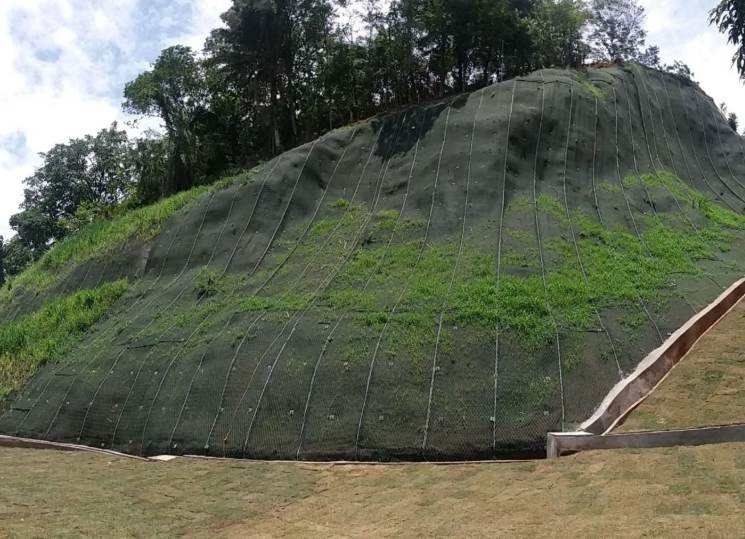
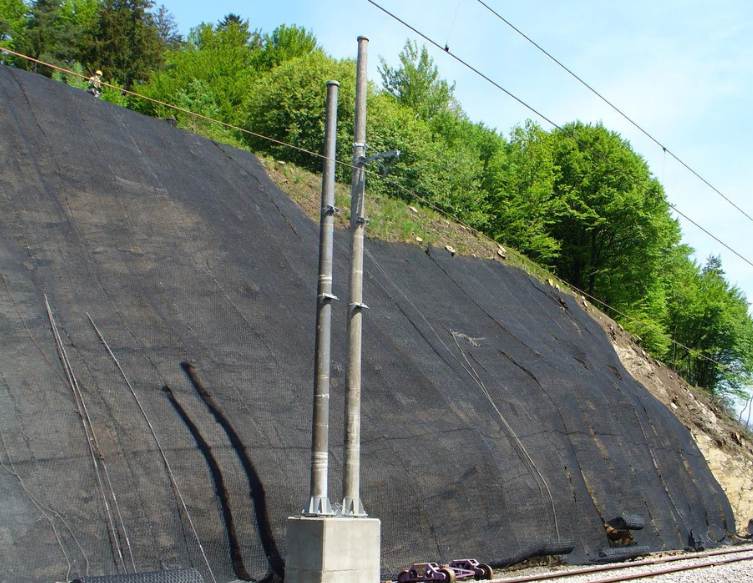
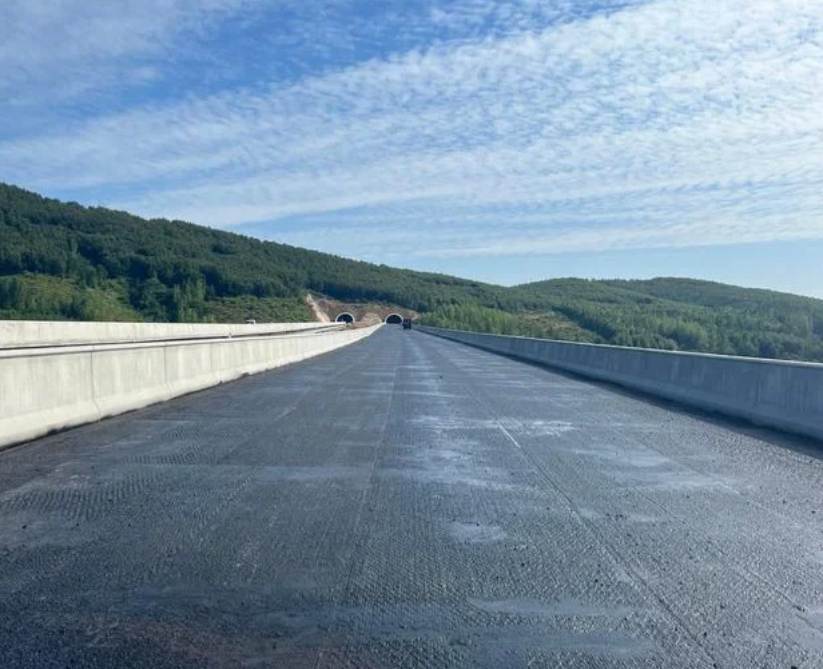
- Road and slope engineering: Subgrade and slope waterproofing need to focus on reinforcement and erosion resistance. Woven filament geotextiles are selected for high-speed railway subgrades, with a breaking elongation ≤30% to reduce subgrade settlement; non-woven geotextiles are combined with vegetation for slope protection to achieve the dual effects of waterproofing and ecological protection.
V. Selection of Waterproof Geotextiles
Scientific selection is the key to ensuring the waterproof effect. It is necessary to judge around three core dimensions to avoid rework due to compatibility problems (industry data shows that 68% of engineering parties have reworked due to material compatibility):
Determine the type according to engineering needs: Clarify the core demands, select woven types for reinforcement focus, and non-woven types for filtration focus; select composite geotextiles (one-cloth-one-membrane, two-cloth-one-membrane) for direct anti-seepage, and general-purpose geotextiles for auxiliary anti-seepage. For key projects such as large reservoirs and high-speed railways, high-specification products above 300g/m² should be selected; for small landscape projects, conventional specifications of 100-150g/m² can be used.
Determine parameters according to environmental factors: When the soil type is sandy soil, non-woven geotextiles with smaller equivalent aperture (0.07-0.1mm) are preferred to prevent fine sand loss; for high water level scenarios, the thickness and strength of materials need to be increased, and the thickness of HDPE membrane is recommended to be ≥1.5mm; for outdoor scenarios with strong ultraviolet rays, products added with anti-aging components should be selected to ensure that the strength retention rate meets the standard.
Determine specifications according to matching materials: When matching with anti-seepage membranes, the mass per unit area of geotextiles should be adapted to the membrane thickness. 1.0-1.5mm thick anti-seepage membranes can be matched with 200g/m² geotextiles; when in contact with hard materials such as gravel, woven geotextiles with stronger wear resistance should be selected to avoid damage by sharp particles.
VI. Installation and Maintenance of Waterproof Geotextiles
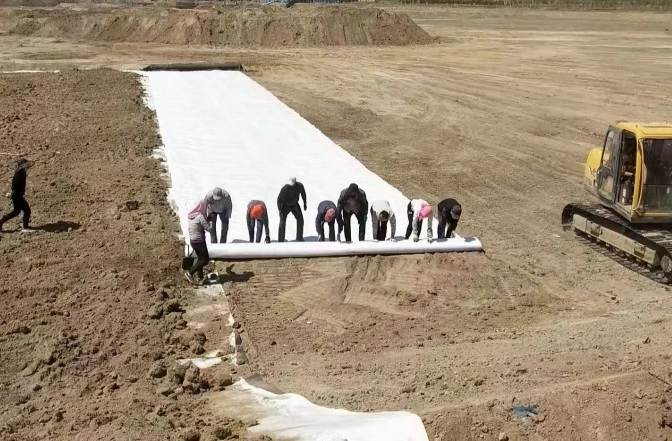
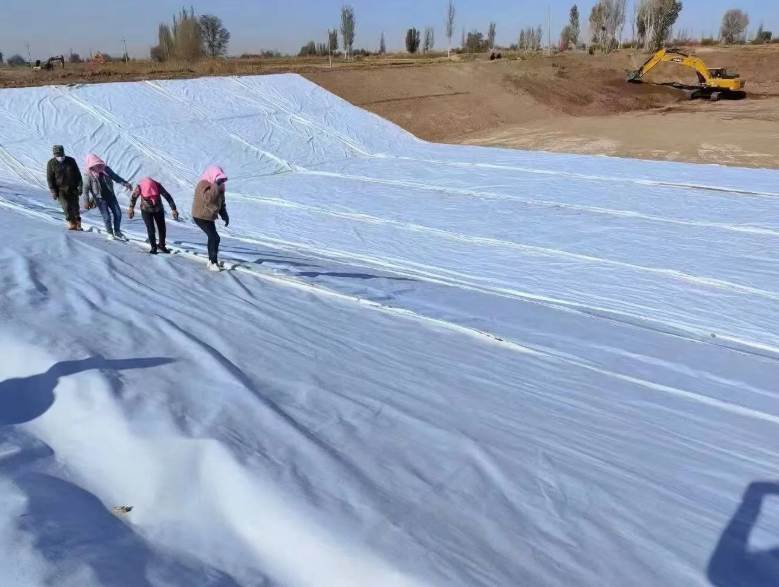
Installation quality directly affects the waterproof effect, and the following specifications must be strictly followed: Before paving, the base course should be cleaned, sharp debris should be removed, and the ground should be leveled; continuous paving should be carried out according to the width, excessive stretching should be avoided, the joints should be thermally welded, and the welding strength should reach more than 80% of the base material strength; after paving, the protective layer should be covered in time to avoid long-term exposure to ultraviolet rays and prevent aging.
Maintenance should focus on regular inspection: daily inspection for damage, joint cracking and other problems, especially for water conservancy and environmental protection projects, regular cleaning of surface debris to prevent blocking the filtration channel; for long-term operation projects, the material strength and anti-seepage performance should be tested every 3-5 years, and aging and damaged parts should be repaired in a timely manner to ensure the integrity of the waterproof system.
VII. Frequently Asked Questions
Q1: Can geotextiles achieve complete waterproofing alone?
No. The core functions of geotextiles are filtration, reinforcement and protection. They cannot block water penetration when used alone. They need to be compounded with anti-seepage membranes, bentonite waterproof blankets and other materials to form an integrated “protection + anti-seepage” system to achieve complete waterproofing effect.
Q2: How to choose between woven and non-woven geotextiles?
The core depends on engineering demands: choose woven types for focusing on structural strength, deformation resistance and high loads; choose non-woven types for focusing on filtration, drainage and air permeability. Woven types are mostly used in water conservancy and transportation projects, while non-woven types are preferred for environmental protection and municipal light projects.
Q3: What about the environmental friendliness of waterproof geotextiles?
Most high-quality products meet environmental protection requirements. Products certified by ISO 14001 have no precipitation of heavy metals, phthalates and other harmful substances, and can be adapted to fish ponds, drinking water reservoirs, landfills and other scenarios. Some products can also be recycled, meeting the needs of green construction.
Q4: How to judge whether the quality of waterproof geotextiles meets the standard?
First, check the standard certification, which should comply with national standards such as GB/T 17643-2011 and GB/T 50290-2014; second, verify core parameters, such as breaking strength, permeability coefficient, puncture resistance, etc.; third, choose manufacturers with multiple production lines and high daily output to avoid non-standard materials (35% of engineering accidents are caused by non-standard materials).
VIII. Conclusion
With the core advantages of “multi-functional coordination, wide adaptability and high cost performance”, waterproof geotextiles have become an indispensable material for modern infrastructure construction. Compared with traditional waterproof materials, they can reduce the later maintenance cost by more than 35% and meet the needs of green construction. If you need to purchase waterproof geotextiles, you can contact Shandong Lianjie!
Reference Sources
- Technical Specification for Application of Geosynthetics (GB/T 50290-2014): As the core basis for the selection, application and construction of geotextiles, it specifies the performance indicators and application requirements of geosynthetics in different engineering scenarios.
- Geosynthetics – Polyethylene Geomembranes (GB/T 17643-2011): It stipulates the standards for core parameters of geomembranes in composite geotextiles, including permeability coefficient, breaking strength and peel strength.
- Relevant Standards for Performance Testing of Geosynthetics: Covering method standards such as equivalent aperture testing (GB/T 17634), tensile strength testing (GB/T 15788) and puncture resistance testing (GB/T 19979.1), these standards provide the testing basis for the performance parameters presented in the article.