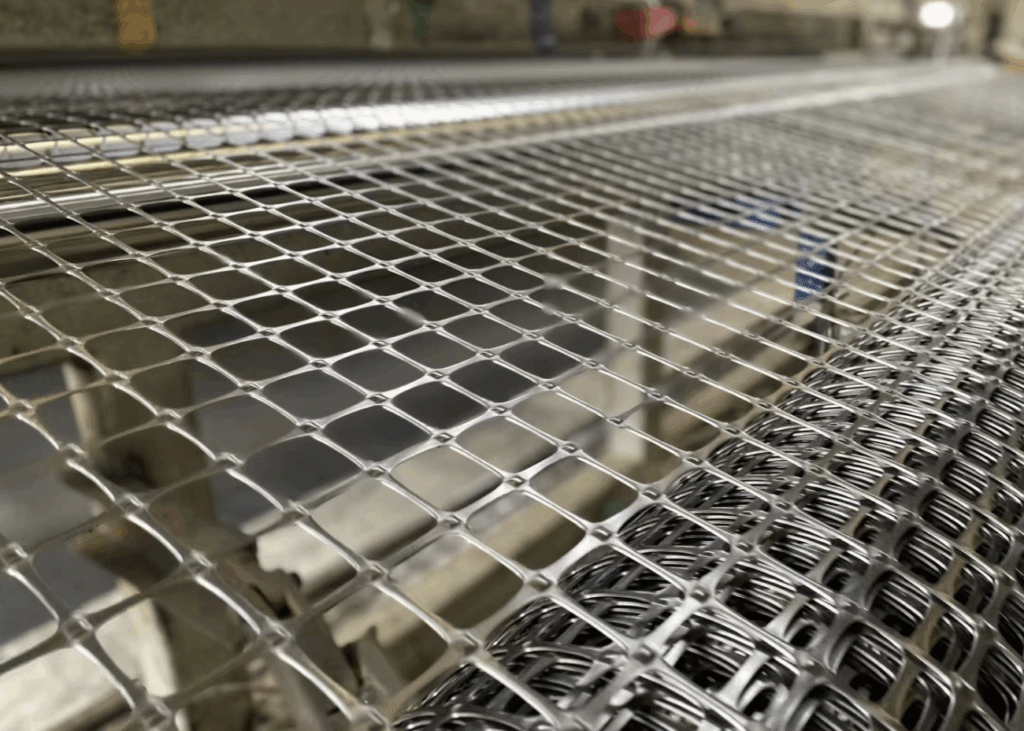
As a mainstream geotechnical reinforcement material, geogrids feature high tensile strength, low deformation, excellent aging resistance and strong interlocking performance. They form a coordinated force-bearing system with soil, fundamentally optimize the force structure of the foundation, significantly improve foundation bearing capacity, effectively control post-construction settlement, reduce cushion thickness, and lower overall project costs. Combined with practical engineering experience and industry specifications, this paper systematically introduces the core working mechanism, quantitative reinforcement effect, accurate selection criteria, standardized construction procedures, applicable scenarios and common problems of geogrids for improving foundation bearing capacity, providing implementable technical references for soft foundation reinforcement and subgrade strengthening projects.
1. Core Working Mechanism of Geogrids to Improve Foundation Bearing Capacity
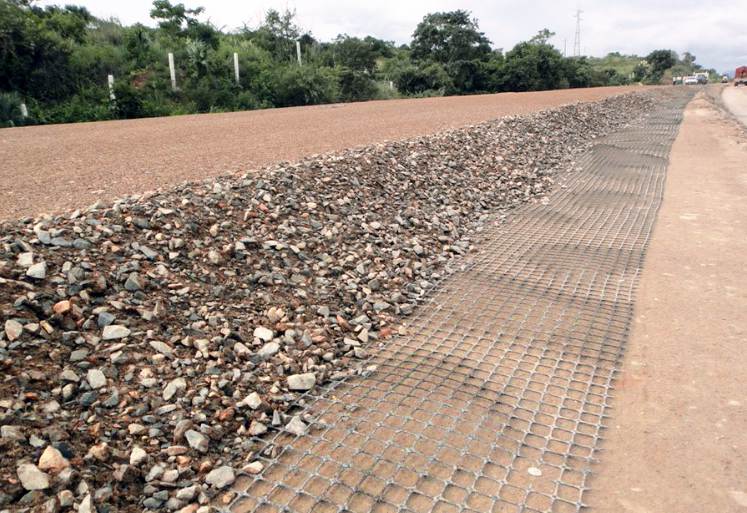
The improvement of foundation bearing capacity by geogrids is not achieved through a single effect, but through multiple mechanical effects formed by the coordinated force of geogrid-soil interlocking. This is the core advantage of geogrid reinforcement over conventional replacement reinforcement and geotextile reinforcement. Verified by engineering practice and testing experiments, the reinforcement effect is mainly realized through four synergistic core mechanisms.
1.1 Soil Lateral Confinement Effect
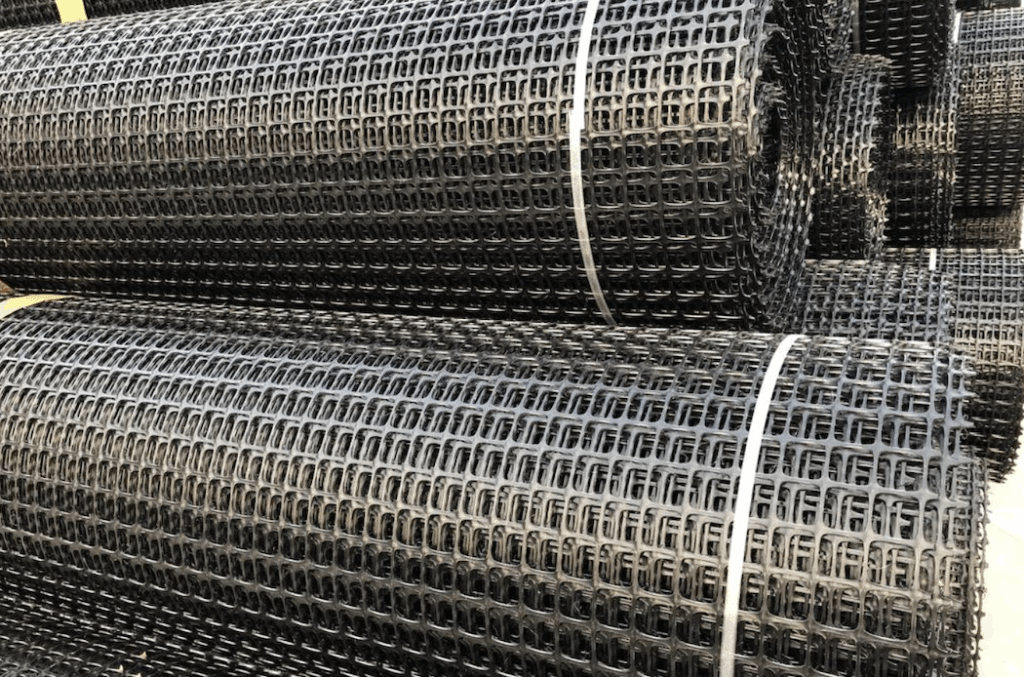
Natural soils, especially soft clay and silty soil, have low shear strength and are prone to lateral expansion and displacement under vertical loads, resulting in overall foundation instability and sharp reduction of bearing capacity. With a regular grid structure, geogrids laid inside the subgrade cushion form mechanical interlocking and frictional bonding with backfill soil particles. They firmly lock soil particles, effectively restrict lateral shear deformation and transverse displacement of soil mass, greatly improve the overall shear strength of soil, and enhance the stability of foundation bearing capacity fundamentally.
1.2 Tensile Reinforcement Effect
Soil itself has almost no tensile resistance, and tensile stress generated by foundation deformation easily causes cracking and settlement defects. Manufactured through polymer stretching technology, geogrids feature high tensile strength (ranging from 80 to 1000 kN/m) and ultra-low elongation, perfectly compensating for the tensile deficiency of soil. When the foundation deforms under load, the geogrid bears and disperses most of the internal tensile stress of the soil, prevents soil cracking and loosening, and strengthens the overall structural strength of the foundation.
1.3 Uniform Stress Distribution Effect
For unreinforced foundations, loads concentrate on local surface soil, and local overstress directly leads to foundation damage and excessive settlement. After embedding geogrids, the high-strength grid uniformly disperses concentrated vertical surface loads to a larger soil range, significantly reduces the peak local pressure at the foundation base, avoids damage caused by local stress concentration, balances the overall foundation stress state, and effectively raises the ultimate bearing capacity.
1.4 Tension Membrane Settlement Restraint Effect
Aiming at the uneven settlement common in soft foundations under load, geogrids form a stable tension membrane structure under stress. It provides reverse tensile support for settlement depressions, restricts vertical soil deformation, greatly reduces the amplitude of uneven foundation settlement, guarantees the flatness of road and site surfaces, and effectively lowers the incidence of later-stage pavement cracking, rutting, collapse and other defects.
2. Quantitative Effect Data of Geogrid Reinforcement on Bearing Capacity Improvement
Based on plate load tests, on-site subgrade detection and massive engineering measured data, the foundation reinforcement effect of geogrids has clear quantitative indicators, which intuitively reflect the bearing improvement and cost-saving benefits, applicable to conventional municipal, highway and site hardening projects.
After single-layer geogrid reinforcement on conventional soil subgrades, the overall foundation bearing capacity can be increased by 30%-60%, and the CBR bearing index of soft silty soil and loose fill can be increased up to 3 times, fully meeting the load design requirements of secondary highways, municipal roads and temporary construction platforms. In terms of construction optimization, the interlocking reinforcement of geogrids effectively reduces the thickness of aggregate cushions. Compared with traditional unreinforced construction, the cushion thickness can be reduced by 15%-20%, greatly saving the consumption of sand, gravel and other raw materials.
In terms of settlement control, the post-construction uneven settlement of geogrid-reinforced foundations is reduced by 20%-40%, solving the problem of long-term settlement and repeated pavement damage of soft soil foundations. Meanwhile, the structural stability of reinforced foundations is significantly improved, the later-stage maintenance and repair rate is reduced by more than 60%, and the service life of engineering projects is greatly prolonged.
3. Geogrid Selection Criteria for Foundation Bearing Capacity Improvement
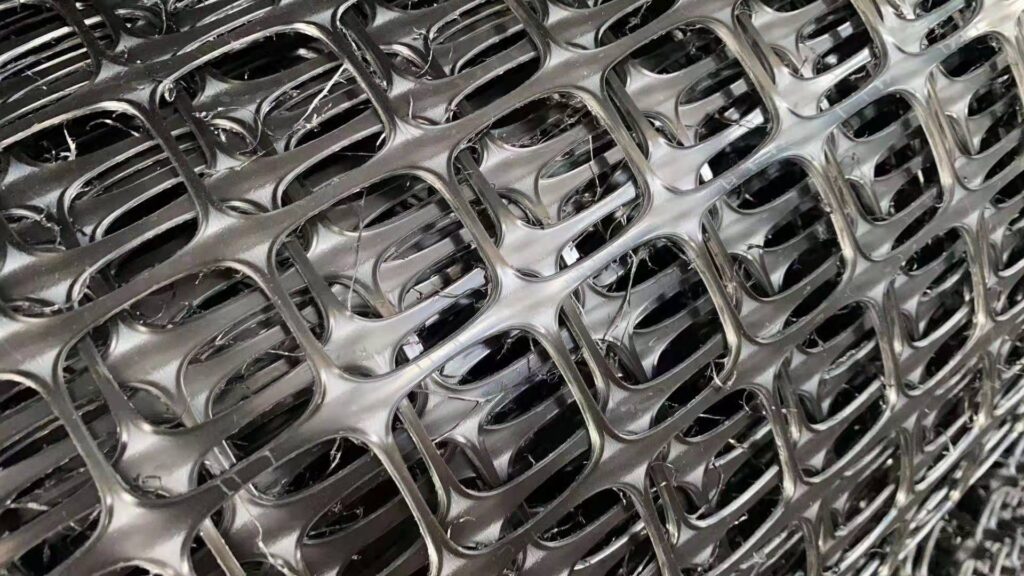
Different types of geogrids vary greatly in mechanical properties and soil interlocking effects. Improper selection will lead to substandard reinforcement and insufficient bearing capacity improvement. According to the core requirements of foundation reinforcement, this section distinguishes the applicable scenarios and bearing reinforcement effects of mainstream biaxial, triaxial and uniaxial geogrids, and clarifies the essential differences between geogrids and geotextiles to avoid selection errors.
3.1 Biaxial Geogrid
Biaxial geogrids feature uniform bidirectional stress performance and high structural stability, with grid holes well adapted to conventional subgrade fillers. With strong universality and cost performance, they are the mainstream choice for foundation reinforcement in civil infrastructure projects. They are widely applied to ordinary soil subgrades, municipal sidewalks, rural roads and general site hardening projects, achieving a stable bearing capacity improvement of over 30%.
3.2 Triaxial Geogrid
Triaxial geogrids adopt a multi-directional uniform stress structure, with wider stress diffusion range and stronger soil interlocking capacity than biaxial geogrids, delivering superior reinforcement performance. They are specially designed for high-standard scenarios including heavy-duty highways, factory heavy-load sites, ultra-soft soil subgrades and temporary heavy-load construction platforms. Capable of improving bearing capacity by 50%-60%, they resist long-term cyclic heavy vehicle loading with excellent fatigue and deformation resistance.
3.3 Uniaxial Geogrid
Uniaxial geogrids only have high tensile strength in a single direction, with core advantages in slope reinforcement, retaining wall support and embankment slope stabilization. Their bidirectional interlocking and stress diffusion capacity are weak, making them unsuitable as the main material for foundation bearing capacity improvement. They are not recommended for conventional subgrade reinforcement projects.
3.4 Core Differences Between Geogrid and Geotextile
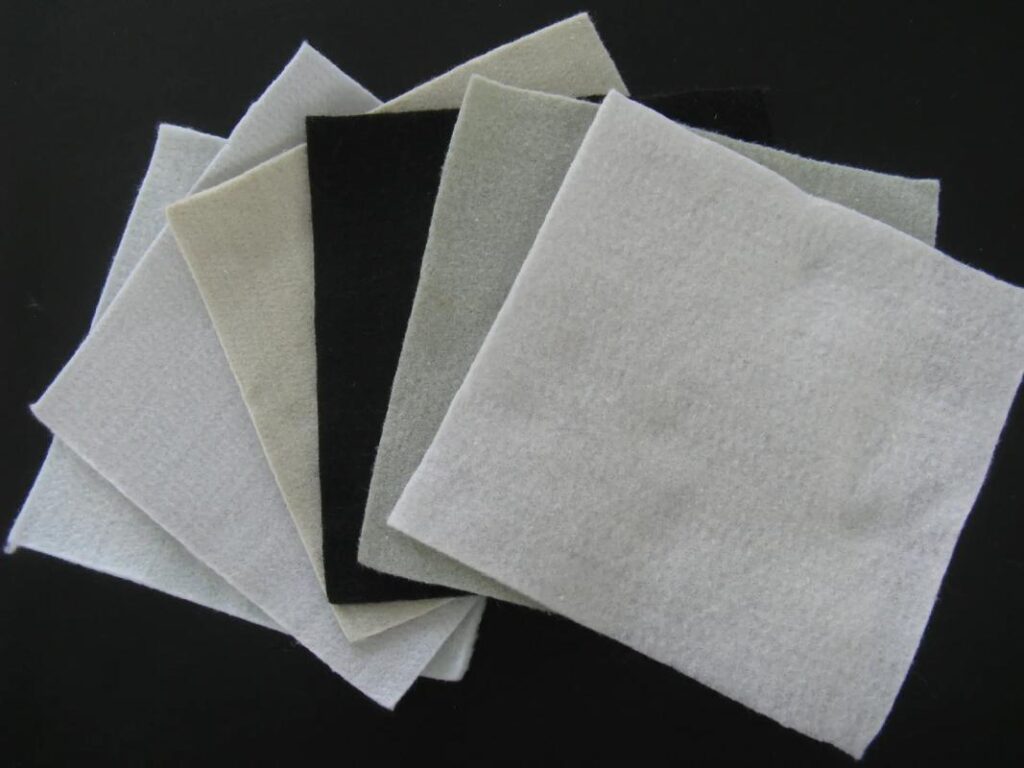
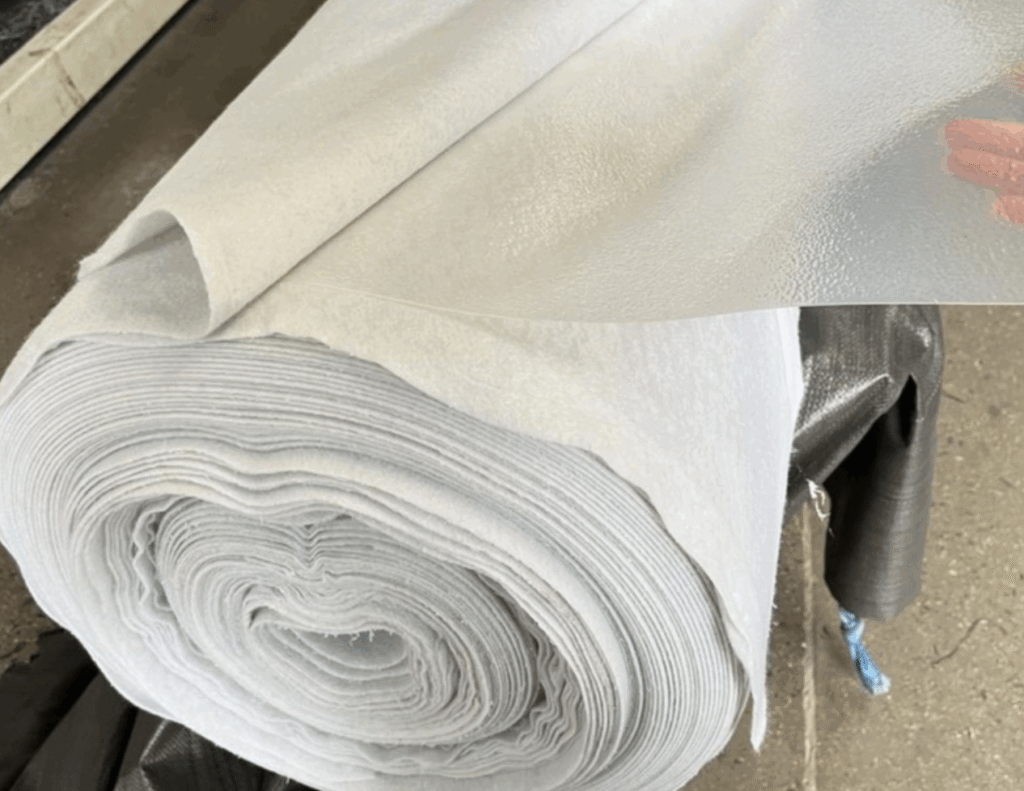
Most engineering practitioners confuse these two geosynthetic materials. Geotextiles mainly function in water permeability, filtration and isolation, without high-strength grid interlocking structure. They cannot effectively restrict soil deformation or diffuse loads, resulting in negligible improvement in foundation bearing capacity. In contrast, geogrids focus on reinforcement, interlocking and structural strengthening, serving as the only efficient and reliable geosynthetic material for improving foundation bearing capacity, and are the priority choice for soft foundation reinforcement.
4. Construction Procedures for Geogrid Foundation Bearing Capacity Improvement
High-quality material selection must be matched with standardized construction, as improper construction details will greatly weaken the reinforcement effect. Based on industry specifications and practical engineering experience, the standardized construction procedures tailored for foundation bearing capacity improvement are summarized as follows.
Step 1: Foundation Preprocessing
Thoroughly clean sundries, silt and weak interlayers in the construction area, level and backfill uneven pits, and compact the base layer in layers with compaction machinery to meet flatness and compactness standards. For ultra-soft clay subgrades, conduct sun drying or replacement treatment in advance to avoid reinforcement failure caused by excessively weak base soil.
Step 2: Geogrid Laying and Layer Determination
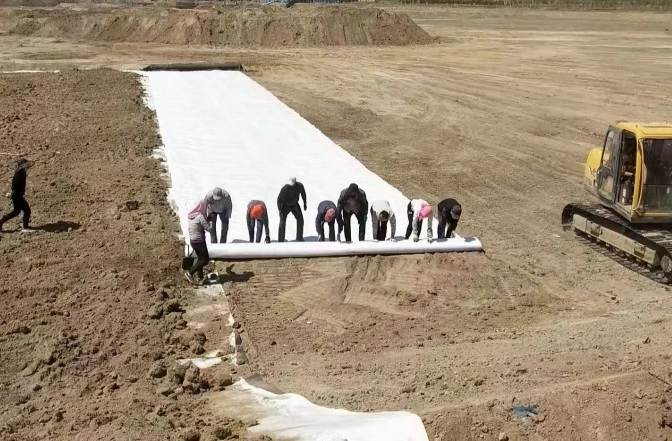
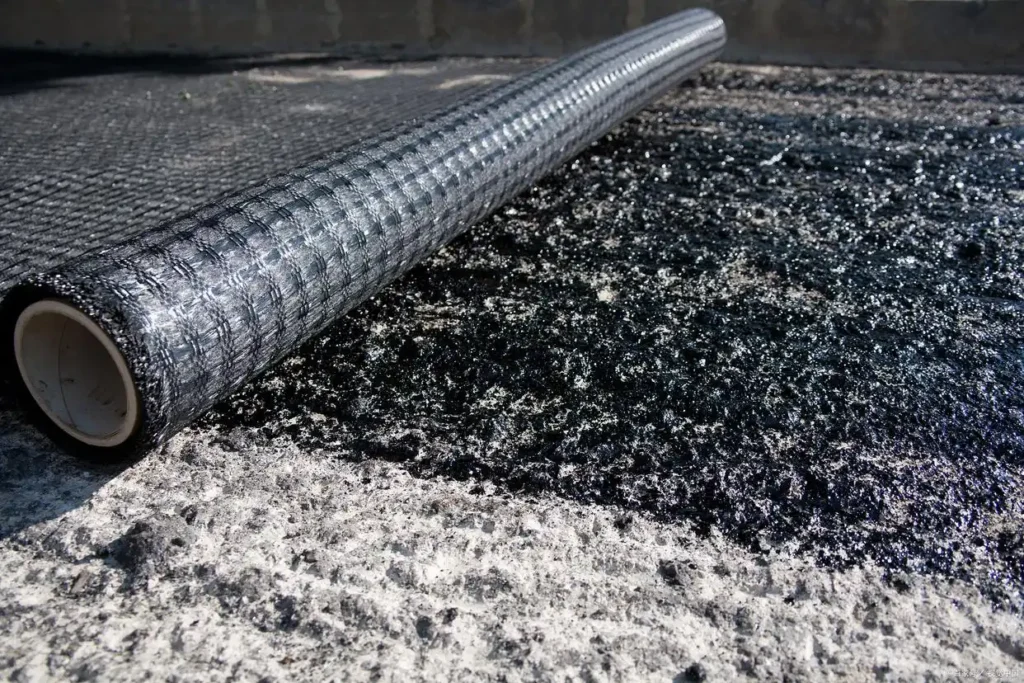
Determine the geogrid model and laying layers according to foundation load levels: single-layer laying for conventional light-load scenarios, and double-layer overlapping laying for heavy-load and ultra-soft foundations. Lay geogrids flat and taut without wrinkles or distortion along the subgrade stress direction. Slack laying is strictly prohibited to ensure the full play of tensile reinforcement performance.
Step 3: Lapping and Fixing Construction
Control the horizontal and vertical lap width of geogrids within 20-30 cm, and stagger lap areas to avoid weak continuous joints. Fix the laid geogrids evenly with U-shaped nails or steel bar nails to ensure close fitting with the base, prevent grid displacement and arching during filler compaction, and guarantee coordinated stress of geogrid and soil.
Step 4: Layered Filling and Compaction
Backfill qualified sand, gravel and soil fillers immediately after geogrid fixation. Construction machinery is prohibited from driving on exposed geogrids. Adopt layered filling and layered compaction construction, control the thickness of each filler layer within the specification range, and compact evenly from both sides to the middle. This enables full embedding of soil particles into grid holes, forming a stable interlocking reinforcement system to maximize foundation bearing capacity.
Step 5: Completion Inspection and Acceptance
Allow the reinforced foundation to stabilize after construction. Detect foundation bearing capacity and settlement coefficients through plate load tests, verify whether all indicators meet design requirements, and rework and rectify areas with insufficient compaction and substandard bearing capacity to ensure qualified reinforcement effects.
5. Applicable Scenarios and Construction Limitations
5.1 Core Applicable Scenarios
Geogrid reinforcement technology for bearing capacity improvement is applicable to most civil and municipal infrastructure projects, including: reinforcement of soft clay and wet soft subgrades; subgrade strengthening for rural roads, municipal roads and factory roads; hardening of temporary heavy-load construction platforms and storage yards; foundation reinforcement of embankments and settlement control for new and old subgrade splicing; and foundation renovation projects requiring cushion thickness reduction and cost reduction.
5.2 Application Limitations
This technology is not a universal reinforcement solution with clear application boundaries. For foundations with ultra-thick silt layers and fluid soft soil, single geogrid reinforcement has limited effect and needs to be combined with replacement, powder stirring and other composite construction technologies. For ultra-high load and super high-rise heavy-duty infrastructure foundations, multi-layer geogrid overlapping and filler grade optimization are required to improve reinforcement strength, and single-layer geogrid cannot meet the design requirements.
6. Frequently Asked Questions (FAQ)
6.1 Can geogrids effectively improve the bearing capacity of soft clay foundations?
Yes. Soft clay is characterized by low shear strength, easy deformation and low bearing capacity. After laying geogrids, the lateral confinement and stress diffusion effects lock soft soil particles, compensate for the tensile defects of soft soil, and significantly improve the overall bearing capacity and stability of foundations, making it the core technology for soft clay foundation reinforcement.
6.2 Which geogrid is the best choice for improving foundation bearing capacity?
Biaxial geogrids are preferred for conventional municipal and rural road foundations with optimal cost performance; triaxial geogrids are selected for high-load scenarios such as heavy-duty roads, ultra-soft foundations and construction platforms due to superior reinforcement effect and stability; uniaxial geogrids are not recommended for foundation bearing capacity improvement projects.
6.3 How to calculate the bearing capacity of geogrid-reinforced foundations?
In engineering design, the theoretical bearing capacity can be calculated based on the tensile strength of geogrids, laying layers, cushion thickness and original soil bearing capacity in accordance with relevant formulas in highway subgrade design specifications. The final acceptance standard is based on measured data from on-site plate load tests. The combination of theoretical calculation and on-site detection ensures accurate control of reinforcement effects.
6.4 Can geogrids completely eliminate foundation settlement?
Complete settlement elimination is impossible, but geogrids can greatly reduce total settlement and eliminate uneven settlement. Natural soil inherently has compressive deformation properties. Geogrids constrain and suppress harmful settlement, controlling post-construction settlement within the allowable specification range, ensuring normal engineering operation and fully meeting the settlement acceptance standards of various infrastructure projects.
6.5 What are the differences in reinforcement effects between single-layer and multi-layer geogrids?
Single-layer geogrid is suitable for light-load and well-conditioned conventional foundations to meet basic bearing capacity requirements. Multi-layer overlapping geogrid reinforcement is applied to heavy-load and ultra-soft foundations, which further enhances soil constraint and stress diffusion effects, delivering significantly better bearing capacity improvement and settlement control performance than single-layer laying, suitable for high-standard engineering projects.
7. Conclusion
Relying on the four core mechanisms of lateral confinement, tensile reinforcement, stress diffusion and tension membrane effect, geogrids systematically optimize the mechanical structure of foundations and effectively solve engineering problems such as insufficient bearing capacity and uneven settlement of soft foundations. Compared with traditional soil replacement and improvement technologies, geogrid reinforcement features stable quality, high construction efficiency, low cost and excellent durability.
In engineering practice, matching biaxial or triaxial geogrids according to foundation soil conditions and load levels, and strictly implementing standardized laying procedures can stably improve foundation bearing capacity and control post-construction settlement. It adapts to most subgrade and site hardening projects and serves as the preferred technology for soft foundation reinforcement and subgrade strengthening in current geotechnical engineering.
References
- Specifications for Design of Highway Subgrades (JTG D30-2015)
- Geosynthetics – Plastic Geogrids (GB/T 17689-2008)
- Technical Specifications for Application of Geosynthetics in Highways (JTG/T D31-02-2013)