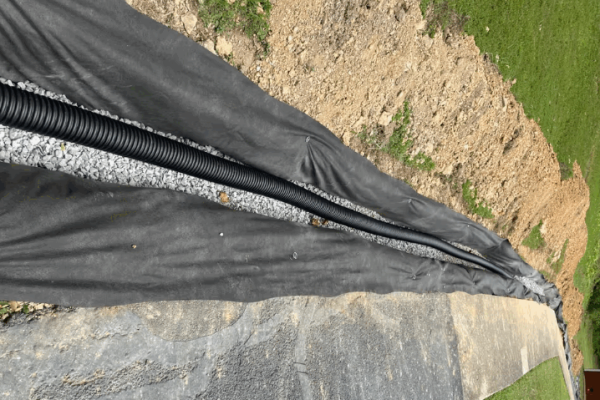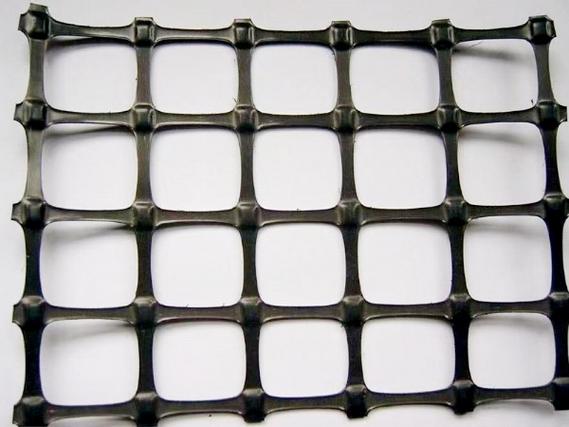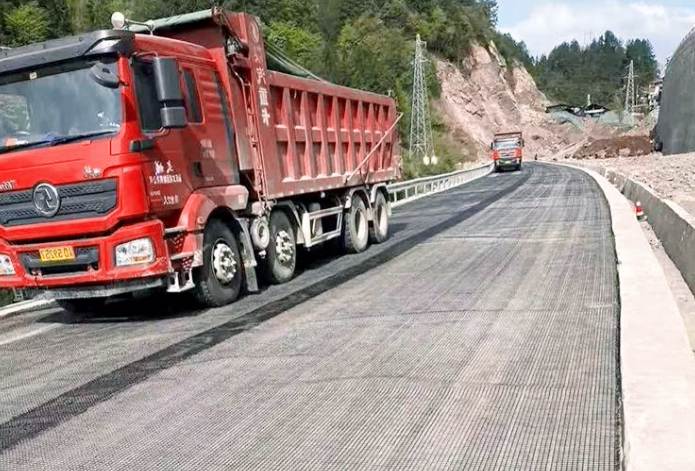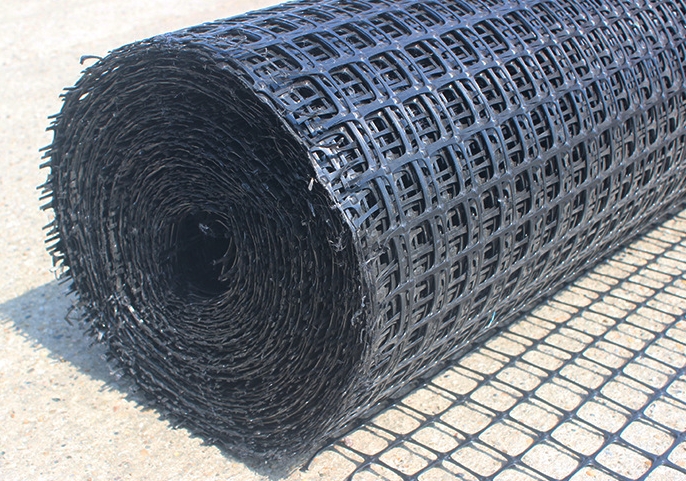
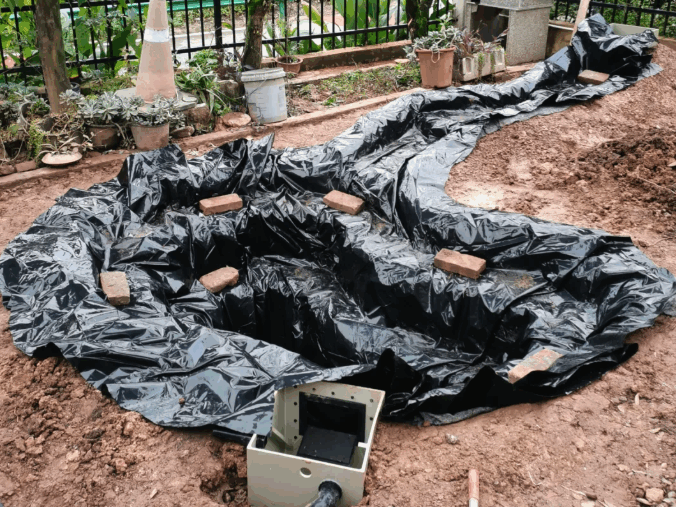
The invisible threats to swimming pools often lie beneath the surface — unremoved gravel, spreading tree roots, and even buried glass shards can pierce the pool liner under water pressure, leading to high replacement costs. Geotextile, a protective material originating from civil engineering, has become a “must-have” for pool protection due to the high strength of its synthetic fibers.
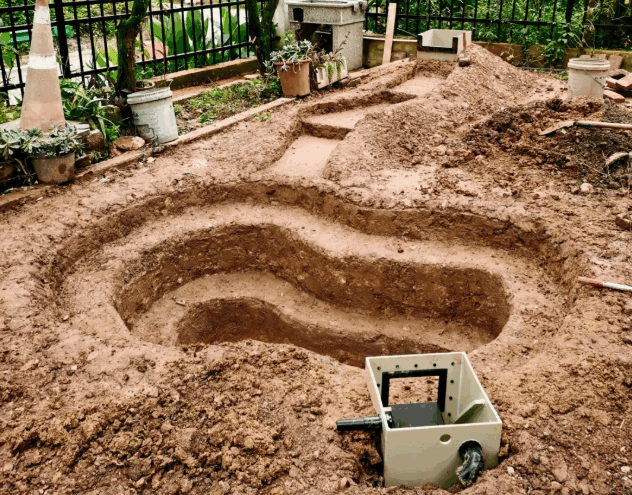
What is a Geotextile Pool Pad?
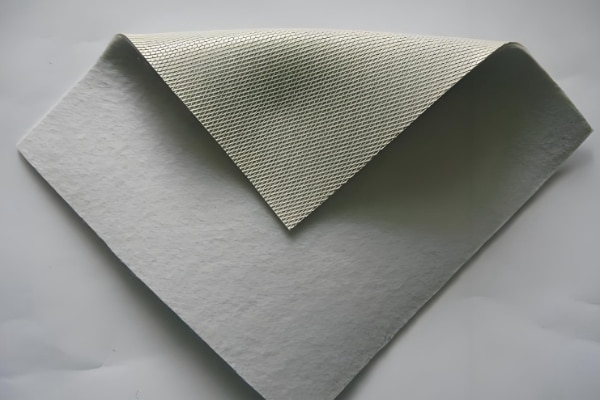
A Geotextile Pool Pad is a high-density protective liner made of polypropylene (PP) or polyester (PET) synthetic fibers through a non-woven process. Its core feature is the dual attribute of “protection + cushioning” — it not only possesses puncture-resistant mechanical strength but also provides a comfortable foot feel through its fibrous structure, while balancing breathability and drainage.
Initially used for foundation reinforcement in road and bridge engineering, this material has been modified into a pool-specific protective product due to its corrosion resistance and anti-aging advantages (able to resist acid-base erosion and UV degradation).
Recommended Reading:Underwater Repairing of Leakage in HDPE Geomembrane Pond
Core Functions
- Puncture-Proof Barrier: The dense structure formed by interwoven fibers can block sharp objects larger than 0.5mm in diameter (such as gravel and tree roots), preventing direct damage to the pool liner. High-end models like Gorilla Pad can even withstand impacts from small stones through thickening technology.
- Lifespan Extender: Reduces friction and wear between the liner and the ground, lowering the risk of creasing and tearing caused by uneven terrain. Test data shows that pools using geotextile liners have their liner replacement cycle extended from 1-2 years to 3-5 years.
How to Choose the Right Geotextile Pool Pad?
1、Primary Principle: Precise Size Matching with the Pool
| Pool Type | Recommended Size Selection | Installation Allowance Standard | Pitfall Avoidance Tips |
| Round Inflatable Pool | Pre-cut models for 10–15ft (e.g., VEVOR 15ft) | 30cm beyond the pool edge | Avoid “exact-size” pads; the allowance covers edge sharp objects |
| Round Hard-Sided Pool | Custom models for 18–24ft (e.g., ACTREY 24ft) | Cut to pool outer diameter + 50cm | Choose “thickened models” for metal hard-sided pools to prevent bracket damage |
| Rectangular Pool | Pre-cut rectangular models for 12x24ft/16x32ft | 15cm folding space at each corner | For irregular rectangles, choose “cuttable roll models” to avoid splicing |
| Small Children’s Pool | Lightweight models (under 180g/m²) for 6–8ft | 20cm beyond the edge | No need for thickened models to avoid cost waste |
Practical Tip: Use a tape measure to measure the maximum diameter/side length along the pool’s “outer edge,” not the “inner size.” For roll models, first draw an outline with chalk, then cut along a straight line with a utility knife.
2、Key Parameter Comparison
| Parameter Dimension | Entry-Level (Home Use, Ordinary Ground) | Professional-Level (Complex Ground/Long-Term Use) | Selection Advice |
| Weight (g/m²) | 180–200g/m² (e.g., VEVOR Basic Model) | 280–300g/m² (e.g., ACTREY Thickened Model) | Choose 300g for lawn/tree root areas; 200g for concrete/sand |
| Material | Recycled Polypropylene (Low Cost) | Virgin Polyester (Strong Anti-Aging) | Prioritize polyester in rainy/sunny areas (polypropylene absorbs water and mildews easily) |
| Craftsmanship | Regular Needle-Punching (Single Density) | Double-Density Needle-Punching (Dense Surface) | Choose double-density for homes with pets/frequent stepping (wear resistance increased by 50%) |
| Environmental Certification | Basic Recyclability Certification | OEKO-TEX 100 Certification (Non-Toxic) | Must choose certified models if children/pets come into contact with pool water |
3、Pitfall Avoidance Tips
Low-Price Trap: Products priced below 0.18 USD per square meter are mostly made of recycled materials, with a tensile strength of less than 10kN/m, and are prone to fiber shedding within 6 months.
Scenario Adaptation: Choose lightweight models (e.g., 180g/m²) for inflatable pools and thickened models (recommended 200g/m²) for hard-sided pools. Mixing the two will result in insufficient protection or installation difficulties.
Installation & Maintenance of Geotextile Pool Pad
1. Pre-Installation Preparation
- Three-Step Ground Treatment:
- ① Remove sharp objects such as stones and glass;
- ② Level depressions with a rake, ensuring the height difference does not exceed 5mm;
- ③ For grassy areas, spray herbicide in advance (to prevent weeds from piercing later).
- Essential Tools List:
- Tape measure (precision 1mm), industrial-grade scissors, rubber mallet (for flattening the liner), U-nails (for sand fixation), double-sided tape (for concrete fixation).
2. Standardized Installation Process
- Unfolding & Positioning: Lay the liner flat on the ground, using the predetermined center point of the pool as the reference. Ensure uniform excess around the edges (15cm reserved on each side is recommended) and compact the corners with heavy objects to avoid displacement.
- Cutting & Correction: Cut along the marked line of the pool’s outer diameter. For curved parts, adopt the method of “small-section cutting + gradual adjustment” to avoid over-cutting in one go.
- Fixation & Reinforcement: Drive 1 U-nail per meter in sandy ground (depth ≥5cm); attach double-sided tape (width ≥2cm) along the edges on concrete surfaces; directly fix the corners with a stapler on wooden platforms.
3. Long-Term Maintenance Points
- Seasonal Storage: Rinse the liner with clean water after draining, dry it until the moisture content is <15% (judgment by weight: dry weight is more than 80% lighter than wet weight). Avoid sharp-angle folding when storing and keep it in a dry and ventilated place.
- Damage Repair Solutions: For holes with a diameter <3cm, use a patch of the same material (5cm larger than the hole) + special geotextile glue for pasting; replace the entire liner if the damaged area exceeds 10cm².
Frequently Asked Questions
1、Geotextile Liner vs. Ordinary Tarpaulin: Which is More Cost-Effective?
Tarpaulins have a tensile strength of only 5-8kN/m, are easily pierced by tree roots, and have a lifespan of only 3-6 months. Geotextiles have a lifespan of 2-3 years; although the one-time investment is 3 times higher, the annual average cost is 60% lower.
2、Do Pools with Existing Sand Layers Need an Additional Geotextile Pad?
Yes. Sand layers are prone to sagging under water pressure, causing sharp objects to protrude. Tests show that adding a geotextile liner can reduce the liner damage rate from 28% to 3%.
3、Will Using a Circular Liner for a Square Pool Affect Protection?
As long as the cut liner covers the pool bottom and extends 10cm beyond the edges, the protection effect remains unchanged. However, it will increase material waste (about 15%-20%), so pre-cut square models are recommended.
4、What are the Criteria for Judging Environmentally Friendly Materials?
Qualified products should comply with EU CE Certification (EN 13250 standard), with a formaldehyde emission <0.1mg/m³, and no odor remaining after 24 hours of ventilation. If the odor persists for more than 48 hours, it may be made of non-environmentally friendly recycled materials.
5、Geotextile Liner vs. Foam Pad: How to Choose?
Foam pads are prone to water absorption and mold (lifespan 6-12 months) and have poor drainage. Geotextiles can drain water and prevent mold, with a lifespan 3-4 times that of foam pads, making them more suitable for humid areas.
Conclusion
Installing a geotextile liner for your above-ground pool is a time-saving, low-cost, and high-return investment. It fundamentally solves the three core pain points of pool bottom damage, uneven ground, and weed infestation, significantly extending the service life of the pool. If you want to purchase a suitable Geotextile Pool Pad, feel free to contact us!
Reference Sources
- OEKO-TEX 100 certification standard
- Source: OEKO-TEX Official Website Certification Instructions Page “OEKO-TEX 100 Standard for Non Toxic Textile Products”
- Performance testing standards for geotextiles
- Source: ASTM D4833-20 (American Society for Testing and Materials Standard Test Method for Breaking Strength and Elongation of Geotextiles by the Wide Wideth Tensile Test); ② ISO 12236-2010 (International Standard “Geotextiles and Geotextile Related Products – Determination of Punchure Resistance”)