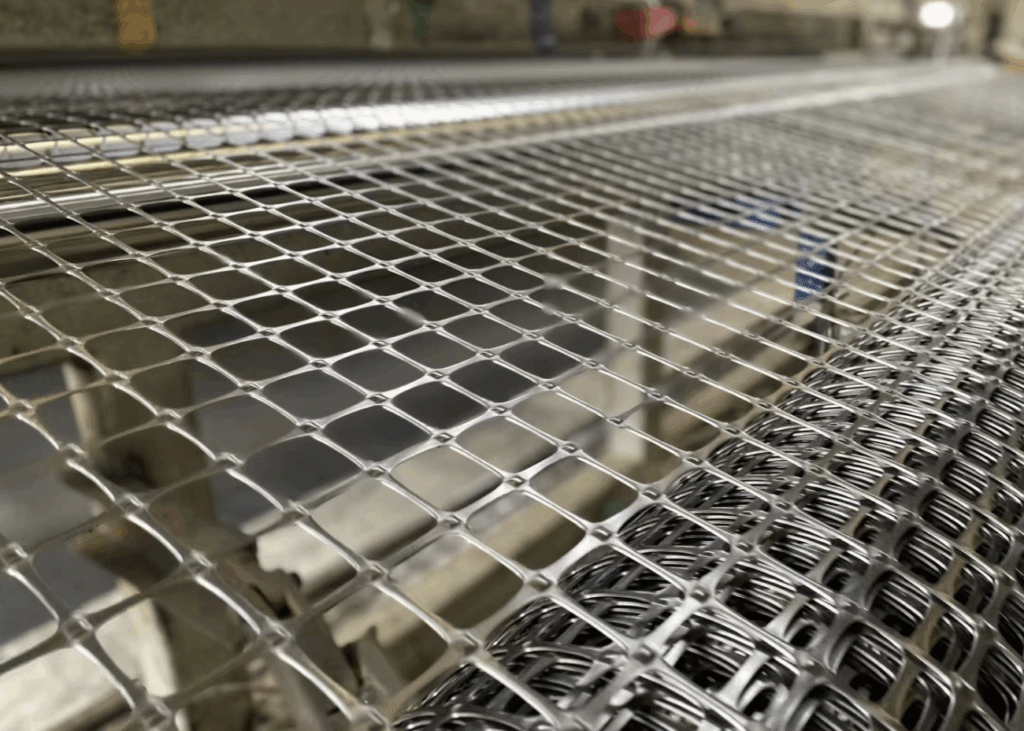
1. Geotextile Price Range for 2026
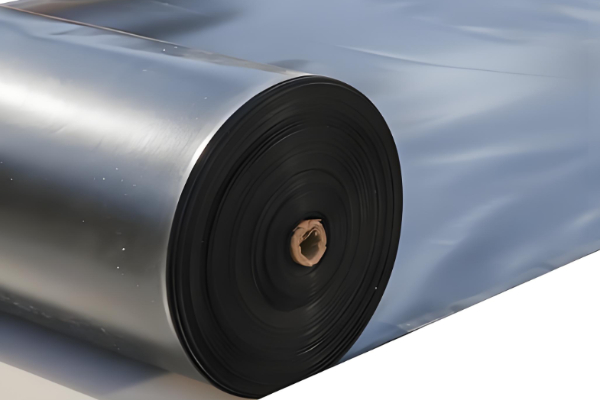
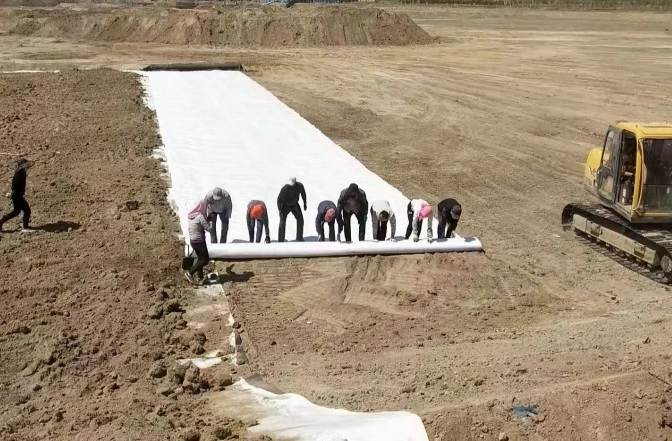
In 2026, the global ex-factory price of geotextile materials ranges broadly from $0.15 to $5.40 per square meter. For specifications commonly used in civil engineering projects, prices typically fall between $0.20 and $2.50 per m². The all-in installed price, including labor and ancillary materials, ranges from $1.00 to $8.00 per m².
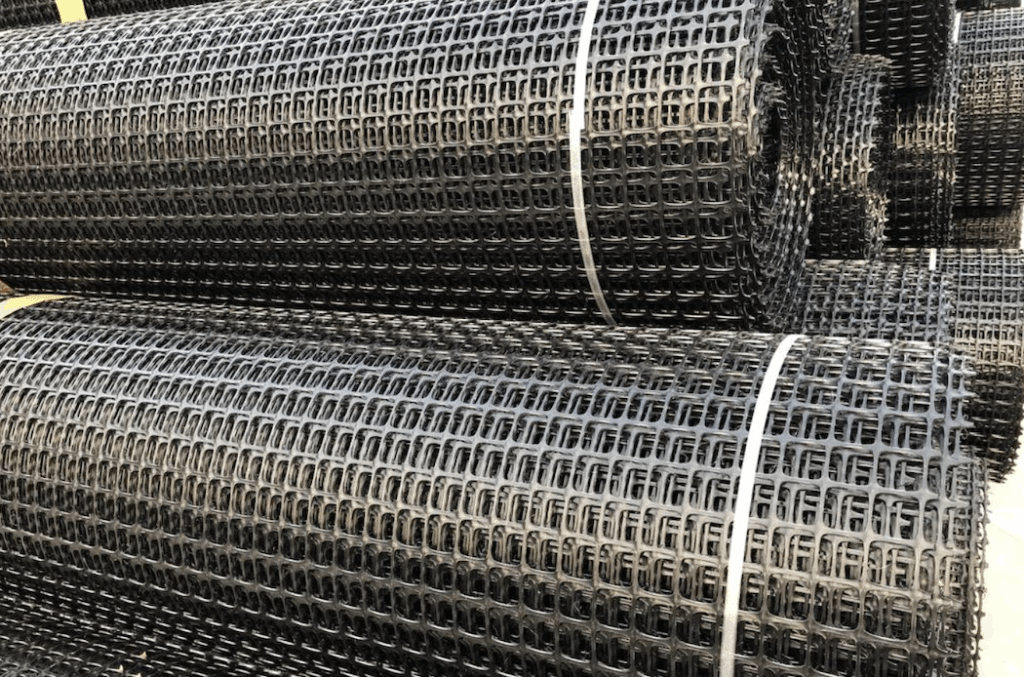
By product type, standard non-woven geotextile is the most affordable category, priced at $0.15–$3.00 per m². Woven geotextile, which delivers higher tensile strength, costs $0.30–$7.50 per m². High-strength composite and specialty functional geotextiles can exceed $5.00 per m². Price variation is driven primarily by five factors: raw material, grams per square meter (GSM), tensile strength, certification standards, and order volume.
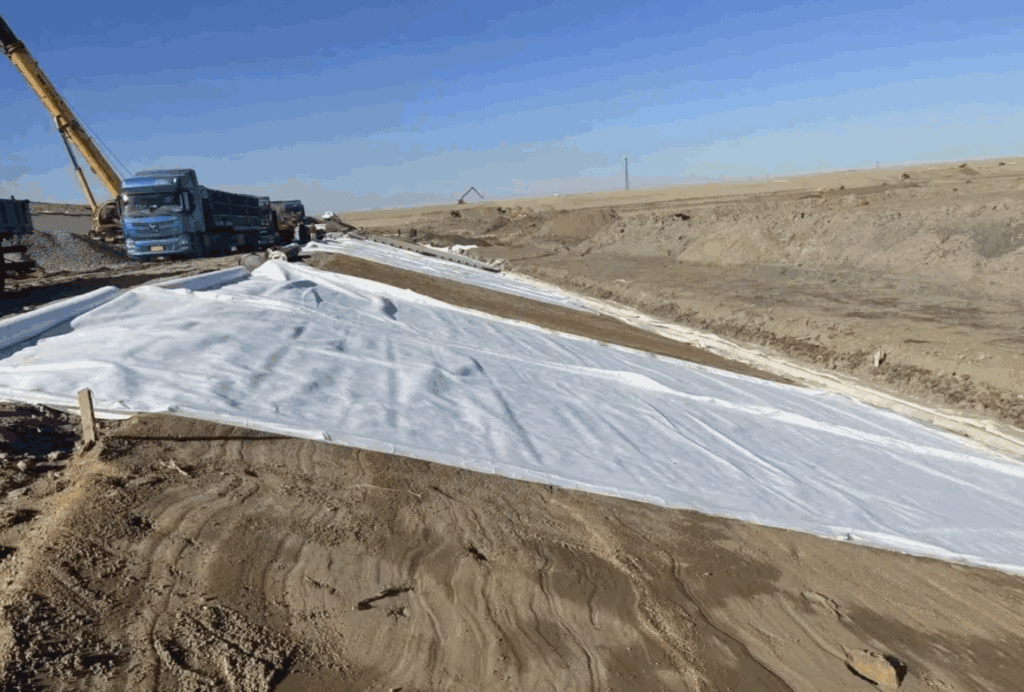
2. Detailed Price Breakdown by Geotextile Type
2.1 Non-Woven Geotextile Price
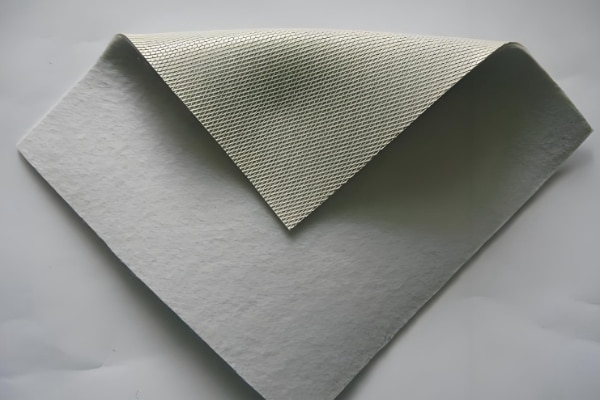
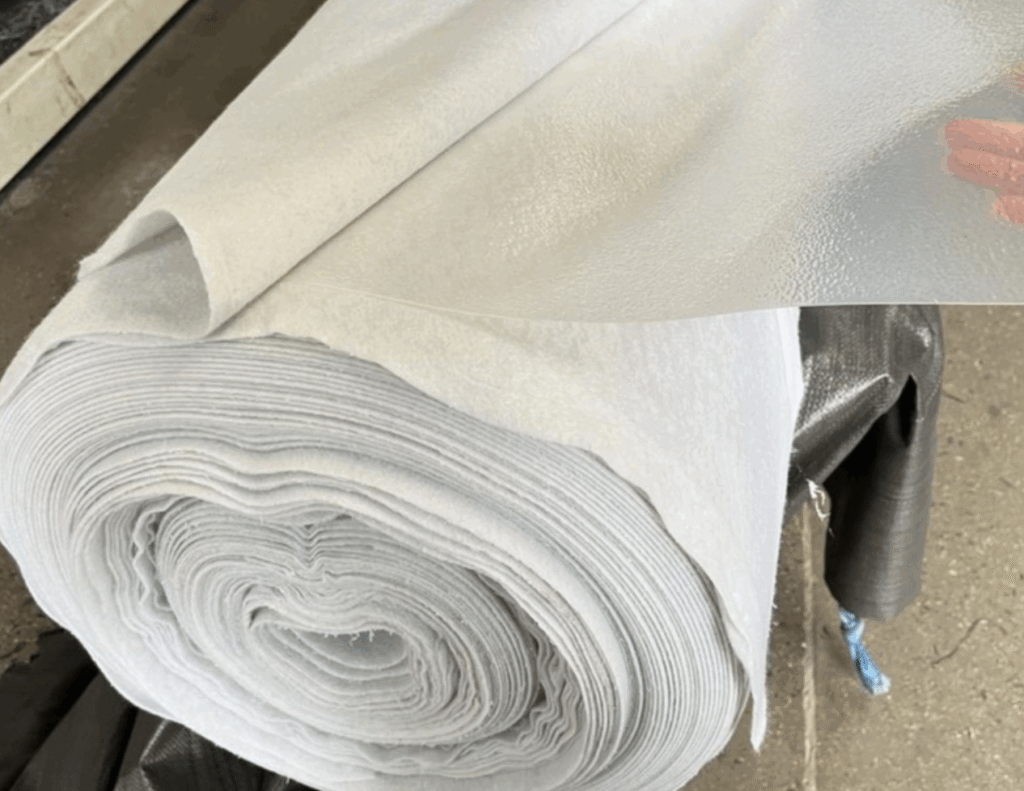
Manufactured via needle-punched or thermal-bonded processes, non-woven geotextile provides reliable filtration, drainage and separation performance. It is the most widely used category in construction, with polypropylene (PP) and polyester (PET) as the dominant raw materials.
| GSM Specification | Ex-Factory Price Range (USD/m²) | Typical Applications |
|---|---|---|
| 100–150 | 0.15–0.35 | Landscaping, light-duty filtration, temporary protection |
| 200–250 | 0.25–0.60 | Road subgrade separation, municipal drainage, general slope protection |
| 300–400 | 0.50–1.20 | Subgrade reinforcement, landfill filter layers |
| 500–800 | 1.00–3.00 | Heavy-duty engineering, high-load ground treatment |
Filament non-woven geotextile costs 5–15% more than staple fiber products of the same GSM. It offers superior mechanical properties and UV resistance, making it the preferred choice for high-standard infrastructure projects.
2.2 Woven Geotextile Price
Woven geotextile is formed by interlacing warp and weft yarns, featuring high tensile strength and low elongation. It is primarily used for reinforcement, load bearing and high-strength separation, and is available in split-film, monofilament and multifilament variants.
| Product Category | Typical GSM | Ex-Factory Price Range (USD/m²) | Core Applications |
|---|---|---|---|
| Standard split-film woven | 150–250 | 0.30–1.50 | Light-duty roads, storage yard reinforcement |
| High-strength monofilament woven | 200–400 | 0.80–3.00 | High-grade highways, embankment slope protection |
| High-strength polyester woven | 200–500 | 1.50–7.50 | Large-scale water conservancy, offshore engineering |
At the same GSM, woven geotextile generally costs 20–50% more than non-woven. However, it delivers better value per unit of tensile strength, making it the more economical choice for projects where reinforcement is the primary requirement.
2.3 Knitted & Composite Geotextile Price
Knitted geotextile and composite geotextiles (e.g., geotextile combined with geomembrane or drainage net) fall into the high-value category, with prices rising significantly with added functionality:
- Warp-knitted geotextile: $0.80–$4.00 per m², combining high strength and high elongation for slope protection applications.
- Composite impermeable geotextile (one-fabric-one-membrane / two-fabrics-one-membrane): $1.20–$6.00 per m², integrating filtration and impermeability for water conservancy and environmental projects.
2.4 Natural Fiber Geotextile Price
Natural biodegradable geotextiles such as coir and jute are valued for their eco-friendliness. They are priced at $0.30–$1.00 per m² with a service life of 5–15 years. Most commonly used for temporary slope greening and ecological restoration projects, they cost 10–20% less than synthetic fiber alternatives.
If you are purchasing geotextiles, contact Shandong Lianjie for professional geotextile solutions!
3. Key Factors That Affect Geotextile Pricing
3.1 Raw Material Composition
Raw materials account for 50–60% of total geotextile production cost, and material type creates significant price gaps:
- Polypropylene (PP): Accounts for approximately 70% of the market, offering the best cost-performance ratio and excellent acid-alkali resistance, with the lowest base price.
- Polyester (PET): Costs 30–50% more than equivalent PP products, but delivers higher tensile strength and better hydrolysis resistance, suitable for alkaline soil and long-term load scenarios.
- Recycled material: Blending 15–30% recycled resin reduces cost by 10–20%, but correspondingly lowers mechanical performance and UV service life. It is only recommended for non-load-bearing temporary works.
3.2 Weight (GSM) and Mechanical Strength
Grammage (GSM, grams per square meter) is the core determinant of price. Generally, every 100 GSM increase raises unit price by 15–40%. Note that products with the same GSM can differ by over 30% in tensile and puncture resistance due to raw material and process differences. High-strength custom specifications carry a noticeable price premium.
3.3 Manufacturing Process & Certifications
- Process differences: Needle-punched non-woven production costs more than thermal-bonded; woven manufacturing costs more than non-woven; high-end warp-knitting carries the highest premium.
- Certification premium: Products compliant with ASTM, GRI and ISO international standards cost 10–25% more than non-standard alternatives. Third-party testing and factory quality inspection reports required for high-standard projects also add to unit cost.
3.4 Order Volume & Logistics Cost
- Volume discount: Small orders under 5,000 m² carry a higher unit price. Bulk orders over 10,000 m² can reduce unit cost by 10–25%. For large projects over 50,000 m², negotiation margin can reach 20–30%.
- Logistics impact: Shipping by sea or land increases landed cost by 10–20%. Wide-width rolls (6–8 meters) cost 5–10% more per unit, but reduce on-site seaming and lower total installation cost.
3.5 Custom Functional Treatments
Special modifications such as UV stabilization, acid-alkali resistance, flame retardancy and anti-static properties increase unit price by 5–20%. For example, products with long-term UV stabilizers for exposed installations — which retain ≥70% strength after 500 hours of UV exposure per ASTM D4355 — cost 10–15% more than standard grades.
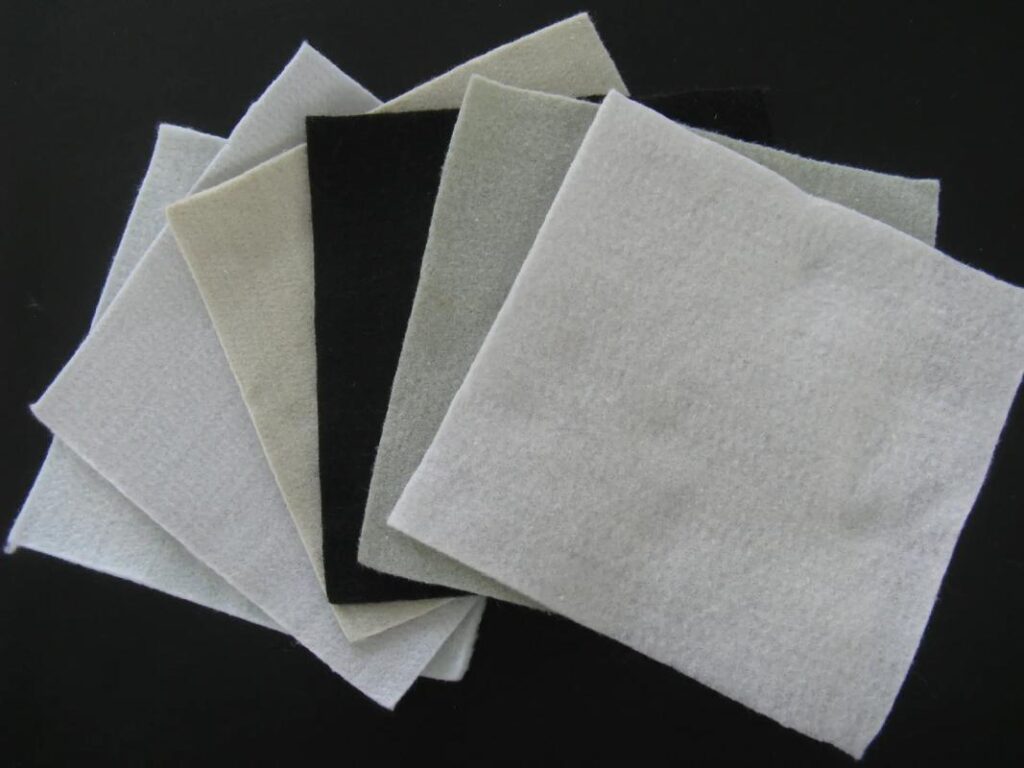
4. Geotextile Cost Estimation for Common Applications
4.1 Road Construction & Pavement
Subgrade separation is the most common geotextile application, typically using 200–300 GSM non-woven or woven geotextile to separate subgrade soil from aggregate and prevent pumping.
- Material cost: $0.30–$1.20 per m²
- All-in installed cost: $1.50–$3.00 per m²
- Benefit: Reduces aggregate consumption by 20–40% and extends pavement service life by over 30%, significantly lowering life cycle cost.
Calculation Example: For a 10,000 m² secondary highway using 200 GSM filament non-woven geotextile at a material price of $0.50 per m², total material cost equals $5,000. With an all-in installation price of $1.20 per m² including labor and site preparation, total project cost amounts to approximately $17,000.
4.2 Drainage & French Drain Systems
For municipal drainage and behind-retaining-wall french drains, 150–300 GSM non-woven geotextile is commonly used as a filter layer to prevent soil particles from clogging drainage pathways.
- Material cost: $0.20–$0.80 per m²
- All-in installed cost: $1.00–$2.50 per m²
- Selection note: Apparent opening size (AOS) must be matched to soil particle size to balance soil retention and water permeability, in compliance with ASTM D4751.
4.3 Landfill & Environmental Projects
Filter and protection layers in landfills impose strict performance requirements, typically using 400–600 GSM high-strength non-woven geotextile paired with HDPE geomembrane.
- Material cost: $1.00–$3.00 per m²
- Composite system total cost: $15–$30 per m² (including geomembrane, GCL and other supporting materials)
- Mandatory requirements: Must meet GRI standards, resist acid and alkali corrosion, and deliver long-term hydrolysis resistance with a design service life of 50+ years.
4.4 Slope Protection & Erosion Control
For highway and water conservancy slope protection, woven geotextile is used for reinforcement, or natural fiber geotextile is applied alongside vegetation establishment.
- Woven reinforcement solution: Material cost $0.80–$2.50 per m², suitable for steep slopes and high-scour conditions.
- Eco-friendly coir solution: Material cost $0.40–$1.00 per m², suitable for gentle slope ecological restoration; degrades naturally and supports vegetation growth.
4.5 Landscaping & Agricultural Applications
For light-duty scenarios such as garden weed control, artificial lake liners and agricultural irrigation filtration, 100–200 GSM light-weight non-woven geotextile is sufficient.
- Material cost: $0.15–$0.40 per m²
- Note: Most purchases are small-batch and made through retail channels, where prices are 50–200% higher than ex-factory rates.
5. Installation Cost & Total Budget Breakdown
In a typical geotextile project, materials account for 40–60% of the total budget, with installation and ancillary materials making up the remainder. The cost structure is as follows:
- Labor cost: $0.30–$1.50 per m². Installation on flat ground is less expensive, while construction on steep slopes or complex terrain can increase labor cost by 50% or more. Overlap seaming costs approximately $0.50–$1.00 per m², and stitched seaming costs $1.00–$2.00 per m².
- Ancillary materials: $0.10–$0.50 per m², including staples, seam adhesive and batten strips. Standard overlap width is 15–30 cm, and an additional 10–15% material wastage allowance should be factored in.
- Site preparation: $0.20–$0.80 per m², including grading and removal of sharp debris. This step is critical to preventing puncture damage to the geotextile.
For typical flat-ground projects, total installation cost is roughly 0.8–1.5 times the material cost. For complex terrain and high-standard projects, installation cost can reach 2 times the material cost or more.
6. Tips for Cost-Effective Geotextile Selection & Procurement
6.1 Right-Size Specifications to Avoid Over-Engineering
Select specifications based on actual project load and design service life, rather than blindly pursuing higher GSM. For example, 150 GSM non-woven geotextile is sufficient for temporary access roads; over-specifying a 400 GSM product would increase material cost by 2–3 times and create unnecessary waste.
6.2 Optimize Procurement Strategy
- Consolidate bulk orders: Combine project requirements to meet volume thresholds and secure lower ex-factory pricing.
- Source from local suppliers: Prioritize manufacturers close to the project site to reduce logistics cost by 10–20%.
- Compare full delivered cost: Clarify whether quotes include freight and taxes to avoid low introductory prices with hidden add-on fees.
6.3 Prioritize Life Cycle Cost
Low-cost recycled-material products can reduce initial purchase cost by 20%, but shorten service life by 30–50% and incur higher maintenance and replacement costs over time. For long-term projects, virgin-material products with anti-aging treatment deliver lower life cycle cost over a 50-year service horizon.
6.4 Verify Quotations Thoroughly
When requesting quotes from suppliers, specify the following parameters to avoid pricing discrepancies:
- GSM, raw material (PP/PET) and manufacturing process
- Core mechanical indicators such as tensile strength and puncture resistance
- Compliance standards (national standard / ASTM / GRI) and availability of test reports
- Quotation terms: ex-works / delivered price, minimum order quantity, lead time
7. FAQs
How much does geotextile cost per square foot?
One square meter equals approximately 10.764 square feet. Converted, standard geotextile costs roughly $0.014–$0.50 per square foot, with commonly used engineering grades falling around $0.02–$0.23 per square foot.
What is the price of 200gsm non-woven geotextile?
Ex-factory price for 200 GSM staple fiber non-woven geotextile is approximately $0.25–$0.50 per m²; filament grade costs around $0.30–$0.60 per m². Standard-compliant products cost 10–20% more than non-standard alternatives.
Is woven or non-woven geotextile cheaper?
At the same GSM, non-woven geotextile is generally less expensive. However, when calculated by unit tensile strength, woven geotextile offers better value. Non-woven is more cost-effective for separation and filtration applications, while woven is more economical for reinforcement and load-bearing scenarios.
Does geotextile price include delivery?
Industry-standard ex-factory pricing typically excludes freight, taxes and installation fees. Bulk orders may be negotiated for site delivery. Always clarify quotation terms during inquiry to avoid subsequent cost disputes.
What is the cheapest type of geotextile?
Light-weight staple fiber non-woven geotextile under 100 GSM is the lowest-cost option, at approximately $0.10–$0.20 per m². It is only suitable for low-demand scenarios such as temporary coverage and light filtration, and must not be used in load-bearing engineering.
How much does geotextile cost per ton?
Polypropylene geotextile costs approximately $1,200–$2,500 per ton, while polyester grade costs $1,500–$3,000 per ton. Exact prices fluctuate with raw material market trends and product specifications. Lower GSM products yield more area per ton, resulting in lower cost per square meter.
8. Final Takeaways
Geotextile prices vary widely in 2026, determined primarily by product type, technical specifications and procurement conditions. For conventional infrastructure projects, 200–300 GSM virgin polypropylene non-woven geotextile offers the best balance of performance and cost. For high-load, long-service-life projects, high-strength woven or polyester filament products are recommended.
When procuring, do not judge solely by unit price. Evaluate comprehensively based on performance standards, service life, logistics and installation cost to achieve the best cost-performance ratio. For a customized, precise quotation tailored to your project, provide details including working conditions, required specifications and project volume.
References
- BPM Geosynthetics. Complete Guide to Geotextile Membrane Price [EB/OL]. 2026.
- GEOSINCERE. Ultimate Guide To Geotextile Prices [EB/OL]. 2025.
- Civil Layer. How Much Do Geotextiles Cost in 2025? – A Detailed Guide [EB/OL]. 2025.