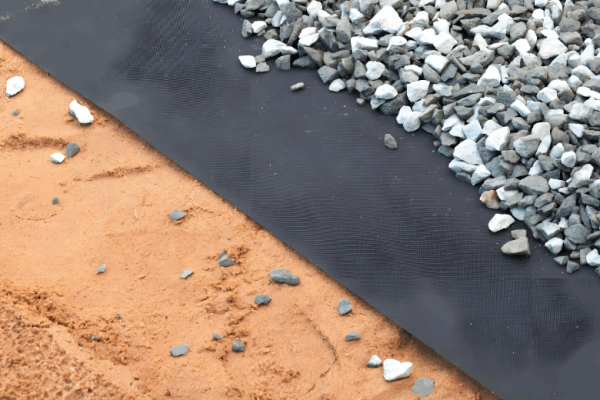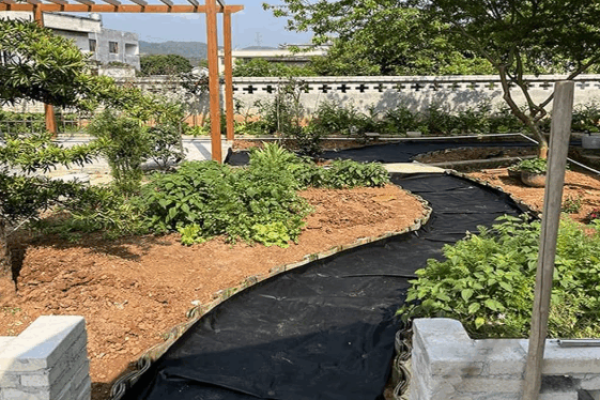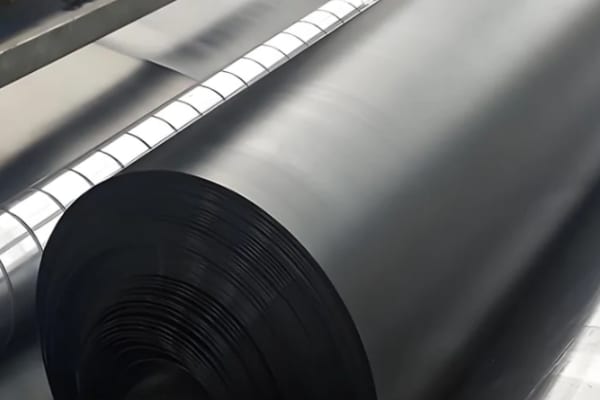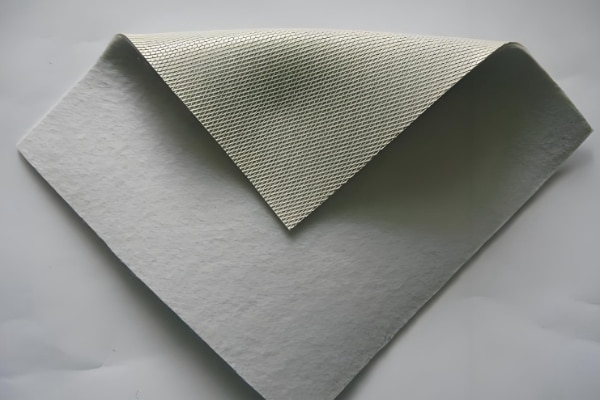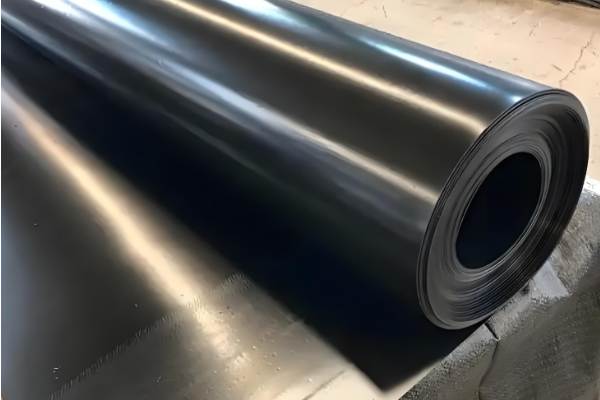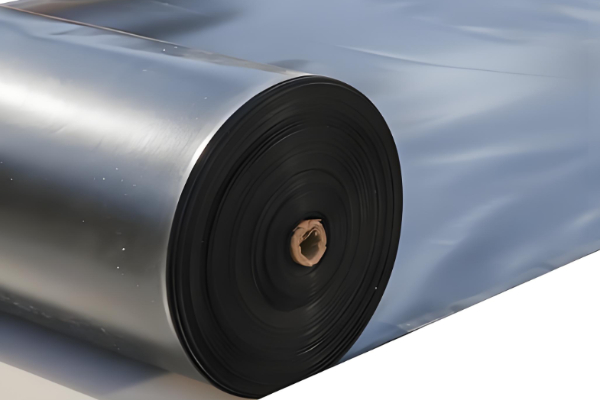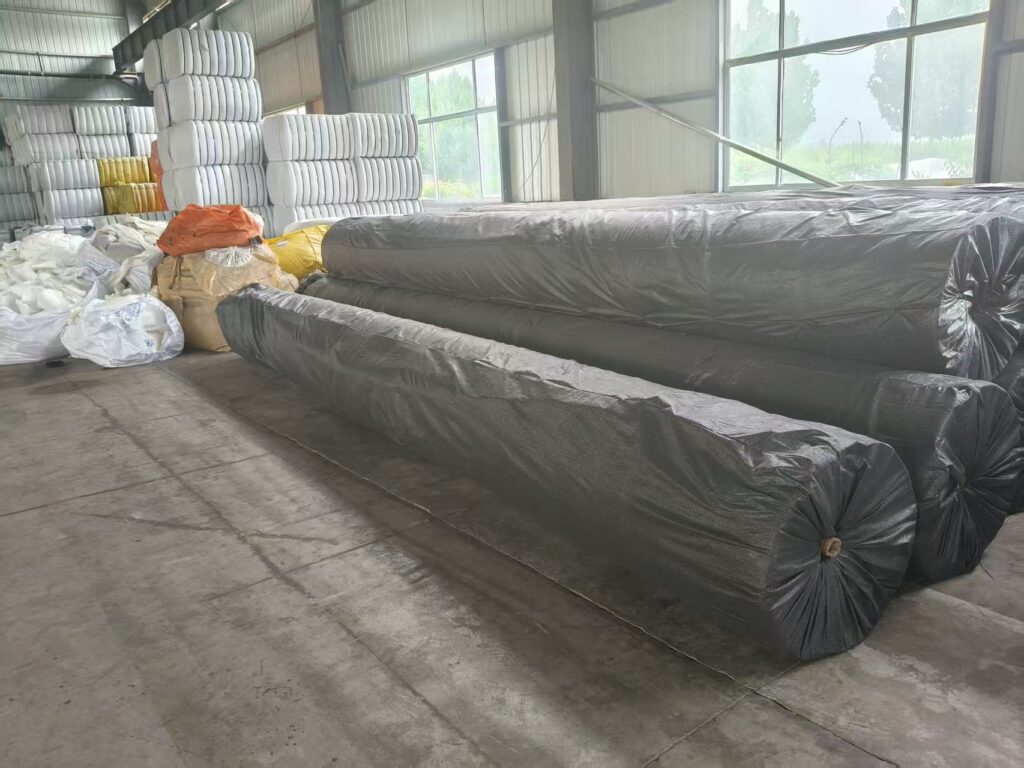
Biaxial Geogrid is a high-performance geosynthetic material made from polymer substrates through a biaxial stretching process. Its core advantage lies in excellent tensile strength in both longitudinal and transverse directions, which can effectively distribute soil stress and reinforce soil structures. It is widely used in various civil engineering projects such as roads, railways, slopes, landfills, etc. This article covers the definition, production process, material, performance, application scenarios, installation methods, selection skills, purchasing guide and frequently asked questions of biaxial geogrids.
1. What is Biaxial Geogrid
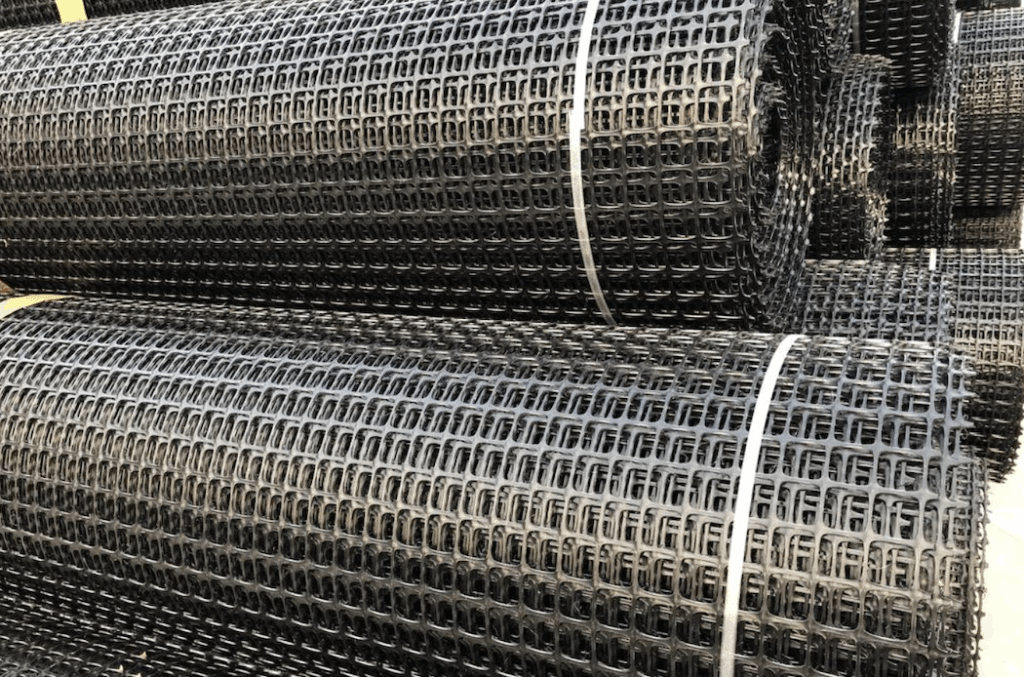
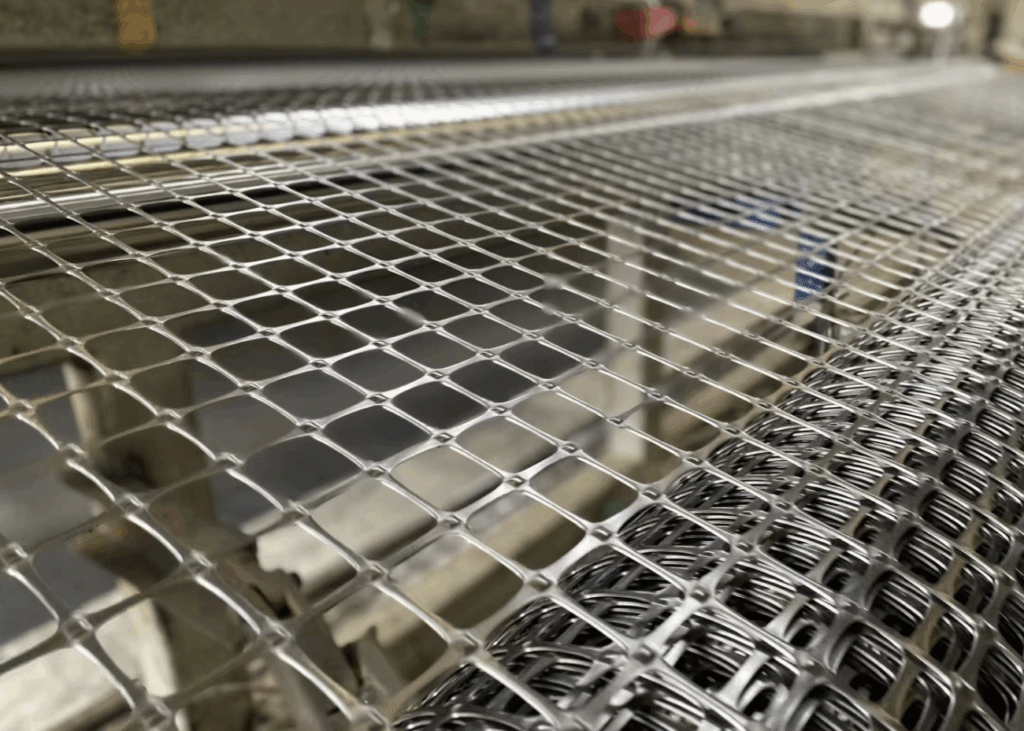
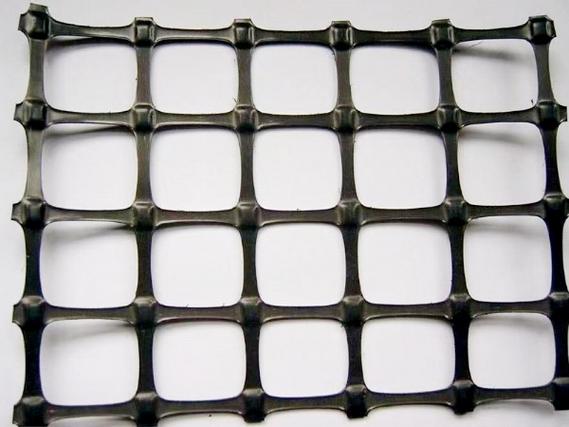
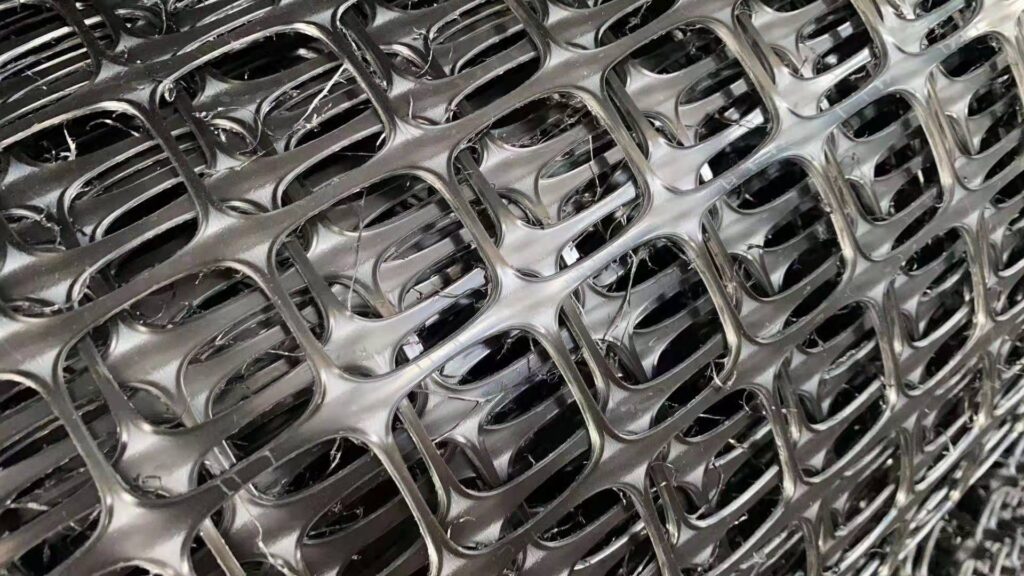
Biaxial Geogrid, also known as biaxially stretched geogrid, is a mesh-structured geosynthetic material made from polymers such as Polypropylene (PP), Polyester (PET), High-Density Polyethylene (HDPE) through extrusion, precise punching, and high-temperature biaxial stretching (simultaneous longitudinal and transverse stretching).
Its core feature is “biaxial stress bearing”: the tensile strength in the longitudinal and transverse directions is basically the same, forming an effective “reinforcement network” in the soil. It evenly distributes soil loads, improves soil shear strength and bearing capacity, and prevents soil deformation and settlement. It is mainly used for soil reinforcement and structural stabilization.
Compared with ordinary geotextiles, geomembranes and other geosynthetics, the core advantage of biaxial geogrid is “reinforcement and stabilization” rather than seepage control or filtration. Its mesh structure provides better interlock with soil, transfers and distributes loads efficiently, making it the preferred reinforcement material in geotechnical engineering.
1.1 Production Process
The core production process of biaxial geogrid is “biaxial stretching”. Processes vary slightly among PP, PET, HDPE but follow the same general flow:
- Polymer Sheet Extrusion: Raw materials such as polypropylene or polyester are melted and extruded into uniform polymer sheets (usually 1–3 mm thick).
- Precision Punching: Professional punching equipment creates evenly distributed rectangular, circular or diamond-shaped holes (10–50 mm in diameter) to form a stable mesh after stretching.
- High-Temperature Biaxial Stretching: The punched sheet is stretched longitudinally and transversely simultaneously at high temperatures (120–150°C for PP, 180–220°C for PET) at a stretch ratio of 3–6 times. Polymer molecular orientation greatly improves tensile strength and rigidity.
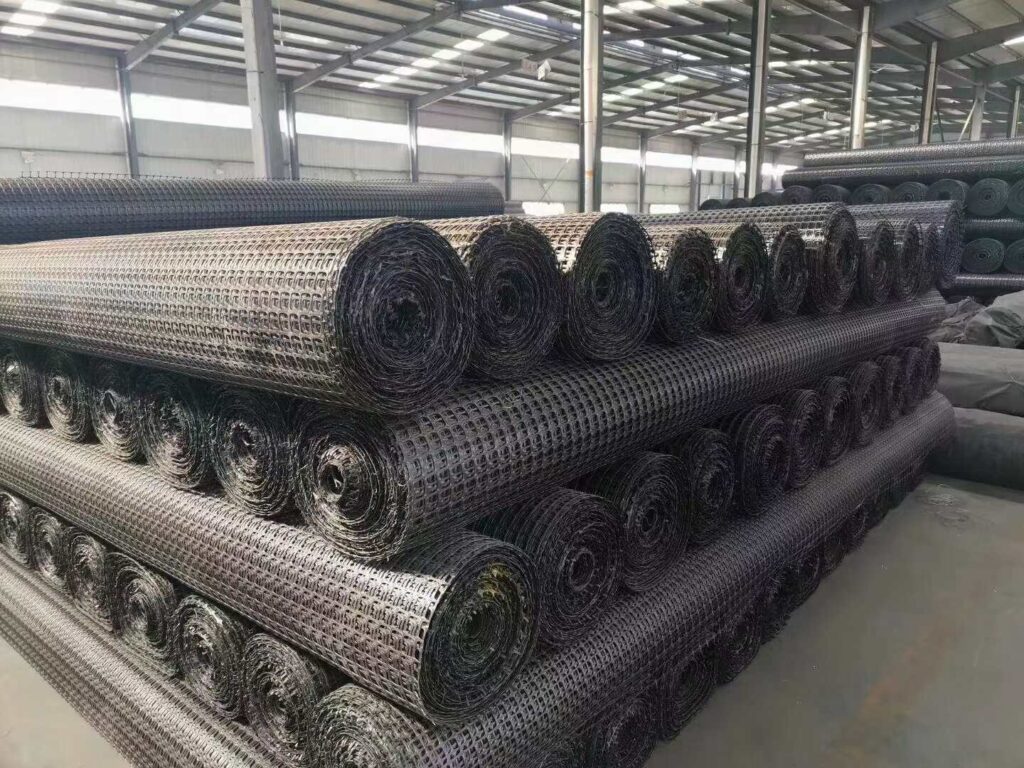
- Testing & Winding: After cooling and setting, products are tested for tensile strength, elongation, joint efficiency, etc. Qualified products are wound, cut, packaged and stored.
1.2 Core Materials
Biaxial geogrids are mainly made of three polymers with different characteristics:
- Polypropylene (PP): The most widely used material with low cost and high cost-performance ratio. Good corrosion resistance, UV resistance and flexibility. Tensile strength: 20–150 kN/m. Suitable for medium and low-load projects such as ordinary road subgrades, slope protection, landfills. Density: 0.92 g/cm³. Stable at -40~120°C.
- Polyester (PET): Also known as polyester fiber. High tensile strength (50–200 kN/m), better creep resistance and aging resistance than PP. High temperature and corrosion resistance. Suitable for high-load and long-term projects such as highways, railway subgrades, bridge abutments, mine roofs. Slightly more expensive than PP. Density: 1.4 g/cm³. Good oil and acid resistance but weak alkali resistance.
- High-Density Polyethylene (HDPE): Good flexibility and impact resistance. Excellent low-temperature resistance, usable at -60°C. Suitable for cold-region projects such as northern road subgrades and slope protection. Tensile strength is between PP and PET. Moderate price.
2. Core Performance and Specifications of Bidirectional Geogrid
| Performance Indicators | Core Requirements (PP Material) | Core Requirements (PET Material) | Test Standards |
| Vertical Tensile Strength | 20-150kN/m | 50-200kN/m | ASTM D 6637, GB/T 17689 |
| Elongation at Yield | ≤15% | ≤10% | ASTM D 6637, GB/T 17689 |
| Node Efficiency | ≥85% | ≥90% | ASTM D 6637 |
| Aperture | 10-50mm (Rectangular/Circular) | 10-50mm (Rectangular/Circular) | Industry Conventional Standards |
| Service Life | 50-70 Years | 70-100 Years | Long-Term Aging Test |
3. Application Scenarios of Bidirectional Geogrid
Biaxial geogrid is mainly used for soil reinforcement and structural stabilization.
- Road & Railway Engineering (Core Application):Subgrade reinforcement, pavement stabilization, and abutment transition treatment. Distributes subgrade stress, improves bearing capacity, prevents settlement and cracking, reduces rutting and damage. Especially suitable for soft soil subgrades and seasonal freeze-thaw areas. Reduces cushion thickness, filler usage and construction period.
- Slope & Foundation Pit Engineering:Slope reinforcement, retaining wall support, foundation pit support. Fixes slope soil, prevents erosion, landslides and collapses. Used with anchor rods and soil nails to improve bearing capacity and avoid sidewall deformation.
- Landfill & Environmental Engineering:Landfill cover stabilization, leachate collection system reinforcement, environmental slope protection. Prevents cover settlement and cracking, avoids leachate leakage, and ensures structural integrity.
- Other Applications:Coal mine roof support, slope greening soil fixation, culvert crack protection, soft soil subgrade improvement, bridge abutment load transfer platform.
4. Installation Method of Bidirectional Geogrid
Installation follows the principles: Level, Stretch, Compact, Fix.
- Site Preparation:Clear the construction area, remove sharp debris (stones, steel bars, branches), level the ground. Drain standing water to keep the surface dry to avoid scratching the geogrid.
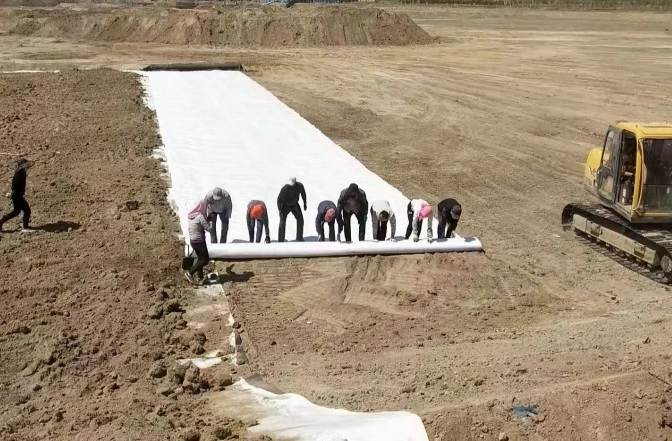
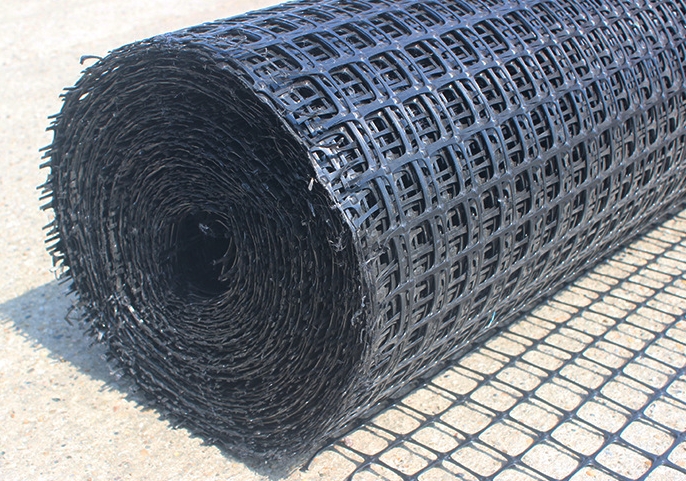
- Geogrid Laying:Unroll and lay the biaxial geogrid flat on the surface, aligned with the main stress direction (parallel to road axis for road subgrades). Overlap width: 15–20 cm. Secure overlaps with plastic clips or geotextile ties to prevent sliding.
- Stretching & Leveling:Gently stretch the geogrid to ensure flatness without wrinkles. Tension: 5%–10% (avoid overstretching). Re-fix after stretching to ensure close contact with the ground.
- Backfilling & Compaction:Use smooth, sharp-free soil for backfilling. Layer thickness: 10–20 cm. Avoid direct mechanical rolling on the geogrid. Use light rollers for compaction to over 95% compaction degree. Continue layered backfilling and compaction until design elevation is reached.
- Inspection & Acceptance:Check for damage, secure overlaps and qualified compaction before subsequent construction.
Installation Precautions
- Avoid installation in extreme high temperatures or heavy rain.
- Prevent sharp objects from scratching the geogrid. Repair damaged areas with matching material.
- Ensure overlaps are firmly fixed.
- Workers should wear gloves to avoid cuts.
5. Advantages of Biaxial Geogrid
- Mechanical Performance: Biaxial stress bearing, high tensile strength and rigidity. Effectively distributes soil stress, improves shear strength and bearing capacity, reduces settlement and deformation.
- Economic Benefits: Simple construction, high efficiency, short construction period, reduced labor costs. Reduces cushion thickness, filler and transportation costs. Overall project cost can be reduced by 15%–30%.
- Durability: UV-resistant, corrosion-resistant, biodegradation-resistant. Long service life: 50–70 years for PP, 70–100 years for PET.
- Environmental Protection: Non-toxic, odorless, pollution-free. Reduces filler usage and carbon footprint. Supports green construction.
6. Biaxial vs. Uniaxial vs. Triaxial Geogrid
6.1 Biaxial vs. Uniaxial Geogrid
| Comparison Dimensions | Biaxial Geogrid | Uniaxial Geogrid |
| Tensile Strength Direction | Biaxial force bearing, basically the same tensile strength in vertical and horizontal directions | Uniaxial force bearing, high tensile strength only in vertical direction, low strength in horizontal direction |
| Core Purpose | Soil reinforcement and structural stabilization, suitable for scenarios requiring biaxial force bearing | Slope protection and retaining wall, suitable for scenarios requiring only uniaxial force bearing |
| Applicable Scenarios | Highway/railway subgrade, soft soil subgrade, landfill, foundation pit support, etc. | Steep slope protection, retaining wall support, slope greening, etc. |
| Price | Medium, PP material is about 0.6-1.2 USD/㎡, PET material is about 1.0-1.8 USD/㎡ | Low, about 0.4-0.8 USD/㎡ |
| Cost Performance | High, suitable for multiple scenarios, low long-term use cost | Medium, only suitable for uniaxial force bearing scenarios, limited application scope |
6.2 Biaxial vs. Triaxial Geogrid
- Biaxial Geogrid: Biaxial (longitudinal + transverse) loading. Uniform tensile strength, cost-effective. Suitable for most conventional reinforcement projects (ordinary roads, slopes, landfills).
- Triaxial Geogrid: Multi-directional loading (longitudinal + transverse + diagonal). Higher tensile strength, creep resistance and stability. Suitable for complex high-demand projects (freeways, high-speed railways, large foundation pits, high slopes). Price: ~1.5–2.5 USD/㎡.
Selection Suggestion:
Choose biaxial geogrid for conventional loads and general scenarios. Choose triaxial geogrid for high-load, complex projects.
7. Purchasing Guide of Biaxial Geogrid
7.1 Price Reference
Prices are in USD per square meter (1 USD ≈ 7.2 RMB):
- PP biaxial geogrid: 0.6–1.2 USD/㎡ (≈ 4.3–8.6 RMB/㎡)
- PET biaxial geogrid: 1.0–1.8 USD/㎡ (≈ 7.2–12.96 RMB/㎡)
- HDPE biaxial geogrid: 0.8–1.4 USD/㎡ (≈ 5.76–10.08 RMB/㎡)
- Installation cost: 0.2–0.8 USD/㎡ (≈ 1.44–5.76 RMB/㎡)
Price Factors: Material > Specification > Order Quantity > Manufacturer > Region.
Bulk orders over 10,000 ㎡ typically qualify for 7.5–9 discount.
7.2 Purchasing Tips
- Verify Quality: Require third-party test reports (ASTM D 6637 or GB/T 17689). Check tensile strength, elongation, joint efficiency. Verify business license, type inspection reports and ISO certification.
- Confirm Specifications: Clarify material, tensile strength, aperture, width, length. Confirm in the contract.
- Compare Suppliers: Compare 2–3 manufacturers on price, quality, delivery and after-sales service. Avoid excessively low prices.
- After-Sales Support: Prefer suppliers with warranty (1–2 years), replacement service and technical guidance. For overseas orders, confirm export qualification, customs clearance and logistics.
- Control Order Quantity: Plan based on project demand to avoid waste or delays.
- Inspect Deliveries: Check appearance, dimensions and re-test mechanical properties.
8. Frequently Asked Questions
Q1: What is the difference between PP and PET biaxial geogrid?
A: PP has lower cost, moderate strength, suitable for general projects. PET has higher strength, better creep and aging resistance, longer service life, suitable for heavy-duty key projects.
Q2: How long is the service life?
A: PP: 50–70 years; PET: 70–100 years; HDPE: 60–80 years. Harsh environments may slightly reduce lifespan but still meet design requirements.
Q3: Can it be used for soft soil subgrades?
A: Yes. It is one of the core materials for soft soil subgrade treatment, improving bearing capacity and accelerating consolidation.
Q4: What is the minimum order quantity?
A: Generally 1000 ㎡ for PP, 500 ㎡ for PET. Some manufacturers support trial orders as low as 100 ㎡.
Q5: How to ensure installation quality?
A: 1) Clean the site to avoid sharp objects. 2) Ensure proper overlap (15–20 cm) and tension. 3) Use clean backfill and layered compaction. 4) Inspect and repair promptly.
9. Conclusion
As a core reinforcement material in modern geotechnical engineering, biaxial geogrid features balanced biaxial strength, high durability, corrosion resistance, easy construction and excellent cost performance. It is widely used in roads, railways, slopes, landfills and other projects, effectively solving problems such as soil settlement, slope sliding and subgrade cracking, extending service life and reducing project costs.
If you are looking for biaxial geogrid manufacturers, please feel free to contact Shandong lianjie>>