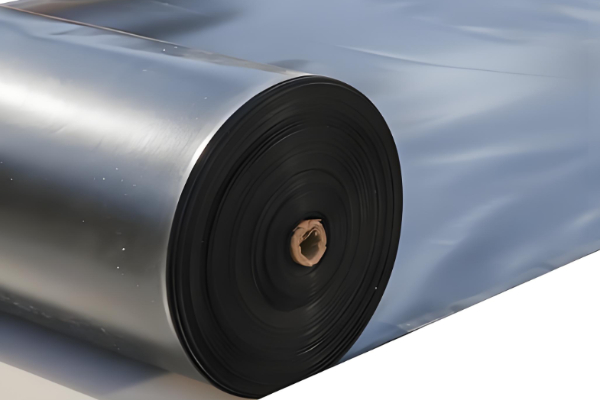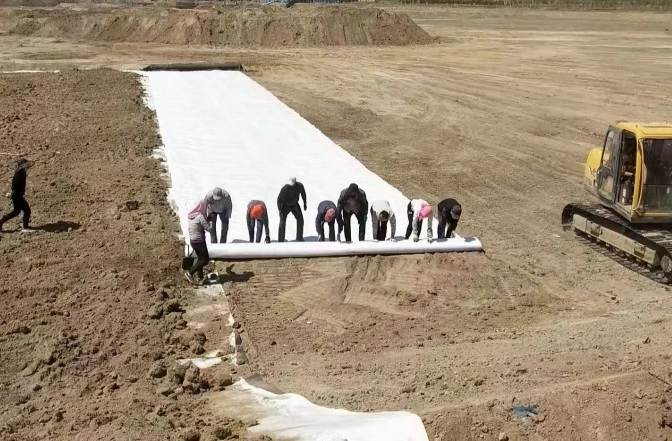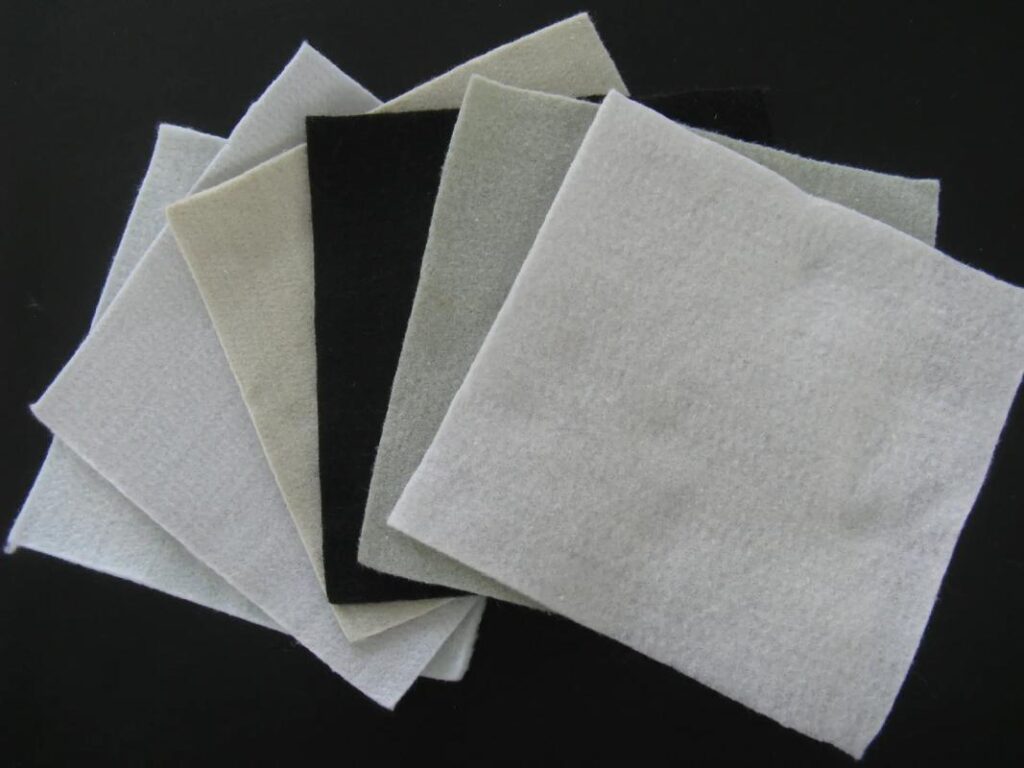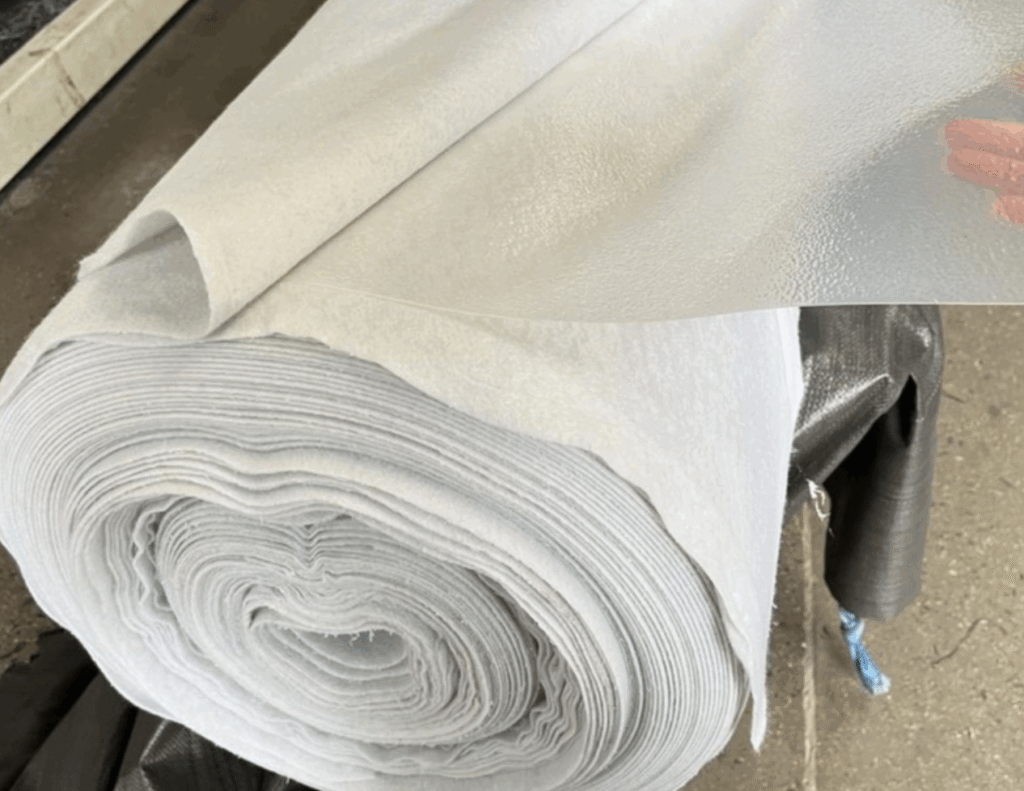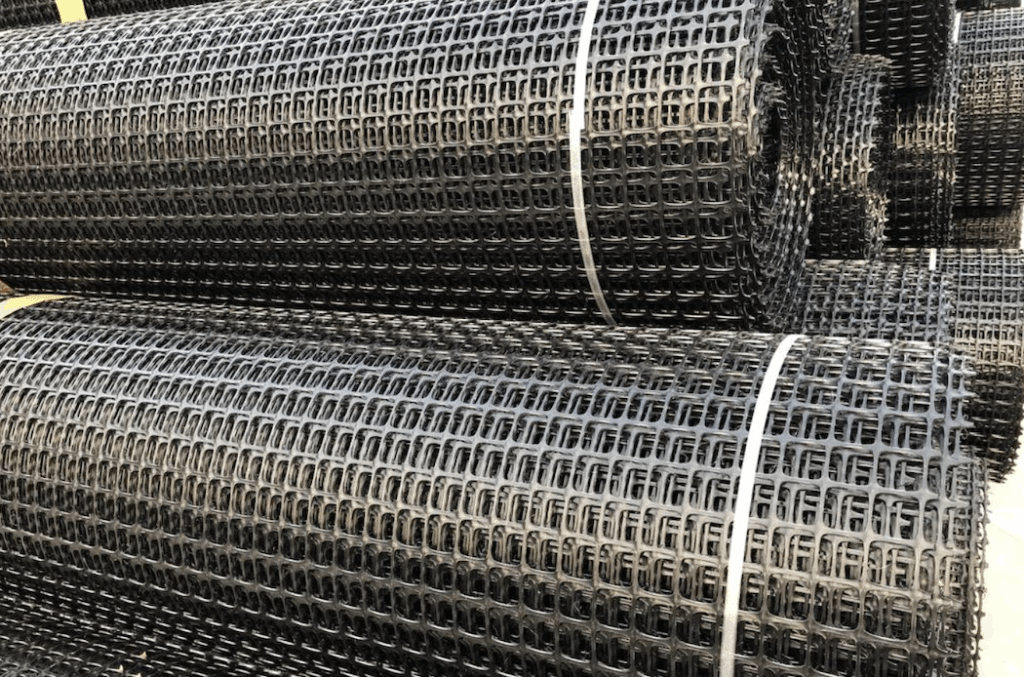
Geotextiles are core permeable geosynthetic materials widely used in geotechnical engineering, municipal construction, water conservancy slope protection, and landfill projects. With five essential functions including filtration, drainage, reinforcement, anti-seepage, and protection, they serve various civil engineering projects. This article will systematically review the classification, core performance, advantages and disadvantages, and suitable engineering scenarios of mainstream geotextiles, hoping to be helpful to you.
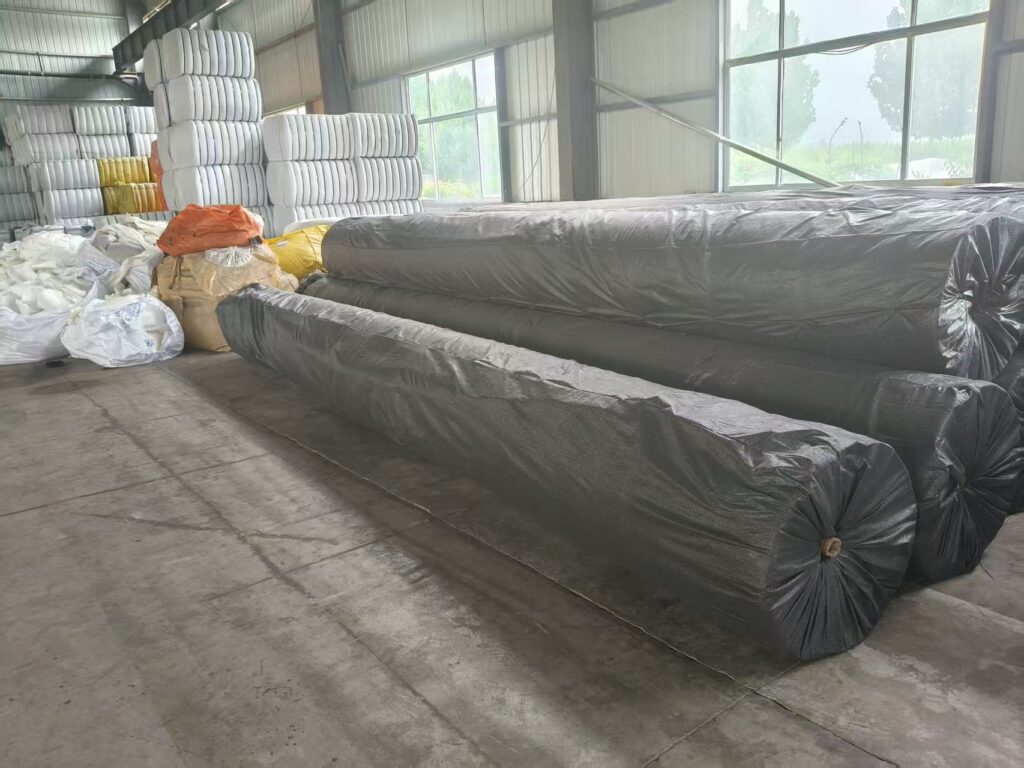
1. Detailed Introduction to Three Core Types of Geotextiles
1.1 Woven Geotextiles
Woven geotextiles are high-strength engineering-specific geosynthetic materials fabricated by warp and weft interweaving of polypropylene or polyester fibers on professional looms, with slit-film woven geotextiles as the common subtype.
Core Performance: Featuring high warp and weft tensile strength, stable structural integrity, excellent tear resistance, puncture resistance, and friction resistance with a compact structure. Their main drawbacks include low porosity, weak water permeability and filtration performance, poor flexibility, and insufficient base surface fitting performance.
Application Scenarios: Specialized in reinforcement and stabilization working conditions. Widely applied in highway and railway subgrade reinforcement, soft soil foundation treatment, dam slope hardening, yard and airport pavement reinforcement, and other projects requiring high mechanical strength.
Conventional Specifications: Mainstream market GSM ranges from 200g to 800g, with breaking strength significantly higher than non-woven geotextiles of the same weight, suitable for heavy-load engineering projects.
1.2 Non-Woven Geotextiles
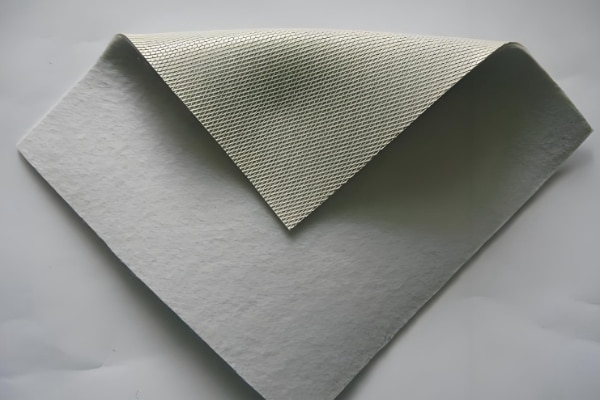
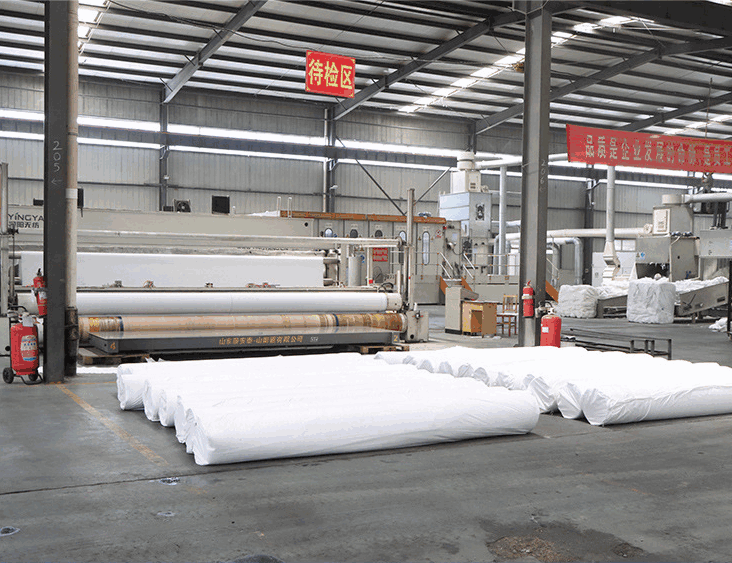
Non-woven geotextiles are formed through fiber carding, web laying, and consolidation without warp and weft weaving. The mainstream types include needle-punched non-woven geotextiles and heat-bonded non-woven geotextiles, among which needle-punched non-woven geotextiles are the most widely used geotextile products in engineering.
Core Performance: Equipped with uniform pores, excellent water permeability and air permeability, superior filtration performance, great flexibility, and outstanding base surface fitting ability to adapt to irregular substrates. They also offer corrosion resistance, aging resistance, environmental friendliness, and high cost performance. In contrast, their tensile strength is relatively low, making them unsuitable for heavy-load reinforcement scenarios.
Application Scenarios: Dominated by filtration, drainage and protection functions. Suitable for municipal road drainage, French drain systems, river slope anti-erosion protection, artificial lake anti-seepage protection, protective layers for landfill anti-seepage systems, and landscape water and soil conservation projects.
Conventional Specifications: General GSM ranges from 100g to 600g. 200g to 300g specifications are adopted for conventional drainage and protection projects, while 400g and above high-GSM products are used for landfill and heavy-duty protection projects.
1.3 Knitted Geotextiles
Knitted geotextiles are niche high-end geotextiles manufactured via knitting technology with flexible fiber interwoven structures. They are mostly used in combination with other geosynthetic materials to form composite geosynthetic systems.
Core Performance: Boasting excellent toughness, outstanding tensile deformation resistance, superior base surface fitting performance, and great fatigue resistance for complex curved surface working conditions. Their structural strength falls between woven and non-woven geotextiles with strong customization flexibility.
Application Scenarios: Mainly used for special and complex protection projects, including irregular slope protection, coastal tidal zone anti-erosion treatment, supporting protection for composite geomembranes, and refined landscape water and soil conservation projects.
2. Core Differences Between Woven and Non-Woven Geotextiles
Woven and non-woven geotextiles are the two most commonly used and easily confused geotextile products in engineering. They have significant differences in core performance and application scenarios, and accurate distinction is the key to engineering selection. The detailed differences are as follows:
| Comparison Dimension | Woven Geotextile | Non-Woven Geotextile |
| Production Technology | Formed by warp and weft interweaving with compact and regular structure | Formed by fiber web consolidation without weaving structure, with uniform pores |
| Tensile Strength | High with excellent tear resistance and puncture resistance | Medium strength with good flexibility but insufficient rigid strength |
| Water Permeability & Filtration | Weak with fixed pores and prone to clogging | Excellent with three-dimensional pore structure for stable drainage and filtration effects |
| Flexibility | Poor with ordinary base surface fitting performance | Excellent, adaptable to various irregular base surfaces |
| Core Functions | Reinforcement, stabilization, and load distribution | Filtration, drainage, anti-seepage protection, and anti-erosion |
| Project Cost | Relatively high at the same GSM | High cost performance, suitable for most general projects |
Core Selection Conclusion: Choose woven geotextiles for projects focusing on reinforcement, load bearing and stabilization; select non-woven geotextiles for projects prioritizing drainage, filtration, anti-erosion and anti-seepage protection.
3. Scenario-Based Geotextile Selection Solutions
Civil engineering projects vary greatly in working conditions and functional requirements. Accurate scenario-based selection can maximize geotextile performance, reduce project costs, and avoid construction quality problems.
3.1 Drainage Projects
Such projects require efficient water permeability and sediment filtration to prevent drainage pipeline blockage. Needle-punched non-woven geotextiles are the preferred choice. 200g to 300g specifications are suitable for conventional municipal drainage projects, while 300g to 400g specifications are adopted for working conditions with high sediment content and large water discharge to ensure long-term stable drainage and filtration performance.
3.2 Road and Foundation Infrastructure Projects
Highway, railway, and soft soil foundation projects require materials with high-strength reinforcement, anti-settlement, and load dispersion capabilities. High-GSM woven geotextiles are recommended. 400g and above specifications are applied for main roads and heavy-duty roads to effectively improve overall subgrade stability and delay pavement settlement and cracking.
3.3 Slope Anti-Erosion and Water Conservancy Revetment Projects
River, lake, and coastal slopes are vulnerable to water flow scouring and rain erosion, requiring reliable soil and water conservation and slope protection. Heavy-duty non-woven geotextiles are suitable for conventional slopes, while knitted geotextiles are ideal for complex working conditions such as irregular curved slopes and tidal zones, effectively stabilizing soil and preventing slope water loss and collapse.
3.4 Landfill and Anti-Seepage Projects
Landfill, artificial lake, and reservoir projects require integrated protection, anti-seepage, and corrosion resistance. Heat-bonded non-woven geotextiles are recommended for matching use with geomembranes. 400g to 600g high-GSM products can effectively prevent geomembrane puncture by sharp soil particles, achieve water seepage, exhaust and impurity isolation, and ensure long-term stable operation of anti-seepage systems.
Frequently Asked Questions
1. What are the three main types of geotextiles?
The three standard core geotextile types are woven geotextiles, non-woven geotextiles, and knitted geotextiles. Non-woven geotextiles have the widest market application; woven geotextiles focus on high-strength reinforcement; knitted geotextiles are used for special and complex engineering projects.
2. Which is better for drainage projects: woven or non-woven geotextiles?
Non-woven geotextiles are the preferred option for drainage projects. Their uniform three-dimensional pore structure delivers excellent water permeability and filtration performance, which can effectively intercept sediment and drain accumulated water. In contrast, woven geotextiles have low porosity and poor water permeability, easily causing drainage system blockage and thus unsuitable for drainage working conditions.
3. Which type of geotextile has the highest strength?
Under the same GSM specification, woven geotextiles have the highest tensile strength, tear resistance, and puncture resistance among all geotextile types, specially designed for infrastructure projects requiring soil reinforcement, load bearing and stabilization.
4. How to choose the right geotextile GSM for different projects?
GSM selection is based on actual working conditions: 100-200g for temporary protection, 200-300g for conventional drainage and protection, 300-500g for subgrade reinforcement, and 400g and above for heavy-duty anti-seepage and slope protection projects. Properly increase the GSM for harsh and complex working conditions to ensure project quality.
5. What is the difference between geotextiles and geogrids?
Geotextiles are flexible and permeable, mainly functioning in filtration, drainage, protection and mild reinforcement. Geogrids are rigid mesh materials specialized in high-strength soil reinforcement and foundation stabilization with no drainage or filtration functions. The two materials are complementary and often used together in high-standard subgrade and slope projects.
Conclusion
Woven, non-woven, and knitted geotextiles adapt to different civil engineering requirements with differentiated technologies and performances. Non-woven geotextiles are the first choice for general protection and drainage projects due to their superior drainage and filtration performance; woven geotextiles dominate subgrade and foundation reinforcement projects relying on high mechanical strength; knitted geotextiles solve protection problems for complex and irregular working conditions. In practical engineering selection, it is unnecessary to blindly adopt high-end materials. Accurate matching of geotextile types and specifications according to project functional requirements, construction environments and load standards can ensure project quality, extend service life, and effectively control construction costs.
Reference Materials
1. GB/T 17638-2017, Geotextiles – Synthetic Fiber Needle-Punched Nonwoven Geotextiles (Chinese National Standard)
2. GB/T 17639-2008, Geotextiles – Synthetic Fiber Woven Geotextiles (Chinese National Standard)
3. JT/T 480-2018, Technical Specification for Application of Geosynthetics in Highway Engineering